Flying is often the fastest way to cover a very long distance, but it is not always the fastest, cheapest, or easiest door to door. On short and medium routes, a train, coach, ferry, overnight service, or shared car can remove airport transfers, security lines, baggage fees, and missed-connection risk.
There is no universally best alternative. Rail is usually the strongest lower-emission option where a direct, well-used service exists. A coach may win on price. A ferry may be the only practical route to an island. A solo petrol car can perform poorly on emissions, while a shared vehicle can be competitive. Compare the actual route rather than assuming every non-flight option is greener.
Quick answer: Start with rail for city-center trips of roughly two to six hours, coach for the lowest cash fare, ferry for water crossings, and a shared car for rural places that public transport does not serve well.
| Alternative | Best use case | Main advantage | Main trade-off |
|---|---|---|---|
| Direct train | City-center routes and medium distances | Comfortable, productive time and usually low emissions | Coverage and fares vary; cross-border booking can be fragmented |
| Long-distance coach | Budget-focused short and medium trips | Often the lowest upfront price | Slower and less spacious than rail |
| Ferry | Islands, coastal routes and vehicle crossings | Carries more luggage and may offer cabins | Vessel emissions and crossing conditions vary widely |
| Shared car or carpool | Rural routes and groups of three or four | Flexible door-to-door access | A solo fossil-fuel car can be inefficient and expensive |
| Overnight train | Long routes with a usable night service | Replaces travel time and potentially one hotel night | Limited routes; private cabins can sell out early |
| Bicycle, e-bike or walking | Local journeys and slow-travel itineraries | Low operating cost and direct access | Weather, fitness, safety and luggage constraints |
| Scheduled passenger ship | Rare ocean crossings where the journey is the trip | Avoids flying and creates a distinct travel experience | Very slow, infrequent and often expensive; not automatically low-carbon |
Take a direct train
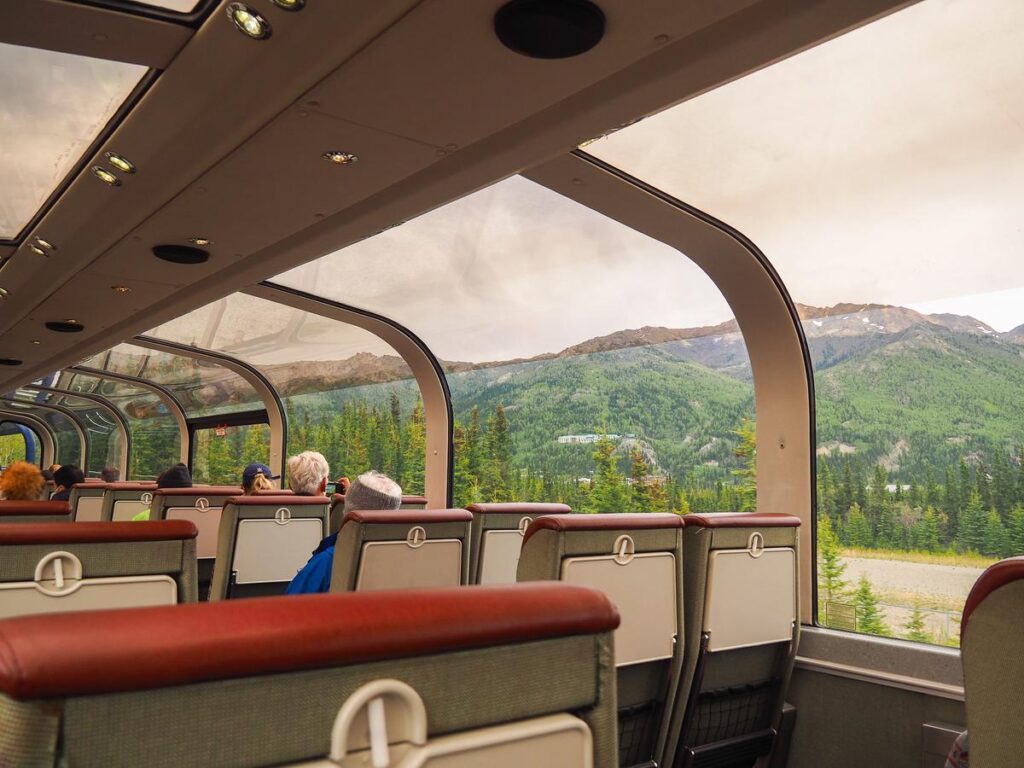
Train routes are also widespread. It, therefore, offers you other ways to travel without flying. You can comfortably travel from city to city. There are also international trains that can take you across the border.
Also, the train speeds have significantly increased over the past decades. Depending on your country, some trains are faster than buses.
You only need to buy tickets to your destination by train. This transport mode is ideal for overland travel, but we also have underwater trains in some countries.
Trains connect major cities and offer tight routines as airlines. On the bright side, trains are freer from occasional delays than airplanes, but you may encounter a train strike that could derail (no pun intended) your travel plans. It is the fastest way to travel without flying. So you will likely get to your destination on time.
Pros:
- Traveling by train is convenient
- Idea for commuting
- No traffic jams
- Night trains are available for night travel
- Reduced carbon footprint
- You can work while traveling
- Cost-effective even for shorter distances
- Relatively safer
Cons:
- Takes longer compared to air travel
- Not ideal over long distances
- Overcrowding in trains
- Requires connecting modes of transport
- Rural areas are poorly served by trains
Cruise ships

Cruise ships are your answer if you still wonder how to travel overseas without flying. This is the only flying alternative that connects continents. You can travel by cruise ship from South America to Africa or Europe.
Most cruise ships are designed for passengers’ comfort. That is why they are more famous than other ways to travel without flying. You can even have a private room inside a cruise ship. Most honeymooners and seasoned travelers choose them for that very reason.
Alternatives to cruise ships are yachts, hovercrafts, and boats. These water vessels aid in traveling over water but cannot cover a long distance.
Like trains, cruise ships also follow a tight schedule. You have to check in on time for your journey. You don’t have control over this routine since travel operators handle everything.
Pros:
- Ideal for families and groups
- Air conditioning is available for comfort
- Easy, comfortable, convenient, and relaxing
- Great for adventure
- Variety of food options
- Getting new acquaintances
- Tax- and duty-free shopping
Cons:
- No eco-friendly
- Expensive for all-inclusive packages
- No flexibility
- Does not cover most destinations
See Related: Norway Cruise Packing List
Sailing or boating

Like Cruise ships, boats allow you to travel overseas. It is also luxurious and comfortable to travel by boat. That, however, depends on the vessel type.
Ocean liners are direct substitutes for passenger planes and are designed for passengers’ comfort. Some ocean liners even have world-class entertainment systems and luxurious accommodation rooms.
There are also different food options, depending on your preferences. You can get both local and international dishes. High-end ocean liners have restaurants, a gym, a spa, pools, and other facilities. That is why some people call them a city on the sea.
River cruises are smaller versions of ocean liners that use river channels to transport people from one major city to the next. They are also built for comfort. You can even sleep during your long journeys.
If you want a better over-water travel experience, you can try cargo ships or local ferries to your destination.
Pros:
- Ideal for families and groups
- Climate control rooms available for comfort
- Easy, comfortable, convenient, and relaxing
- Variety of food options
- Easy to socialize
Cons:
- No eco-friendly
- Relatively expensive
- No flexibility
- Does not cover most destinations
Buses

A bus is one of the overland travel options considered friendly to our environment. Many organizations now encourage public transportation to reduce carbon emissions. Consider taking a bus to your destination instead of using your car.
Some of the most popular bus options are FlixBus, Greyhound, and Megabus, each offering incredibly low fares. Unlike trains, planes, and ships, buses are widespread.
Road networks are found everywhere, both in rural and urban areas. It is one of the transport options that may not require another connecting mode of transport. You can walk to a bus station and board to your destination.
Buses are ideal even for longer journeys overland. Some are now traversing states to take passengers to their various detonations.
Buses are more cost-effective than air transport, even over long distances. Besides, modern buses have comfortable seats. That is the reason grand tours or safari companies now use buses. Like other public transportation methods, bus travel can be inconvenient in many ways.
Pros:
- Flexible booking time
- Cost-effective alternative to air travel
- Short check-in time
- Easy to access
- Contributes to the economy
- Reduces carbon emissions to the atmosphere
Cons:
- Bus travel takes longer than flying
- Some bus operators do not allow seat reservation
- No complimentary food
- Can be inconveniencing
RVs or Vans

If you want to quit flying domestically, a recreational vehicle may be the best option. People repurpose old buses and vans into RVs. You can call it a mobile home or home on wheels. Besides, you can use RV rental sources such as Cruise America, Outdoorsy, and RVShare to rent one temporarily.
RVs are ideal for road trips when traveling as a family or just a few people. You save time and the extra cost of booking hotels for accommodation and food. A well-designed RV has beds, an entertainment area, a kitchen, and other facilities you need for comfort during your trip.
You can freely explore the places you visit and rest anywhere for a night when the dark falls. But if you have a driver, you can be on the move at night and engage in different activities during the day.
RVs are the only option if you are looking for an inexpensive way to go on a trip. Grand tours and Safaris may cost more. They are also not as convenient as your RV.
If you can’t fly to your destination, you can use a recreational vehicle to take you there.
Pros:
- Comfort and convenience guaranteed
- Reduced cost of trip and adventure
- No constant packing and unpacking
- More family time
- Better journey experience
- You can bring your pet along
Cons:
- Road trips include chores
- Difficulty navigating city streets
- Extra cost in vehicle fees
- Sewage handling may be challenging
- RV travel takes time
See Related: Outdoorsy vs RVShare: What is Better?
Cars

You can drive your car or a leased one if you are licensed. It gives you the freedom to go anywhere you want and the flexibility to plan your schedule. You can also stop anywhere you please for refreshment before continuing your journey.
As hinted, you can drive your car or rent one. Whichever option you take, you should get to your destination worry-free. Ensure you follow all the procedures for planning a road trip, including servicing the car if you drive long distances.
Driving your vehicle allows you to work at your own pace and have total control over your journey. You can change your destination from one major city to the next.
Pros:
- High flexibility and more freedom
- Convenient for carrying your luggage around
- More privacy and comfort
- You can see and explore more places
Cons:
- Exhaustion sets in over long-distance
- Theft risk is high
- Possible mechanical breakdown
- It is not eco-friendly unless you are using an electric car
- Costlier than traveling by bus
Cycling

This may seem impractical if you consider a long distance. However, you can bike from city to city over a short distance to save on transport fees.
Cycling is energy efficient and the most inexpensive way of traveling without flying. It is also eco-friendly since no greenhouse gasses are emitted into the atmosphere.
However, cycling over a considerable distance requires physical strength that the elderly and minors don’t have. It is also slow. It can take even two weeks to cover the miles you do when driving. If time is crucial, consider other ways to travel without flying.
Pros:
- Very affordable
- Eco-friendly
- Doubles up as a workout
- Flexible
Cons:
- Very slow
- Not time-conscious over long distances
- No comfort
- Unexpected weather changes can sabotage the journey
- Affected by terrain
Horse or Camel as Alternative to Flying

Horses and camels transported people and their luggage for centuries. They may be your best option if you don’t mind how long they take to reach your destination.
Camels or horses offer eco-friendly alternative travel methods. If you care about saving the planet, flying, sailing, or driving should not be an option. You can only consider them if the vessel used does not burn fossil fuel for energy. Electric cars are a good example.
However, camels and horses require feeding along the way. The feeding sessions take time, making this travel option nearly unreliable in the current error.
Like cycling, riding on the back of a horse can be affected by the weather. Rain and storms will halt your journey. Unless you are doing it for fun, horse or camel riding does not come before other travel methods besides flying.
Pros:
- Very affordable
- Eco-friendly
- Doubles up as a workout
- Flexible
Cons:
- Very slow
- No comfort
- Affected by weather elements
- Affected by terrain
- Horses and camels require regular feeding, which takes time.
See Related: Best Travel Accessories
Why Look for Ways to Travel Other Than Flying?

Flying seems lucrative, but what factors can make you look for alternative travel options? There are many, but let’s briefly discuss a few of them.
High cost of flying
First, flying is not for everyone because of the ticket fees. Even if you are willing to take to the air, you will be discouraged by how expensive it is to buy a plane ticket. As a result, airline alternatives offer the best cost-effective option to many people.
Other ways to travel cost only a few bucks, especially if traveling domestically.
Connecting modes of travel are needed
Next, flying may not be your best option because it is incomplete. You must still use buses, trains, or other travel options to connect to your destination. Airports are not as everywhere as bus stops, and you must spend a lot to get to the airport or your destination once you land.
Some people may see that as inconvenient and use the road or water to reach their destination.
Occasional delays
Flying is praised as the fastest mode of transport. However, that is not always true, as occasional delays can sabotage the flight routine. Sometimes, you must wait at the airport or in a plane for hours before it can be declared for takeoff.
Also, you must get to the airport a few hours before departure time to navigate the check-ins and security lineups. Without knowing this, you will waste many hours at the airport, which could be enough to get to your destination using other means.
Flying has lost its tag as the fastest mode of transport over short distances. Summing up the time you take to go to the airport, move past security checks, and finally become airborne can surprise you. If you travel from state to state or city to city, consider an alternative to flying.
Jet lag syndrome
Jet lag is a sleep disorder that you experience when you move from one time zone to the next over a short time. Your body’s internal clock or circadian rhythm needs to adjust over time. Unfortunately, that is not possible when you fly.
Symptoms of jet lags include the following:
- Insomnia – Difficulty falling asleep
- Headaches
- Drowsiness
- Lack of focus and concentration
- Stomach upset
- Fatigue
- Mood swings, etc.
Not all individuals suffer from jet lag. But if you are a victim, find out how to travel overseas without flying. You don’t have a choice because the symptoms are not pleasant.
See Related: Must-Know Pieces of Advice for Booking Flights Online
How to choose the best alternative to flying
- Compare door-to-door time. Include transfers, check-in, security, baggage claim and connection buffers.
- Compare the all-in price. Add baggage, seat selection, fuel, tolls, parking, cabins and a hotel night if required.
- Check disruption exposure. A cheap itinerary with separate tickets can become expensive after one delay.
- Account for accessibility and luggage. The lowest-carbon option is not useful when it cannot meet a traveler’s physical or practical needs.
- Use route-specific emissions data. Vehicle type, occupancy, electricity mix and distance all matter.
When flying is still the practical choice
Flying may remain reasonable for very long distances, urgent travel, routes with poor ground connections, or travelers whose health and accessibility needs make a multi-stage surface journey materially harder. The goal is a better decision, not moral purity.
What to Consider When Choosing Alternatives to Fly?
There are many alternatives to flying, and what you choose depends on many factors. You don’t just wake up to say you want to sail or drive yourself to the destination. Consider the following:
Know Your Route
This is necessary if you have never been to your destination before. You will need to master your route if you will be driving yourself. It is part of planning. Decide where you want to go and how to get there without flying.
Among the things you need to do is check the map for the routes. Besides, you are not doing that only to know the road. You also do it to identify possible stopovers. Identify restaurants, hotels, filling stations, hospitals, and other facilities available along the way.
You should also ensure your travel insurance covers your journey. Check out travel insurance companies such as InsureMyTrip and TravelInsurance.com. These are reputable insurers that cover a range of incidents.
See Related: Why So Many Flight Cancellations? Here’s What to Know
Transport Option
You can now decide on your alternative travel options. If you are traveling across your country’s borders, choose other travel methods to take you there.
Research the possibility of using trains, automobiles, cruise ships, motorbikes, etc. Each of these is best suited for different routes and travel reasons.
For example, a camel or a horse can be the best eco-friendly alternative to flying on a road trip.
When looking at alternative flight methods, consider the cost. Some will be more cost-effective than others. On the other hand, some may not be feasible. For instance, you cannot think of a car or motorbike if you want to travel over water. Instead, you can consider using a yacht, ferry, cruise ship, and other water vessels.
Set Timeframe
How soon do you want to get to your destination? Time is a primary factor to consider before you can choose your alternatives. We have seen some people cycling. But will that get you to the destination on time?
If you want to get to your destination faster, using a camel may not be possible. If traveling over water and time are constraining factors, a ferry may not be an option over a speed boat.
Skipping the flight usually means staying regional, which is no bad thing for the wallet – plenty of our budget-friendly destinations are reachable by train, bus or car.
Evaluate all other ways to travel besides flying and settle on the ones that will take you to your destination on time. Sometimes, you may sail over road transport if it is faster.
Prepare Your Travel Documents
Your travel documents include visas and passports. Don’t think you will only need them when flying. If you want to travel from one country to the next, you need them regardless of the alternative travel methods chosen.
Check your documents and ensure they are valid. You should renew any that have expired. Travelers will only use legitimate documents to avoid unnecessary problems.
Traveling With Goods
Once again, check the destination country’s laws to see if what you want to transport is legal. This also applies whether you fly or use different travel methods other than flying.
The size of your goods will also determine how to travel without flying. You may need a cargo ship over a yacht or a pickup truck over a camel.
FAQs
What is the best alternative to flying for trips under 500 kilometers?
A direct train is often the strongest option when both endpoints have useful stations. Coach travel can be cheaper, and a shared car may be more practical for rural destinations.
What is usually the cheapest alternative to flying?
A long-distance coach often has the lowest ticket price, but compare baggage, terminal transfers and travel time before deciding.
Is train travel always greener than flying?
Rail is generally energy-efficient and low-emission, especially on electrified and well-used routes, but the result depends on the electricity mix, occupancy and the specific journey.
Can I cross an ocean without flying?
Yes, but scheduled passenger options are rare. Most ocean crossings require a cruise, repositioning voyage or specialized passenger ship and take far longer than a flight.
Is driving better than flying?
Not automatically. A shared efficient vehicle can compare well, while a solo petrol or diesel car can have a high per-person footprint. Use route-specific data.
Related Resources