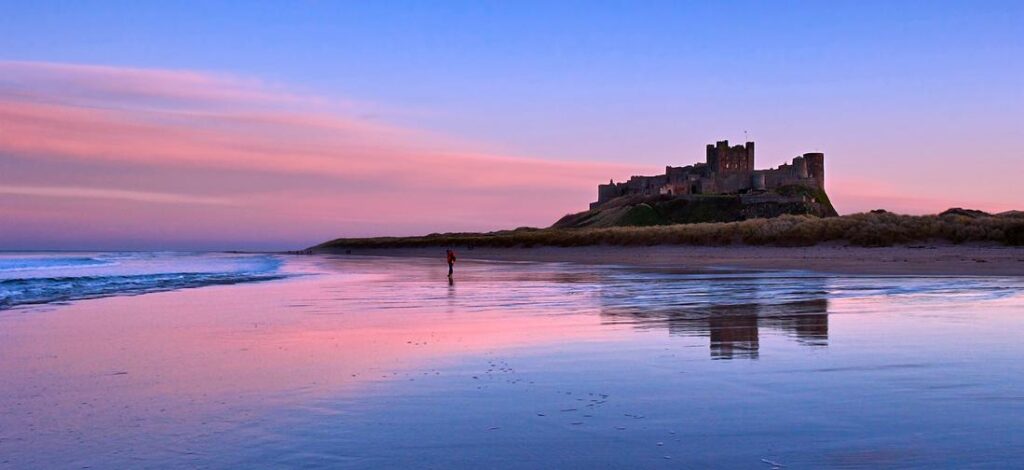
Bamburgh Castle is worth visiting for its 12th-century keep, Victorian state rooms, Anglo-Saxon archaeology, nine-acre grounds, and views across the Northumberland coast. Allow about 2.5 to 3.5 hours for the castle itself. Add time for Bamburgh village, the beach, or the Grace Darling Museum if you want to make a half-day of it.
The key historical distinction is easy to miss: Bamburgh was an Anglo-Saxon royal fortress, but the castle visible today is not an intact Anglo-Saxon building. Its oldest surviving stone core is Norman, while several of its best-known interiors were rebuilt or created during the Victorian restoration.
Last verified: 15 July 2026. Opening hours, prices, events, transport, and access arrangements can change. Check the official visitor information before traveling.
Disclosure: ViaTravelers may earn a commission when you book through some links in this guide, at no extra cost to you. Recommendations are based on practical fit, location, and relevance to the trip.

Bamburgh Castle at a glance
| Planning detail | Current information |
|---|---|
| Location | Bamburgh, Northumberland, NE69 7DF, England |
| 2026 opening hours | Daily, 10:00 am to 5:00 pm through 8 November; last castle entry at 4:00 pm |
| Adult admission | £17.46 through 1 September 2026; £19.95 after 1 September |
| Child admission, ages 5 to 16 | £8.75 through 1 September 2026; £10 after 1 September |
| On-site parking | £6 per day; not included with admission |
| Suggested visit length | 2.5 to 3.5 hours for the castle; longer with the village or beach |
| Dogs | Regular dogs are allowed in specified outdoor and service areas; assistance dogs only in the State Rooms, Clock Tower Café, and Armstrong & Aviation Museum |
| Membership | Historic Houses members are accepted; the castle is not part of the National Trust or English Heritage |
Key takeaways
- Book or arrive near opening time during school holidays because the car parks and state rooms become busier later in the day.
- The strongest parts of the visit are the Keep, King’s Hall, archaeology collections, Armstrong & Aviation Museum, and coastal viewpoints.
- The access route is steep, and only the first five state rooms are wheelchair-accessible. Read the detailed access guidance before booking.
- Farne Islands boat trips leave from Seahouses, while Holy Island visits are controlled by safe tidal crossing times. Neither works well as an unplanned add-on.
- Bamburgh Castle is privately owned by the Armstrong family and remains a family residence.
In this guide
- Is Bamburgh Castle worth visiting?
- Bamburgh Castle history
- What to see inside the castle
- Tickets, parking, transport, and access
- 2026 events and tours
- Things to do near Bamburgh Castle
- Where to stay
- Filming locations and drone rules
- Frequently asked questions
Is Bamburgh Castle worth visiting?
Yes, if you want more than a coastal viewpoint. Admission covers furnished rooms, a substantial medieval keep, archaeology displays, an aviation museum, and extensive grounds. The setting adds value, but the interiors and collections are large enough to justify a dedicated visit.
The castle is particularly well suited to travelers interested in Anglo-Saxon Northumbria, Norman fortification, Victorian engineering, The Last Kingdom, or photography. Families also have more to work with than at a roofless ruin, although steep paths, stairs, pushchair restrictions, and exposed drops require planning.
Travelers who mainly want the classic exterior view can see the castle from the beach and village without buying admission. The paid visit makes more sense when you have at least two and a half hours and intend to explore the rooms, museums, and grounds rather than rush through them.

Planning estimate: allow 2.5 to 3.5 hours for a normal visit. Add roughly one to two hours for the RNLI Grace Darling Museum, village, and a beach walk. Treat this as an editorial planning range rather than an official time limit.
Bamburgh Castle history: the short version
Bamburgh’s importance comes from continuity. The castle rock and surrounding landscape contain evidence of thousands of years of human activity, and the fortified site became a royal center of the Anglo-Saxon kingdom of Northumbria. The present castle combines a 12th-century Norman core, later medieval work, charitable reconstruction in the 18th century, and a major Victorian restoration.
| Period | What happened at Bamburgh |
|---|---|
| Before AD 547 | The rock was occupied before the Anglo-Saxon kingdom of Bernicia; archaeological evidence extends well beyond the written record. |
| AD 547 onward | Traditional chronology associates King Ida of Bernicia with the fortified royal stronghold. Bamburgh later became a principal seat of Northumbrian power. |
| 7th to 10th centuries | The fortress-palace was linked to Northumbrian kings and the Christian history of St Oswald, St Aidan, and Lindisfarne. Its early name, Bebbanburg, survives in modern popular culture. |
| 1095 to 1164 | Bamburgh became a Crown fortress after the Norman siege of 1095. The stone Keep is known to have existed by 1164. |
| 1464 | Yorkist forces captured the castle using guns during the Wars of the Roses, making the siege an important episode in the development of artillery warfare. |
| 1610 | James I granted the castle to Claudius Forster, ending its long period as a royal possession. |
| 18th century | The Lord Crewe Trustees and Dr John Sharp made parts of the ruin usable for charitable work, including education and medical care. |
| 1894 to 1904 | William Armstrong bought the semi-derelict castle. Architect C. J. Ferguson directed extensive restoration and rebuilding, completed after Armstrong’s death. |
| Today | The Grade I-listed castle remains the private home of the Armstrong family and is open to visitors. |
Why the archaeology matters
The Bamburgh Research Project describes more than 2,000 years of continuous occupation within the castle and more than 6,000 years of activity in the surrounding landscape. Excavations have found evidence of high-status early medieval metalworking, pre-Norman stone structures, and earlier Roman and prehistoric occupation.
About 300 meters south of the castle, the Bowl Hole cemetery is thought to have served the royal court associated with the Northumbrian palace beneath the present fortress. Archaeologists excavated the early medieval burial ground between 1998 and 2007. These finds help explain why Bamburgh is more than a later medieval castle built on an empty hill.
For wider context on the country’s historic sites and regions, see our United Kingdom travel guide.
What to see inside Bamburgh Castle
The visitor route moves through furnished state rooms, the Keep, museums, and open wards. The sections below separate the medieval fabric from later rooms so you know what you are looking at.
King’s Hall and the State Rooms
The King’s Hall is one of the castle’s signature interiors, but it is Victorian rather than Anglo-Saxon. It was built on the site of the medieval Great Hall and has a false hammerbeam roof made with teak. The surrounding State Rooms display furniture, ceramics, portraits, and objects connected with generations of castle owners and guests.


The Keep and Armoury
The massive square Keep is the oldest surviving part of the castle. Its front wall is about 11 feet thick, with walls about 9 feet thick elsewhere. The structure sits on a plinth intended to frustrate attempts to undermine the masonry.
Inside, look for the bottle-shaped entrance, which allowed mounted soldiers to pass through without dismounting, and the well cut about 145 feet through rock. The Armoury displays pikes, halberds, muskets, bows, and crossbows. It should be understood as a collection spanning several periods, not as a room of weapons all dating to Anglo-Saxon Bamburgh.


Archaeology Museum and Cross Hall
The Archaeology Museum gives the clearest evidence of Bamburgh’s early medieval importance. Its standout objects include the small gold plaque known as the Bamburgh Beast and a rare pattern-welded sword. These finds are more useful for understanding Anglo-Saxon Bamburgh than later rooms that merely occupy the same site.

The Cross Hall is a later ceremonial interior with a Tudor-style fireplace, carved stonework, tapestries, and art. Its name should not be interpreted as proof that the room itself is an intact 7th-century hall.

Armstrong & Aviation Museum and West Ward
The Armstrong & Aviation Museum covers William Armstrong’s engineering work and aviation artifacts associated with the two world wars. It is in the West Ward, where visitors can also see excavation areas, the windmill, and St Oswald’s Gate, the original entrance to the medieval fortress.

Grounds, chapel ruins, and coastal viewpoints
The grounds cover about nine acres on the Great Whin Sill rock outcrop. Look for the ruins of St Peter’s Chapel, the windmill, cannons, archaeological trenches, and the Battery Terrace. On clear days, the higher viewpoints look toward the Farne Islands and Lindisfarne.
These outdoor areas are exposed to wind and weather. Some paths are steep or uneven, and the site has high walls and sheer drops. Wear footwear with grip and supervise children closely.
Plan your Bamburgh Castle visit
2026 opening hours and ticket prices
The castle is currently open daily from 10:00 am to 5:00 pm through 8 November 2026. Last entry to the castle is 4:00 pm; the State Rooms take last entry at 4:15 pm, and the West Ward at 4:30 pm before closing at 4:45 pm. The site closes at 5:00 pm.
| Ticket | 25 June to 1 September 2026 | After 1 September 2026 |
|---|---|---|
| Adult | £17.46 | £19.95 |
| Child, ages 5 to 16 | £8.75 | £10 |
| Under 5 | Free | Free |
| Family, 2 adults and up to 3 children | £51.19 | £58.50 |
| Accessibility adult | £12.82 | £14.65 |
| Accessibility child | £3.50 | £4 |
| One adult carer with an accessibility ticket | Free | Free |
The summer prices are temporary reduced rates for tickets dated through 1 September 2026. The castle is scheduled to close from 9 to 13 November for its Christmas installation, then reopen from 14 November through 3 January. Confirm the winter schedule before making a special trip.
The site is cashless. Bring a payment card or contactless device, and download online tickets before arrival because mobile signal can be limited. Historic Houses members can present a valid card. National Trust and English Heritage membership does not include entry.
Driving and parking
Drivers normally leave the A1 for the B1342 toward Bamburgh. Follow the castle parking signs rather than relying on the village street layout.
- The private on-site car park is up the hill and costs £6 per day.
- Parking is separate from admission and cannot be assumed to be included in an online castle ticket.
- The road-level car park opposite the castle is operated by the council, not the castle.
- Overnight parking and camping are not permitted in the castle car park.
- Campervans are not accepted in the on-site car park from 1 June through 31 August, except for Blue Badge holders when space is available.
Parking pressure is highest during summer weekends and school holidays. Arriving close to 10:00 am reduces the risk of a long walk from an overflow or village space.
Getting there by train and bus

Berwick-upon-Tweed is the nearest mainline rail station, about 21 miles away. The Arriva X18 route links Newcastle and Berwick via Morpeth, Alnwick, Seahouses, and Bamburgh, with a village stop at The Grove. The timetable is not a simple turn-up-and-go service, and not every journey follows the same stopping pattern.
Use the live X18 timetable and Traveline North East journey planner for your exact date. Prebook a taxi when the bus does not align with your train, particularly for the return. Our long-distance train travel tips can help with connection buffers and ticket planning.
Accessibility
The approach is steep. The castle offers forward parking and a free shuttle buggy from its private hilltop car park to the main castle, but the buggy cannot collect passengers from the council car park or village because it does not operate on the public road.
The first five rooms on the State Room route, including the King’s Hall, are accessible depending on the visitor’s mobility. A film and audiovisual displays cover rooms that cannot be reached. Wheelchairs, walking aids, and crutches are not permitted beyond the King’s Hall for safety reasons, and later rooms involve steps.
Accessibility tickets require proof, and one adult carer is admitted free with each accessibility ticket. Pushchairs are not permitted in the State Rooms, so bring a baby carrier. Review the full access statement or contact the castle before booking if a slope, transfer, or step count could affect your visit.
Dogs
Well-behaved dogs are allowed on a short lead in the grounds, Victorian Stables, and Tack Room Takeaway. Regular dogs cannot enter the State Rooms, Clock Tower Café, or Armstrong & Aviation Museum. Only assistance dogs are admitted to those indoor areas.
This policy affects how a group visits: someone may need to remain outside with the dog while others tour the interior. The high walls and exposed drops also make a locked, short lead the sensible choice.
Food, facilities, and visiting with children
The Clock Tower Café and Tack Room Takeaway sell hot and cold food, drinks, and cakes, with outdoor seating in the grounds. The site is cashless. Toilets, including accessible facilities and baby-changing areas, are available.
For families, the main constraints are the steep approach, stairs, pushchair ban in the State Rooms, and exposed walls. A carrier is more useful than a stroller inside. Check the events calendar for workshops and trails included with admission rather than assuming a specific activity runs every day.
Best time to visit
| Season | Best for | Tradeoff |
|---|---|---|
| April to June | Longer daylight, spring landscapes, and generally lighter pressure than peak summer | Cold wind and rain remain possible |
| July and August | Largest events program and easiest combination with beach time | Highest demand for parking, rooms, and nearby boat trips |
| September and October | A calmer castle visit and good coastal walking conditions on suitable days | Shorter daylight and some events ending for the season |
| November to March | Seasonal displays and a quieter atmosphere when open | Opening arrangements, weather, and daylight require closer checking |
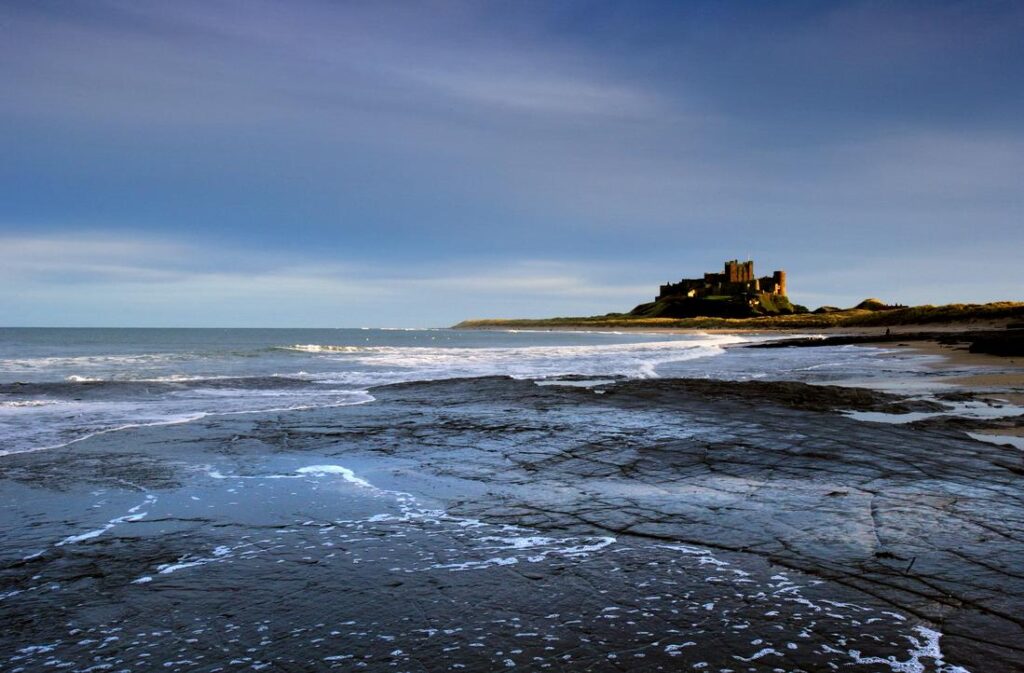
For the easiest visit, arrive at opening on a weekday outside school holidays. Photographers often prefer the beach around sunrise or late light, but that exterior session should be planned separately from the castle’s public opening hours.
Bamburgh Castle events and tours in 2026
The events program changes through the year. Two 2026 options are particularly relevant to readers searching for Bebbanburg and The Last Kingdom.
| Experience | 2026 dates | What is included | Price note |
|---|---|---|---|
| The Last Kingdom TV props and costume display | 14 February to 1 November | Selected costumes, props, and photo opportunities in the King’s Hall | Included with standard admission |
| Uhtred of Bebbanburg Tour | Selected days, 14 February to 26 October | About 1.5 hours with a guide, plus all-day castle admission | Adult £39.95; child £19; under 5 free |
The Uhtred tour uses steep or uneven outdoor ground and may be rescheduled in severe weather. Dogs are allowed for much of the route but not inside the King’s Hall. Check selected dates before arranging transport.
Which ticket or tour should you book?
| Option | Best for | Main limitation |
|---|---|---|
| Official standard admission | Independent visitors who want the rooms, museums, and grounds at their own pace | Transport and interpretation beyond on-site displays are your responsibility |
| Official Uhtred tour | The Last Kingdom fans who want a guided comparison of history and fiction | Selected dates, higher price, and uneven ground |
| Third-party Northumberland day tour | Travelers without a car who want transport bundled with a wider route | Less time at the castle and an itinerary controlled by the operator |
Start with official admission when Bamburgh Castle is the main reason for the day. A third-party option is more useful when transport is the problem or when you want to combine Bamburgh with another fixed stop. Compare the live itinerary, castle-entry inclusion, cancellation terms, and time allowed on site before booking.
You can review current Bamburgh Castle tours and day trips, but verify that any listed product includes the admission or transport you expect.
Things to do near Bamburgh Castle
The easiest add-ons are Bamburgh Beach, the village, and the Grace Darling Museum. Farne Islands and Holy Island require more planning because boats, weather, and tides control the schedule.
Bamburgh Beach and the village

The broad beach below the castle is the simplest extension to a castle visit. Walk far enough onto the sand to see the full curtain wall, but stay off fragile dunes where signs request it and check conditions before entering the water. For more coastal ideas, see our guide to the best beaches in the United Kingdom.
Bamburgh village is compact, with food, accommodation, St Aidan’s Church, and the RNLI museum within walking distance. It fits naturally with our list of beautiful villages in England.
Farne Islands
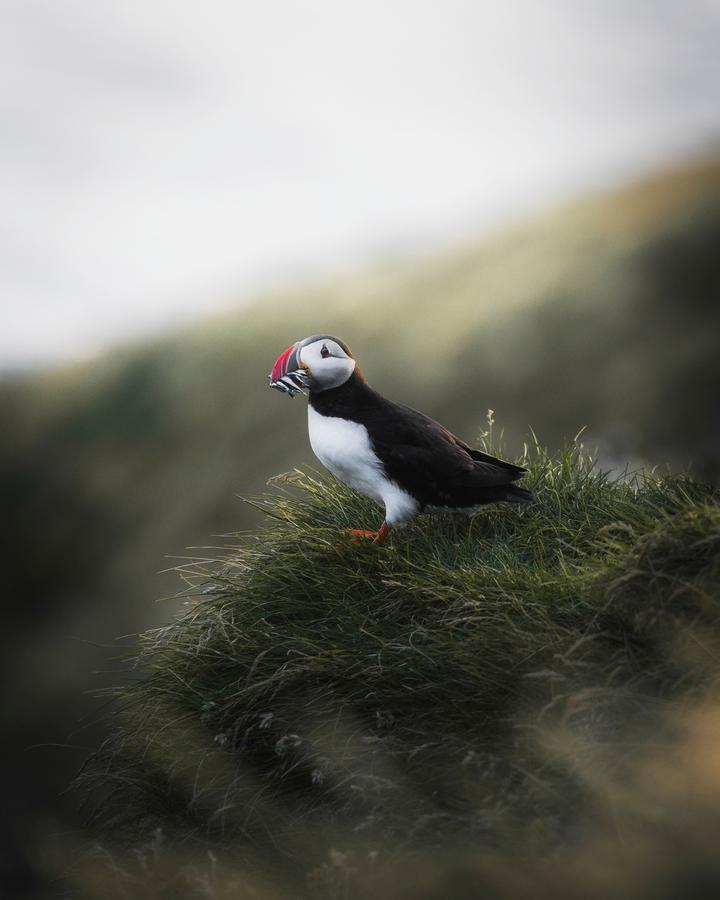
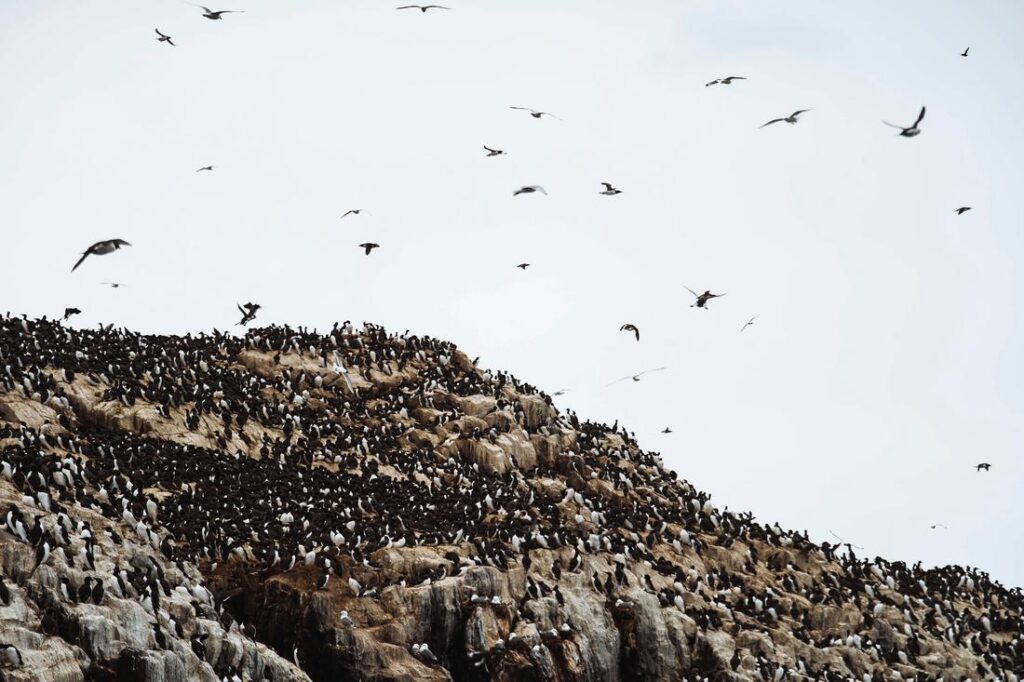
Farne Islands boat trips leave from Seahouses harbour, not Bamburgh village. Book in advance, arrive early enough to park, and expect weather-related changes. The National Trust may restrict landings when rain threatens nesting seabirds, although a sail-around trip may still operate.
Dogs, including assistance dogs, are not allowed to land on the islands because of the sensitive bird colonies. Boat operators set their own policies for dogs that remain aboard.
Check the National Trust planning guidance before travel. You can also compare a Longstone Lighthouse and Farne Islands boat trip, checking the departure point and landing terms carefully.
Holy Island and Lindisfarne Priory
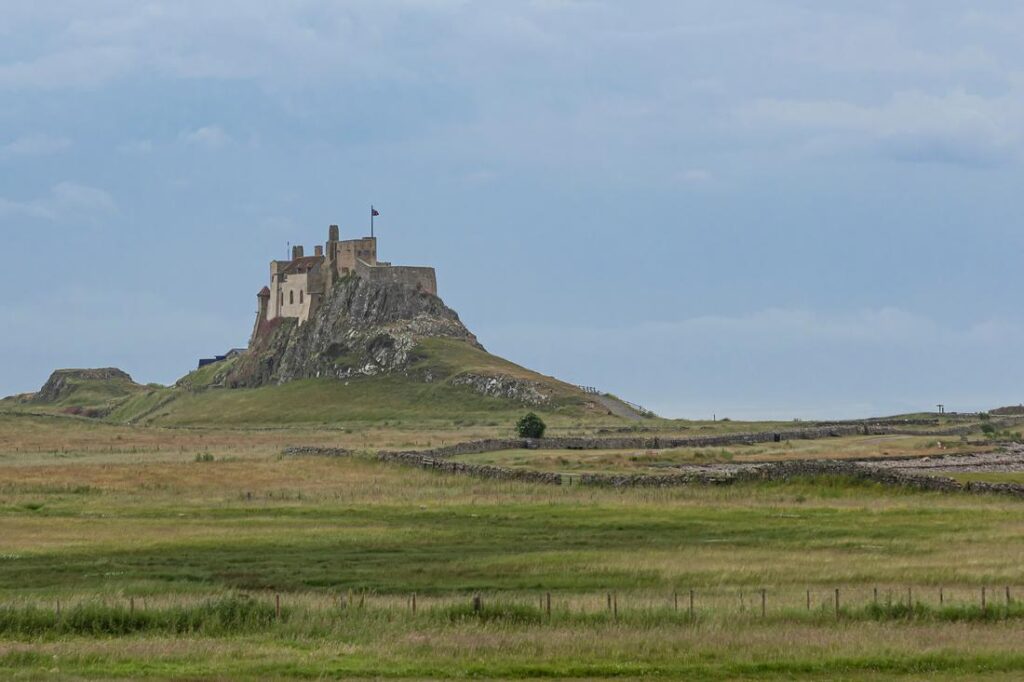
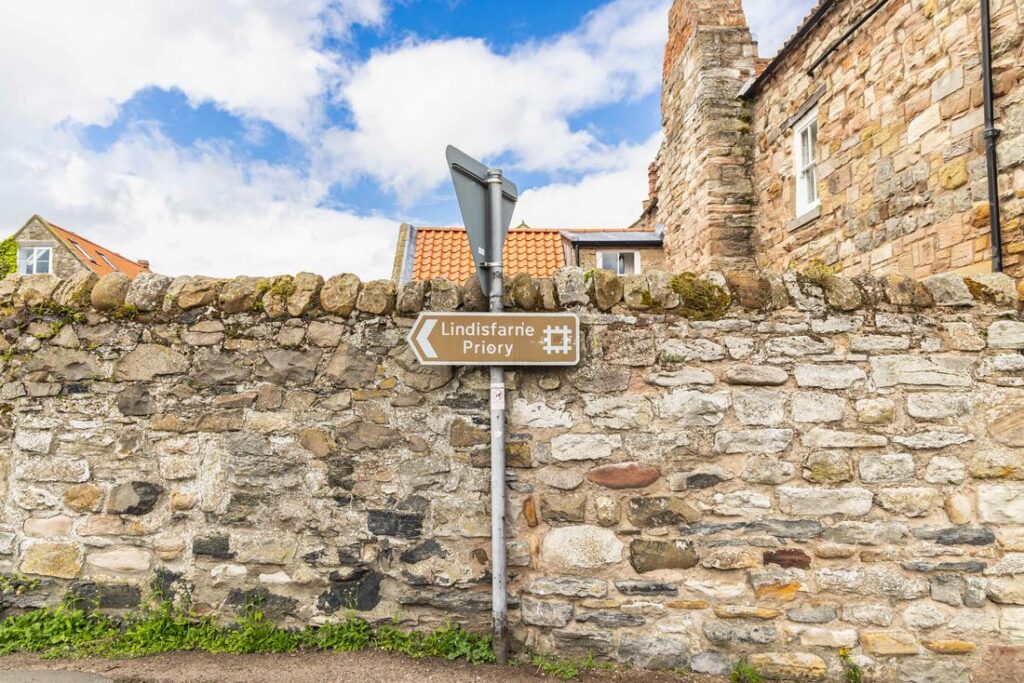

Holy Island is a logical historical companion to Bamburgh, but its tidal causeway makes it the least flexible add-on. Check both the Lindisfarne Priory opening information and the official safe crossing times. Northumberland’s crossing service advises treating the published times with caution and allowing an extra 30 minutes for local weather variables.
Do not drive onto the causeway after the safe window has closed. A combined Bamburgh and Lindisfarne day tour can simplify transport, but the operator still has to build the day around the tide.
RNLI Grace Darling Museum
The RNLI Grace Darling Museum in Bamburgh tells the story of the lighthouse keeper’s daughter who helped rescue nine survivors from the wreck of the SS Forfarshire on 7 September 1838. Displays include personal letters, family portraits, and the coble used in the rescue.
The museum is a practical choice after the castle because it is in the village and does not require another drive. Assistance dogs are welcome; other dogs cannot enter the museum.
Choose the right combination
| Combination | Planning difficulty | Best approach |
|---|---|---|
| Castle, village, and beach | Low | Arrive at opening, visit the castle first, then walk or move the car once |
| Castle and Grace Darling Museum | Low | Check museum opening hours and visit after lunch |
| Castle and Farne Islands | Medium to high | Book the boat first, then fit castle admission around the fixed sailing time |
| Castle and Holy Island | High | Build the entire day around the safe causeway window; do not improvise the crossing |
Where to stay near Bamburgh Castle

Stay in Bamburgh when walking access to the castle and beach matters most. Choose Seahouses when you want more dining choices and an early departure for a Farne Islands boat. Accommodation sells quickly in peak summer, so compare cancellation terms and parking rather than booking by property name alone.
| Base or property | Best for | Important detail |
|---|---|---|
| Bamburgh village | Walking to the castle, beach, and Grace Darling Museum | Smaller room supply and strong summer demand |
| Seahouses | Boat departures, restaurants, and a broader range of rooms | About 3.5 miles from Bamburgh Castle; bus, taxi, or car needed |
| The Bamburgh Castle Inn | Harbour views, pub dining, and access to Seahouses boat trips | Located in Seahouses; no on-site parking, with pay-and-display parking opposite |
| The Olde Ship Inn | A historic harbour pub with rooms and self-catering options | Located in Seahouses; no on-site parking |
Travelers who specifically want overnight accommodation in a historic fortress may prefer our guide to castle hotels in Germany. Bamburgh itself operates as a visitor attraction, private home, event venue, and estate with separate holiday accommodation rather than a conventional castle hotel.
Bamburgh Castle filming locations and drone rules
Bamburgh Castle and its estate have appeared in productions including The Last Kingdom, Transformers: The Last Knight, The BFG, Macbeth (2015), and Elizabeth. The historical Bamburgh behind the name Bebbanburg also inspired Bernard Cornwell’s fictional stronghold in The Saxon Stories.
Do not assume a recreational drone flight is permitted. The estate prohibits takeoff, landing, or flight over its private land without explicit prior permission. That policy covers the castle grounds, Castle Green, car parks, beach, dunes, and surrounding estate land. The nearby Site of Special Scientific Interest adds wildlife-protection restrictions.
Review the castle’s drone policy and filming information before bringing professional equipment.
A practical one-day plan
- Arrive shortly before the 10:00 am opening and park in the castle or council car park.
- Visit the State Rooms and Keep first, before the interior route becomes busier.
- Continue through the Archaeology Museum, West Ward, and Armstrong & Aviation Museum.
- Finish the castle visit on the grounds and Battery Terrace, then stop for lunch.
- Spend the afternoon at the Grace Darling Museum, Bamburgh village, and the beach.
Keep Farne Islands or Holy Island for a separate day unless a confirmed sailing or safe tidal window fits comfortably. That avoids sacrificing the castle visit or creating a dangerous rush to the causeway.
Frequently asked questions
Is Bamburgh Castle worth visiting?
Yes. It combines furnished state rooms, a substantial 12th-century Keep, Anglo-Saxon archaeology, an aviation museum, nine acres of grounds, and major coastal views. It offers more to see than a typical roofless castle ruin.
How long do you need at Bamburgh Castle?
Allow about 2.5 to 3.5 hours for the castle. Add one to two hours for Bamburgh village, the Grace Darling Museum, or the beach. This is a practical planning estimate, not an official time limit.
How much is Bamburgh Castle in 2026, and what time does it open?
As verified on 15 July 2026, the castle opens daily from 10:00 am to 5:00 pm through 8 November, with last castle entry at 4:00 pm. Temporary summer admission through 1 September is £17.46 for adults and £8.75 for children ages 5 to 16. Prices rise to £19.95 and £10 after 1 September. Check the official site before travel.
Is there parking at Bamburgh Castle?
Yes. The private on-site car park costs £6 per day and is not included with admission. A separate council car park sits opposite the castle at road level. Overnight parking is not allowed.
Are dogs allowed at Bamburgh Castle?
Regular dogs are welcome on a short lead in the grounds, Victorian Stables, and Tack Room Takeaway. Only assistance dogs may enter the State Rooms, Clock Tower Café, and Armstrong & Aviation Museum.
Is Bamburgh Castle wheelchair-accessible?
Access is partial. A shuttle buggy operates from the private car park, and the first five State Rooms, including the King’s Hall, are accessible depending on mobility. Wheelchairs, walking aids, and crutches are not permitted beyond the King’s Hall, where later rooms involve steps.
Who owns Bamburgh Castle, and is it National Trust or English Heritage?
Bamburgh Castle is privately owned by the Armstrong family and remains a family residence. It is not managed by the National Trust or English Heritage, although Historic Houses members are accepted.
Is Bamburgh Castle the real Bebbanburg?
Bamburgh is the historical stronghold associated with the early name Bebbanburg. Bernard Cornwell used Bebbanburg as Uhtred’s ancestral home in The Saxon Stories, and the castle and estate have appeared in The Last Kingdom.
Can you stay inside Bamburgh Castle?
Bamburgh Castle is not operated as a conventional castle hotel. The estate advertises separate self-catering holiday accommodation, while most visitors stay in Bamburgh village or nearby Seahouses.
What was filmed at Bamburgh Castle?
Selected productions include The Last Kingdom, Transformers: The Last Knight, The BFG, Macbeth from 2015, and Elizabeth. Filming may use the castle, estate, or surrounding landscape rather than every interior room.
Plan the visit around the fixed constraints
Start with the castle’s official hours, then solve parking or transport, and only then add a boat trip or Holy Island. That order protects the part of the day you can control and leaves enough margin for weather, tides, and rural connections.
For a first visit, the strongest plan is the castle at opening, lunch in Bamburgh, the Grace Darling Museum, and a beach walk. Book Farne Islands and Holy Island as separate, schedule-led experiences unless your timings are unusually generous.
Related reading: