Did you know that Mexico is home to one of the deepest canyons in the world? Most of us only know of the Grand Canyon regarding deep canyons. But Barranca del Cobre offers even more amazing features. Read on to see what I mean.
Are you ready to explore North America’s most extensive, deepest canyon system? If so, you’re not going to the Grand Canyon. Instead, you’re heading south to the Mexican state of Chihuahua! There, where six rivers converge into the powerful Rio Fuerte, the rugged Barranca del Cobre is your destination.
What’s Special About Barrancas del Cobre?
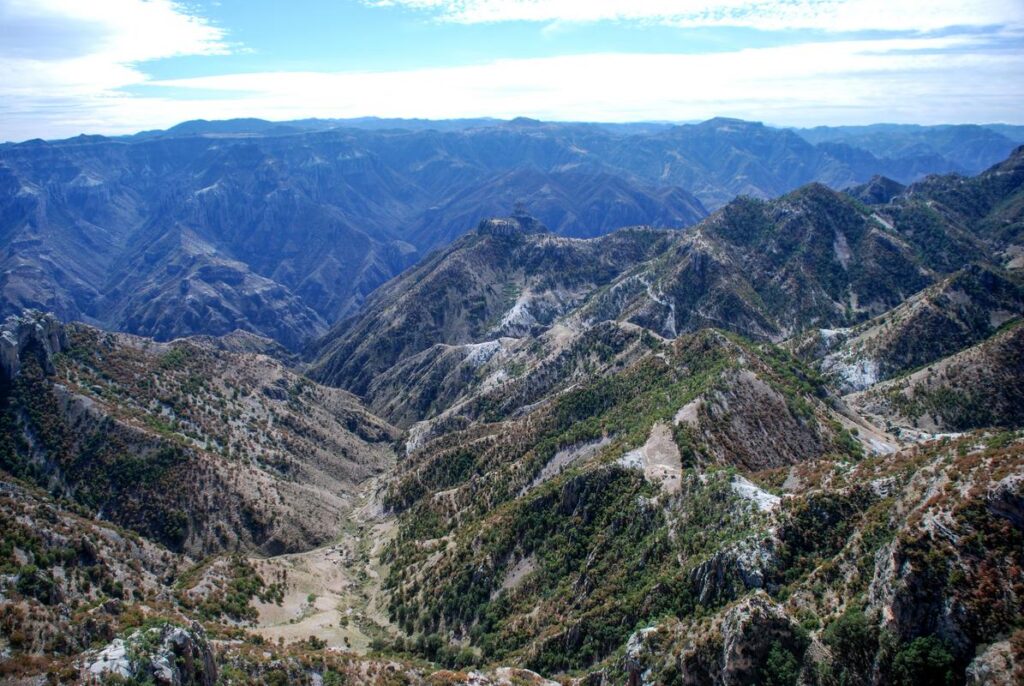
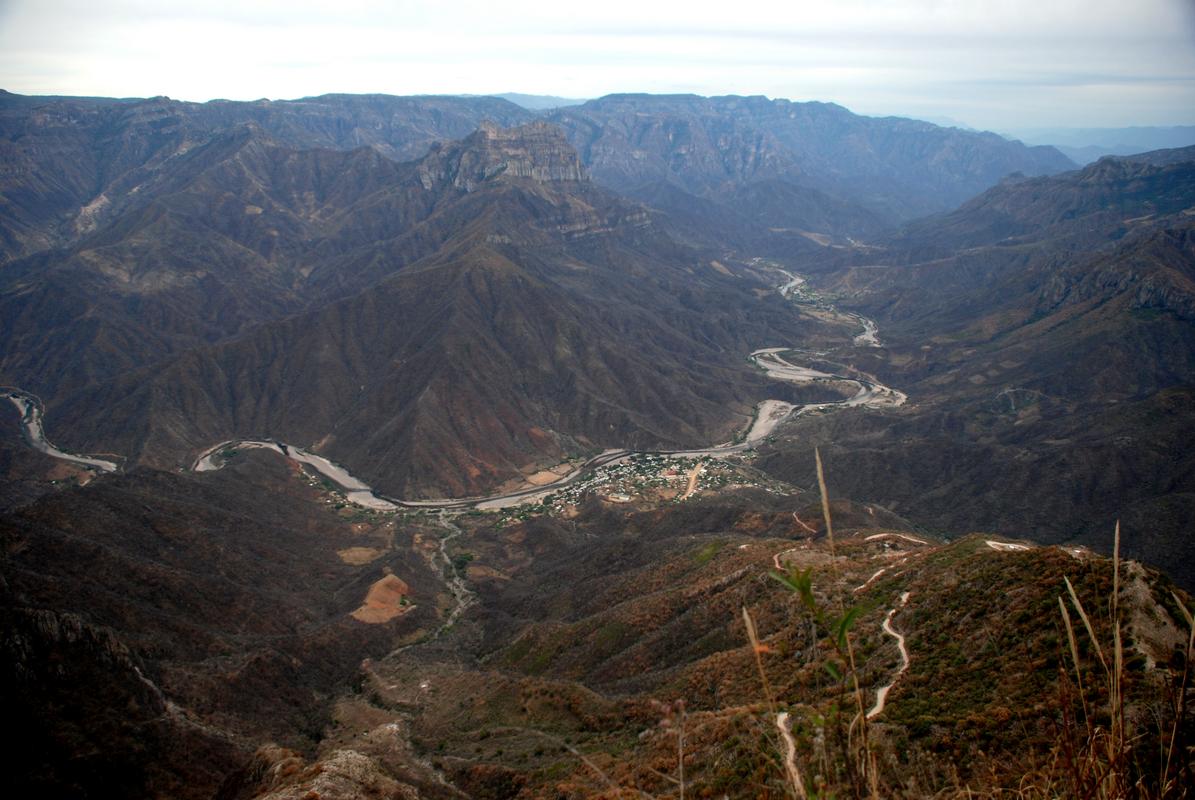
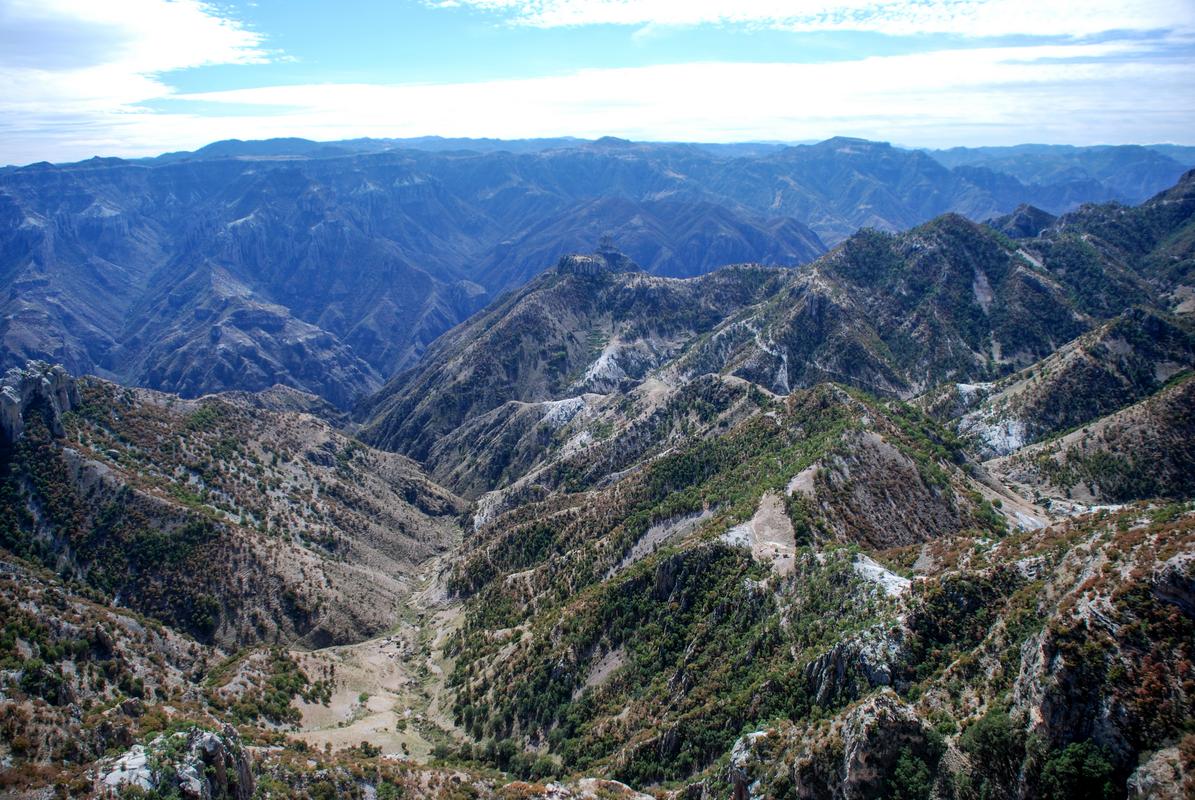
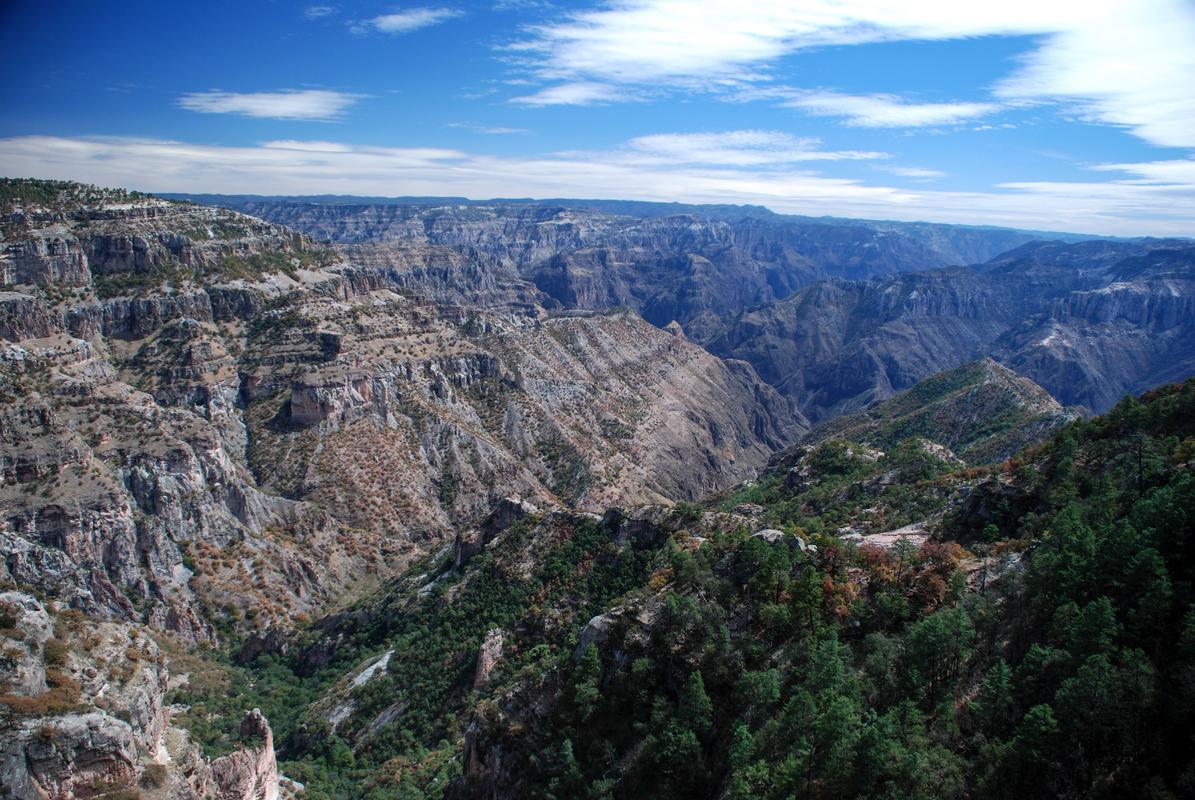
Also known as Mexico’s Copper Canyon, it’s made of six massive canyons and is the best place to start exploring Sierra Tarahumara. Urique Canyon is the deepest of the six at 1,879 metres (6,164 feet) – a figure the canyon’s own cable-car operator publishes – which makes it deeper than the Grand Canyon’s roughly 1,829 metres, though not by the dramatic margin the comparison usually implies. Barranca del Cobre proper is a separate canyon; the cable car at Divisadero looks out over the junction of the Cobre, Tararecua and Urique canyons.
The system is commonly put at roughly 65,000 square kilometres (about 25,000 square miles), though no Mexican government source publishes an official figure. The stunning, winding Barranca del Cobre’s signature green canyon walls enclose challenging hikes and dramatic vistas, two distinctly separate ecosystems, and the ancestors of ancient civilizations.
The region can be explored on foot, horseback, or donkey, and by train – an amazing journey that climbs to plateaus 8,000 feet high and drops into the deepest reaches of the canyon.
Image Gallery
Features
Besides being larger than the Grand Canyon area, what other features make Mexico’s Copper Canyon area unique? Well, here you go!
El Fuerte

Situated at the entry point to the canyon, the small town of El Fuerte sits about an hour and a half inland from the Gulf of California, at an elevation of 90 metres (295 feet).
Three lakes provide world-class bass fishing and cruises on the El Fuerte River. There’s also a verdant tropical forest, home to various rare and exotic birds. These amazing birds include the tiger, heron, great black hawk, chachalaca, russet-crowned motmot, and white-fronted parrot.
Steeped in indigenous and Spanish colonial history, El Fuerte is the first stop on the Copper Canyon train rather than its origin – the Chepe Express starts at Los Mochis – and it is the boarding point most travellers actually use, because it saves a very early start and skips the flat farmland section.
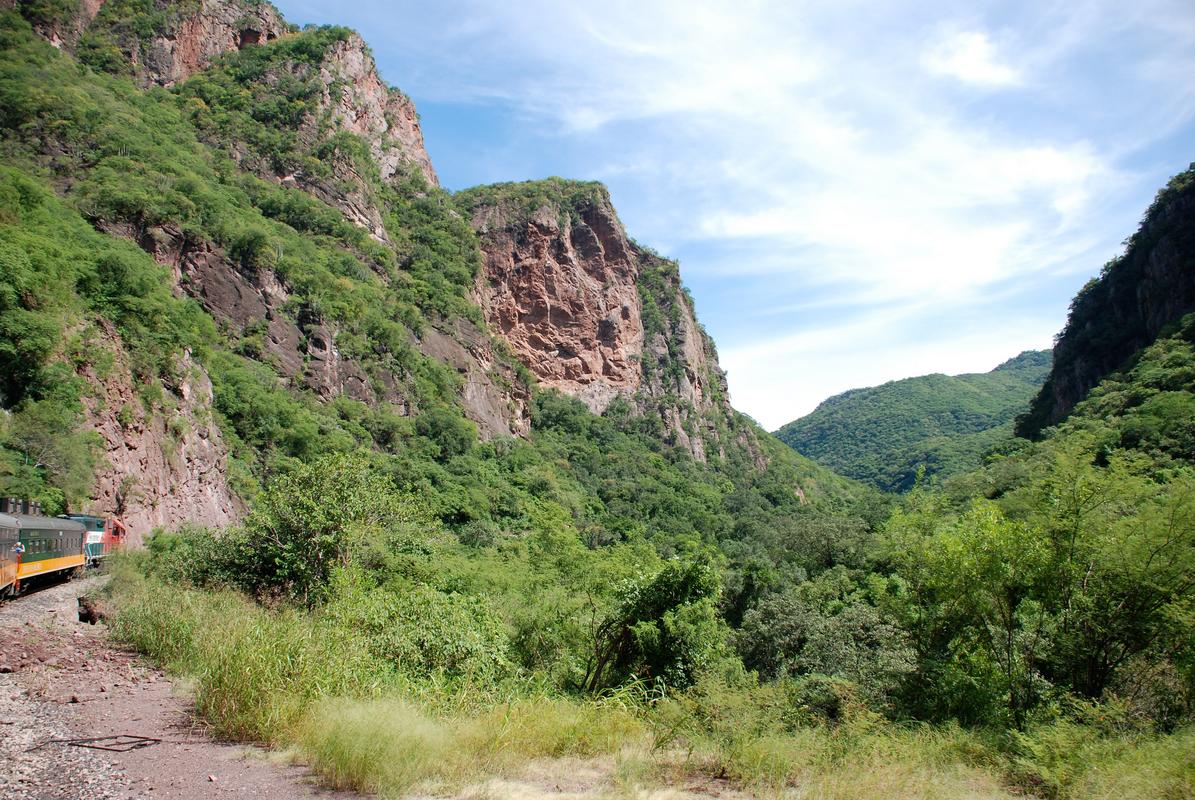
Two different services run on this line and the numbers get mixed up constantly. The full Ferrocarril Chihuahua al Pacifico route, Chihuahua to Los Mochis, is 673 km (418 miles) and takes roughly 16 hours; that is the Chepe Regional. The tourist Chepe Express covers more than 350 km between Los Mochis and Creel, scheduled 07:00 to 17:40 with one time-zone change. The line is widely reported to cross 37 bridges and pass through 86 tunnels, climbing to about 2,400 metres (7,900 feet) near Divisadero – figures neither the operator nor Ferromex publishes officially. It’s a spectacular journey providing overnight stops and hiking opportunities in and around the canyon.
Into the Copper Canyon

Intrepid campers, hikers, and climbers will find plenty of opportunities for adventure inside Barranca del Cobre’s walls. Because of the canyon’s dramatic elevation changes, it contains two completely different ecosystems.
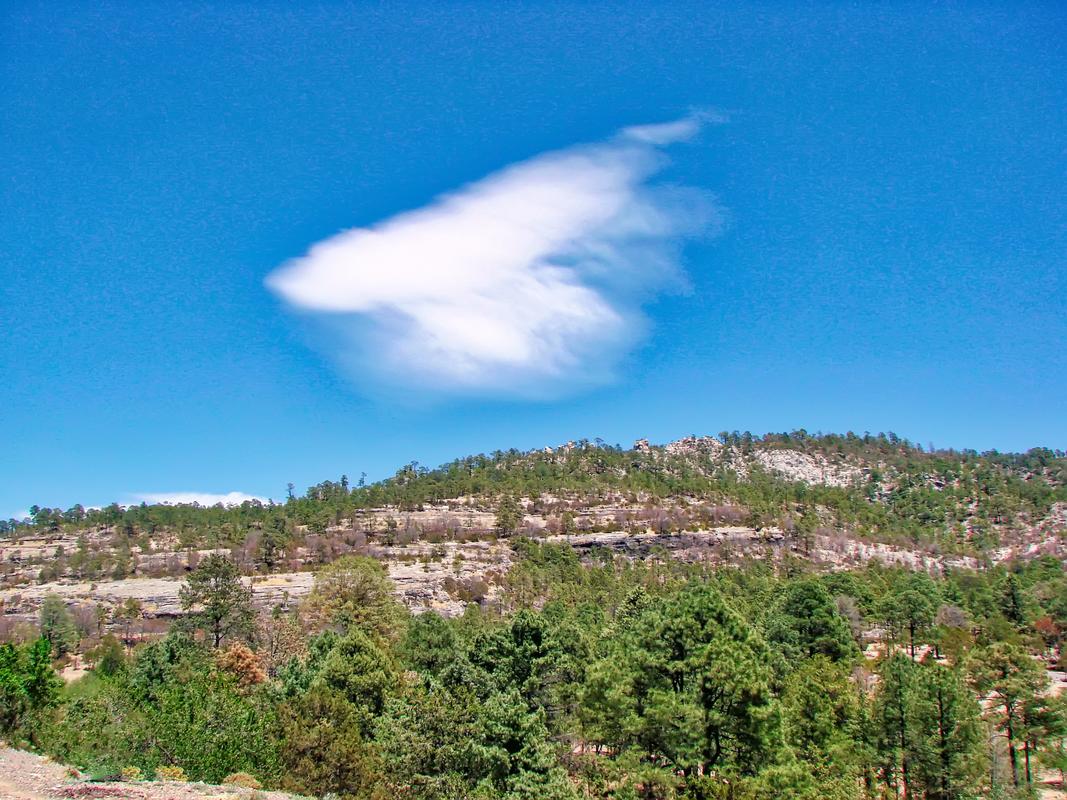
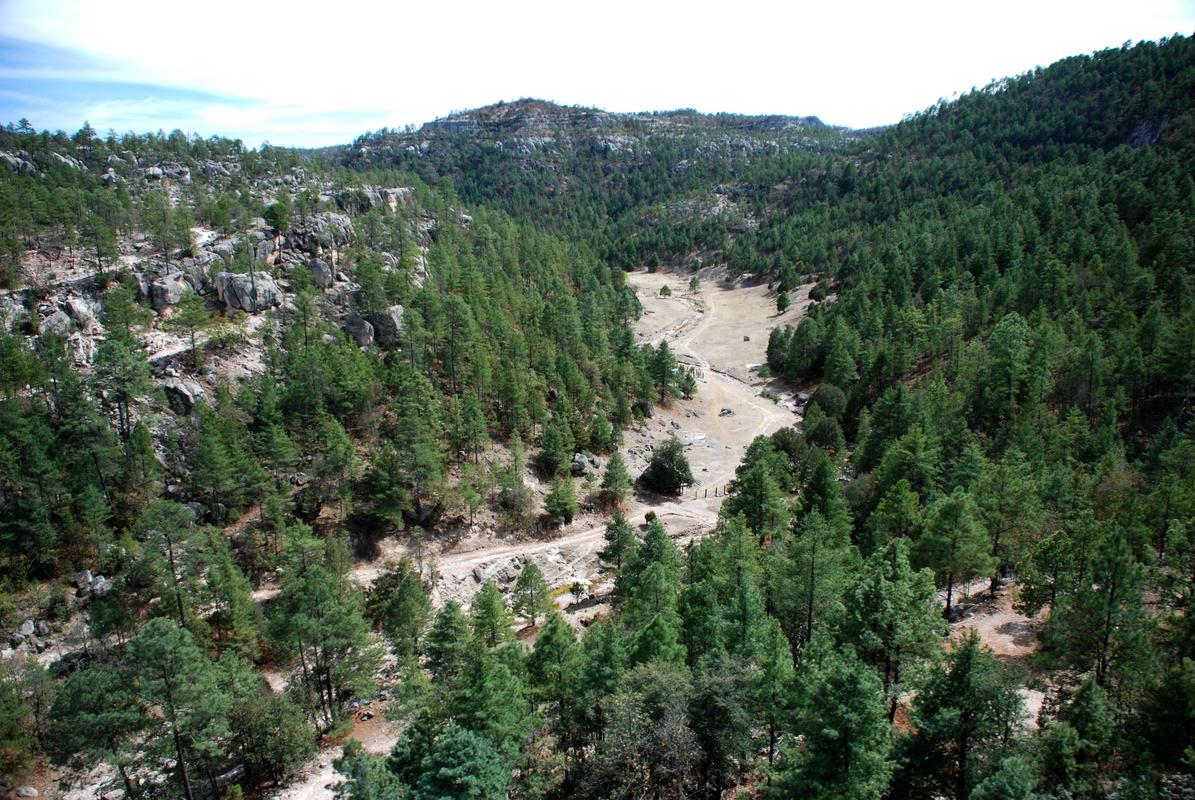
The alpine plateaus are heavily forested at heights ranging from 4,000 to 8,000 feet. This region boasts more than 20 species of oak trees and 15 varieties of pine, along with alder, juniper, poplar, and madrone.
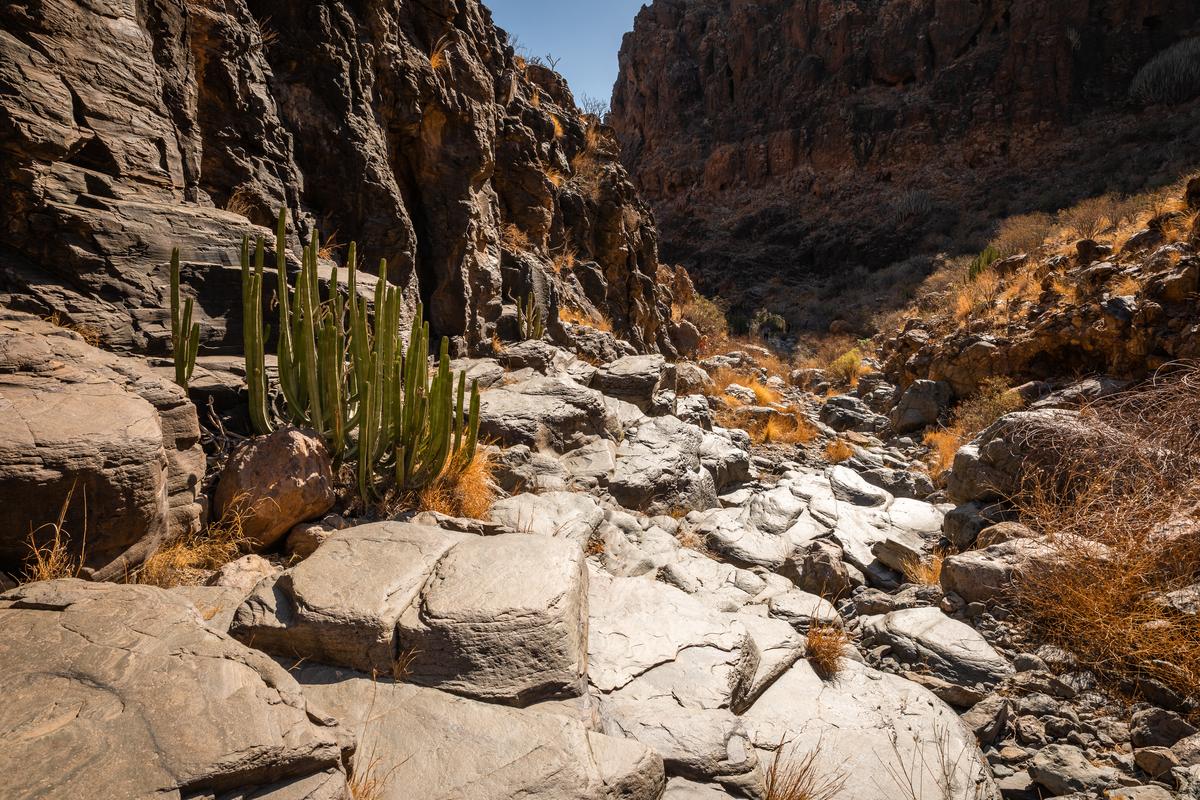
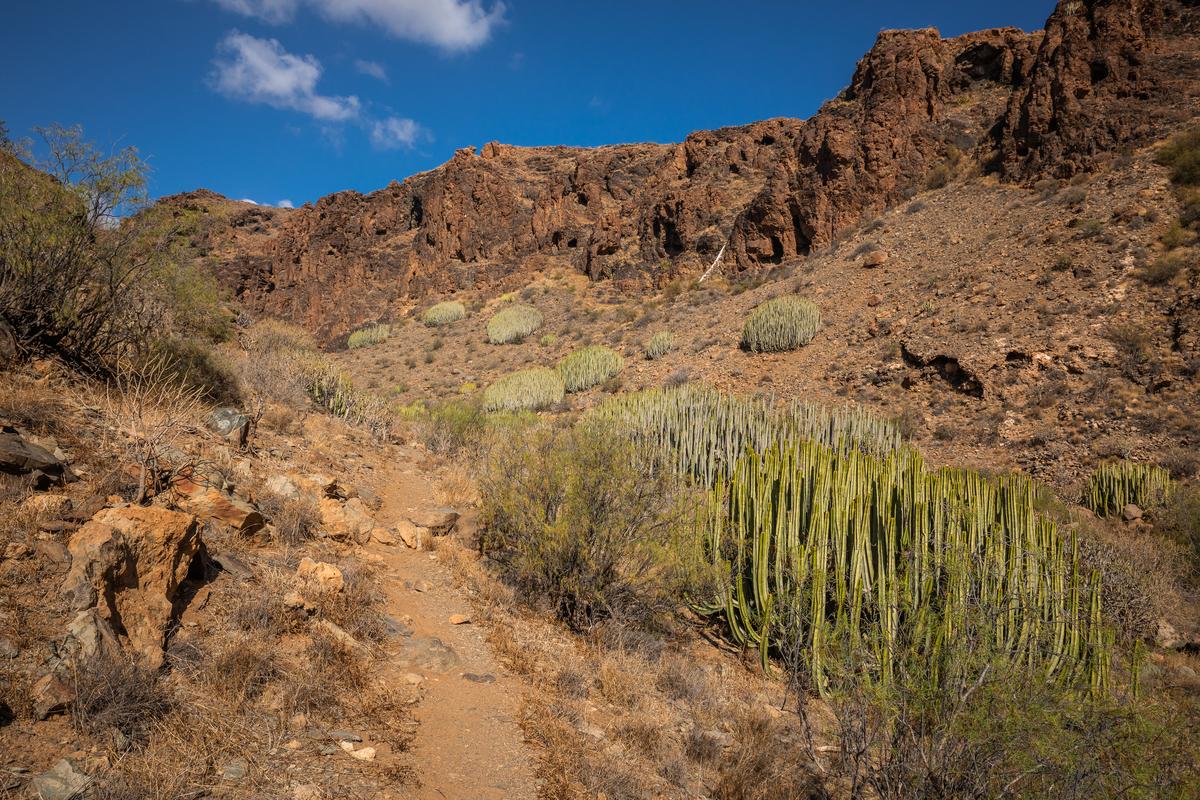
Six thousand feet down, in the canyon’s depths, you’ll find a semi-tropical environment that can become semi-arid, depending on seasonal rainfall. Huge palm and fig trees grow alongside various cacti at the canyon’s bottom.
Hikers making the descent will encounter a number of challenges, including rock climbing and rappelling, wood and rope suspension bridges, and one giant “Tarzan leap.”
The town of Divisidero offers some of the best canyon views and is also a major access point to hiking trails into the canyon. Recent developments, however, have added a heart-pumping zipline and cable car trip over the canyon walls.
See Related: Best Travel Subscription Boxes
Rich Copper Canyon Heritage

Tucked away on remote canyon cliffs are the villages of the Tarahumara Indians, an indigenous people who sought refuge from the Spanish invaders hundreds of years ago. Famous for their long-distance vertical running, the Tarahumara – Raramuri, in their own language – still speak Raramuri, which is not descended from the language of the Aztecs. Raramuri and Nahuatl are sibling branches of the Uto-Aztecan family, both descended from Proto-Uto-Aztecan; neither came from the other. Raramuri is the second most widely spoken Uto-Aztecan language after Nahuatl.
Today, you can experience the Copper Canyon on foot, as the Tarahumara do, or choose any exciting alternatives, such as horseback riding. Larger and, as Britannica puts it, more spectacular than the Grand Canyon – no authoritative source supports the “seven times larger” figure that circulates online, so treat any multiplier you see with suspicion – and host to a unique and diverse ecology, the Copper Canyon rewards anyone willing to spend more than a day here.
For instance, it is home to various amazing plants and animals, including the black bear, cougar, deer, eagles, jaguars, ocelots, and pumas. This canyon is a nature lover’s paradise with its deep canyons, high cliffs, and waterfalls!
Stunning Landscape and Climate

Copper Canyon offers the best starting point for exploring the Sierra Madre Occidental region. And with six stunning canyons sitting southwest of the popular Chihuahua, you’ll certainly have more than you can take in.
If you love adventure, this is among the most adventurous places you can be. You can explore the amazing pine and oak forests on foot with a professional guide.
Or, if you’re up for something more extreme, you can go rock climbing or rappel down the canyon walls! There are even ziplines that will take you flying over the magnificent landscapes.
As for the climate, the Copper Canyon region enjoys a subtropical climate with average temperatures ranging from 18-22 degrees Celsius. However, it’s important to note that the temperature can drop significantly at night, so ensure you pack accordingly.
The temperature is usually warm and humid all year round at the foot of the canyons. However, April to June is the hottest period in the area. These months experience chronic drought, which ends in July at the start of the rainy season.
See Related: Most Scenic Bike Trails Across America
What to do in Barranca del Cobre

Now, even with all these stunning features and attractions that the Copper Canyon offers, where do you start? What are the best things to do in and around Copper Canyon?
1. Tour Barrancas de Sinforosa
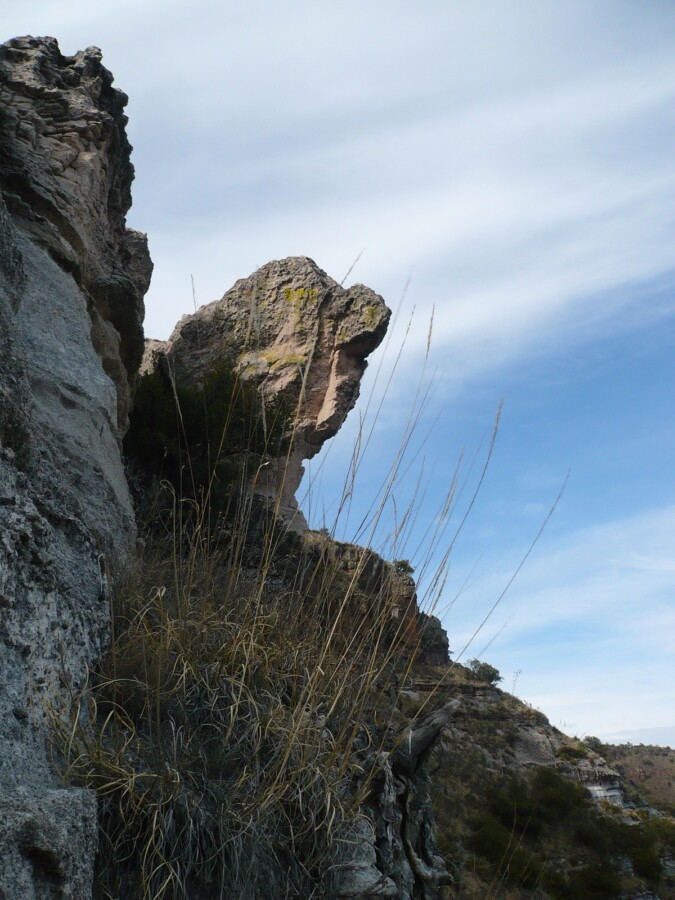
Barrancas de Sinforosa (aka Barrancas de la Sinforosa) sits 16 km from the town of Guachochi, about 20 minutes on a dirt road – not 16 km from Chihuahua City, which is roughly 344 km and five hours away by road. It is a great place to visit to provoke your adrenaline to the max. This place consists of natural volcanic stones estimated to have been formed around 20-30 million years ago.
The area extends around 80 miles along the vast Sierra Madre Occidental and can be seen from a plane to Chihuahua. A journey to this place will take you around one and a half hours on a dirt road, leading you to the famous Cumbres de la Sinforosa” viewpoint.
From here, you’ll have the best view of the landscape and Chihuahua City, which is over 1km deep from where you stand.
Read Also: Costa Rica vs Mexico
2. National Park Basaseachi Waterfall

If you want the best connection with nature, this natural paradise offers exactly that. At 246 metres (807 feet) of free fall it is Mexico’s second-tallest waterfall, behind Piedra Volada at 453 metres – and because Piedra Volada only flows in the July-to-October rains, Basaseachic is the tallest waterfall in Mexico that runs year-round. It is not, despite what several sites claim, anywhere near the twentieth-tallest in the world; by height it ranks somewhere past two hundredth. As such, it offers some of the most stunning sights in Copper Canyon.
The waterfall also offers more than just its impressive height. Numerous tree species exist, such as pine, oak, agaves, sotol, and acacia. And if you are lucky, you might taste sotol, a native liquor produced from the “Desert Spoon” plant native to the Chihuahua state.
A short trail leads to viewpoints above and below the fall. Piedra Volada, the taller of the two, is in the same national park but is seasonal – come outside the summer rains and there may be nothing to see. So, while you visit Copper Canyon, make a point of visiting these two waterfalls.
See Related: Inspiring Songs About Traveling for Your Next Trip
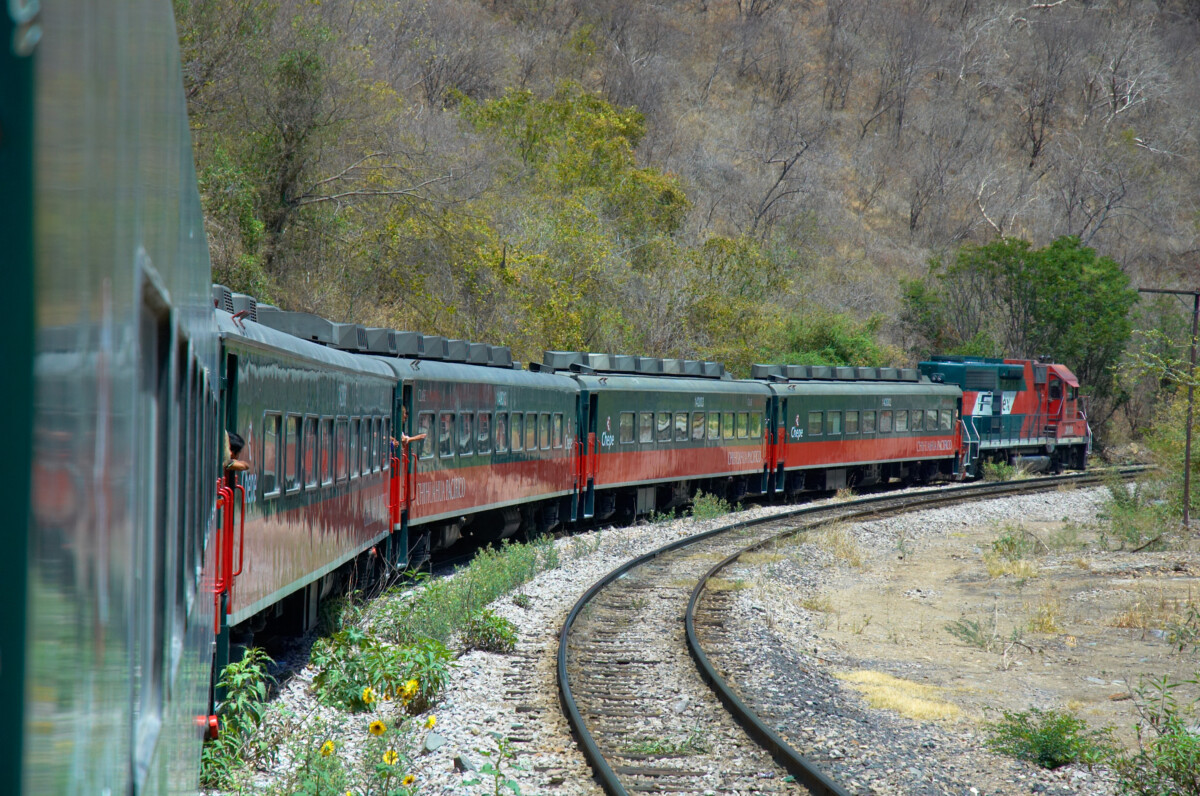
3. Ride the El Chepe Train

The El Chepe train line is one of the best ways to get around and explore the vast landscape of Copper Canyon. This puts it among the most popular attractions in the area.
The journey aboard this train will take you through some of the most stunning scenery in Mexico, including bridges, tunnels, and gorges. As you sit back and enjoy the views, your knowledgeable guide will tell you about the region’s history and culture.
The railway line has been operational for over half a century. The carriages of the Chepe Express have undergone recent remodeling and adjustments to provide tourists and travelers with the ultimate comfort.
End to end on the Chepe Regional that is 418 miles of cliffs, bridges and tunnels. The scenery does most of the work; your only job is to stay awake for it.
Which train you want depends on how much of your day you are willing to spend sitting down. Chepe Express (Primera, Ejecutiva and Turista classes) runs Los Mochis to El Fuerte, Bahuichivo, Divisadero and Creel, leaving Los Mochis Monday, Thursday and Saturday at 07:00 and arriving Creel at 17:40, returning Tuesday, Friday and Sunday at 08:00. In May, June, August and September it drops to a Thursday-to-Sunday schedule. Chepe Regional is the slower local service that still runs the full Chihuahua to Los Mochis route, stopping at far more stations, Tuesday and Saturday westbound and Wednesday and Sunday eastbound. Either way, break the trip – a single unbroken run is a long day and you see the best of the canyon from the ground, not the window. Fares change every season and the operator publishes them only as images, so check current Chepe schedules and rates directly before you plan around a price.
4. Barrancas del Cobre Adventure Park

This is one of the most popular adventure parks in Copper Canyon. It is at Areponapuchi (Divisadero), which has its own Chepe station – about 47 km and 45 minutes by road from Creel, the nearest town with a real choice of hotels and restaurants. The park contains some of the longest ziplines that take you over one of the most exciting canyon landscapes in the world.
The headline ride is the ZipRider: a 2,554-metre cable starting at 2,248 metres above sea level and landing at 1,700 metres, running up to 290 metres above the ground at 80 to 135 km/h (50 to 84 mph). The ticket includes the cable-car ride back plus a 700-metre uphill walk, which nobody warns you about. The descent also includes several heart-in-mouth hanging bridges that make your cross-canyon adventure thrilling.
The park publishes no acreage, but it does publish prices, and they are the useful number: ZipRider MXN 1,250 (MXN 1,120 for Chihuahua residents), the teleferico MXN 350 for ages 12 and up, MXN 180 for ages 5 to 11 and MXN 1,110 for a family pack, the seven-zipline circuit MXN 1,250, the via ferrata MXN 750 and the Bosque Aereo canopy walk MXN 380. The cable car itself runs 3 km of cable, hangs up to 260 metres above the canyon and takes 8 minutes each way with up to 60 passengers. For example, it offers the best landscape for hiking, mountain biking, and horseback riding. Your time here will certainly be worth it.
Going back to the top of the zipline is also exciting. You’ll get an even better landscape view and take pictures as you scale the canyons on a cable car. The whole adventure is simply heart-throbbing. So, if you are visiting Mexico, this is one place you don’t want to miss.
See Related: Types of Concierge Services for Travel
How to Get There
There are several ways to get to Copper Canyon. The most common is flying into General Roberto Fierro Villalobos International Airport in Chihuahua City, then continuing by road or rail – Divisadero is roughly 300 km away, a five- to six-hour drive, not the two hours often quoted.
You can take a bus or a taxi to your destination from here. Alternatively, you can fly to the Los Mochis International Airport and take the El Chepe train. This will give you a chance to explore even more of the stunning scenery that Mexico has to offer.
Driving between towns is the part most visitors should skip. The train exists precisely because the roads through the Sierra are slow, remote and, in places, contested.
Is Copper Canyon Safe to Visit Right Now?
Check the current US State Department advisory before you book, because it names this destination directly. Chihuahua state carries a Level 3 “Reconsider Travel” advisory for crime and kidnapping, and the state entry ends with a sentence most Copper Canyon guides leave out: “U.S. government employees may not travel to other areas of Chihuahua, including Copper Canyon.” Employee travel is confined to defined zones of Ciudad Juarez, Chihuahua City, Nuevo Casas Grandes, Ojinaga and Palomas, with daylight-only movement on Federal Highway 45.
Sinaloa, where the Chepe Express begins, is rated higher still at Level 4 “Do Not Travel.” Under that advisory US government employees may reach Los Mochis and Topolobampo by air or sea only and are restricted to the city and the port. That is a meaningful constraint on the standard itinerary, which has most visitors flying into Los Mochis and boarding there.
None of that is a reason nobody goes – the train runs, the park operates, and tour operators work the route continuously. It is a reason to travel the corridor by train rather than by car, to avoid driving between towns after dark, and to read the current Mexico travel advisory yourself rather than relying on a blog post, this one included. Advisory levels are reissued periodically and the wording changes.
Best Time to Visit

Late October through March is the reliable window, with October and November the sweet spot. The reason is rainfall: on Mexican Servicio Meteorologico Nacional normals for El Fuerte, at the lowland end of the line, July averages 169.5mm and August 176.2mm, against under 35mm in every month from November to May. The wet season runs from about mid-June to early September, with the storms arriving in the afternoon.
The weather is generally relatively cooler during this period, making it ideal for outdoor activities. However, the temperature can get quite hot during the summer, reaching 100 degrees Fahrenheit, which can be uncomfortable for some people.
However, you should also note that this period is the busiest in the area. As such, you might encounter large crowds in popular tourist destinations.
If you want a more secluded experience, you can visit Copper Canyon between December and February. The weather is still relatively cool during this period, and the crowds are minimal.
See Related: Most Beautiful Valleys in the US
Where to Stay in Copper Canyon
There are several accommodation options in Copper Canyon, ranging from hotels and hostels to camping sites. For those on a budget, several hostels are located in Creel town, the gateway to the canyon. Some of the best hotels here include;
1. One Chihuahua Norte Hotel

The hotel is located in Chihuahua, one of the best budget-friendly hotels. It offers numerous features to ensure your comfortable stay here, including;
- Free WiFi
- Flat-screen TV
- Desk
- Huge beds
- linen beddings
- Towels
In addition, the hotel has a free shuttle service and express check-ins and check-outs. Room service is exceptional if you need to order or request anything from the room. It is also just 17 km from General Roberto Fierro Villalobos International Airport and offers free parking.
2. City Plus Hotel Chihuahua

This 4-star hotel is just 5 kilometers from Catedral de Chihuahua in Chihuahua. And it’s also among the best hotels to book a room in the area. So, if you plan to visit the Copper Canyon, you won’t have to worry too much about where to stay.
One reason why many tourists choose this hotel is its location. It offers some of the best views of the city. Additionally, they provide luggage storage, a fitness center, and free WiFi and room service. That feels like a good place to spend a night or two. Other features include:
- A safety-deposit box
- Private bathroom
- Television
- Desk
- Wardrobe
It also serves breakfast buffet in the morning. The place is a favorite for couples.
3. Hotel en la Naturaleza

For those who love privacy, this hotel is in Alamos, Sonora – a Pueblo Magico on the far side of the Sierra Madre, not in the Copper Canyon at all. There is no road across the mountains between the two, so reaching Divisadero from here means a long detour via Los Mochis or Chihuahua City. Worth knowing before you book it as a canyon base. Additionally, it’s surrounded by beautiful landscapes that you can explore during your free time, especially if you’re an avid hiker or love nature walks.
Some of the features and services offered at El Pedregal – Hotel en la Naturaleza include;
- An outdoor pool
- Garden
- Terrace
- Lounge area
- Room service
- Free WiFi throughout the property
Guests can also enjoy breakfast in the morning while admiring the views of the surrounding landscape. If you want to explore Copper Canyon at your own pace, this is always a great place to start.
4. Hotel Entronque Barrancas

This hotel is one of the best places to stay if you want to be close to all the action. It’s situated just a few-minutes-walk from some of the most popular tourist destinations in Copper Canyon, such as;
- The Tarahumara caves
- The canyon itself
- The Barrancas del Cobre train station
Some of the features and services offered at Hotel Entronque Barrancas include;
- A 24-hour front desk
- Free airport shuttle service
- Terrace
- Garden
- Free WiFi throughout the property
- Luggage storage space
Guests can enjoy a continental breakfast in the morning before exploring Copper Canyon. If you’re looking for a central place to stay, this is the place.
Copper Canyon FAQs
How deep is Copper Canyon compared to the Grand Canyon?
Urique Canyon, the deepest of the six canyons in the system, reaches 1,879 metres (6,164 feet) – deeper than the Grand Canyon’s roughly 1,829 metres, but only by about 50 metres. The system as a whole is larger than the Grand Canyon; the widely repeated claim that it is “seven times larger” has no authoritative source behind it, so treat any specific multiplier with caution.
Where does the Chepe Express start and stop?
Chepe Express runs between Los Mochis, Sinaloa and Creel, Chihuahua, stopping at El Fuerte, Bahuichivo and Divisadero. Los Mochis is the origin, not El Fuerte – though El Fuerte is where most travellers actually board, because it avoids a 07:00 start and skips the flat farmland section. The separate Chepe Regional still runs the full 673 km Chihuahua to Los Mochis route with many more stops.
What days does the Copper Canyon train run?
Chepe Express departs Los Mochis on Monday, Thursday and Saturday at 07:00, reaching Creel at 17:40, and returns from Creel on Tuesday, Friday and Sunday at 08:00. In May, June, August and September the service reduces to Thursday through Sunday. Chepe Regional runs Chihuahua to Los Mochis on Tuesday and Saturday and back on Wednesday and Sunday. Confirm on chepe.mx before booking flights around it – the timetable is seasonal.
Is Copper Canyon safe for tourists?
The US State Department rates Chihuahua state Level 3, Reconsider Travel, for crime and kidnapping, and its advisory states that US government employees may not travel to other areas of Chihuahua, including Copper Canyon. Sinaloa, where the train starts, is Level 4, Do Not Travel, with employees permitted to reach Los Mochis by air or sea only. The train and the adventure park operate normally and organised tours run year-round, but the practical implication is clear: travel the corridor by rail rather than by car, do not drive between towns after dark, and read the current advisory yourself before booking.
What is the best time of year to visit Copper Canyon?
Late October to March, with October and November best for the combination of clear air and comfortable temperatures. The rains fall from about mid-June to early September – Mexican meteorological normals for El Fuerte show 169.5mm in July and 176.2mm in August against under 35mm from November to May. The one argument for going in the wet season is Piedra Volada waterfall, Mexico’s tallest at 453 metres, which only flows between July and October.
How much does the Copper Canyon cable car and zipline cost?
The Parque de Aventura Barrancas del Cobre at Divisadero publishes its own rates: the teleferico cable car is MXN 350 for ages 12 and over, MXN 180 for ages 5 to 11 and MXN 1,110 for a family pack; the ZipRider is MXN 1,250; the seven-zipline circuit is MXN 1,250; the via ferrata is MXN 750; and the Bosque Aereo canopy walk is MXN 380. Chihuahua residents pay reduced rates on several of these.
Do the Tarahumara speak an Aztec language?
No. Raramuri, the Tarahumara language, and Nahuatl, the language of the Aztecs, are separate branches of the Uto-Aztecan family – siblings descended from a common ancestor, Proto-Uto-Aztecan, rather than one descended from the other. Raramuri is the second most widely spoken Uto-Aztecan language after Nahuatl.
Related Resources