A good Grand Canyon itinerary will help you focus on doing the things you and your family love. Otherwise, you’ll step out on an observation deck and stand there for hours with your jaw on the ground, marveling at its beauty.
Which is okay. But there is so much more to do. Guys, you need a plan. There’s hiking, wildlife spotting, white-water rafting, old weathered prospectors to find–wait, that was a Brady Bunch episode.
You get my drift, though. The Grand Canyon is so massive, so amazing; you need an idea of what you’ll do when you get there. Some tours book fast, so you’ll need reservations. There are great hotels, campgrounds, and cabins too.
The best ones fill quickly, though. My favorite air route takes over the Grand Canyon, and if we have a cool pilot flying us, we get a literal bird’ s-eye view with pilot commentary.
The best experience is a well-planned, sturdy, shoes-on-the-ground vacation that takes advantage of everything this beloved National Park offers. Most activities and amenities at the South Rim are open year-round. If you go in the summer, expect triple-degree days, especially as you descend into the canyon.
During the summer, it’s best to limit your hikes to early morning and keep them on the shorter side. Always have water with you, even for short walks.
Only a few shuttles will be operational in the winter, but it’s also less crowded. Spring and fall have the best weather and without the crowds of summer.
How Many Days Do You Need?

The ideal duration for a Grand Canyon trip is 3 to 4 days. This time frame allows you to explore significant viewpoints like Antelope Canyon, Havasu Falls, and the South Rim and engage in popular activities such as hiking, mule riding, or river rafting.
Packing List for Grand Canyon – What to Bring
To visit the Grand Canyon means packing and bringing the necessary equipment to enjoy its great outdoor activities without inconvenience. The Grand Canyon has an interesting climate, and depending on when you go, it could be extremely warm or snowing and below freezing.
Here’s what you should bring with you to the Grand Canyon:
- Compact binoculars (there is plenty of wildlife roaming around)
- Universal waterproof case
- Compact first aid kit
- Sleeping pad
- Camping lantern
- LifeStraw Personal Water Filter
- Waterproof dry bag
- Tent
- Trekking pole
- Powerbank (for charging your devices while hiking or camping)
- Waterproof lightweight jacket
- Thermal tops
- Lightweight pants
- Wool socks
- Waterproof hiking shoes
Grand Canyon Map
Let’s look at the Grand Canyon National Park map to help you get oriented.

We have some ideas to help you plan the ultimate Grand Canyon itinerary so you don’t miss a thing.
Multi-Day Grand Canyon Itinerary
Ideally, you’ll have more than one day to explore. These itineraries include highlights and make suggestions for overnight stays.
Grand Canyon Itinerary 2 Days

You can park for free in the Park & Ride lots in Tusayan, a mile from the Grand Canyon South Rim Visitor Center. You can also buy your Grand Canyon National Park passes there. An individual permit is $20 per person, and kids 15 and younger are free.
Then, take the free shuttle to the Visitor Center. A vehicle permit is $35 if you prefer to drive and park inside. At the center, you can get a self-guided tour brochure for detailed information about Grand Canyon history.
The free shuttle can also take you to Grand Canyon Village. This lively little town will serve as your home base. The village was established with the arrival of the steam train in 1901. The original Railway Depot is still standing.

You can also visit Verkamp Visitor Center to see the historical exhibits and the Hopi House–a replica pueblo. You’ll find good outfitters here with the best supplies if you need gear. Pick up authentic Native American handicrafts and other souvenirs, too.
Between meals and shopping trips in the village, spend some time at Yavapai Point, which gives some of the best canyon views. Want to start a hike? Bright Angel Trail makes a great day hike on a well-maintained dirt trail.

Find the trailhead at Bright Angel Lodge by the mule corral. There may be water stations along the trail, but you should bring your own and some salty snacks. The views are fantastic along the trail, but don’t let yourself get distracted. The distance you walk down is the distance you must back up.
The trail is steep, so it will take you much longer to return to the top. A good tip for a nice, invigorating hike is to turn around at the 1.5-mile Resthouse. That’s a good 2 to 4-hour hike. After this point, the trail is quite steep and will take much longer.
Depending on the time of year, you could start this hike late afternoon when the trail gets a little shade, then make it back up in time for sunset.
Remember, you want a dip below the rim. If you don’t want to go to the Resthouse at 1.5 miles, don’t. Turn around whenever you feel like it. If you don’t want to hike, you can also take a shuttle along the rim.
The driver will stop at places for vista views and photo opportunities. Prefer to walk the rim? That can take four or five hours. The best sunsets are at Mathi Point, but it gets crowded then. Try Hopi Point instead. You can reach it by shuttle.

Here’s a tip: It’s chilly up there after the sun. If everyone is waiting for the return shuttle, you may have to wait for the next one. So take a jacket, and you won’t feel uncomfortable. You’ll be ready for the hotel after a good first day of hiking or walking.
A good option is the European-styled El Tovar Hotel located inside the park. It’s a historic property with modern conveniences. Another, perhaps more fun, option is to rent or bring your RV and use one of the comfortable RV parks in and around Grand Canyon Village.
You’ll be steps away from spectacular views and wildlife. After a well-deserved rest, aim to wake up early to catch the sunrise. Mather Point is a good place to do this.
Then, take the shuttle from the Visitor Center to the South Kaibab Trail for another dip below the rim.

Like Bright Angel, the South Kaibab Trail is steep. You can get wide-open views at Ooh-Aah Point, just under a mile away, then turn back. Or, you can go down another half mile to Cedar Ridge, which is a good, doable half-day hike. Restrooms are available there, too.
Beyond that, you’re looking at a pretty strenuous hike that isn’t recommended during summer. Back up at Grand Canyon Village, rehydrate, bike, or walk along Hermit Road.
See Related: Things to Do in Page, Arizona
Grand Canyon Itinerary 3 Days
Have time to do a Grand Canyon Itinerary 3-day plan? For your third day, add a car ride along Desert View Drive. The Desert View Drive is 25 miles of scenery going east from Grand Canyon Village. It’s lined with one jaw-dropping view after another.
Check out the drive from our YouTube channel on the historic Highway 64 scenic byway during a snowstorm.
You can drive your vehicle or take the shuttle. The drive ends at the Desert View Watchtower.

On the way back, stop at Navajo Point and admire the stunning blue Colorado River as it cuts through the orangey-red canyon. Bring a picnic lunch or snack, and consider how tiny you are compared to your immediate world of rushing water and mighty canyon.
Later, find the trailhead to Shoshone Point. It’s a bit over a mile east of Yaki Point on Desert View Drive and looks like a little parking lot. Walk a mile along the unpaved trail through forestland. Past the forest, you’ll be treated to an incredible view and a peaceful sunset, all to yourself.
See Related: The Ultimate Sedona Itinerary
Zion National Park, Bryce Canyon, and Grand Canyon Itinerary
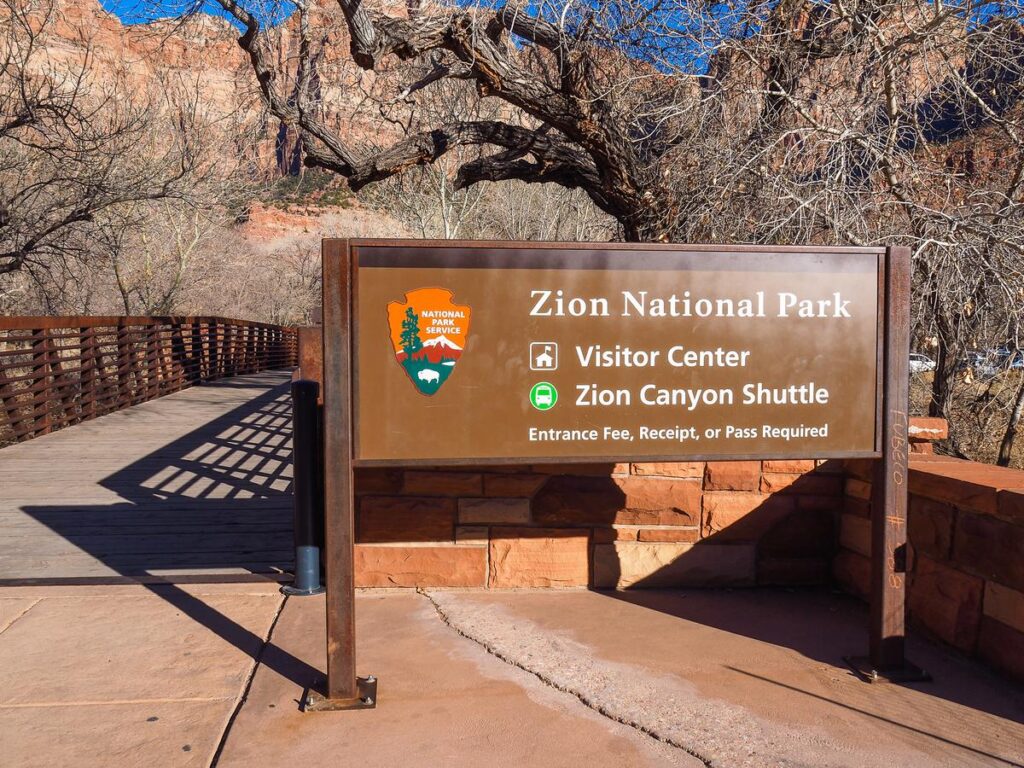
If you have even longer, use this Zion, Bryce Canyon, and Grand Canyon itinerary to maximize your trip to the Southwest.
This itinerary is good for adults as it involves a lot of hiking and works well in spring or fall. Winter will work if you’re comfortable being in the snow. Spend the night in St. George, Utah.
The Ramada by Wyndham is an excellent choice and at a reasonable price. Get your start in Zion National Park with an Angel’s Landing Hike. This strenuous hike is also the most iconic. The steep trail with narrow sections has outstanding views. You can park at or take a shuttle to The Grotto Trailhead.
You need a pass to enter Zion, which costs $35 per car or $20 for those arriving without a vehicle. The West Rim Trail to the top is paved for two miles. After that, there are a few more miles of switchbacks, followed by a narrow ridge.
There are anchored chains to help you climb to Angel’s Landing. If you don’t want to do this part, then don’t!

Hike to Scout Lookout, enjoy the view, then turn around or continue along the West Rim Trail. This climb to Angel’s Landing is not for inexperienced hikers or those afraid of heights.
But if you decide to press on, you’ll get unforgettable views of the main canyon. Head to The Narrows for another outdoor adventure if you’re coming in late spring or summer.

The Narrows is a part of Zion Canyon in a section with a 1,000-foot wall and, in some places, a river less than 30 feet wide. You can see the river from the paved Riverside Walk. You can also get in the Virgin River at the Temple of Sinwava.
Then, wade through The Narrows as far as Big Spring. The water hike to Big Spring will be a 10-mile round-trip all-day hike. You don’t have to go that far, of course.
If you try this winter or early spring hike, be aware that snowmelt can cause colder and higher water levels. Sometimes, the area is closed. Fall will have the best weather, but the water will be cold.
Zion National Park will take one to two days, depending on the weather and how much you want to hike. After Zion, pack up for the drive to Bryce, Utah, for an overnight and a day in Bryce Canyon National Park.
You could extend your stay near Zion. But Bryce has unique options for stays with tranquil canyon views in Tropic at the base of Bryce Canyon National Park. The entry fee to Bryce Canyon National Park is $35 per vehicle. There is one main 18-mile road running north/south through the park.

Most of your overlooks will be off this road–Sunrise, Sunset, Bryce, and Inspiration. Do an easy hike or walk around the rim. You can choose more strenuous, longer hikes that originate from the Bryce Amphitheater.
Another fun, zero-tech option for exploring is to hire a wrangler for guided 2 to 4-hour horseback rides into the amphitheater.

There’s a nice Visitor Center for ranger talks and more tour information. The park is open year-round, but some roads and trails may be closed after winter and early spring snowstorms.
After a night or two at Bryce Canyon National Park, visit the Grand Canyon. We already gave you a South Rim itinerary, but the North Rim is only a three-hour drive away.

The North Rim is also open only from May through October. If you drive to the South Rim instead, it’s approximately 300 miles away. It’s not terrible, but plan for half a day’s drive. Hopefully, you’re planning well in advance because one of the best places to stay at the North Rim books fast.
The Grand Canyon Lodge is the only hotel at the Grand Canyon’s North Rim. It’s a rustic but pretty lodge with dining and a set of cabins. The North Rim Campground is also available. No hook-ups are offered, RVs are allowed, and a dump station is available. Fees start at $18 per site per night.
For your North Rim hike, choose Bright Angel Point Trail. It’s steep in places but offers incredible canyon views.

Only 10% of Grand Canyon visitors see the North Rim, so don’t worry about big crowds. The Visitor Center has maps and more information about the area.
See Related: Where to Stay in Grand Canyon National Park: Best Areas
Grand Canyon Itinerary for Family Vacations
Our itineraries will work perfectly for family vacations with just a few adjustments. Teenagers can likely handle the hiking and climbing fine. But smaller ones may not be up to the same adult-sized challenges.
The Best Grand Canyon Itinerary Safe for Kids

Visiting the Grand Canyon with kids is mostly like going anywhere as a family with a few special considerations.
You want to include the journey as part of the fun and adventure. Take it slow and let everyone enjoy the beauty and mystery of the park. If you plan a summer vacation, be mindful of the heat and crowds on weekends.
Also, remember the North Rim is only open from mid-May through October. After October, the snowfall is too heavy to travel to the North Rim. When traveling with toddlers, consider bringing a harness or carrier. It’s so easy to get too close to the edge and disaster.
But don’t worry. Grand Canyon activities for toddlers will keep them safe and engaged. Kids may not be up for many hikes unless they’ve trained and helped plan for them. If that’s the case, consider hiking to the canyon floor and camping for the night.

Then, take the next day to hike back up. This is a strenuous hike that will take the family a few hours. Reserve your campground reservations about a year in advance and carefully plan your gear list. One of the Grand Canyon kid-friendly activities in Grand Canyon Village is seeing the Hopi House.

The Hopi House replicates a Native American pueblo where you can buy handicrafts. Throughout the day, a Navajo dance troupe performs traditional dances.
Another fun family activity is to take a helicopter to the canyon floor. If you’re traveling with kids over the age of 9 and they are not petite for their age, you can take a guided mule tour around the rim.

This will take approximately two hours. The mules are specially chosen, trained for the job, and treated well. Times and the number of riders are limited, so book well in advance.
White-water rafting along the Colorado River is one of the Grand Canyon family-friendly activities your kids, 8 years and older, won’t forget. Drive south for a couple of hours to Sedona to hike through the red rocks and play in the water at Slide Rock State Park.
Explore the ruins at Walnut Canyon, too. If you don’t need to stay in the park, you can take the Grand Canyon Railway from Williams, Arizona.It’s an exciting trip your preteens will love.
You’ll even get “train-robbed” by bandits. Williams will remind you of Radiator Springs in the movie Cars. Your kids will love that.

You can also stay in family-friendly Flagstaff, a 90-minute drive away. It’s not a bad distance for a day at the South Rim. Finally, be aware you’ll be spending most of your time in the desert with very few options for food. Pack plenty of snacks and liquids to keep kids and toddlers from getting hungry, hot, and cranky.
See Related: World Nomads Travel Insurance Review
Grand Canyon Activities for Toddlers

Don’t put off the trip because you think there won’t be Grand Canyon activities for toddlers when even the littlest ones can appreciate the splendor. When your toddler grins at first sight of the canyon and says, wow, or the equivalent, you’ll be glad you came.
With toddlers, you’ll want those precious lodging reservations inside the park. That will make managing gear, feedings, and naps so much easier. Take advantage of your toddler’s early-bird tendencies and get going as soon as possible in the morning to beat crowds.
Be early everywhere. Plan to use the free shuttles as much as possible and use snacks, games, and toys to distract your child while you wait. Make as many reservations as you can for meals. Bike trailers are available to reserve too.
With a little planning, the whole family can experience the Grand Canyon regardless of age. You’ll have fun memories and adorable family photos too.
This itinerary assumes an early start at the rim, which is far easier from inside the park. the best places to stay near the Grand Canyon covers the lodges that make sunrise realistic.