The best day trips from Las Vegas range from quick desert drives to full-day national park excursions. Red Rock Canyon, Hoover Dam, Lake Mead, and Mount Charleston are the easiest choices. Valley of Fire, Grand Canyon West, Death Valley, and Zion require more driving but still fit into a well-planned day.
For most travelers, the practical limit is about 2.5 hours of driving each way. Grand Canyon South Rim, Page, and Bryce Canyon can be visited in one day, but they involve eight to ten hours on the road. We have included them because they are popular Las Vegas excursions, with clear warnings about the time commitment.
Planning note: Drive times below are estimates from the central Las Vegas Strip in normal conditions. Traffic, construction, weather, park closures, and your starting hotel can change them. Access information was last checked on August 4, 2026.
Quick answer: Which Las Vegas day trip should you choose?
- Choose Red Rock Canyon for the easiest half-day escape.
- Choose Hoover Dam and Boulder City for engineering, history, and minimal driving.
- Choose Mount Charleston for cooler summer temperatures.
- Choose Valley of Fire for red-rock scenery, except during the hottest months.
- Choose Grand Canyon West for a manageable Grand Canyon outing from Las Vegas.
- Choose Death Valley or Zion for a demanding but worthwhile national park day.
- Stay overnight for Grand Canyon South Rim, Page, or Bryce Canyon unless you are comfortable with a very early start and a long drive home.
Las Vegas day trips at a glance
| # | Destination | Typical drive each way | Best for | Day-trip fit |
|---|---|---|---|---|
| 1 | Red Rock Canyon | 25-35 minutes | Scenic driving and short hikes | Easy half day |
| 2 | Hoover Dam and Boulder City | 45-60 minutes | Engineering and history | Easy full or half day |
| 3 | Lake Mead | 45-60 minutes | Water views and recreation | Easy full or half day |
| 4 | Mount Charleston | 50-70 minutes | Cooler weather and mountain scenery | Easy full or half day |
| 5 | Valley of Fire | 60-75 minutes | Red sandstone and petroglyphs | Easy outside peak heat |
| 6 | Seven Magic Mountains and Goodsprings | 30-50 minutes | Art, photography, and mining history | Easy half day |
| 7 | Nelson and Techatticup Mine | 60-75 minutes | Mining history and photography | Easy with a reservation |
| 8 | Grand Canyon West | 2 hours 10 minutes-2.5 hours | Canyon viewpoints and Skywalk | Long but practical |
| 9 | Death Valley | 2-2.5 hours | Desert geology and photography | Best in cooler months |
| 10 | Mojave National Preserve | 1 hour 15 minutes-2 hours | Dunes, Joshua trees, and solitude | Practical with preparation |
| 11 | Zion National Park | 2.5-3 hours | Canyon scenery and hiking | Demanding full day |
| 12 | Extraterrestrial Highway and Rachel | 2-2.5 hours | Roadside culture and aviation history | Long out-and-back |
| 13 | Cathedral Gorge State Park | 2.5-3 hours | Clay spires and narrow passages | Demanding full day |
| 14 | Grand Canyon South Rim | 4 hours 15 minutes-4 hours 45 minutes | The national park experience | Better overnight |
| 15 | Page: Antelope Canyon and Horseshoe Bend | 4 hours 15 minutes-4 hours 45 minutes | Slot canyons and photography | Better overnight |
| 16 | Bryce Canyon National Park | 4-4.5 hours | Hoodoos and overlooks | Better overnight |
Before you leave Las Vegas
- Start before 7 a.m. for any destination more than two hours away.
- Carry more water than you expect to use. Desert heat can become dangerous even during a short roadside delay.
- Download maps before entering remote parts of Nevada, Arizona, California, or Utah. Cell coverage is inconsistent.
- Check park alerts on the morning of departure. Flash floods, snow, heat, construction, and wildfire can alter access quickly.
- Reserve fixed-entry attractions before building the rest of the itinerary around them. Antelope Canyon tours, Techatticup Mine tours, Angels Landing permits, and seasonal Red Rock entry times require advance planning.
- Consider renting a car in Las Vegas for flexible routes. Organized tours are often more practical for Grand Canyon West, Zion, Page, or a one-day South Rim visit.
1. Red Rock Canyon National Conservation Area

Typical one-way drive: 25-35 minutes. Best for: a half-day scenic drive, short hikes, and a fast break from the Strip.
Red Rock Canyon is the most convenient nature trip from Las Vegas. Its 13-mile one-way Scenic Drive passes the red Calico Hills, sandstone overlooks, desert springs, trailheads, and picnic areas. You can complete the loop in a few hours or spend most of the day hiking.
Our family has also used the loop for an exotic-car outing; my husband and son drove through the conservation area rather than committing to a longer desert route. That works well for travelers who want scenery without a strenuous hike.
The Bureau of Land Management requires timed Scenic Drive reservations from October 1 through May 31 for entry between 8 a.m. and 5 p.m. Reserve before driving out during the cooler and busiest part of the year.
2. Hoover Dam and Boulder City

Typical one-way drive: 45-60 minutes. Best for: engineering, history, accessible viewpoints, and first-time visitors.
Hoover Dam is the easiest major landmark to combine with a Las Vegas vacation. Walk across the top of the dam, view the Colorado River from the Mike O’Callaghan-Pat Tillman Memorial Bridge, and allow time for Boulder City’s historic center.
As of August 4, 2026, the Bureau of Reclamation lists the guided Dam Tour at $40 per person, the Power Plant Tour at $25 for adults and $15 for ages 4-16, and self-guided Visitor Center access at $15. Children age three and younger enter free. The full Dam Tour is sold on-site, so arrive early and check the official Hoover Dam visitor page before departure.
The full Dam Tour is the best choice for travelers interested in the structure itself. The Power Plant Tour is shorter and easier to fit around Boulder City or Lake Mead. Our detailed Hoover Dam guide covers additional viewpoints and planning details.
3. Lake Mead National Recreation Area
Typical one-way drive: 45-60 minutes. Best for: reservoir views, paddling, boating, beaches, and combining with Hoover Dam.
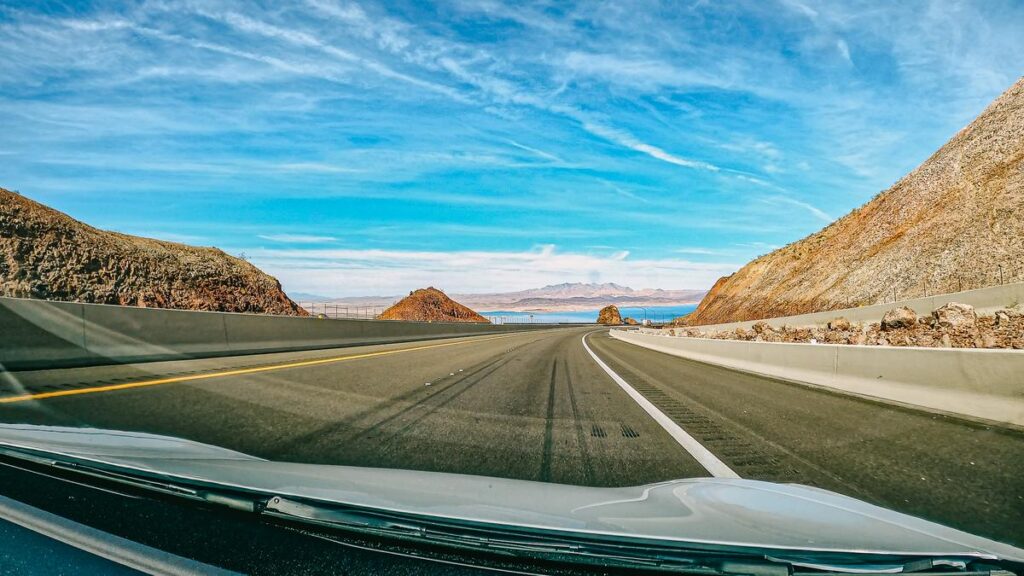
Lake Mead works as a separate outing or an extension of Hoover Dam. The most efficient day combines one or two overlooks, a shoreline stop, Boulder City, and the dam rather than trying to cover the entire recreation area.
Summer changes the plan. The National Park Service closes designated strenuous trails each year from May 15 through September 30, with additional heat closures possible. Check the current Lake Mead conditions before hiking, boating, or driving to a remote launch area.
Water levels and facility access can affect ramps and shorelines. The practical approach is to select one activity in advance using our guide to things to do at Lake Mead, then confirm that the relevant road or facility is open.
4. Mount Charleston and the Spring Mountains
Typical one-way drive: 50-70 minutes. Best for: cooler summer air, mountain scenery, picnics, and forest trails.
Mount Charleston is one of the most useful summer alternatives to the low desert. The Spring Mountains rise sharply northwest of Las Vegas, producing cooler conditions and a landscape of pines, rocky ridges, and seasonal snow.
Start at the Spring Mountains Visitor Gateway, then choose a trail or picnic area appropriate for the season. Summer weekends can bring crowded parking. Winter visitors need to check road restrictions, snow conditions, and traction requirements before leaving the valley.
This is a better warm-weather choice than attempting exposed trails at Valley of Fire, Lake Mead, or Death Valley. Elevation reduces the temperature, but it does not remove the need for water, sun protection, and weather checks.
5. Valley of Fire State Park and Lost City Museum

Typical one-way drive: 60-75 minutes. Best for: red-rock scenery, petroglyphs, roadside viewpoints, and cooler-season hikes.
Valley of Fire contains red Aztec sandstone, arches, narrow passages, petrified wood, and petroglyph sites. Elephant Rock, Atlatl Rock, Arch Rock, and the road through the park are accessible without committing to a long trail.
Many popular trails, including Fire Wave and White Domes, close annually from May 15 through September 30 because of extreme heat and frequent rescue calls. At the August 4, 2026 update, Nevada State Parks was also directing visitors to check current entrance access. Review the official Valley of Fire page on the morning of your trip.
Add the Lost City Museum in Overton

The Lost City Museum provides the archaeological and cultural context missing from a drive-only visit. Its collections include pottery, tools, baskets, and objects recovered before the creation of Lake Mead, along with reconstructed ancestral Puebloan structures.
As of August 2026, the museum lists Tuesday through Sunday hours of 8:30 a.m. to 4:30 p.m. Adult admission is $8, while visitors under 17 enter free. Confirm the schedule before building the park route around a museum stop.
6. Seven Magic Mountains and Goodsprings

Typical one-way drive: 30-50 minutes. Best for: a short photography outing, public art, and Nevada mining history.
Seven Magic Mountains is a large-scale installation by artist Ugo Rondinone, consisting of seven stacked boulder towers painted in vivid colors. The site is free, does not require a reservation, and is best visited near sunrise or late afternoon when temperatures and light are more manageable.

Continue to Goodsprings for a contrasting look at southern Nevada’s mining history. The settlement is not an abandoned ghost town, but it retains historic buildings and the Pioneer Saloon. Haunted-tour stories are part of the town’s modern tourism identity, although they should be treated as local lore rather than established history.
This combination works well when you have three or four free hours but do not want to spend the entire day in the car.
7. Nelson Ghost Town and Techatticup Mine

Typical one-way drive: 60-75 minutes. Best for: mining history, guided underground access, old vehicles, and photography.
Techatticup Mine lies in Eldorado Canyon near Nelson. The property combines a historic mine tour with an outdoor collection of buildings, equipment, vehicles, and movie props.
The operator currently describes the walking route as roughly one-quarter mile and about one hour and 20 minutes. Published tour times are 9 a.m., noon, and 2 p.m. when the minimum group requirement is met. As of August 2026, listed prices are $20 for adults, $12.50 for children ages 5-12, and free for younger children. Reservations and current pricing should be confirmed through Eldorado Canyon Mine Tours.
Combine the mine with a drive toward Nelson’s Landing, but check road and weather conditions before descending toward the Colorado River.
8. Grand Canyon West
Typical one-way drive: 2 hours 10 minutes-2.5 hours. Best for: Grand Canyon views without driving to the national park’s South Rim.
Grand Canyon West is on Hualapai Tribal land and is not part of Grand Canyon National Park. This distinction matters because admission, transportation, viewpoints, rules, and available activities differ from the South Rim.
Because Grand Canyon West is sovereign territory rather than a national park, the practicalities change – see what to know before visiting tribal land.
The main stops include Eagle Point, Guano Point, and the Grand Canyon Skywalk. Visitors use the site’s shuttle system to move among attractions. Grand Canyon West currently opens at 8 a.m.; general closing and last-entry times vary with daylight and summer operations, so check the official visitor information before leaving Las Vegas.
On one family trip, we took a helicopter excursion from Las Vegas that flew over Hoover Dam and Lake Mead before descending below the canyon rim for breakfast. My son had apple juice while the adults had champagne. It remains one of our most memorable Las Vegas excursions, but flight paths, landing locations, weight limits, and inclusions vary by operator.
Choose Grand Canyon West when the priority is seeing the canyon in one day. Choose the South Rim when the priority is the national park itself.
9. Death Valley National Park

Typical one-way drive: 2-2.5 hours to Furnace Creek. Best for: geology, broad desert views, salt flats, and cooler-season photography.
We have completed Death Valley as a day trip from Las Vegas and enjoyed it, but the route works best from late fall through early spring. A focused day can include Zabriskie Point, Furnace Creek, Badwater Basin, and Artist’s Drive when the roads are open.
Do not treat a summer visit like an ordinary sightseeing drive. Temperatures can become life-threatening, vehicles can overheat, and cell coverage is limited. Bring water, keep the fuel tank well above empty, and avoid leaving paved roads without the equipment and experience required for remote desert travel.
Flood damage and construction can close roads for extended periods. Check the National Park Service road map and alerts, then use our Death Valley guide to choose a realistic route.
10. Mojave National Preserve

Typical one-way drive: 1 hour 15 minutes-2 hours, depending on the first stop. Best for: dunes, Joshua tree forests, volcanic terrain, and low-traffic desert roads.
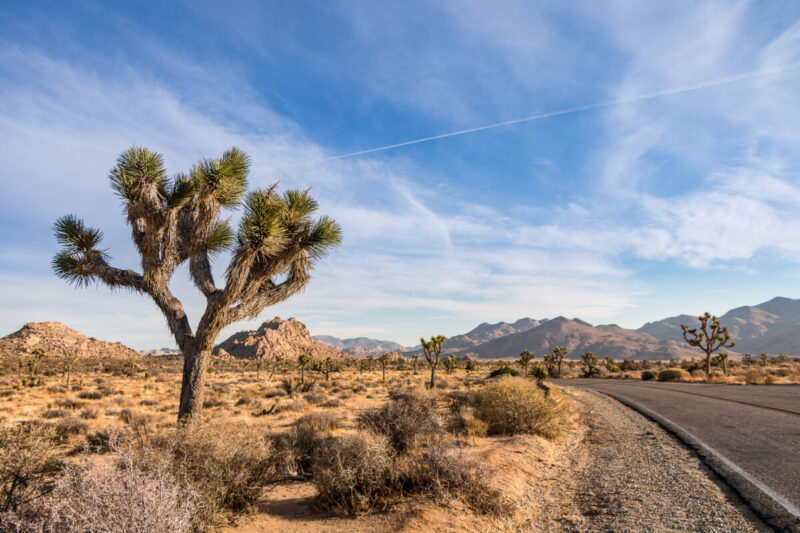
Mojave National Preserve receives less attention than Death Valley or Joshua Tree, which makes it useful for travelers seeking space and desert scenery. Possible stops include Kelso Dunes, the Cima Dome Joshua tree forest, Hole-in-the-Wall, and the outdoor areas around Kelso Depot.
As of August 2026, the indoor portion of Kelso Depot Visitor Center is closed. Restrooms, parking, outdoor areas, and water remain available, but there is no restaurant or fuel station inside the preserve. Potable water is limited to a few facilities.
Check Mojave road and facility conditions, fill the fuel tank before entering, and do not follow navigation apps onto unmaintained roads. Our Mojave Desert guide can help narrow the route.
11. Zion National Park

Typical one-way drive: 2.5-3 hours. Best for: high canyon walls, the Virgin River, scenic overlooks, and a limited day of hiking.
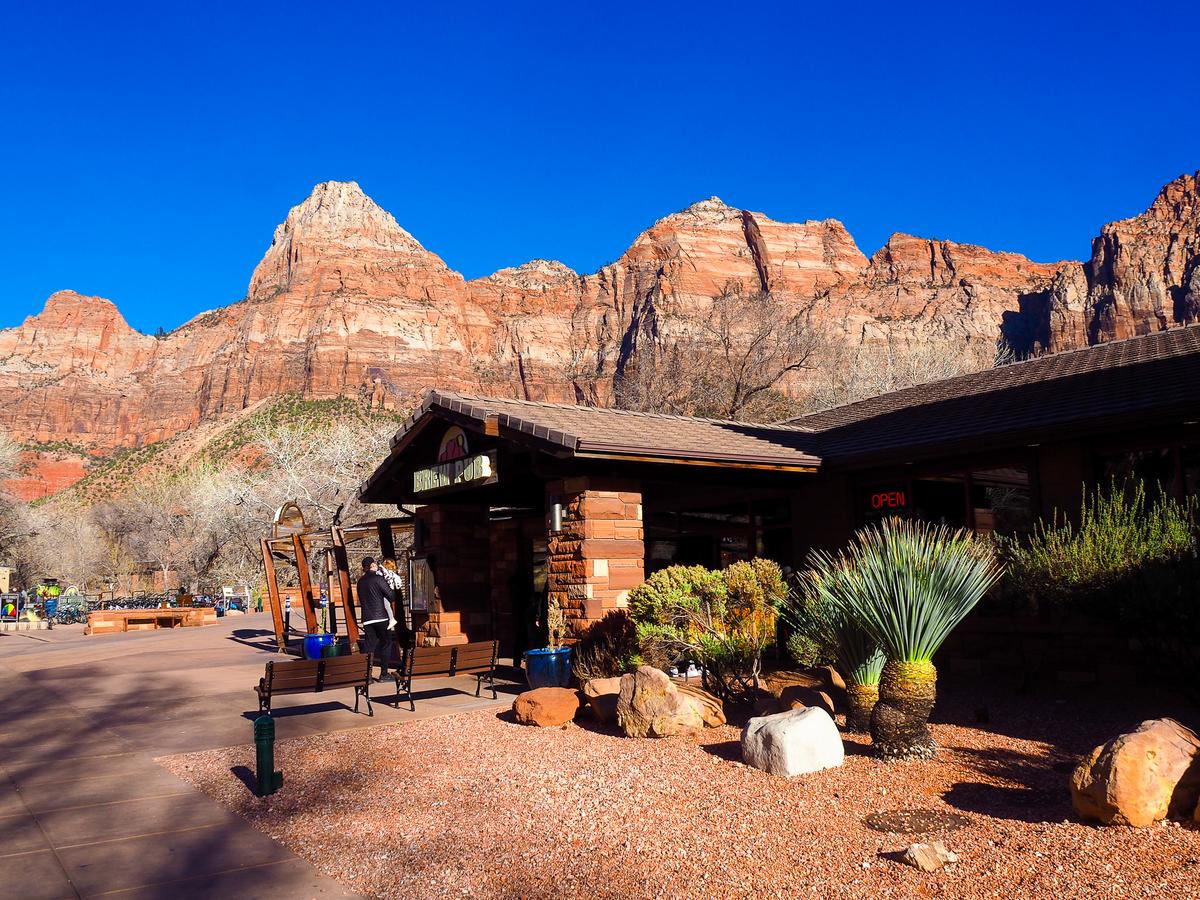
Zion is a realistic but demanding trip from Las Vegas. Leave before sunrise, account for the one-hour time difference during much of the year, and limit the itinerary to Zion Canyon or the east side rather than trying to cover the entire park.
When the Zion Canyon shuttle is operating, private vehicles generally cannot use Zion Canyon Scenic Drive. An Angels Landing permit is required beyond Scout Lookout, but hiking to Scout Lookout does not require that permit. Summer temperatures can exceed 100 degrees Fahrenheit, and monsoon storms increase the risk of flash floods in narrow canyons.
Review the current Zion conditions, then use our guides to the best things to do in Zion National Park and what to know before visiting Zion. An overnight stay in Springdale provides much more time and removes the late drive back to Nevada.
12. The Extraterrestrial Highway and Rachel

Typical one-way drive: 2-2.5 hours to Rachel. Best for: remote-road scenery, unusual roadside stops, and Cold War aviation history.
Area 51 is the popular name associated with the Groom Lake facility within the Nevada Test and Training Range. It is not Edwards Air Force Base. Declassified CIA history connects Groom Lake with testing of the U-2 and A-12 OXCART aircraft.
The installation itself is restricted and cannot be visited. Remain on public roads, obey every sign, and do not approach gates or cross boundaries. The worthwhile public trip follows U.S. 93 to State Route 375, the officially designated Extraterrestrial Highway, with Rachel as a sensible turnaround point.
Travel Nevada describes the full Las Vegas-Tonopah loop as approximately 470 miles and recommends two days. For a one-day outing, turn around at Rachel rather than completing the loop. Fuel, food, restrooms, and cell service are limited, so prepare before leaving the main highway.
13. Cathedral Gorge State Park

Typical one-way drive: 2.5-3 hours. Best for: eroded clay formations, narrow passageways, hiking, and photography.
Cathedral Gorge differs from the red sandstone parks closer to Las Vegas. Erosion has carved pale bentonite clay into spires, fins, alcoves, and narrow passageways that visitors can explore on foot.
The one-mile Miller Point Trail links the overlook with the main picnic area, while a longer loop reaches more remote sections of the park. The park is open throughout the year. Published day-use fees are $5 for Nevada vehicles and $10 for vehicles from outside Nevada, but confirm current fees before departure.
We have not visited Cathedral Gorge yet; it remains on our Nevada list rather than being a firsthand recommendation. The long drive makes it best for travelers who are comfortable spending most of the day on the road or combining it with an overnight trip through eastern Nevada.
14. Grand Canyon National Park’s South Rim

Typical one-way drive: 4 hours 15 minutes-4 hours 45 minutes. Best for: travelers determined to visit the national park rather than Grand Canyon West.
The South Rim is 263 miles one way from Las Vegas and is open throughout the year. It is possible to visit in a day, but a self-drive itinerary can exceed 13 hours once meals, fuel, traffic, and viewpoint stops are included.
Prioritize Mather Point, Grand Canyon Village, and a limited section of Desert View Drive. Do not plan a substantial below-rim hike on the same day as the round-trip drive. Winter weather can slow the route and temporarily close roads.

Staying overnight makes sunrise or sunset possible and provides time to use our guides to the best things to do at the Grand Canyon and a practical Grand Canyon itinerary.
15. Page, Arizona: Antelope Canyon and Horseshoe Bend

Typical one-way drive: 4 hours 15 minutes-4 hours 45 minutes. Best for: a fixed Antelope Canyon tour, slot-canyon photography, and Horseshoe Bend.
All Antelope Canyon locations are on Navajo Nation land and require an authorized guide. The Navajo Nation currently lists a $15 entry fee per person, per location, per day, in addition to the tour operator’s price. Tour availability, photography rules, age limits, and cancellation policies vary by operator.
Our family visited Lower Antelope Canyon in early March. Crowds were manageable during that trip, and the enclosed passages felt cool enough to justify a jacket. Conditions and visitor numbers vary, so that experience should not be treated as a guarantee for every March visit.
The route involves stairs, ladders, tight spaces, and uneven surfaces. Compare Upper versus Lower Antelope Canyon before reserving, especially when traveling with limited mobility.

Horseshoe Bend is about seven miles from Lower Antelope Canyon. The City of Page currently charges $10 for a passenger vehicle and $5 for a motorcycle. The main overlook has a railing, but other sections remain exposed. Stay back from unprotected edges and carry water for the walk from the parking area.
Combining both sites in one day from Las Vegas requires a fixed tour time and roughly nine hours of driving. An overnight stay leaves room for our guide to things to do in Page and the complete Horseshoe Bend guide.
16. Bryce Canyon National Park

Typical one-way drive: 4-4.5 hours. Best for: hoodoos, high-elevation overlooks, and travelers willing to accept a very long day.
Bryce Canyon is not a single canyon. It is a series of natural amphitheaters filled with hoodoos and forested ridges. Sunrise Point, Sunset Point, Inspiration Point, and Bryce Point provide the most efficient first visit.
The 2026 park shuttle operates from April 3 through October 18, with longer daily hours during summer. The park does not require timed-entry reservations and remains open year-round, although snow and ice can affect roads and trails.
A day trip requires a pre-dawn departure and a limited visit. An overnight stay is the better choice for hiking below the rim or seeing sunrise without driving through the night. Our Bryce Canyon National Park guide covers a fuller itinerary.
Guided alternatives from Las Vegas
Affiliate disclosure: ViaTravelers may earn a commission when you book through selected links below, at no additional cost to you. Tour schedules, pickup zones, prices, and inclusions can change. Verify the current listing before paying.

| Tour | Best for | Important limitation |
|---|---|---|
| Black Canyon motorized rafting trip | A relaxed Colorado River experience below Hoover Dam | Confirm whether Las Vegas transportation is included in the selected option |
| Grand Canyon West bus tour | Travelers who do not want to drive more than four hours round trip | This visits Hualapai Tribal land, not Grand Canyon National Park |
| Grand Canyon West, Hoover Dam, and Seven Magic Mountains tour | Travelers prioritizing several headline stops in one day | A long checklist itinerary leaves limited time at each location |
| Boulder City self-guided visit with Las Vegas transportation | Travelers who want time in Boulder City without renting a car | The current listing does not include Hoover Dam admission |

Compare cancellation terms, included meals, pickup locations, admission fees, and time at each stop. Our review of the best sites for booking tours explains the differences among major marketplaces.
A Los Angeles day tour is usually better as an overnight trip
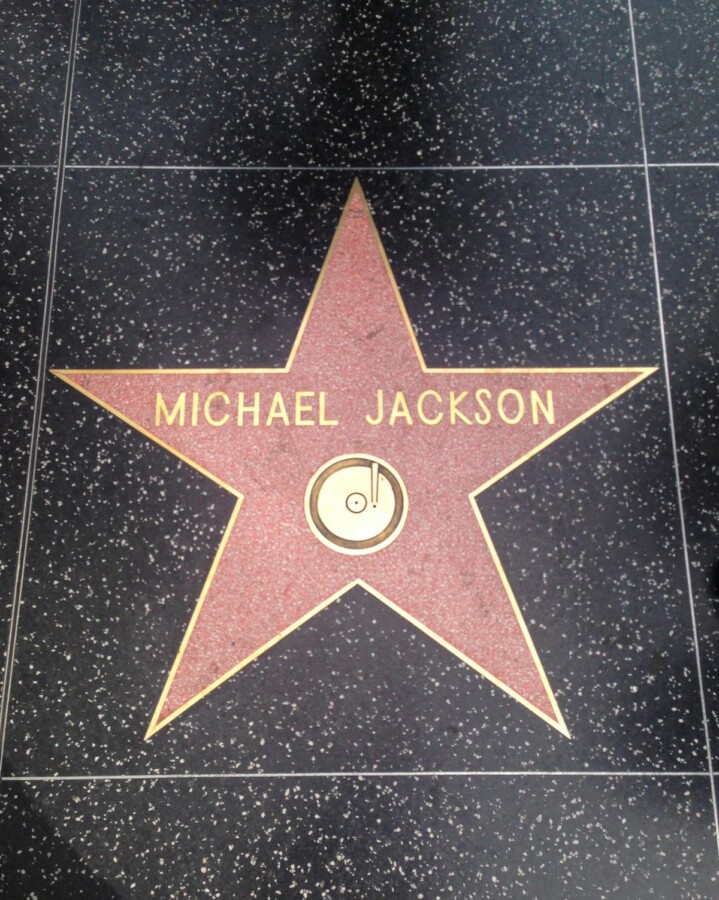
Los Angeles is not included among the 16 recommended destinations because traffic can turn the drive into four or five hours each way. An organized Los Angeles and Hollywood day tour from Las Vegas removes the driving burden, but the operator lists a day of roughly 14 hours.
This option suits travelers with a fixed Las Vegas hotel reservation and no opportunity to stay in California. Otherwise, spend at least one night in Los Angeles rather than compressing Hollywood, Beverly Hills, and Santa Monica into a few rushed stops.
Choosing the right trip
For a first Las Vegas visit, start with Red Rock Canyon, Hoover Dam, or Valley of Fire. These destinations provide a meaningful change of scenery without consuming most of the day in transit.
Grand Canyon West, Death Valley, Mojave National Preserve, and Zion are better for travelers prepared for an early departure and a full schedule. Grand Canyon South Rim, Page, and Bryce Canyon deserve an overnight stay whenever the itinerary allows it.
Frequently asked questions
What are the best day trips from Las Vegas within two hours?
Red Rock Canyon, Hoover Dam, Boulder City, Lake Mead, Mount Charleston, Valley of Fire, Seven Magic Mountains, Goodsprings, Nelson, and Techatticup Mine are generally within about two hours of the central Strip in normal conditions. Check live navigation and current closures before leaving.
Can you visit the Grand Canyon from Las Vegas in one day?
Yes. Grand Canyon West is roughly two to two and a half hours each way and is the more practical one-day option. Grand Canyon National Park’s South Rim is 263 miles from Las Vegas and usually requires more than eight hours of round-trip driving, so an overnight stay is preferable.
What is the best Las Vegas day trip during summer?
Mount Charleston and the Spring Mountains are usually the best summer choice because their higher elevation brings cooler conditions than the Las Vegas Valley. Avoid exposed desert hikes during extreme heat, and check road, weather, and wildfire conditions before departure.
Do you need a rental car for day trips from Las Vegas?
A rental car provides the most flexibility for Red Rock Canyon, Valley of Fire, Mount Charleston, Death Valley, and Mojave National Preserve. Hoover Dam, Grand Canyon West, Zion, Bryce Canyon, and Page also have organized tour options for travelers who prefer not to drive.
Is Zion National Park a realistic day trip from Las Vegas?
Zion is possible as a long day trip, with a typical drive of about two and a half to three hours each way. Leave before sunrise, check the shuttle schedule, and choose only a few stops or one moderate hike. Staying overnight in Springdale provides a much less rushed visit.
Can you visit Antelope Canyon and Horseshoe Bend in one day from Las Vegas?
Yes, but the trip involves roughly nine hours of driving plus a fixed Antelope Canyon tour time. All Antelope Canyon visits require an authorized Navajo guide. An overnight stay in Page is the better option for most travelers.