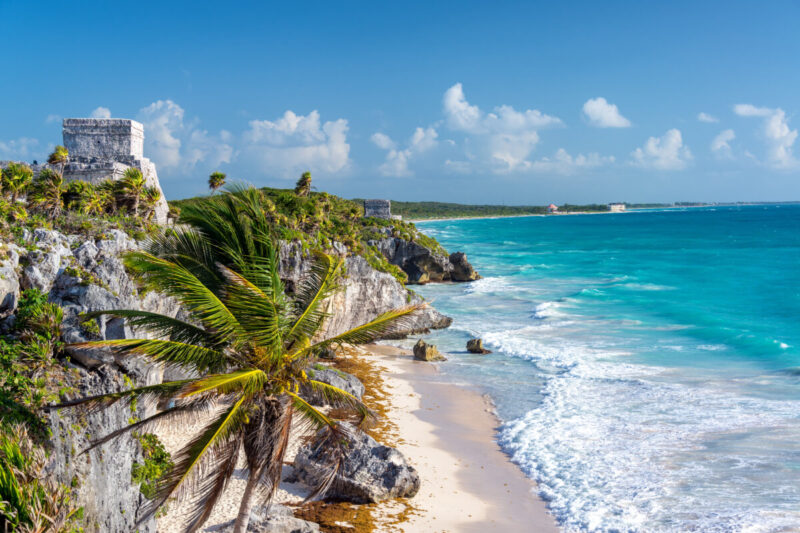
Mexico has a lot to offer those looking for new adventures. It is also one of the best travel destinations for archaeology lovers. If you’re interested in the country’s history and culture, you must explore archaeological sites.
Mexico has registered tens of thousands of archaeological sites, but the ones you can actually walk into are a much shorter list: INAH, the federal institute that manages them, keeps 194 archaeological zones and one paleontological zone open to the public, 365 days a year. The 15 below are the ones worth building a trip around.
One thing to get straight before you book anything: these are not all Maya sites, and travel guides blur this constantly. Palenque, Calakmul, Uxmal, Chichen Itza, Coba, Tulum, Bonampak, Edzna and Tonina are Maya. Monte Alban is Zapotec. El Tajin belongs to the Classic Veracruz culture. El Tepozteco is Tlahuica. Cholula and El Cerrito were built and rebuilt by several central Mexican peoples. Teotihuacan is not Maya at all – it was a separate central Mexican metropolis that had collapsed centuries before the Aztecs arrived to name its ruins. Knowing which culture you are looking at is the difference between seeing a pile of stones and reading a city.

Surrounded by natural beauty, these are the most visited ancient Mayan ruins in Mexico to explore. Let’s take a look-see!
Best Archaeological Sites in Mexico
15. Bonampak
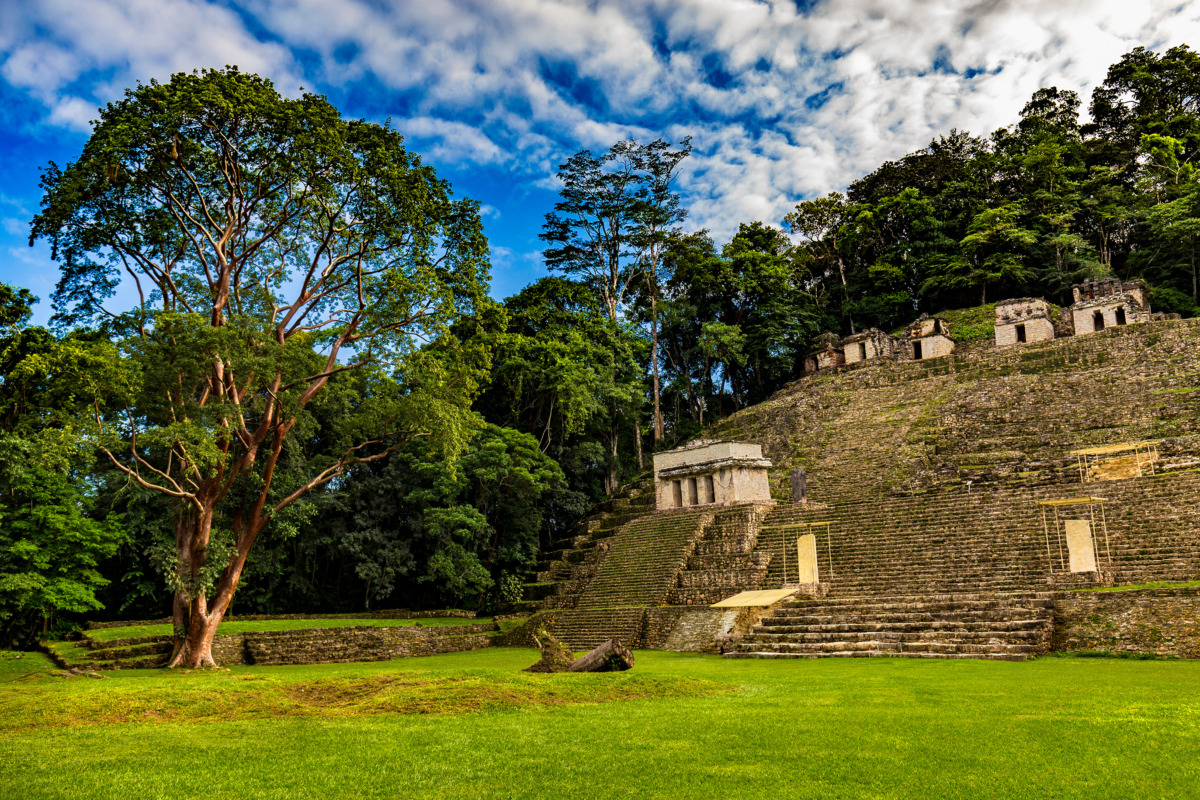
Bonampak is an ancient Mayan archaeological site in Chiapas. It dates to the early classic period, located around 30 km south of Yaxchilan.
This Mayan ruin is renowned for its colorful floor-to-ceiling murals on the interior walls of the three-roomed structure on the first level of the Acropolis. These paintings usually describe events that occurred during Chan Muwan’s reign.
Take a close look at the monuments and paintings in Bonampak to know the history of the place in detail. Book a Bonampak and Yaxchilan from Palenque Tour now.
See Related: Unknown Places to Visit in the US
14. Coba Ruins

Located in Quintana Roo in the Yucatan Peninsula region, Coba is another ancient site in Mexico. It features over 6,500 Mayan ruins that you can explore at your own pace.
Nohoch Mul is the reason most people come. The step pyramid rises 42 meters (about 140 feet) above the forest and roughly 120 steep steps lead to the top, where the view is nothing but jungle canopy in every direction. The name is Yucatec Maya for “large mound” – the structure’s original name has been lost.
Check this before you go, because it changed recently. Nohoch Mul was closed to climbers for roughly six years while INAH carried out conservation work, and reopened on December 8, 2025 with a wooden staircase built over the original stone steps. Climbing now runs in timed groups with a short limit at the summit, so arrive early rather than at midday. That makes Coba the only major site on the Yucatan Peninsula where you can still climb the main pyramid: Chichen Itza closed El Castillo to climbers in 2006 and Tulum never permitted it. A new highway has also cut the drive from the Riviera Maya to roughly 45 minutes, which is why the crowds have grown. Don’t miss the chance to book a guided tour.
13. Edzna Archaeological Ruin
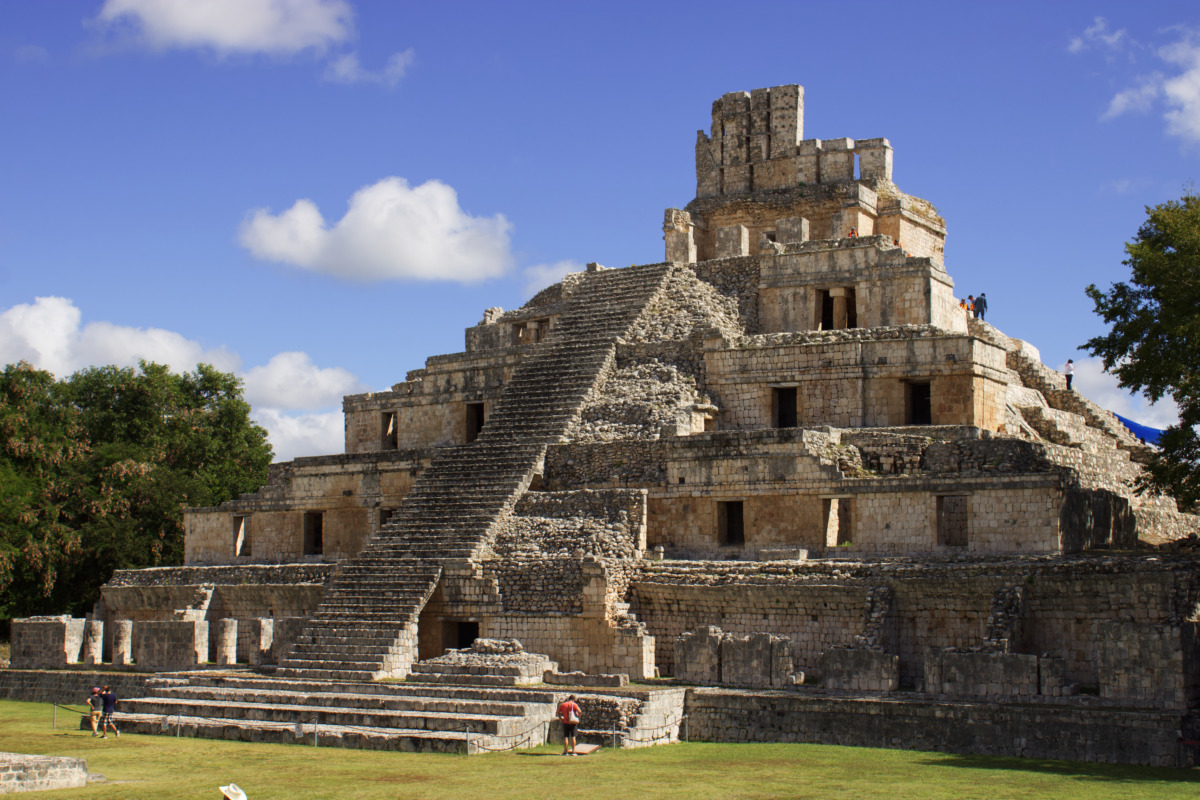
Located in the north of the Mexican state of Campeche, Edzna is one of the most impressive ancient ruins to explore. The site will make you want to discover more about ancient civilizations. Founded between 600 and 300 BC, this archaeological site was flooded by Mayan culture.
The main temple, built on a 40-meter-high platform, is the place’s highlight. The ball court, made of two parallel structures, is another remarkable building in the plaza. Small stairways lead to the top of those two structures.
If you plan to visit ancient sites in Mexico, Edzna is another great option for immersing yourself in pre-Hispanic Mexican history.
See Related: Best Van Camping Equipment [Essentials & Gadgets]
12. El Tajin

Situated in Veracruz state, El Tajin is a part of Veracruz culture. Numerous temples, pyramids, and palaces surround this ancient ruin that flourished from 600 to 1200 CE.
The Pyramid of the Niches is the main attraction of this UNESCO World Heritage site for its unusual structure and incredible preservation over the centuries. This building features 365 stone niches, making it look like an astronomical calendar.
The unique design of the pyramids makes the place even more interesting, as there’s no such style in any Mesoamerican civilization. It’s a masterpiece of American and Mexican architecture.
Around 300,000 visitors visit this historic site’s beauty every year. Explore El Tajin Ruins and Papantla on a day trip.
See Related: Interesting Tips to Remember While Visiting Ancient Sites
11. El Cerrito Archaeological Site
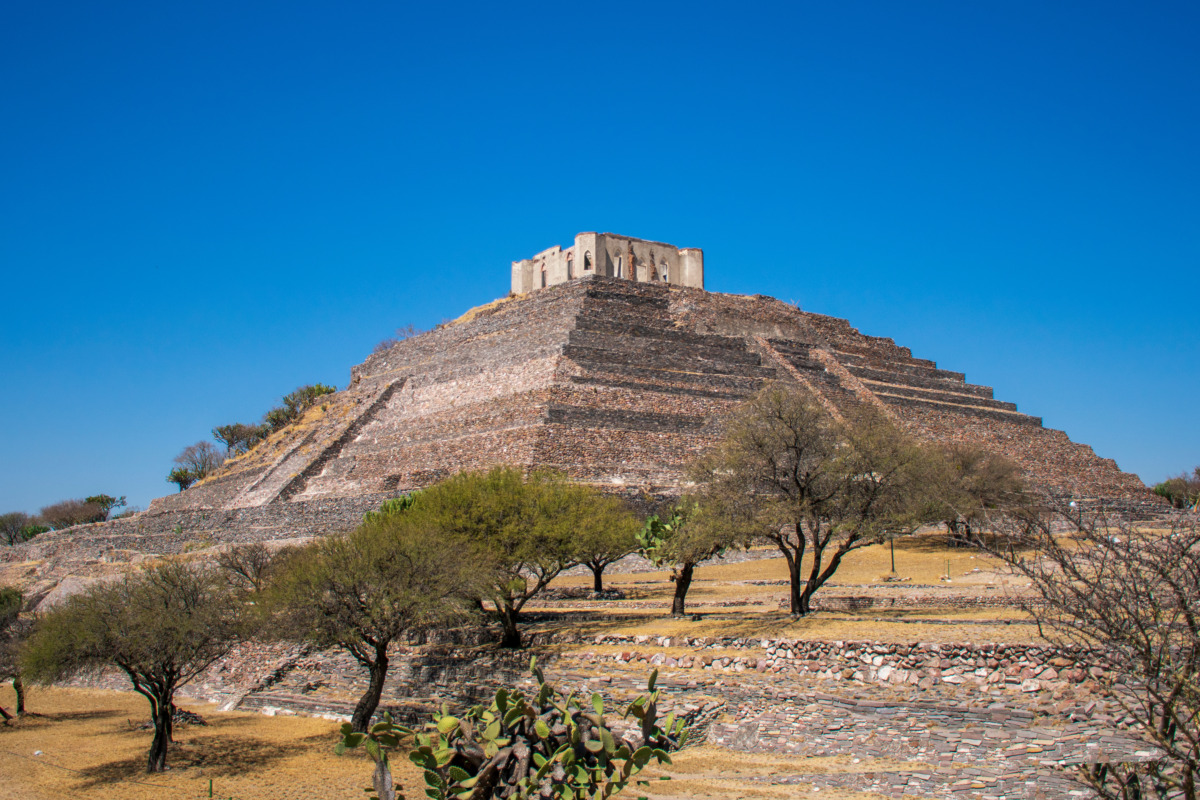
Now comes one of the most underrated tourist spots in Mexico. El Cerrito’s archaeological ruin extends to Queretaro, the heart of the country. It has been in Mexico since 300 BCE and features a pyramid and interpretive trails.
The Chupicuaro culture that inhabited this site centuries ago built one of the world’s most stunning pyramids and left an archaeological site full of jewels, gemstones, and other precious stones around the area.
Apart from ruins, the site features a museum that displays the history of the ancient civilization. It also presents gems and jewelry that people used to wear back then. You can even see fossilized inhabitants.
Undoubtedly, El Cerrito is something you would not want to miss out on when in Mexico.
10. El Tepozteco, Tepoztlan
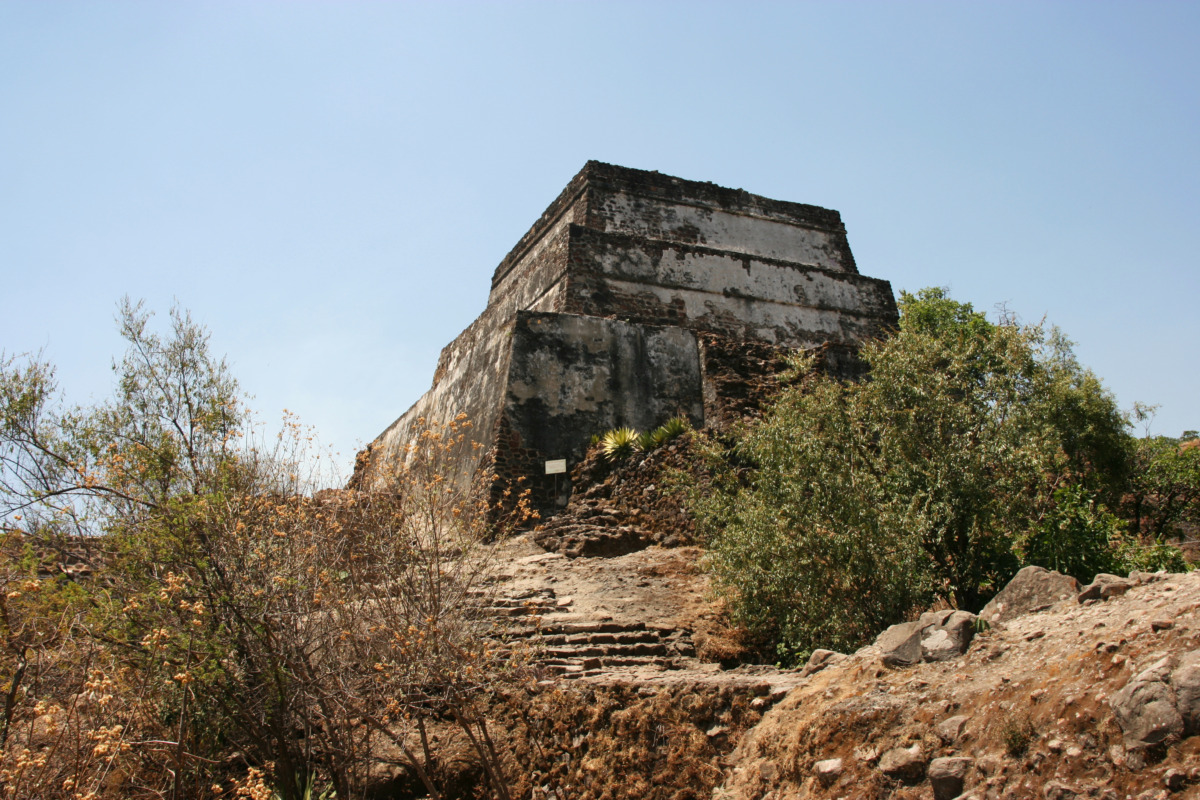
The ranking continues with one of the most fascinating yet challenging sites to reach. El Tepozteco lies at the peak of a Mexican rainforest mountain in the Magic Town of Tepoztlan in Morelos.
How ancient inhabitants built this temple at the top of the Sierra de Tepoztlan is still a secret. Sitting 2,310 meters above sea level, El Tepozteco features a 6.4-meter high platform supporting a temple base that is 3.3 meters high. It attracts tourists from all over the world.
However, researchers said this temple was the playground for praising Tepoztecatl, the Aztec God of the alcoholic beverage pulque.
Getting there is the whole experience: the trail up the Sierra de Tepoztlan is a steep, rocky climb of roughly two kilometers that most people take an hour or more to finish, and there is no shortcut. The reward is the temple platform and a panoramic view back over Tepoztlan and the valley.
See Related: Best Sabbatical Destinations
9. Monte Alban
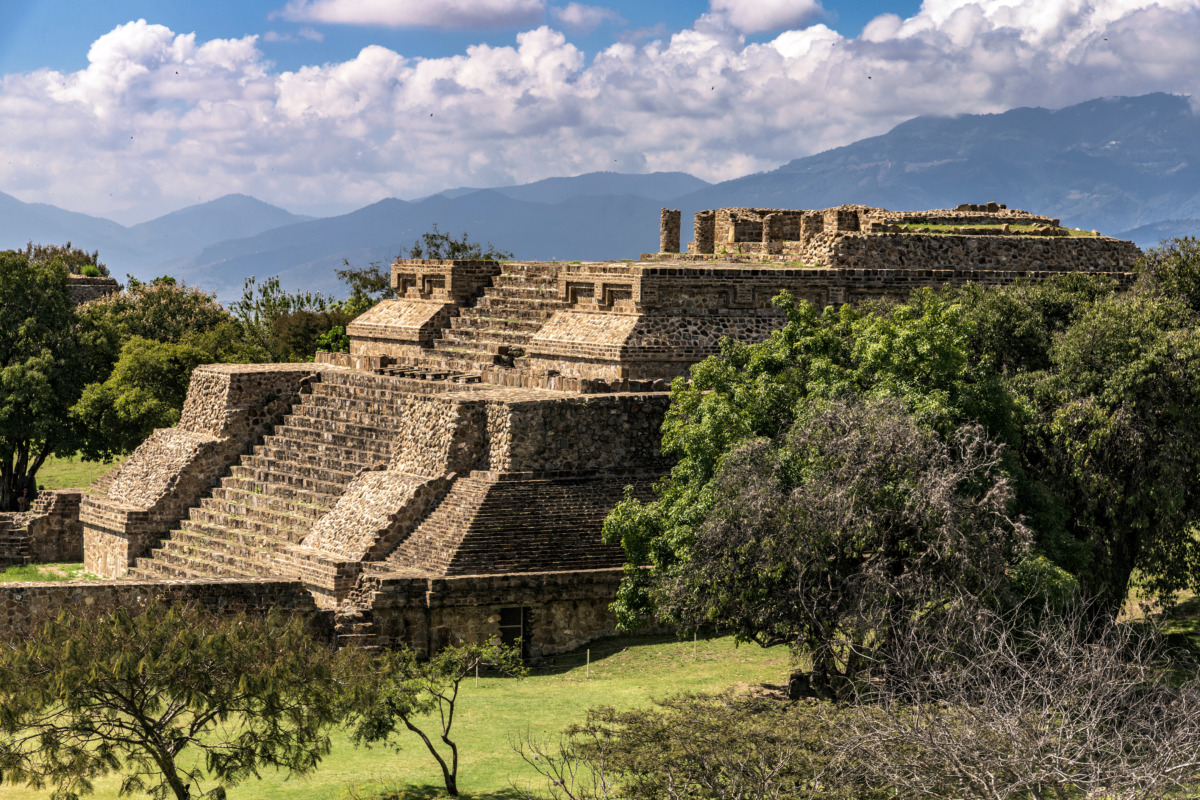
Monte Alban is Zapotec, not Maya, and it is the oldest continuously occupied city on this list – the capital of the Zapotec state for well over a thousand years. It sits on a leveled ridge in the Valley of Oaxaca, in the southern Mexican state of Oaxaca, and the builders flattened an entire mountaintop to make room for it.
Founded in the 6th Century BC, the site rises around 1,300 feet from the valley and has an elevation of 6,400 feet, overlooking the city of Oaxaca. It has been declared a UNESCO World Heritage site since 1987.

The site includes various structures, including pyramids, temples, plazas, underground passageways, and the most sophisticated tomb system in the pre-Columbian Americas, with over 150 tombs.
As it is on high ground, you will have an unparalleled view once you reach the top. However, Monte Alban is threatened by human urbanization. As humans continue to expand, Monte Alban is losing land.
8. Calakmul

Calakmul is one of the well-known Mayan ruins in the Mexican state of Campeche. Located in the jungles of the greater Peten Basin region, this ancient Mayan site never fails to impress its visitors.
Around 22 miles from the Guatemalan border, Calakmul was one of the most powerful and largest ancient cities ever found in the Maya lowlands.
There are around 6,750 identified ancient structures in Calakmul, and the Great Pyramid is the tallest one – over 45 meters high.

The site is so isolated that you will feel immersed in Calakmul’s natural beauty as you spend some time there.
The unique structures and tombs make this site well worth the trip. One of the best ways to reach this Mayan ruin is by hiring a car – it’s over four hours each way.
See Related: Family Travel Hacks You Need to Know
7. Uxmal Archaeological Site

Uxmal is a well-known ancient Mayan city of the Maya Civilization. It was located in northwest Yucatan and developed between the 6th and 10th Centuries CE.
Uxmal is considered one of the famous Mayan ruins of Maya culture. The site represents the Puuc architectural style – which flourished in the Late Classic Period.
Though there are several pyramids, the ‘Pyramid of the Magician’ is the major attraction of this archaeological site. You can’t climb the main pyramid but can mount a couple of others.

The Governor’s Palace, the Zona Arqueologica de Uxmal, and the Throne of the Jaguar are other famous sites to explore in Uxmal.
Additionally, you will encounter several traditional Mayan symbols across this ancient Maya city. Moreover, Uxmal has been designated a World Heritage site since 1996. It is, indeed, an eye-catching spot to explore.
See Related: How to Book a Flight Without a Credit Card
6. Zona Arqueologica Palenque
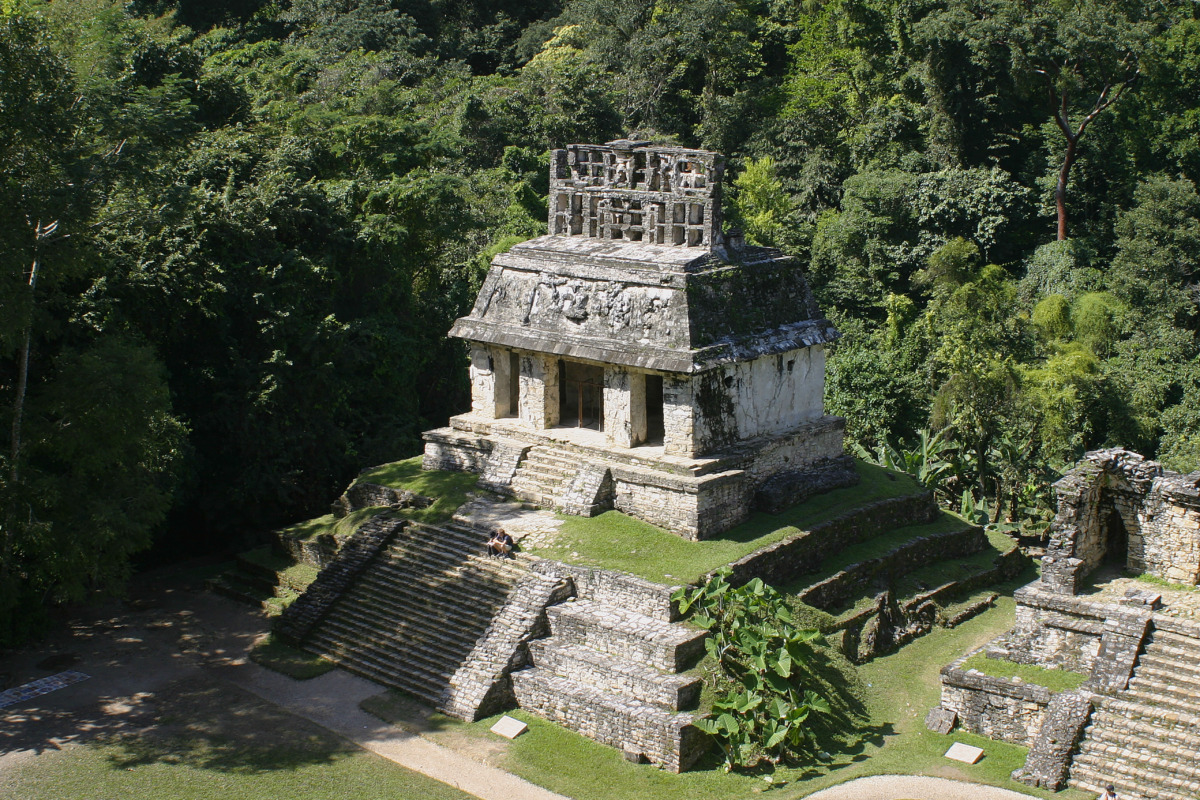
Palenque, flourishing between 600 and 750 CE, is another well-known ancient Mayan city north of Chiapas. Situated in the dense jungles of Chiapas, Zona Arqueologica Palenque will shock you.
This site is famous for its well-crafted architecture and stunning sculptural art. This archaeology in Mexico will tell you everything you need to know about Mayan architecture.
Palenque is the home of the Temple of the Inscriptions – not the largest Maya pyramid, but arguably the most important one, because of what was found inside it. In 1952 the archaeologist Alberto Ruz Lhuillier worked his way down a hidden stairway inside the structure and reached the intact tomb of K’inich Janaab’ Pakal, the ruler who governed Palenque for 68 years, still wearing his jade mosaic mask. The tallest Maya structure in Mexico is elsewhere on this list: Calakmul’s Great Pyramid.
Nevertheless, Palenque has so much more to offer. You will come across the Temple of the Cross, the Temple of the Sun, the Temple of the Skulls, the Temple of the Foliated Cross, and other sites.
Palenque is not Mexico’s busiest site – Chichen Itza and Teotihuacan trade that title between them – and that is precisely the argument for going. The carving here is the finest in the Maya world, the jungle presses right up against the plazas, and you can stand in front of the Temple of the Cross without queuing behind a coach party. Palenque has had its own Tren Maya station since January 2024, which makes it far easier to reach than it was a few years ago.
Additionally, you can also see the Palace and the aqueduct. It is impossible not to get lost there.
Never hesitate to explore for further information about Palenque, economic trips, or in-budget travels. Click on GetYourGuide to find the best options for you, or you can book a tour here.
See Related: Best Gifts for Couples Who Love to Travel
5. Tonina Archaeological Zone

Tonina Archaeological Zone is another exceptional tourist destination for those looking for ancient ruins in Mexico. It is another ancient Maya civilization and a close rival of Palenque.
Situated in Chiapas, this spot has a diversity of pyramids that serve as temples. You can see an extensive ballcourt – used to play the Mesoamerican ballgame.
This Mayan ruin is distinguished by its in-the-round carved monuments and well-preserved stucco sculptures. These structures will make you wonder how on earth ancient inhabitants built them.
The place is breathtaking itself as it is in the middle of the jungle. And, of course, it is a beautiful place to visit any time of the year. The city is well-known for having the last known worldwide Maya Calendar. Without a doubt, this is a trip you will love to do.
See Related: Best Lightweight Travel Clothing for Hot Climates
4. Tulum Ruins

Tulum is a major Mayan city that functioned as a fortress around the 14th and 15th centuries. It is located in the Caribbean Quintana Roo state and is one of Mexico’s most visited ancient ruins.
Since the site faces the Caribbean Sea, Mayans utilized Tulum as land, a sea route for trade, and a fort defense against invasions.
The Pyramid El Castillo (the castle) is the most famous structure in Tulum. However, the Temple of the Frescoes and the Temple of the Descending God are also trademarks in Tulum.
Millions of visitors delight themselves each year by exploring these Mayan ruins. Also, Tulum is near Mexico’s most famous city, Cancun, which is only 81 miles apart. You can cover this distance within 1.5 to 2 hours by road, depending on the weather.
No matter when you are traveling to Mexico, Tulum should always be on your bucket list. Book a Tulum Archaeological Site and Cenote Guided Tour here.
See Related: Tulum vs Cancun
3. Chichen Itza

Famous worldwide, Chichen Itza is a spectacular site in the modern-day state of Yucatan, in the Yucatan Peninsula. One glance will tell you everything you need to know about its beauty and majesty by itself only – no words needed.
Chichen Itza is a UNESCO World Heritage site, and once you reach it, you can easily guess why. It is a well-preserved ancient Mayan city in Mexican territory that attracts millions of tourists and locals each year.
The site features many uniquely designed buildings to explore. However, the pyramid El Castillo, or Temple of Kukulcan, is the most famous structure.

There are countless other impressive stories to explore, making it one of Mexico’s most visited archaeological sites.
Thirteen ballcourts have been identified across the site, used for the Mesoamerican ballgame. The Great Ball Court is by far the largest anywhere in Mesoamerica: the playing alley runs about 168 meters (551 feet) long and 70 meters wide, walled by stone rings set roughly 6 meters up. Stand at one end and a normal speaking voice carries to the other.
The Temple of the Warriors is another must-see in the area. This pyramid portrays a warrior formation and attracts many visitors. In addition, the Sacred Cenote is another spot worth seeing. Cenotes are natural sinkholes that are very common in the Yucatan Peninsula.
Indeed, Chichen Itza has its own water-filled Cenote, where Mayans used to perform human sacrifices as devotion to the Maya rain god Chaac.
This ancient site is normally Mexico’s most visited, drawing 7,000 to 9,000 people on an average day, though 2026 has been an unusual year: INAH recorded 984,119 visitors in the first half of 2026, down 13.8 percent year on year, after a 13-day closure in May caused by a dispute over relocating vendors. The site reopened on June 1, 2026.
How Do You Enter Chichen Itza Now?
Through a new gate, and the walk is longer than you expect. The old entrance is closed permanently. All visitors now arrive through the Centro de Atencion a Visitantes (CATVI), a 40-acre complex built for 794.2 million pesos as part of the Tren Maya infrastructure, with its own rail station and 517 parking spaces. Parking runs 125 pesos for cars and motorcycles, 150 for vans and 200 for buses, where it used to be cheap or free. From CATVI to the main plaza is close to a mile on foot, past the Sacred Cenote and a long line of vendors – and then the same mile back. Budget the extra half hour each way, wear real shoes, and carry water. The Gran Museo de Chichen Itza sits inside the complex with nearly 1,000 artifacts recovered during the Tren Maya excavations, and almost nobody finds it because it is barely signposted. It is a short walk from the ticket booths and worth the detour. If you’re in Mexico to explore archeological sites, your trip is almost incomplete without taking a tour of Chichen Itza.
In addition, this Chichen Itza English Tour provides the best trips to Chichen Itza and all Yucatan Peninsula. You can also book this guided tour.
See Related: How Long Does it Take to Travel Around the World?
2. Cholula

Cholula deserves a shout-out on this list. Situated in the metropolitan area of Puebla, this is one of the best sites to visit in Mexico.
The Great Pyramid of Cholula is one of the main attractions of Cholula. This archaeological site is a giant construction with seven pyramids to discover.
It is not the tallest pyramid anywhere – at roughly 55 meters it is shorter than Giza and shorter than several Maya pyramids on this list. What it holds is the volume record: the Great Pyramid of Cholula is the largest monument by volume ever built anywhere on Earth, roughly twice the volume of the Great Pyramid of Giza, because successive peoples kept building new pyramids over the old ones for more than a thousand years. From the outside it reads as a hill with a colonial church on top, which is exactly what the Spanish thought when they built the Iglesia de Nuestra Senora de los Remedios up there in the 1590s.
Apart from the Great Pyramid of Cholula, the city offers several other cool things to do. The list includes hiking in Cerro Zapotecas, exploring Container City, and cherishing history at the Museo Regional de Cholula.
Since the city offers many things to do around the year, this famous site is well worth visiting. This Puebla and Cholula Day Trip will make your day!
1. Teotihuacan
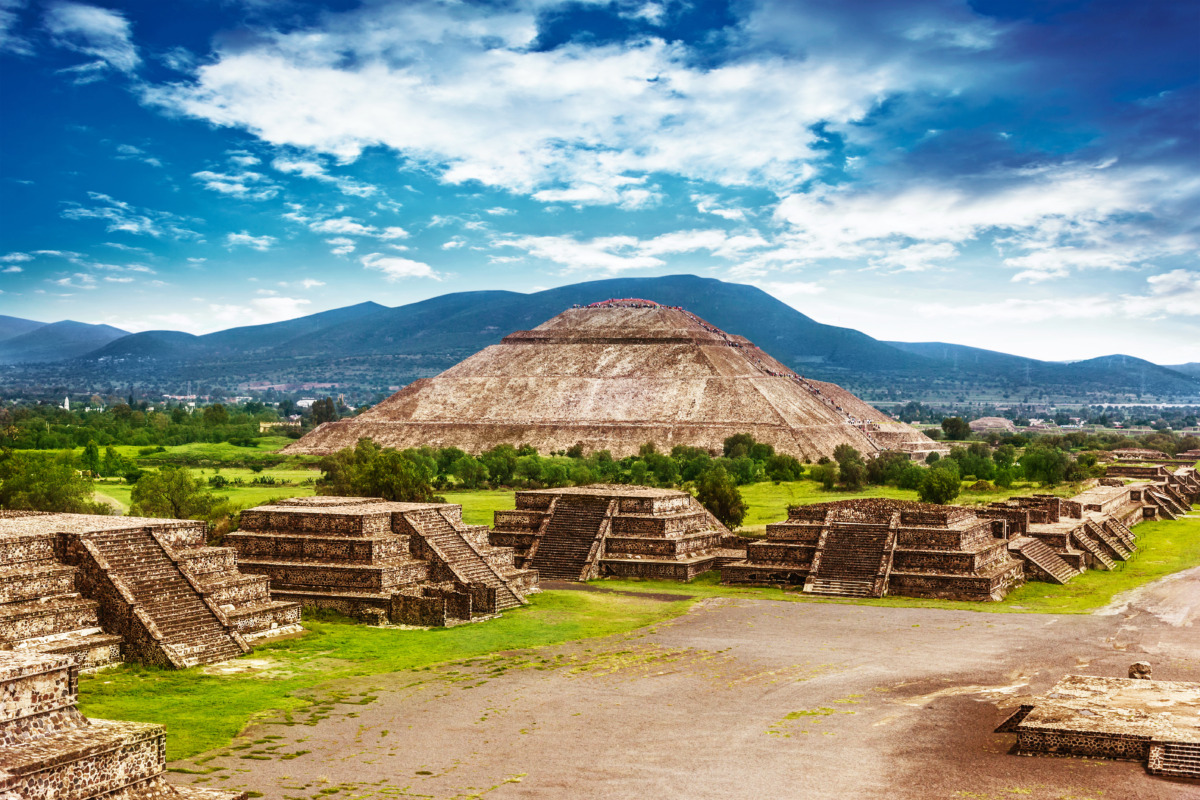
Teotihuacan is the largest ancient city in the Americas and the one most often mislabeled. It is not Maya and it is not Aztec. It was a multi-ethnic central Mexican metropolis that peaked around 400 to 500 CE, held perhaps 100,000 people, and was already an abandoned ruin when the Mexica arrived centuries later and gave it the Nahuatl name we still use, meaning roughly “the place where the gods were created.” Nobody knows for certain what its builders called it or what language they spoke.
Teotihuacan lies about 25 miles northeast of Mexico City and covers roughly 8 square miles, which makes it a full day rather than a morning. It runs neck and neck with Chichen Itza for the title of most visited archaeological zone in Mexico, and took the top spot outright in mid-2026 while Chichen Itza’s numbers fell. Go on a weekday and start at the northern end, at the Pyramid of the Moon, so the sun is behind you as you walk south down the Avenue of the Dead.
This gorgeous site is famous for its colorful murals designed on plastered walls. You can also find them in the city’s apartment compounds, temples, and palaces.
Its influence reached the Maya world rather than coming from it. Teotihuacan-style architecture, obsidian and imagery turn up hundreds of miles away at Maya cities including Tikal, and in 378 CE a figure recorded in Maya inscriptions as Sihyaj K’ahk’ arrived at Tikal and installed a new dynasty – an event most archaeologists read as Teotihuacan projecting power deep into the Maya lowlands.
Pyramid of the Sun
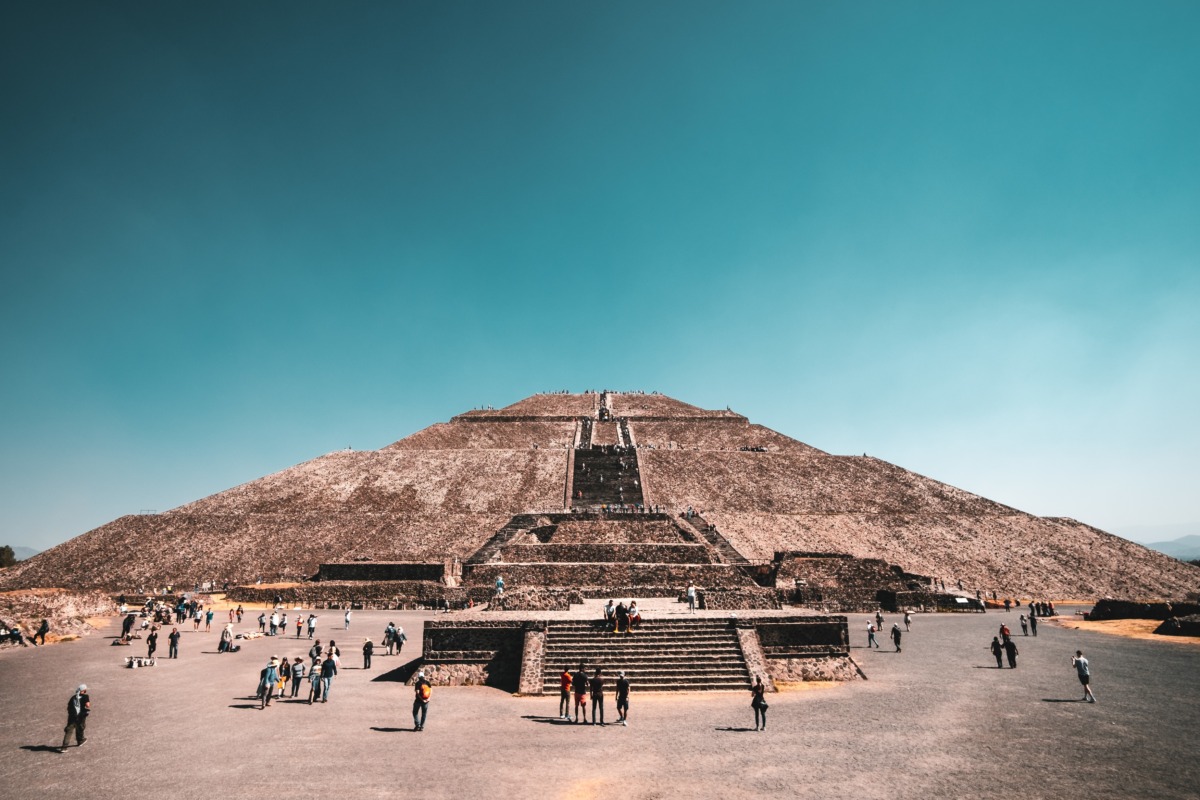
The Pyramid of the Sun is the seventh largest pyramid in the world. It is 65.5 meters high, 220 meters long, and 224 meters wide. It is also the largest pyramid in Teotihuacan City and one of the largest in the Mesoamerican region.
Pyramid of the Moon
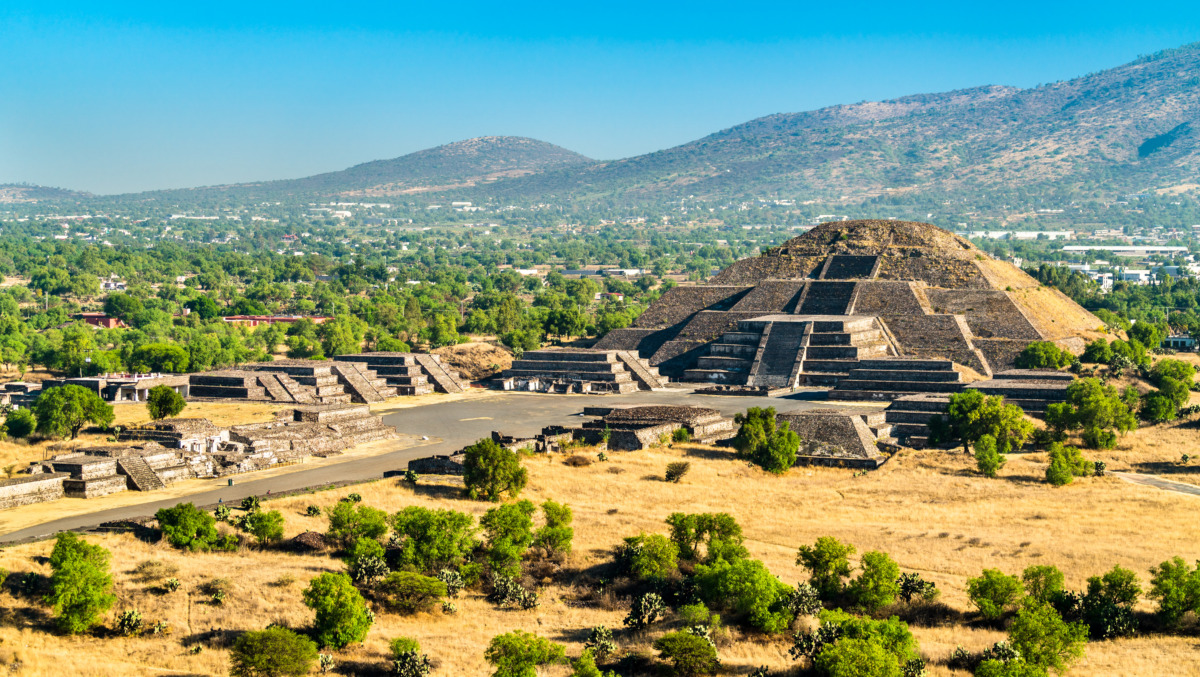
The Pyramid of the Moon is the second-largest structure in Mesoamerica. Located at the end of the Avenue of the Dead, this pyramid stands 43 meters high and measures 130 by 156 meters at its base.
Avenue of the Dead
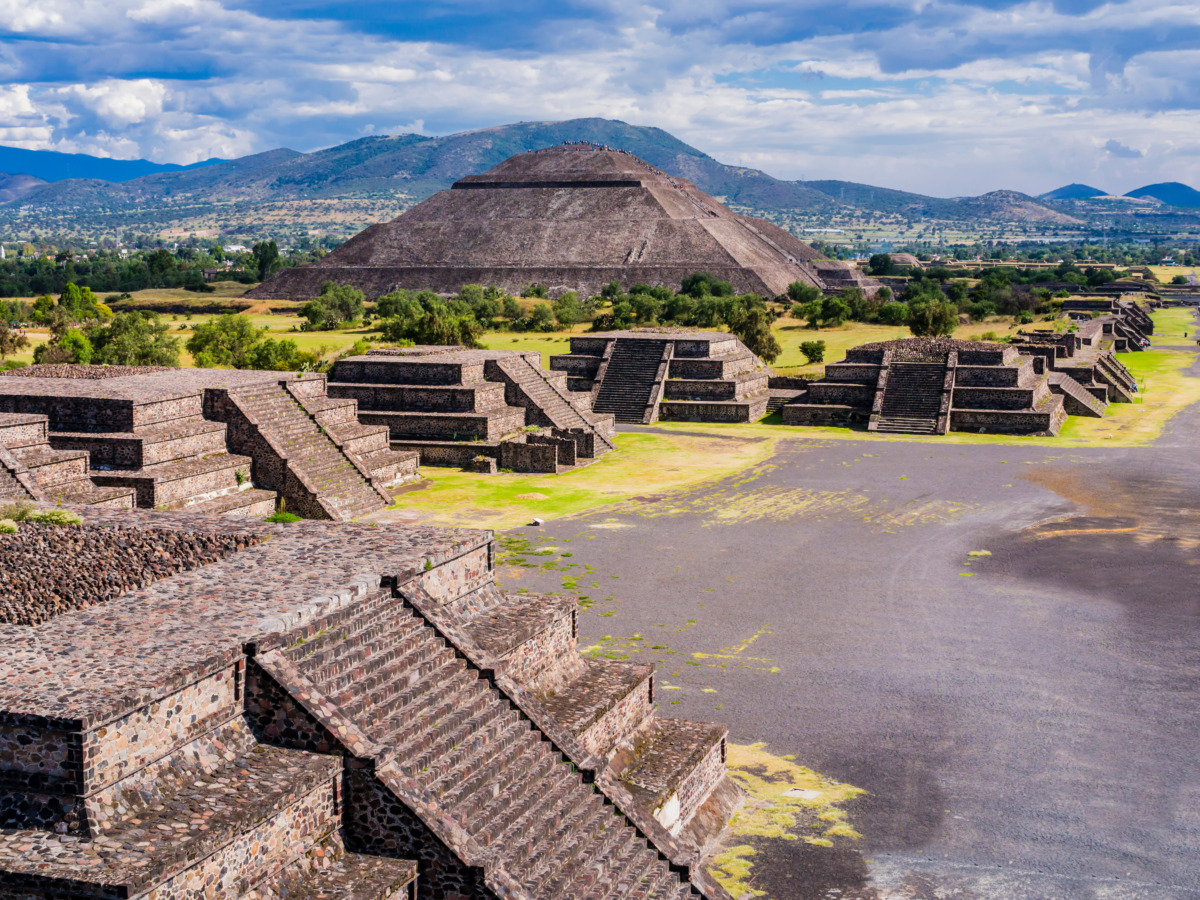
The massive Avenue of the Dead is the main road between the pyramids in Teotihuacan. The path is roughly 4 km in length and 40 meters in width. Take a walk on the Avenue of the Dead to see this dream tourist site.
Spring Equinox

Spring Equinox is an annual event at Mexico’s Teotihuacan around the 20th and 21st of March. Lots of people visit the Pyramid of the Sun at this event. As a ritual, they usually wear white clothes and stand with arms outstretched, facing the sun to receive “positive energies” from above.
However, archaeologists Sergio Gomez Chavez and Alejandro Sarabia stated that this activity has nothing to do with the Teotihuacan tradition. The accumulation of people could harm and deteriorate the pyramids.
If you plan to visit Teotihuacan, GetYourGuide has many affordable offers, such as a Teotihuacan Tour or Teotihuacan and Tlatelolco Day Trip. Don’t miss out!
See Related: Mexico vs Costa Rica
FAQs
What is the most famous archaeological site in Mexico?
The most famous archaeological site in Mexico is Chichen Itza, on the Yucatan Peninsula, and it is normally the most visited as well, at 7,000 to 9,000 people on an average day. It was once a major Mayan city known for its impressive pyramids, including the iconic El Castillo. Chichen Itza was designated a UNESCO World Heritage Site in 1988, attracting millions yearly visitors.
How many archeological sites are in Mexico?
Mexico has registered tens of thousands of archaeological sites, but only 194 archaeological zones (plus one paleontological zone) are open to the public, 365 days a year, under INAH. These include ancient ruins from the Maya, Aztecs, and other pre-Columbian civilizations.
Many of these sites are open to the public and offer visitors a glimpse into Mexico’s rich history and culture. Despite the large number of registered sites, many more likely remain undiscovered or unexplored, making Mexico a fascinating destination for archeologists and history enthusiasts.
What is the importance of archeology in today’s world?
Archaeology is a way of taking a dip into ancient cultures and traditions by studying artifacts. This gives an insight into the life of ancient people with no written records.
Why are archeological sites important?
An archaeological site is a location that displays historical and cultural artifacts with crucial information. It provides solid evidence that proves centuries-old stories or cultures.
If you’re curious about history, consider exploring archaeological sites to discover ancient cultures or traditions.
Related Resources