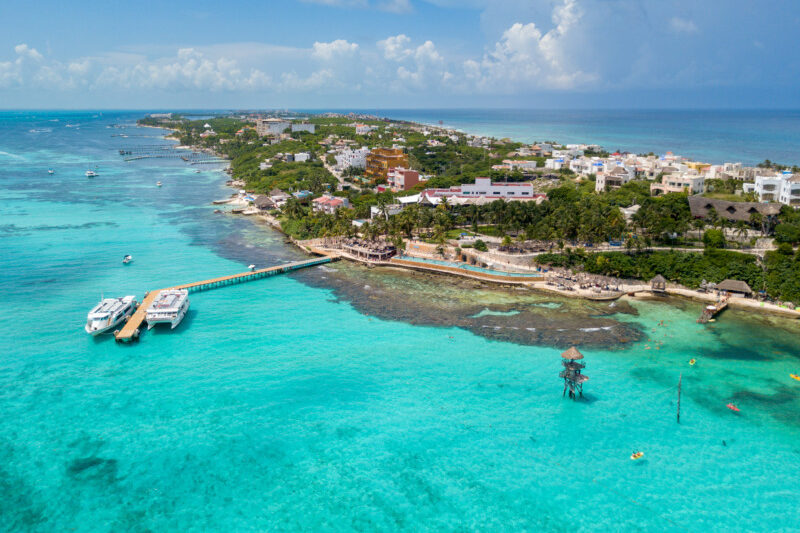
Mexico captivates travelers with its extraordinary diversity, from ancient ruins and colonial cities to pristine beaches and vibrant contemporary culture. Explore the archaeological wonders of Chichen Itza and Teotihuacan, where massive pyramids reveal the sophisticated achievements of pre-Hispanic civilizations. In colonial towns like San Miguel de Allende and Oaxaca, cobblestone streets lead to baroque churches and lively markets selling regional handicrafts. Along Mexico’s extensive coastline, the Caribbean waters of the Riviera Maya contrast with the powerful Pacific surf of destinations like Puerto Escondido. Dive into Mexico’s world-renowned cuisine, from street tacos to mole sauces, alongside artisanal mezcal and tequila. Throughout the country, lively festivals showcase Mexico’s deep cultural traditions, where indigenous heritage blends with Spanish influences, creating a colorful, hospitable destination that rewards both first-time visitors and lifelong explorers.
Mexico
Country in Mexico, North AmericaUpdated
- Overall6/10
- Best forCouples, Budget travelers
- PeakJan, Mar, Nov, Dec
- CurrencyMXN
Oaxaca’s markets, Teotihuacan at dawn, and a $2 street taco better than any resort meal — Mexico keeps delivering at every price point.

At a glance
- Spanish (official)
- 68 recognised indigenous languages including Náhuatl
- Maya
- and Zapotec
- Desert landscapes
- Tropical coast
- Mountain ranges
- Ancient ruins
- Archaeology
- Food & Drink
- Beach
- Culture
- Adventure
- History
How Mexico scores
Character
Editorial scores on a 10-point scale, weighed against destinations of the same kind.
Travel safety snapshot
SafePlace indicators use their source 100-point scale; higher is more favourable. Planning context, not a live travel advisory — check official government guidance before you go.
When to go
Best months to visit: January, February, March, April, May, October, November and December.
- January: 7.2 to 22.2 degrees Celsius, 9.1 millimetres of rain, best-time score 5 out of 5.
- February: 8.4 to 24.5 degrees Celsius, 8.6 millimetres of rain, best-time score 5 out of 5.
- March: 10.4 to 26.7 degrees Celsius, 20 millimetres of rain, best-time score 5 out of 5.
- April: 12 to 27.5 degrees Celsius, 30.3 millimetres of rain, best-time score 5 out of 5.
- May: 13.3 to 27.6 degrees Celsius, 68.7 millimetres of rain, best-time score 4 out of 5.
- June: 13.5 to 24.8 degrees Celsius, 179.9 millimetres of rain, best-time score 3 out of 5.
- July: 12.8 to 22.7 degrees Celsius, 232.1 millimetres of rain, best-time score 3 out of 5.
- August: 12.8 to 22.7 degrees Celsius, 249.4 millimetres of rain, best-time score 3 out of 5.
- September: 12.8 to 22.4 degrees Celsius, 227.5 millimetres of rain, best-time score 2 out of 5.
- October: 11.3 to 22.5 degrees Celsius, 88.2 millimetres of rain, best-time score 4 out of 5.
- November: 9.4 to 23 degrees Celsius, 22.8 millimetres of rain, best-time score 5 out of 5.
- December: 7.8 to 22.1 degrees Celsius, 8 millimetres of rain, best-time score 5 out of 5.
Month-by-month conditions and packing advice
- January
- Mild to warm, mostly dry January in Mexico: dry-season beaches, cities, ruins, food regions, colonial towns, and road trips are most reliable. Crowds: January in Mexico is comfortable for sightseeing, neighborhoods, food stops, day trips, and outdoor time with limited weather friction. Pack: Pack layered clothing and comfortable walking shoes.
- February
- Mild to warm, mostly dry February in Mexico: dry-season beaches, cities, ruins, food regions, colonial towns, and road trips are most reliable. Crowds: February in Mexico is comfortable for sightseeing, neighborhoods, food stops, day trips, and outdoor time with limited weather friction. Pack: Pack light clothing, sun protection, and comfortable walking shoes.
- March
- Mild to warm, mostly dry March in Mexico: dry-season beaches, cities, ruins, food regions, colonial towns, and road trips are most reliable. Crowds: March in Mexico is comfortable for sightseeing, neighborhoods, food stops, day trips, and outdoor time with limited weather friction. Pack: Pack light clothing, sun protection, and comfortable walking shoes.
- April
- Warm to hot, occasional rain April in Mexico: dry-season beaches, cities, ruins, food regions, colonial towns, and road trips are most reliable. Crowds: April in Mexico is comfortable for sightseeing, neighborhoods, food stops, day trips, and outdoor time with limited weather friction. Pack: Pack light clothing, sun protection, and comfortable walking shoes.
- May
- Warm to hot, occasional rain May in Mexico: shoulder timing can work with heat, value, or post-rain freshness. Crowds: May in Mexico is comfortable for sightseeing, neighborhoods, food stops, day trips, and outdoor time with limited weather friction. Pack: Pack light clothing, sun protection, and comfortable walking shoes.
- June
- Mild to warm, rainy June in Mexico: rain, humidity, and storm risk increase, but flexible regional trips can still work. Crowds: June in Mexico is one of the wetter periods, so museums, food stops, flexible reservations, and backup indoor plans make the trip easier. Pack: Pack light clothing, sun protection, and comfortable walking shoes. Add a rain jacket or compact umbrella.
- July
- Mild to warm, rainy July in Mexico: rain, humidity, and storm risk increase, but flexible regional trips can still work. Crowds: July in Mexico is one of the wetter periods, so museums, food stops, flexible reservations, and backup indoor plans make the trip easier. Pack: Pack layered clothing and comfortable walking shoes. Add a rain jacket or compact umbrella.
- August
- Mild to warm, rainy August in Mexico: rain, humidity, and storm risk increase, but flexible regional trips can still work. Crowds: August in Mexico is one of the wetter periods, so museums, food stops, flexible reservations, and backup indoor plans make the trip easier. Pack: Pack layered clothing and comfortable walking shoes. Add a rain jacket or compact umbrella.
- September
- Mild to warm, rainy September in Mexico: peak rain and hurricane-season risk make broad travel less dependable. Crowds: September in Mexico is one of the wetter periods, so museums, food stops, flexible reservations, and backup indoor plans make the trip easier. Pack: Pack layered clothing and comfortable walking shoes. Add a rain jacket or compact umbrella.
- October
- Mild to warm, some rain October in Mexico: shoulder timing can work with heat, value, or post-rain freshness. Crowds: October in Mexico is workable with normal seasonal planning; build in layers, weather checks, and a mix of indoor and outdoor activities. Pack: Pack layered clothing and comfortable walking shoes. Add a rain jacket or compact umbrella.
- November
- Mild to warm, mostly dry November in Mexico: dry-season beaches, cities, ruins, food regions, colonial towns, and road trips are most reliable. Crowds: November in Mexico is comfortable for sightseeing, neighborhoods, food stops, day trips, and outdoor time with limited weather friction. Pack: Pack layered clothing and comfortable walking shoes.
- December
- Mild to warm, mostly dry December in Mexico: dry-season beaches, cities, ruins, food regions, colonial towns, and road trips are most reliable. Crowds: December in Mexico is comfortable for sightseeing, neighborhoods, food stops, day trips, and outdoor time with limited weather friction. Pack: Pack layered clothing and comfortable walking shoes.
- November
- December
- January
- March
- June
- July
- August
- September
Know before you go
About
Mexico, a country in southern North America, is the world’s most populous Spanish-speaking nation, home to about 126 million people (2020 census) and centered on its sprawling capital, Mexico City. A federation of 31 states plus the capital, it carries the legacy of the Maya and Aztec civilizations, seen at UNESCO-listed sites such as Chichén Itzá on the Yucatán Peninsula and Teotihuacán northeast of Mexico City. The country holds more than 35 UNESCO World Heritage Sites, the most in the Americas, and its traditional cuisine was inscribed on UNESCO’s Intangible Cultural Heritage list in 2010. Travelers come for the beach resorts of Cancún and the Riviera Maya, the deserts and capes of Baja California, colonial cities like Oaxaca and Guanajuato, and a vibrant culture of festivals, markets, and food spanning Pacific and Caribbean coasts.
Best time to visit
Dry season (December–April) for sunshine and festivals; shoulder months (May, November) for fewer crowds and lower prices
Season by season
Winter (Dec–Feb): dry, warm, peak season for beach resorts, whale watching in Baja. Spring (Mar–May): dry, warming, Spring Break crowds on Caribbean coast. Summer (Jun–Aug): rainy season begins, lush greenery, baby turtle releases, lower prices. Autumn (Sep–Nov): Independence Day (September 16), Día de los Muertos (November 1–2), lighter rains by November.
Crowds
High in Cancún and Riviera Maya during winter/spring break; moderate elsewhere; low in rainy season
Getting there and around
Getting there
Mexico City’s Benito Juárez International Airport (MEX) and Cancún International Airport (CUN) are the main international gateways. Guadalajara (GDL), Monterrey (MTY), and Los Cabos (SJD) also receive direct international flights. Land border crossings from the United States are available at Tijuana, Nogales, Ciudad Juárez, and others.
Getting around
First-class buses (ADO, ETN, Estrella Blanca) are comfortable, safe, and affordable, connecting most cities. Mexico City has an extensive Metro (12 lines) and Metrobuses. Uber and DiDi operate in all major cities and are generally safer than hailing street taxis. Colectivos (shared vans) are common for regional routes. Domestic flights (Volaris, VivaAerobus) are inexpensive for longer distances. Renting a car suits Yucatán road trips but is not recommended in Mexico City due to traffic.
Top experiences in Mexico
Chichén Itzá, Yucatán
A UNESCO World Heritage Site and one of the New Seven Wonders of the World. The Maya city’s El Castillo pyramid produces a shadow serpent effect during the equinox. Arrive at opening to beat tour-bus crowds.
Mexico City Historic Centre
A UNESCO-listed concentration of Aztec, colonial, and modern landmarks spanning the Zócalo (main square), Templo Mayor ruins, Palacio de Bellas Artes, and Diego Rivera murals at the National Palace.
Tulum Ruins
A clifftop Maya fortress overlooking the Caribbean Sea on the Riviera Maya. The photogenic ruins sit above a turquoise-water cove where visitors swim after exploring the archaeological site.
Copper Canyon (Barrancas del Cobre)
A network of canyons larger and deeper than the Grand Canyon in the Sierra Madre Occidental. The Chepe railroad (El Chepe) winds through the gorges over 37 bridges and through 86 tunnels.
Oaxaca & Monte Albán
Oaxaca city is a UNESCO World Heritage centre known for mezcal, mole, and textile markets. Nearby Monte Albán, the ancient Zapotec capital perched on a flattened mountaintop, dates to 500 BC.
Editor-curated picks carried over from our original guide. Where a full place guide exists, the card links to it.
Where to stay
Four Seasons Hotel Mexico City
Paseo de la Reforma 439, Cuauhtémoc, 06500 CDMX, Mexico
A neoclassical 1910 palace on Paseo de la Reforma with 167 rooms, a Michelin-starred restaurant by Enrique Olvera, a rooftop infinity pool with Chapultepec views, and one of Latin America’s finest hotel spas.
Hilton Cancun Mar Caribe
Blvd. Kukulcán Km 14.5, Zona Hotelera, 77500 Cancún, Q.R., Mexico
A 679-room beachfront mega-resort on the Caribbean with an 18-hole Robert Trent Jones II golf course, Nixup spa, six restaurants, a swim-up bar, and direct beach access on Cancún’s Hotel Zone.
Hotel Almar Resort, Puerto Vallarta
Calle Basilio Badillo 168, Zona Romántica, 48380 Puerto Vallarta, Jalisco, Mexico
A boutique 16-room adults-only hotel in Puerto Vallarta’s Zona Romántica, with a rooftop pool, Mexican-contemporary décor, in-room jacuzzis, and steps from Los Muertos Beach.
Editor-curated stays carried over from our original guide. Where we have reviewed the hotel, the card links to the review.
Tips from the field
Highlights
- Chichén Itzá — Maya pyramid and equinox phenomenon
- Mexico City — world-class museums, murals, and street food
- Tulum — clifftop ruins over Caribbean waters
- Oaxaca — mezcal, mole, and Monte Albán
- Copper Canyon — scenic Chepe railway
- Cenotes — crystal-clear sinkholes for swimming
- Día de los Muertos — UNESCO cultural celebration
Best activities
- Explore Chichén Itzá at dawn, snorkel in cenotes near Valladolid, take a food tour of Mexico City's markets, ride the Chepe train through Copper Canyon, surf in Sayulita, swim with whale sharks off Isla Holbox, visit Frida Kahlo's Casa Azul, taste mezcal in Oaxaca.
Local experiences
- Join a Día de los Muertos ofrenda ceremony in Mixquic, take a cooking class in a Oaxacan market, swim in Cenote Ik Kil near Chichén Itzá, ride a trajinera (colourful boat) through Xochimilco, sip mezcal at a family palenque in Santiago Matatlán, watch lucha libre wrestling in Mexico City's Arena México.
Practical tips
- Use official airport taxis or Uber from airports — avoid unlicensed cabs.
- Drink bottled water only; check that the seal is intact.
- Book bus tickets on the ADO website for cheaper 'webfare' rates.
- Carry small bills and coins — many vendors cannot break large notes.
- Don't drink the ice in street stalls (restaurants generally use purified ice).
Photography tips
- Chichén Itzá's El Castillo faces west — shoot at sunrise for front-lit stone without harsh shadows. Cenote Suytun's light beam hits the centre platform around 11 AM. Guanajuato's coloured hillside houses look best from the Pípila monument at golden hour. Oaxaca's alebrijes (wooden folk art) pop against adobe walls. Mexico City's Palacio de Bellas Artes at twilight reflects in the rain-wet plaza.
Timing
- Plan 4–5 days for Mexico City, 4–5 days for the Yucatán Peninsula (Cancún–Valladolid–Chichén Itzá–Tulum), and 3–4 days for Oaxaca. A comprehensive trip covering multiple regions needs 14–21 days.
Keeping it authentic
- Mexican culture remains rooted in pre-Hispanic and colonial fusion. Día de los Muertos (1–2 November) is a genuine family tradition, not a festival staged for tourists
- communities build private ofrendas (altars) with marigolds, photos, and favourite foods. Street-food culture — tacos al pastor, elotes, tamales — is deeply local and varies from state to state. Traditional mezcal production follows centuries-old methods in Oaxaca.
Culture, customs and safety
Cultural heritage
Mexico holds 35 UNESCO World Heritage Sites — the most in the Americas. Ancient civilizations (Maya, Aztec, Zapotec, Olmec) left pyramids, glyphs, and temples across the country. Spanish colonial architecture fills cities like Guanajuato, San Miguel de Allende, and Morelia. Mexican cuisine is itself UNESCO Intangible Heritage, alongside mariachi music, Día de los Muertos, and the traditional Voladores ceremony.
Local customs & etiquette
Greet with a handshake; close friends and family exchange a single cheek kiss. Use the formal ‘usted’ with elders and strangers. Punctuality is relaxed for social engagements (‘hora mexicana’) but expected for business. Tipping 10–15% in restaurants is standard. Bargaining is welcome in markets but not in shops. Ask permission before photographing indigenous people. Remove hats in churches.
Safety notes
Tourist areas (Cancún, Playa del Carmen, Puerto Vallarta, San Miguel de Allende, Mexico City’s centro) are well-policed and generally safe. Avoid travel to states under Level 4 advisory (Colima, Guerrero, Sinaloa, Tamaulipas, Michoacan). Don’t drive highways at night. Use ATMs inside banks. Stick to official taxis or ride-hail apps. Emergency number: 911.