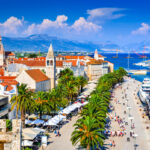
Split vs Trogir: Which Croatian Coastal Gem is Better to Visit in 2026?


The verdict
Split wins overall (8.6 vs 7.4 out of 10), taking 5 of 5 categories.
While both Split and Trogir offer stunning historical attractions and coastal charm, Split emerges as the better overall destination due to its larger size, more diverse offerings, better accessibility, and a wider range of accommodation and dining options. However, Trogir's intimate atmosphere and well-preserved medieval core make it an excellent choice for those seeking a more tranquil experience.
Trogir shows slightly lower average dining cost; overall Croatian coastal prices remain moderate. Split offers warmer, drier summers and milder winters than nearby Trogir, making it slightly more favorable year-round.
Best for well-rounded travelers — Split edges ahead overall.
Choose Split if…
You care most about
- Historical Attractions
- Beaches and Natural Beauty
- Gastronomy
- Accommodation
- Accessibility and Transportation
Overall scores are editorial ratings out of 10; category winners come from the per-category scores below. The overall pick is the higher overall score.
Overall scores
Category by category
| Category | Split | Trogir | Edge |
|---|---|---|---|
| Historical AttractionsComparison of ancient sites, architecture, and cultural heritage | 9 | 8 | Split |
| Beaches and Natural BeautyAnalysis of coastal areas, parks, and natural landscapes | 8 | 7 | Split |
| GastronomyEvaluation of local cuisine, restaurants, and food experiences | 9 | 8 | Split |
| AccommodationOverview of hotel options, variety, and accommodation experiences | 8 | 7 | Split |
| Accessibility and TransportationComparison of transport options, ease of access, and connectivity | 9 | 7 | Split |
Historical Attractions: the details
Split
- Diocletian's Palace – UNESCO site and living monument
- Peristyle Square – ancient Roman courtyard
- Temple of Jupiter – well-preserved Roman temple
Trogir
- Medieval Old Town – UNESCO World Heritage site
- Cathedral of St. Lawrence – Romanesque-Gothic masterpiece
- Kamerlengo Fortress – 15th-century Venetian castle
Beaches and Natural Beauty: the details
Split
- Bačvice Beach – popular city beach with shallow waters
- Marjan Forest Park – hiking trails and panoramic views
- Kasjuni Beach – pristine pebble beach beneath Marjan Hill
Trogir
- Okrug Gornji Beach – long pebble beach on Čiovo Island
- Pantan Nature Reserve – wetland area with bird watching
- Medena Beach – family-friendly beach with water sports
Gastronomy: the details
Split
- Konoba Fetivi – traditional Dalmatian tavern
- Green Market (Pazar) – fresh local produce and specialties
- Bokeria Kitchen & Wine Bar – modern Mediterranean cuisine
Trogir
- Konoba Trs – seafood restaurant in historic setting
- Alka Restaurant – fine dining with local ingredients
- Calebotta – family-run restaurant with traditional dishes
Accommodation: the details
Split
- Palace Judita Heritage Hotel – luxury in Diocletian's Palace
- Radisson Blu Resort & Spa – beachfront resort
- Hostels in Varoš neighborhood – budget-friendly options
Trogir
- XII Century Heritage Hotel – boutique hotel in Old Town
- Brown Beach House – design hotel on Čiovo Island
- Apartments in historic center – authentic local experience
Accessibility and Transportation: the details
Split
- Split Airport – major international airport
- Ferry port with connections to islands
- Extensive bus network and urban railway
Trogir
- Close proximity to Split Airport (5 km)
- Local buses to Split and nearby towns
- Water taxis to nearby islands and beaches
Who should pick which
Split vs Trogir: Which Should You Visit?
Both Split and Trogir are popular travel destinations, but they offer very different experiences. Whether you’re planning a quick getaway or a longer trip, understanding how they compare on weather, cost, things to do, and cultural depth helps you pick the right one for your travel style and budget.
Weather and Best Time to Visit
Split offers warmer, drier summers and milder winters than nearby Trogir, making it slightly more favorable year-round.
Split: Best months are June, July, August. 64 °F (Oct mean) to 89 °F (Jul high).
Trogir: Best months are June, July, August. 55 °F (winter highs) to 82 °F (summer highs).
Split: Best months are June, July, August. 64 °F (Oct mean) to 89 °F (Jul high).
Trogir: Best months are June, July, August. 55 °F (winter highs) to 82 °F (summer highs).
Weather winner: split
Cost of Travel and Daily Budget
Trogir shows slightly lower average dining cost; overall Croatian coastal prices remain moderate.
Sources: {‘name’: ‘Numbeo Cost of Living in Trogir’, ‘url’: ‘https://www.numbeo.com/cost-of-living/in/Trogir-Croatia’}, {‘name’: ‘Numbeo Cost of Living in Croatia’, ‘url’: ‘https://www.numbeo.com/cost-of-living/country_result.jsp?country=Croatia’}
Budget winner: trogir
Things to Do and Activities
Split hosts larger, recurring cultural and music festivals; Trogir has smaller, niche music events.
Activities winner: split
Culture, Heritage, and Local Life
Split blends grand Roman-era sites and high-profile festivals; Trogir offers more intimate medieval charm and quieter heritage.
Culture winner: split
The Bottom Line: Split or Trogir?
Split takes the edge in 3 out of 4 categories. However, both destinations have distinct strengths, and the best choice depends on your priorities.
Consider visiting Split if you prioritize better weather. Choose Trogir if affordability matters more to you.
Travel tips
- Consider visiting both Split and Trogir, as they are only 30 minutes apart by car or bus.
- Book accommodations in advance during peak summer season (July-August) in both cities.
- Use Split as a base for day trips to nearby islands like Hvar, Brač, and Vis.
- Explore Trogir's Old Town early in the morning or late evening to avoid cruise ship crowds.
- Try local specialties like pašticada (beef stew) in Split and grilled fish in Trogir.
Frequently asked questions
Can I easily visit both Split and Trogir during one trip?
Yes, it's very easy to visit both cities in one trip. They are only about 30 kilometers apart, connected by regular bus services and easily accessible by car. Many visitors choose to stay in Split and take a day trip to Trogir.
Which city is better for a longer stay, Split or Trogir?
Split is generally better for a longer stay due to its larger size, more diverse attractions, and better connectivity to other destinations. It offers more accommodation options, a wider range of restaurants, and better nightlife. However, if you prefer a quieter, more intimate setting, Trogir could be ideal for a relaxing extended stay.
When is the best time to visit Split and Trogir?
The best time to visit is during the shoulder seasons of May-June and September-October. During these months, the weather is pleasant, the sea is warm enough for swimming, and there are fewer crowds compared to the peak summer months of July and August. Winter visits can also be charming, especially for Christmas markets, though many tourist facilities may be closed.
The two side by side
Split
Croatia
A vibrant coastal city with ancient Roman ruins seamlessly integrated into modern life
- Diocletian's Palace
- Riva Promenade
- Marjan Hill
- Beaches
- January: 10
- February: 12
- March: 20
- April: 40
- May: 70
- June: 85
- July: 100
- August: 98
- September: 75
- October: 45
- November: 15
- December: 25
Trogir
Croatia
A picturesque island town with well-preserved medieval architecture
- UNESCO World Heritage Old Town
- Cathedral of St. Lawrence
- Kamerlengo Castle
- Čiovo Island
- January: 10
- February: 15
- March: 25
- April: 40
- May: 70
- June: 90
- July: 100
- August: 100
- September: 80
- October: 50
- November: 20
- December: 15