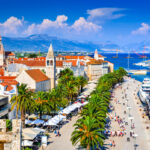
UNESCO World Heritage Diocletian’s Palace—the world’s most complete Roman palace remains where 3,000 residents live within Emperor Diocletian’s 3rd-century retirement fortress, creating a unique “living monument” blending ancient Roman architecture with contemporary shops, cafes, bars, and restaurants. Four imperial gates access this architectural marvel: Golden Gate (north), Silver Gate (east), Bronze Gate (south), Iron Gate (west), surrounding Saint Dominus Cathedral built as the emperor’s mausoleum with 13th-century bell tower representing medieval Dalmatian construction’s earliest examples. Marjan Hill’s 178-meter peninsula summit requires stair climbing via three entrance routes, rewarding visitors with spectacular panoramas of Split city, harbor, surrounding islands, and Mosor/Kozjak mountains across three-sided water views. Adriatic coastline offering swimming, seaside dining, and access to the Riva promenade where Bronze Gate once led directly to the sea before land reclamation. World’s best-preserved Roman military camp-luxury villa fusion where Mediterranean heritage meets vibrant urban life, making Split Europe’s most extraordinary example of living archaeological preservation within a functioning modern Croatian coastal city.
The destination guide
Split
Travel guides for Split
Itineraries & day trips (2)
Things to do (1)
More guides featuring Split (26)
At a glance
- Croatian
- Adriatic coast
- Diocletian's Palace
- Island views
- Mountain backdrop
- Roman history
- Mediterranean lifestyle
- Coastal beauty
- Cultural heritage
How Split scores
Character
Editorial scores on a 10-point scale, weighed against destinations of the same kind.
Travel safety snapshot
SafePlace indicators use their source 100-point scale; higher is more favourable. Planning context, not a live travel advisory — check official government guidance before you go.
When to go
Best months to visit: April, May, June, July, August, September and October.
- January: 8.9 to 11.4 degrees Celsius, 41.8 millimetres of rain, best-time score 2 out of 5.
- February: 7.8 to 11.3 degrees Celsius, 15.1 millimetres of rain, best-time score 2 out of 5.
- March: 9.8 to 12.8 degrees Celsius, 8.1 millimetres of rain, best-time score 2 out of 5.
- April: 12.6 to 15.8 degrees Celsius, 13.3 millimetres of rain, best-time score 4 out of 5.
- May: 15.8 to 18.8 degrees Celsius, 47.9 millimetres of rain, best-time score 5 out of 5.
- June: 20.8 to 24.3 degrees Celsius, 16.8 millimetres of rain, best-time score 5 out of 5.
- July: 23.4 to 27.3 degrees Celsius, 1.9 millimetres of rain, best-time score 4 out of 5.
- August: 24.2 to 27.3 degrees Celsius, 3.2 millimetres of rain, best-time score 4 out of 5.
- September: 21.7 to 24.1 degrees Celsius, 7.6 millimetres of rain, best-time score 5 out of 5.
- October: 16.9 to 19.9 degrees Celsius, 82.4 millimetres of rain, best-time score 5 out of 5.
- November: 13.8 to 16.6 degrees Celsius, 9.8 millimetres of rain, best-time score 3 out of 5.
- December: 9.8 to 12.8 degrees Celsius, 44.7 millimetres of rain, best-time score 2 out of 5.
Month-by-month conditions and packing advice
- January
- Cool weather, some rain January in Split: winter closures and cool weather make coast-first travel less balanced. Crowds: January marks the peak tourist season in Abu Dhabi, with excellent weather conditions for outdoor activities such as desert safaris, cultural tours, and beach visits. Hotel rates and crowd levels are high, but the pleasant weather enhances the overall experience. Visitors should be prepared for occasional rain showers, which are generally brief and refreshing. Pack: Lightweight layers for temperature variation; Waterproof jacket for rain protection; Comfortable walking shoes for city exploration; Wide-brimmed hat and SPF 50+ sunscreen; Light cardigan for air-conditioned spaces; Modest clothing for cultural sites and mosques; Breathable cotton/linen fabrics
- February
- Cool weather, mostly dry February in Split: winter closures and cool weather make coast-first travel less balanced. Crowds: Peak tourist season with excellent conditions for cultural exploration, including historical sites, local markets, and scenic walks. Hotel rates and crowd levels are highest during this period. UV levels remain moderate despite cooler temperatures. Pack: Lightweight layers for temperature variation; Comfortable walking shoes for city exploration; Broad-brimmed hat and SPF 50+ sunscreen; Light cardigan for air-conditioned spaces; Modest clothing for cultural sites and mosques; Breathable cotton/linen fabrics
- March
- Cool weather, mostly dry March in Split: winter closures and cool weather make coast-first travel less balanced. Crowds: Peak tourist season with excellent conditions for cultural exploration, including visits to Diocletian's Palace, local markets, and seaside promenades. Hotel rates and crowd levels are highest during this period. While temperatures are cool, UV levels remain high, so visitors should apply sunscreen and wear protective clothing. Pack: Lightweight layers for temperature variation; Comfortable walking shoes for city exploration; Broad-brimmed hat and SPF 50+ sunscreen; Light cardigan for air-conditioned spaces; Modest clothing for cultural sites and mosques; Breathable cotton/linen fabrics
- April
- Cool weather, mostly dry April in Split: conditions can be excellent, though high summer prices and crowds need planning. Crowds: Peak tourist season with excellent conditions for all outdoor activities including hiking, beach visits, and cultural site exploration. Hotel rates and crowd levels are highest during this period. UV levels remain high despite cooler temperatures. Pack: Lightweight layers for temperature variation; Comfortable walking shoes for city exploration; Broad-brimmed hat and SPF 50+ sunscreen; Light cardigan for air-conditioned spaces; Modest clothing for cultural sites and mosques; Breathable cotton/linen fabrics
- May
- Warm and pleasant, some rain May in Split: Diocletian Palace, beaches, ferries, island trips, cafes, and waterfront walks balance weather and crowds. Crowds: May marks the peak tourist season with excellent conditions for outdoor activities such as desert safaris, beach visits, and cultural site exploration. Hotel rates and crowd levels are at their highest during this period. Despite cooler temperatures, UV levels remain high, necessitating the use of sunscreen and protective clothing. Pack: Lightweight layers for temperature variation; Comfortable walking shoes for city exploration; Broad-brimmed hat and SPF 50+ sunscreen; Light cardigan for air-conditioned spaces; Modest clothing for cultural sites and mosques; Breathable cotton/linen fabrics
- June
- Warm and pleasant, mostly dry June in Split: Diocletian Palace, beaches, ferries, island trips, cafes, and waterfront walks balance weather and crowds. Crowds: Peak tourist season with favorable conditions for outdoor activities such as hiking, cultural tours, and beach visits. Hotel rates and crowd levels are high during this time. UV levels remain high despite cooler temperatures, so sun protection is essential. Pack: Lightweight layers for temperature variation; Comfortable walking shoes for city exploration; Broad-brimmed hat and SPF 50+ sunscreen; Light cardigan for air-conditioned spaces; Modest clothing for cultural sites and mosques; Breathable cotton/linen fabrics
- July
- Hot and sunny, mostly dry July in Split: conditions can be excellent, though high summer prices and crowds need planning. Crowds: Peak tourist season with excellent conditions for all outdoor activities including beach visits, hiking, and exploring local markets. Hotel rates and crowd levels are highest during this period. UV levels remain high despite warmer temperatures. Pack: Lightweight layers for temperature variation; Comfortable walking shoes for city exploration; Broad-brimmed hat and SPF 50+ sunscreen; Light cardigan for air-conditioned spaces; Modest clothing for cultural sites and mosques; Breathable cotton/linen fabrics
- August
- Hot and sunny, mostly dry August in Split: conditions can be excellent, though high summer prices and crowds need planning. Crowds: Peak tourist season with excellent conditions for all outdoor activities including beach visits, hiking, cultural site exploration, and city walking tours. Hotel rates and crowd levels are highest during this period. UV levels remain high despite warmer temperatures. Pack: Lightweight layers for temperature variation; Comfortable walking shoes for city exploration; Broad-brimmed hat and SPF 50+ sunscreen; Light cardigan for air-conditioned spaces; Modest clothing for cultural sites and mosques; Breathable cotton/linen fabrics
- September
- Warm and pleasant, mostly dry September in Split: Diocletian Palace, beaches, ferries, island trips, cafes, and waterfront walks balance weather and crowds. Crowds: Peak tourist season with excellent conditions for all outdoor activities including desert safaris, beach visits, cultural site exploration, and city walking tours. Hotel rates and crowd levels are highest during this period. UV levels remain high despite cooler temperatures. Pack: Lightweight layers for temperature variation; Comfortable walking shoes for city exploration; Broad-brimmed hat and SPF 50+ sunscreen; Light cardigan for air-conditioned spaces; Modest clothing for cultural sites and mosques; Breathable cotton/linen fabrics
- October
- Warm and pleasant, some rain October in Split: Diocletian Palace, beaches, ferries, island trips, cafes, and waterfront walks balance weather and crowds. Crowds: Peak tourist season with excellent conditions for all outdoor activities including beach visits, hiking trails, cultural site exploration, and city walking tours. Hotel rates and crowd levels are highest during this period. UV levels remain high despite cooler temperatures. Pack: Lightweight layers for temperature variation; Comfortable walking shoes for city exploration; Broad-brimmed hat and SPF 50+ sunscreen; Light cardigan for air-conditioned spaces; Modest clothing for cultural sites and mosques; Breathable cotton/linen fabrics
- November
- Warm and pleasant, mostly dry November in Split: quiet travel is possible, but weather and ferry schedules are less dependable. Crowds: Peak tourist season with excellent conditions for all outdoor activities including desert safaris, beach visits, cultural site exploration, and city walking tours. Hotel rates and crowd levels are highest during this period. UV levels remain high despite cooler temperatures. Pack: Lightweight layers for temperature variation; Comfortable walking shoes for city exploration; Broad-brimmed hat and SPF 50+ sunscreen; Light cardigan for air-conditioned spaces; Modest clothing for cultural sites and mosques; Breathable cotton/linen fabrics
- December
- Cool weather, some rain December in Split: winter closures and cool weather make coast-first travel less balanced. Crowds: December marks the peak tourist season in Abu Dhabi, with excellent weather conditions for outdoor activities such as desert safaris, cultural site visits, and city tours. Hotel rates and crowd levels are at their highest, with high UV levels due to the clear skies. Ideal for exploring the cultural heritage and natural beauty of the region, visitors should plan accordingly to enjoy the best experience. Pack: Lightweight layers for temperature variation; Comfortable walking shoes for city exploration; Broad-brimmed hat and SPF 50+ sunscreen; Light cardigan for air-conditioned spaces; Modest clothing for cultural sites and mosques; Breathable cotton/linen fabrics
- July
- August
- June
- September
- November
- February
- December
- January
- March
- April
- May
- October
Know before you go
Best time to visit
May to mid-June and mid-September to October for pleasant weather (15-25°C), manageable crowds, and warm enough seas for swimming. Peak summer (July-August) brings the hottest weather and largest crowds — ideal for beach activities and festivals like Ultra Europe, but with higher prices. November to March is mild and quiet, perfect for cultural exploration without the crowds.
Getting there and around
Getting there
Split Airport (SPU), 20 km northwest of the center, has flights from major European cities (expanded schedule in summer). Airport shuttles connect to the city center. The A1 motorway from Zagreb takes about 4 hours. Direct trains and frequent buses run from Zagreb. Split is a major Adriatic ferry port with connections to Hvar, Brač, Vis, and international routes to Ancona and Bari (Italy). Jadrolinija and Krilo operate the main island services.
Getting around
The Old Town (Diocletian’s Palace) and Riva are pedestrianized and best explored on foot. Most central attractions are within a 10-minute walk. An extensive public bus network covers wider areas (tickets from kiosks or on board). Uber and Bolt operate in the city. Taxis are available but negotiate fares in advance. Driving in the Old Town is not possible — parking is scarce even in surrounding areas. Ferries and catamarans serve the islands from the main harbor.
Top experiences in Split
Diocletian's Palace
Riva Waterfront
Marjan Hill
Cathedral of St. Domnius
Bačvice Beach
Editor-curated picks carried over from our original guide. Where a full place guide exists, the card links to it.


Worth booking ahead in Split
Hand-picked from the operators our guides already send readers to. Prices and availability are live on the partner site.
BrowseViator
Tours and tickets in Split on Viator (opens Viator in a new tab)
Viator's full list of bookable tours and tickets in Split.
BrowseGetYourGuide
Experiences in Split on GetYourGuide (opens GetYourGuide in a new tab)
Everything GetYourGuide sells in Split, with the cancellation terms on each listing.
Where to stayBooking.com
Stays in Split (opens Booking.com in a new tab)
Live rates and availability for Split on Booking.com; filter by neighbourhood once you know where your days start.
We earn a commission if you book through these links, at no extra cost to you. It is how we keep the guides free and independent.
Where to stay
Hotel Peristil
Cornaro Hotel
Editor-curated stays carried over from our original guide. Where we have reviewed the hotel, the card links to the review.
Tips from the field
Highlights
- Diocletian's Palace — 1,700-year-old Roman palace, UNESCO World Heritage, functioning as the city center. Riva Waterfront — Palm-lined promenade with cafés and harbor views. Marjan Hill — Forest park with hiking trails and panoramic Adriatic views. Cathedral of St. Domnius — Built as Diocletian's mausoleum, now the world's oldest cathedral still in use. Bačvice Beach — Sandy beach and home of picigin, a traditional ball game. Island gateway — Ferries to Hvar, Brač, and Vis.
Best activities
- Walk through Diocletian's Palace
- Climb Saint Domnius Bell Tower for panoramic views
- Hike in Forest Park Marjan
- Visit Meštrović Gallery
Practical tips
- Diocletian's Palace is a living city center, not a fenced-off ruin — people live and work inside its walls. The underground cellars (Podrumi) require a ticket and provide the best sense of the original Roman structure. Climb the Cathedral bell tower for the best view of the Old Town. Marjan Hill is best visited early morning for cool temperatures and fewer people. The Green Market (Pazar) sells fresh local produce daily. Croatian kuna was replaced by the Euro in 2023. Picigin (a traditional ball game) is played in the shallows at Bačvice — joining is welcomed.
Keeping it authentic
- Explore the living history within Diocletian's Palace
- Visit local markets like Green Market for fresh produce
Culture, customs and safety
Cultural heritage
Split preserves Roman Emperor Diocletian Palace as a living UNESCO World Heritage site where ancient architecture houses modern shops, restaurants, and homes. The palace complex demonstrates continuous habitation for 1,700 years with Roman, medieval, and Renaissance layers. Marjan Hill maintains ancient hermitages and medieval churches overlooking the historic center. Traditional picigin ball game played in shallow waters reflects local beach culture. The city blends Roman grandeur, Venetian influence, and contemporary Croatian life through festivals, markets, and Mediterranean lifestyle.
Local customs & etiquette
- Greet locals with a friendly “Dobar dan” (Good day)
- Respect the local dining customs, including trying traditional dishes
- Tip around 10% in restaurants if service is not included
- Be mindful of the historical significance of sites, especially in the old town
Safety notes
Split is very safe with low crime rates. Violent crime is rare. Pickpocketing can occur in crowded areas around Diocletian’s Palace and the Riva during peak season. Forest fire risk exists during hot, dry summer months. Walking at night is generally safe in the center. Use common sense in bar areas late at night. Emergency: 112.