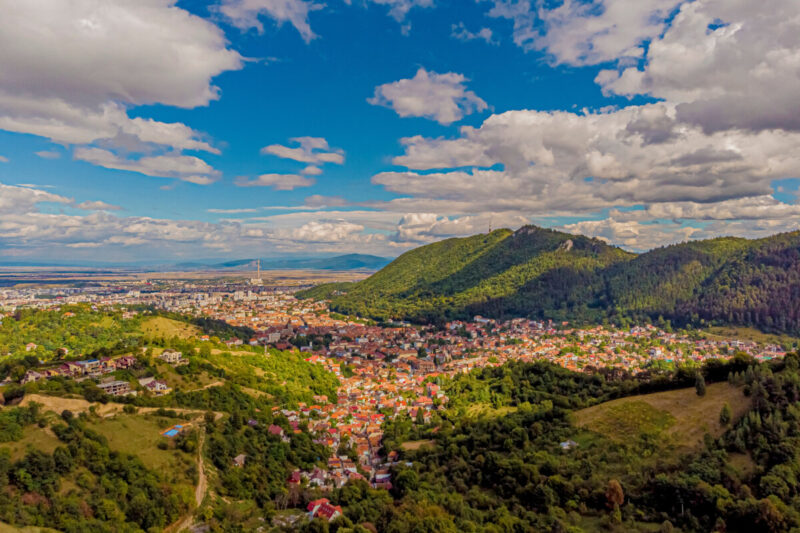
Brașov occupies a strategic mountain pass in Romania’s Transylvania region, where medieval Saxon architecture meets dramatic natural surroundings in the shadow of Mount Tâmpa. The remarkably preserved historic center combines Gothic, Renaissance, and Baroque influences, evident in landmarks like the imposing Black Church the largest Gothic church between Vienna and Istanbul and the picturesque Council Square (Piața Sfatului) lined with pastel-colored merchant houses. Beyond architectural heritage, Brașov serves as a gateway to both cultural and natural experiences, from nearby Bran Castle with its tenuous connections to the Dracula legend to exceptional hiking in the Carpathian Mountains. The city retains authentic Romanian traditions through local festivals, traditional restaurants serving regional specialties like sarmale (cabbage rolls) and mămăligă (polenta), and craft workshops preserving centuries-old techniques. Brașov balances its historical significance with contemporary Romanian culture, offering visitors a compelling glimpse into Transylvanian Saxon heritage while providing access to outdoor adventures in the surrounding mountains and forests where brown bears still roam.
The destination guide
Brașov

At a glance
- Romanian
- Carpathian mountain foothills
- Gothic architecture
- Saxon fortified churches
- Dense forests
- Hiking
- Spa & Wellness
- Nature
- Skiing
- Christmas Markets
- Gastronomy
- Culture
- Scenic Drives
How Brașov scores
Editorial scores on a 10-point scale, weighed against destinations of the same kind.
Travel safety snapshot
SafePlace indicators use their source 100-point scale; higher is more favourable. Planning context, not a live travel advisory — check official government guidance before you go.
When to go
Best months to visit: April, May, June, July, August, September and October.
- January: -5.3 to 2.2 degrees Celsius, 47.9 millimetres of rain, best-time score 2 out of 5.
- February: -3.3 to 5.5 degrees Celsius, 43.2 millimetres of rain, best-time score 2 out of 5.
- March: -0.6 to 9.5 degrees Celsius, 61.4 millimetres of rain, best-time score 3 out of 5.
- April: 3.5 to 14.5 degrees Celsius, 69.8 millimetres of rain, best-time score 4 out of 5.
- May: 8.1 to 18.2 degrees Celsius, 113.9 millimetres of rain, best-time score 5 out of 5.
- June: 13.5 to 23.2 degrees Celsius, 114 millimetres of rain, best-time score 5 out of 5.
- July: 14.8 to 24.7 degrees Celsius, 102.9 millimetres of rain, best-time score 5 out of 5.
- August: 14.7 to 25.4 degrees Celsius, 69 millimetres of rain, best-time score 5 out of 5.
- September: 10.4 to 20.5 degrees Celsius, 55.8 millimetres of rain, best-time score 5 out of 5.
- October: 5.2 to 14.6 degrees Celsius, 64 millimetres of rain, best-time score 4 out of 5.
- November: 1.2 to 9 degrees Celsius, 55.6 millimetres of rain, best-time score 2 out of 5.
- December: -2.4 to 4.2 degrees Celsius, 56.6 millimetres of rain, best-time score 3 out of 5.
Month-by-month conditions and packing advice
- January
- Cold, occasional rain Cold winter weather, few tourists. Crowds: January in Brau0219ov is best for winter-ready travelers; outdoor plans need warm gear, shorter daylight expectations, and weather-aware transport planning. Pack: Pack insulated layers, warm footwear, gloves, and a serious winter coat.
- February
- Cold, occasional rain Chilly and quiet, good for museums. Crowds: February in Brau0219ov is workable with normal seasonal planning; build in layers, weather checks, and a mix of indoor and outdoor activities. Pack: Pack warm layers, a coat, and comfortable shoes for cold mornings and evenings.
- March
- Cold, occasional rain Beginning to warm up, spring blossoms. Crowds: March in Brau0219ov is workable with normal seasonal planning; build in layers, weather checks, and a mix of indoor and outdoor activities. Pack: Pack warm layers, a coat, and comfortable shoes for cold mornings and evenings.
- April
- Cool to mild, occasional rain Pleasant spring weather, great for walking. Crowds: April in Brau0219ov is workable with normal seasonal planning; build in layers, weather checks, and a mix of indoor and outdoor activities. Pack: Pack layered clothing and comfortable walking shoes.
- May
- Cool to mild, some rain Excellent weather before the summer crowds. Crowds: May in Brau0219ov is workable with normal seasonal planning; build in layers, weather checks, and a mix of indoor and outdoor activities. Pack: Pack layered clothing and comfortable walking shoes. Add a rain jacket or compact umbrella.
- June
- Mild to warm, some rain Warm, sunny, and lively. Crowds: June in Brau0219ov is workable with normal seasonal planning; build in layers, weather checks, and a mix of indoor and outdoor activities. Pack: Pack layered clothing and comfortable walking shoes. Add a rain jacket or compact umbrella.
- July
- Mild to warm, some rain Peak summer heat and peak tourist season. Crowds: July in Brau0219ov is workable with normal seasonal planning; build in layers, weather checks, and a mix of indoor and outdoor activities. Pack: Pack light clothing, sun protection, and comfortable walking shoes. Add a rain jacket or compact umbrella.
- August
- Mild to warm, occasional rain Very warm, many festivals and outdoor dining. Crowds: August in Brau0219ov is comfortable for sightseeing, neighborhoods, food stops, day trips, and outdoor time with limited weather friction. Pack: Pack light clothing, sun protection, and comfortable walking shoes.
- September
- Mild to warm, occasional rain Perfect shoulder season with great weather. Crowds: September in Brau0219ov is comfortable for sightseeing, neighborhoods, food stops, day trips, and outdoor time with limited weather friction. Pack: Pack layered clothing and comfortable walking shoes.
- October
- Cool to mild, occasional rain Crisp autumn air and beautiful colors. Crowds: October in Brau0219ov is workable with normal seasonal planning; build in layers, weather checks, and a mix of indoor and outdoor activities. Pack: Pack layered clothing and comfortable walking shoes.
- November
- Cold, occasional rain Cooling down rapidly, often rainy. Crowds: November in Brau0219ov is workable with normal seasonal planning; build in layers, weather checks, and a mix of indoor and outdoor activities. Pack: Pack warm layers, a coat, and comfortable shoes for cold mornings and evenings.
- December
- Cold, occasional rain Cold but festive holiday atmosphere. Crowds: December in Brau0219ov is workable with normal seasonal planning; build in layers, weather checks, and a mix of indoor and outdoor activities. Pack: Pack warm layers, a coat, and comfortable shoes for cold mornings and evenings.
- July
- August
- May
- June
- September
- January
- February
- March
- April
- October
- November
- December
Know before you go
Neighbourhoods
Old Town, Schei, Poiana Brașov
Best time to visit
June through September for warm 20–28 °C hiking weather and long daylight. May and September–October for fewer crowds, wildflowers or autumn foliage. December for atmospheric Christmas markets (especially Baden-Baden and Freiburg). January–March for skiing at Feldberg.
Season by season
Spring (Apr–May): 10–18 °C, wildflower meadows, cherry blossoms, waterfalls at peak flow. Summer (Jun–Aug): 20–28 °C, hiking and biking season, afternoon thunderstorms. Autumn (Sep–Nov): 8–16 °C, stunning foliage, wine harvest in the Markgräflerland, mushroom foraging. Winter (Dec–Mar): -5 to 5 °C, skiing at Feldberg, Christmas markets, snowy forests.
Crowds
Moderate in summer; high at Christmas markets (December); low in shoulder and winter non-ski periods
Getting there and around
Getting there
Brașov has no airport, but it’s well connected by road and rail. The nearest airport is Henri Coandă International Airport in Bucharest (OTP), approximately 170 km south — a 2.5–3 hour drive via the A3/E60 motorway or a 2.5-hour train ride. Direct trains run from Bucharest Nord station to Brașov multiple times daily (about 22–50 RON depending on class). Sibiu International Airport (SBZ) is an alternative, about 150 km west with connections to several European cities. FlixBus and local operators run coach services from Bucharest, Sibiu, and Cluj-Napoca. By car, the drive from Bucharest traverses the dramatic Prahova Valley through the Carpathian Mountains. For travelers arriving from Budapest, the train journey takes approximately 12 hours with a change in Bucharest or Cluj-Napoca.
Getting around
Brașov’s Old Town is entirely walkable — all major attractions fit within a 15-minute walking radius of Council Square. Local buses cover the wider city and connect to Poiana Brașov ski resort (bus 20, about 30 minutes). Taxis are affordable (starting at 3 RON) and metered; use Bolt or Uber apps for transparent pricing. The Tampa Mountain cable car (telecabina) operates from the lower station near Strada Lungă. For day trips to Bran Castle, Peleș Castle, and the fortified Saxon churches, renting a car provides the most flexibility — roads are in good condition and the Carpathian scenery makes driving a pleasure. Alternatively, organized day tours depart daily from the city center. Trains connect Brașov to Sinaia (Peleș Castle) in about 45 minutes. Cycling is increasingly popular, with bike rental shops in the Old Town offering mountain and touring bikes for Carpathian trails.
Top experiences in Brașov
The Black Church (Biserica Neagră)
The largest Gothic church in Southeastern Europe, built between 1383 and 1477. Named for its charred walls following the great fire of 1689, it houses a monumental 4,000-pipe Buchholz organ and one of Europe’s rarest collections of Anatolian prayer rugs.
Council Square (Piața Sfatului) & Council House
The vibrant medieval heart of Brașov, surrounded by colorful Baroque merchant houses, open-air cafes, and the historic 1420 Council House (Casa Sfatului), topped with its iconic Trumpeter’s Tower.
Bran Castle (Dracula's Castle)
Located just 30 kilometers from Brașov, this dramatic 14th-century cliffside fortress perched on a 200-foot rock was built by Teutonic Knights and Saxon settlers, becoming forever associated with Bram Stoker’s Dracula legend.
Tâmpa Mountain & Cable Car
Rising 400 meters directly behind the medieval old town, Mount Tâmpa offers hiking trails and a scenic cable car ride to the panoramic summit near the Hollywood-style ‘BRAȘOV’ sign, overlooking Transylvanian plains.
Râșnov Fortress & Fortified Churches
A medieval Saxon peasant refuge built in the 13th century on a rocky hilltop, designed to protect local villagers from Tartar and Ottoman invasions. The surrounding region features UNESCO-listed fortified churches like Prejmer and Hărman.
Editor-curated picks carried over from our original guide. Where a full place guide exists, the card links to it.
Worth booking ahead in Brașov
Hand-picked from the operators our guides already send readers to. Prices and availability are live on the partner site.
BrowseViator
Tours and tickets in Brașov on Viator (opens Viator in a new tab)
Viator's full list of bookable tours and tickets in Brașov.
BrowseGetYourGuide
Experiences in Brașov on GetYourGuide (opens GetYourGuide in a new tab)
Everything GetYourGuide sells in Brașov, with the cancellation terms on each listing.
Where to stayBooking.com
Stays in Brașov (opens Booking.com in a new tab)
Live rates and availability for Brașov on Booking.com; filter by neighbourhood once you know where your days start.
We earn a commission if you book through these links, at no extra cost to you. It is how we keep the guides free and independent.
Where to stay
Hotel Aro Palace
Bulevardul Eroilor 27, 500030 Brașov, Romania
Brașov’s premier five-star luxury hotel, offering elegant accommodations overlooking Central Park and Mount Tâmpa, within steps of the medieval pedestrian core.
Fritz Lauterbad
Im Grün 160, 78098 Triberg, Germany
A contemporary spa hotel in the forest above Triberg, combining Black Forest timber architecture with clean modern design. An indoor-outdoor infinity pool overlooks conifer canopy, and the restaurant emphasizes regional ingredients (wild game, forest berries, trout). Walking distance to the Triberg Waterfalls.
Seehotel Wiesler
Am Kurplatz 1, 79822 Titisee-Neustadt, Germany
A lakeside 4-star hotel directly on the Titisee promenade, with a panoramic terrace overlooking the glacial lake and the Feldberg massif. Rooms in warm wood-and-stone Alpine style, a wellness area with Finnish sauna, and boat-rental access directly from the hotel dock.
Editor-curated stays carried over from our original guide. Where we have reviewed the hotel, the card links to the review.
Tips from the field
Highlights
- The Black Church — Monumental 14th-century Gothic church with rare Anatolian carpets
- Council Square — Historic Saxon marketplace framed by pastel Baroque merchant facades
- Bran Castle — Romantic hilltop medieval fortress steeped in royal and Dracula lore
- Mount Tâmpa — Cable car and nature trails with breathtaking views over the medieval town
- Medieval Bastions & Towers — The White Tower, Black Tower, and Catherine's Gate
- Saxon Fortified Churches — UNESCO-listed defensive church villages of Prejmer and Hărman
Best activities
- Hike the Westweg long-distance trail, bathe in Baden-Baden's Friedrichsbad, boat on Titisee, drive the Black Forest High Road (B500), visit Triberg Waterfalls, ski at Feldberg, explore the Open Air Museum in Gutach, taste Black Forest cake at a traditional café, buy a handmade cuckoo clock, and walk the Ravenna Gorge with its viaduct bridge.
Local experiences
- Join a clockmaker's workshop to assemble a miniature cuckoo clock, attend a Vesper tasting of Schwarzwälder Schinken and local cheeses, hike to a remote Berggasthof (mountain inn) for fresh trout and Rothaus beer, visit the Ravenna Gorge Christmas Market held beneath the viaduct, or cycle through vineyard-draped foothills in the Markgräflerland wine region.
Practical tips
- Transport: A rental car is ideal for the scenic High Road; trains connect Freiburg to Baden-Baden (1.5 hr). The KONUS Guest Card (free with most hotel stays) gives unlimited free bus and rail travel across the Black Forest.
- Cuckoo Clocks: Buy certified VdS clocks from regional workshops—a quality 1-day clock starts around €150.
- Weather: Afternoon thunderstorms are common in summer; carry rain layers.
- Cash: Many smaller Gasthöfe and farmshops accept only cash (EUR).
- Tipping: 5–10 % at restaurants or round up to the nearest euro.
Photography tips
- Triberg Waterfalls photograph best after rain when water flow peaks
- use a slow shutter (0.5–2 sec) on a tripod to blur the cascades. Titisee reflects the Feldberg massif on calm mornings—arrive at dawn. The Black Forest High Road (B500) offers misty conifer-covered valley views from layby car parks. Freiburg's Münster tower frames well from the Münsterplatz at golden hour. Ravenna Gorge's Christmas Market beneath the viaduct bridge is one of Germany's most photogenic holiday scenes.
Timing
- Allow 2–3 days for Baden-Baden and the northern Black Forest, 2 days for Titisee/Feldberg, and 1–2 days for Triberg and Gutach. A full Black Forest road trip takes 5–7 days. Freiburg makes an excellent base for day trips.
Keeping it authentic
- The Black Forest gave the world the cuckoo clock (invented circa 1730), Black Forest ham (Schwarzwälder Schinken, dry-cured and cold-smoked over fir), Black Forest cake (Schwarzwälder Kirschtorte, layered with cherries, cream, and Kirschwasser cherry brandy), and Bollenhut hats worn by women in Gutach. Trachten (traditional dress) still appears at festivals and weddings. Small family-run Gasthöfe (guesthouses) serve Vesper plates of ham, cheese, and Bauernbrot (farmer's bread) alongside locally brewed Rothaus pilsner.
Culture, customs and safety
Cultural heritage
Brașov preserves exceptional Saxon German medieval heritage as one of Transylvania’s seven walled citadels (Siebenürgen) founded in 1211. The Black Church (Biserica Neagră) stands as Southeast Europe’s largest Gothic cathedral, housing Romania’s biggest bell and over 100 Ottoman Anatolian carpets – the world’s largest collection outside Turkey. Saxon merchants built massive stone fortifications with seven bastions still visible today, while Council Square showcases red-roofed merchant houses from the medieval Marktplatz era. The city represents unique cultural fusion between Germanic Gothic craftsmanship, Romanian traditions, and Transylvanian defensive architecture, making it a pivotal example of Saxon heritage preservation.
Local customs & etiquette
Romanians are warm and hospitable hosts who appreciate visitors showing interest in their culture. Greet people with a handshake and maintain eye contact. When invited to someone’s home, bring flowers (odd numbers only — even numbers are reserved for funerals) or wine. Remove shoes when entering a home unless told otherwise. Tipping 10% at restaurants is appreciated but not obligatory — round up the bill for smaller amounts. Coffee culture is strong: accept an offered coffee as a social gesture rather than declining. Romanian cuisine centers on hearty, meat-heavy dishes — sarmale (cabbage rolls), micicountry (grilled sausages), and ciorbă (sour soup) are staples. Ț̦uică (plum brandy) is the national spirit and refusing a toast can be seen as unfriendly. The Romanian Orthodox Church plays a significant role in daily life — dress modestly when visiting churches (cover shoulders and knees). Avoid discussing Romania solely through the lens of Dracula or poverty stereotypes — Romanians take justified pride in their cultural depth, natural landscapes, and intellectual traditions.
Safety notes
The Black Forest is one of the safest travel regions in Europe. Crime is extremely low in rural areas. Standard precautions apply in Freiburg and Baden-Baden city centers (watch for pickpockets in crowded trams). On hiking trails, stick to marked paths—the forest is dense and disorienting off-trail. In winter, equip your car with winter tires (mandatory in snowy conditions) and drive slowly on winding mountain roads. Black ice is a risk from November through March. Emergency: 112.