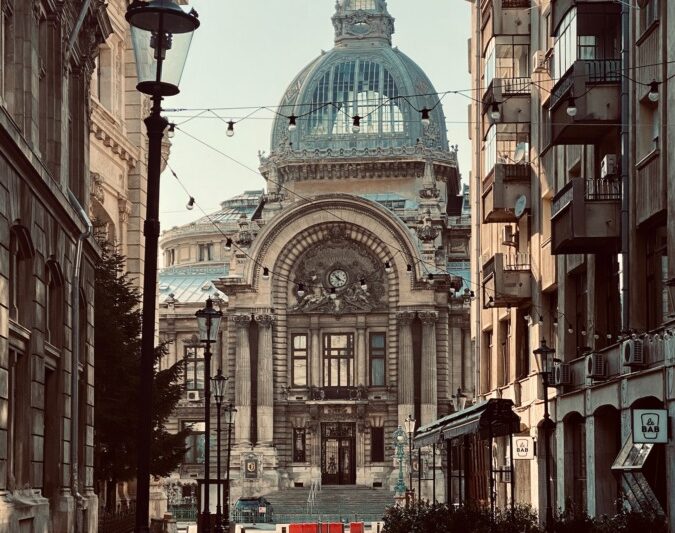
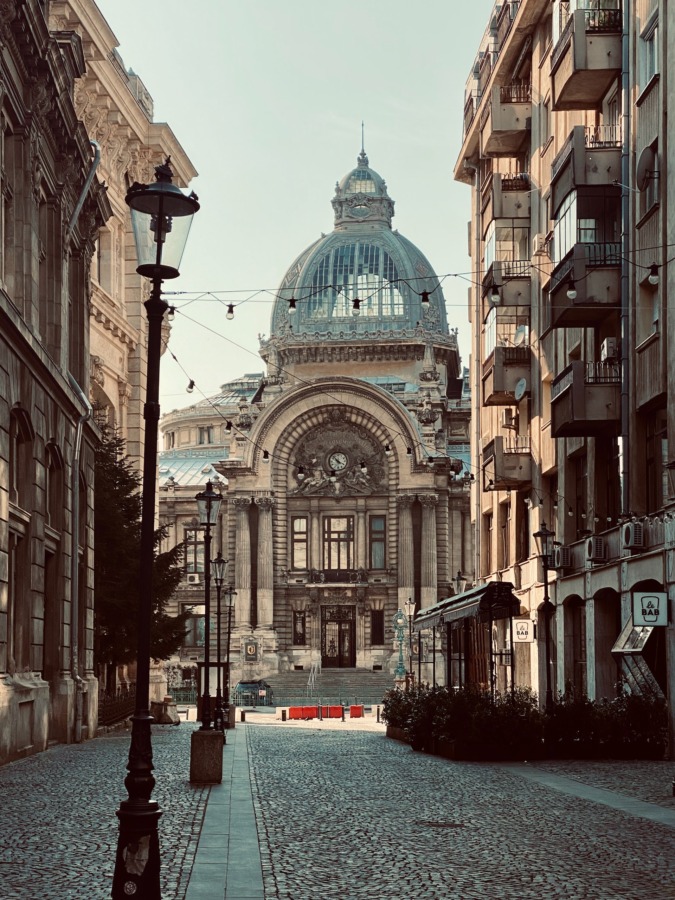
Bucharest emerged from the shadow of Communist rule to reclaim its cultural identity as Romania’s capital, where Belle Époque architecture earned it the nickname “Little Paris,” though today the city presents a fascinating collision of historical eras. This metropolis of approximately 2 million inhabitants sprawls across the Romanian Plain, its main boulevard Calea Victoriei connecting key landmarks including the magnificently eclectic Romanian Athenaeum concert hall and the former Royal Palace, now housing the National Museum of Art. Bucharest’s most controversial architectural statement remains the massive Palace of Parliament (formerly the People’s House), the world’s second-largest administrative building after the Pentagon, constructed during Nicolae Ceauşescu’s regime through the demolition of much of the city’s historic district. Despite this urban upheaval, Bucharest preserves its architectural heritage in the charming Lipscani district, where cobblestone streets wind past centuries-old merchant houses, Orthodox churches, and boutique cafés. The city’s interwar prosperity reveals itself through residential neighborhoods filled with Art Deco and Modernist villas, while hidden courtyards throughout the city conceal garden bars and cultural venues that emerged after the 1989 revolution. Bucharest’s culinary scene celebrates traditional Romanian specialties like sarmale (cabbage rolls) and mici (grilled meat rolls) alongside cosmopolitan international offerings. Cultural institutions such as the George Enescu Philharmonic and National Theater maintain high artistic standards, while contemporary creativity flourishes in repurposed industrial spaces like The Institute and Fabrica Club. Throughout its districts, Bucharest demonstrates Romanian resilience after difficult historical periods, creating a capital where Orthodox domes, French-inspired architecture, Communist-era concrete, and cutting-edge design create a uniquely layered urban experience.
The destination guide
Bucharest
Travel guides for Bucharest
More guides featuring Bucharest (4)
At a glance
- Romanian
- Urban cityscape
- Dambovita River
- Neoclassical architecture
- Parks
How Bucharest scores
Editorial scores on a 10-point scale, weighed against destinations of the same kind.
Travel safety snapshot
SafePlace indicators use their source 100-point scale; higher is more favourable. Planning context, not a live travel advisory — check official government guidance before you go.
When to go
Best months to visit: April, May, June, July, August, September, October and November.
- January: -2.6 to 3.6 degrees Celsius, 3.7 millimetres of rain, best-time score 2 out of 5.
- February: -1.2 to 5.4 degrees Celsius, 9.2 millimetres of rain, best-time score 2 out of 5.
- March: 2.9 to 11.8 degrees Celsius, 16 millimetres of rain, best-time score 3 out of 5.
- April: 7.8 to 17.6 degrees Celsius, 22.1 millimetres of rain, best-time score 5 out of 5.
- May: 12.2 to 22.8 degrees Celsius, 29.2 millimetres of rain, best-time score 5 out of 5.
- June: 17.2 to 26.7 degrees Celsius, 10 millimetres of rain, best-time score 5 out of 5.
- July: 19.2 to 31.1 degrees Celsius, 3.8 millimetres of rain, best-time score 4 out of 5.
- August: 19.9 to 31.4 degrees Celsius, 12.1 millimetres of rain, best-time score 4 out of 5.
- September: 17.1 to 28 degrees Celsius, best-time score 5 out of 5.
- October: 9.8 to 18.3 degrees Celsius, 7.6 millimetres of rain, best-time score 5 out of 5.
- November: 5.5 to 11.3 degrees Celsius, 10.3 millimetres of rain, best-time score 4 out of 5.
- December: -0.3 to 5 degrees Celsius, 24.7 millimetres of rain, best-time score 3 out of 5.
Month-by-month conditions and packing advice
- January
- Cold weather, mostly dry January in Bucharest: deep winter cold makes walking-heavy sightseeing less comfortable. Crowds: January is firmly within Bucharest’s low tourist season, offering budget-friendly accommodation rates and reduced crowd levels at major attractions. While cold weather dominates, the mostly dry conditions mean sightseeing remains feasible, especially for those prepared for chilly walks between indoor cultural sites. This period is ideal for travelers seeking an authentic, local-paced experience without the summer tourist bustle. Outdoor activities may be limited by short daylight hours and the need for warm clothing, but winter markets, cozy restaurants, and cultural events provide plenty to enjoy. Advance booking isn’t typically necessary, making it a flexible time for spontaneous city breaks or slow travel experiences focused on museums, architecture, and intimate dining spots. Pack: Insulated winter coat with wind resistance; Thermal base layers for warmth; Waterproof leather or insulated boots for cold streets; Wool hat, scarf, and gloves set; Casual but warm attire for indoor cultural venues; Compact umbrella for light snow or drizzle
- February
- Cold weather, mostly dry February in Bucharest: deep winter cold makes walking-heavy sightseeing less comfortable. Crowds: February is part of Bucharest’s low tourist season, meaning far fewer visitors at major attractions and more relaxed exploration of the city’s museums, churches, and historic streets. Accommodation rates are generally at their lowest, offering excellent value for longer stays. Cold weather may limit extended outdoor activities, but it’s perfect for slow-paced cultural touring, indoor performances, and sampling hearty Romanian cuisine. Those sensitive to cold should plan shorter outdoor stints interspersed with warm indoor stops. Early booking is not essential this month, but selecting central accommodations reduces travel time in the cold and allows easy access to both indoor and outdoor attractions. Pack: Insulated winter coat for sub-zero mornings; Thermal base layers for extended outdoor walks; Waterproof boots with good grip for icy streets; Wool scarf, gloves, and hat for warmth; Smart-casual warm outfits for restaurants and theatres; Compact umbrella for occasional light showers or snow
- March
- Cool weather, mostly dry March in Bucharest: early spring or early winter makes outdoor plans more weather dependent. Crowds: March marks Bucharest’s shoulder season, offering moderate hotel prices and reduced crowd levels compared to the busy summer months. The cooler, mostly dry weather is well-suited for urban exploration, museum visits, and culinary tours, though outdoor café culture is only beginning to return. Parks and gardens may still be sparse in greenery, but the city’s historic streets and landmarks remain vibrant and accessible. Light layers make it easy to adapt to temperature swings between day and night. This is an ideal month for travelers seeking a more local, less tourist-centric experience, though those expecting warm spring conditions should plan for brisk mornings and evenings. Advance bookings are generally unnecessary except for special events or concerts. Pack: Warm layered clothing for fluctuating temperatures; Comfortable waterproof walking shoes; Compact umbrella or light rain jacket; Scarf and light gloves for chilly mornings; Modest attire for churches and monasteries; Camera with low-light capability for overcast days
- April
- Cool weather, mostly dry April in Bucharest: old-town walks, parks, cafes, museums, architecture, food, and day trips balance pleasant weather and city energy. Crowds: April marks the shoulder season in Bucharest, offering a sweet spot between winter’s dormancy and the busy summer months. Visitor numbers are moderate, meaning easier access to museums, landmarks, and cultural events. Accommodation prices are generally lower than peak season, and the mild weather is perfect for walking tours, day trips to nearby castles, and park picnics. While evenings can still be brisk, days are comfortably cool for sightseeing. Occasional showers may occur, but they rarely disrupt plans. For those seeking cultural immersion without heavy tourist traffic, this month provides an excellent balance of favorable weather and manageable crowds. Pack: Light jacket or windbreaker for cool evenings; Comfortable walking shoes for cobblestone streets; Light sweater or cardigan for layering; Compact umbrella or rain jacket for brief showers; Scarf for added warmth in the mornings; Casual yet modest attire for churches and monasteries
- May
- Warm and pleasant, some rain May in Bucharest: old-town walks, parks, cafes, museums, architecture, food, and day trips balance pleasant weather and city energy. Crowds: May marks the start of Bucharest’s high season, offering near-perfect conditions for sightseeing without the peak summer crowds. Comfortable temperatures support full-day exploration, from the Old Town’s cobblestone streets to outdoor markets and rooftop bars. Moderate rainfall brings occasional light showers, but these are unlikely to disrupt plans significantly. Prices for accommodations and flights begin to rise compared to the quieter winter months, so early booking is advisable. This period is ideal for cultural festivals and outdoor performances, which flourish as the city shakes off winter’s chill. Outdoor dining is in full swing, and parks are lush and inviting, making it a prime month for both first-time visitors and returning travelers seeking a relaxed yet lively atmosphere. Pack: Light layers for varying temperatures; Comfortable walking shoes for cobblestone streets; Compact umbrella or light rain jacket; Sunglasses for bright afternoons; Smart-casual attire for dining and nightlife; Light scarf for cooler evenings
- June
- Warm and pleasant, mostly dry June in Bucharest: old-town walks, parks, cafes, museums, architecture, food, and day trips balance pleasant weather and city energy. Crowds: June offers near-ideal conditions for exploring Bucharest’s outdoor and cultural attractions, placing it firmly within the city’s high tourist season. Expect moderate to high crowd levels, particularly at popular landmarks like the Palace of the Parliament and Old Town, as both international visitors and locals take advantage of the fine weather. Accommodation prices tend to be elevated compared to shoulder months, so advance booking is wise. The warm but not overly hot climate is excellent for walking tours, day trips to Transylvania, or enjoying evening festivals. While conditions are largely favorable, midday sun can be strong, so planning outdoor activities earlier or later in the day ensures comfort and maximizes enjoyment of the city’s summer rhythm. Pack: Lightweight breathable clothing for warm days; Comfortable walking shoes for cobblestone streets; Sunglasses and SPF 30+ sunscreen; Light jacket or shawl for cooler evenings; Reusable water bottle to stay hydrated; Smart-casual attire for upscale dining or events
- July
- Hot and sunny, mostly dry July in Bucharest: summer or late autumn can work with heat or chill planned around. Crowds: July marks the height of Bucharest’s summer tourist season, attracting both international visitors and domestic travelers enjoying the capital’s cultural life. The reliably dry, sunny weather is ideal for walking tours, day trips to nearby castles, and late-night dining on outdoor terraces. However, this is also the busiest period for accommodation demand, with prices reflecting peak-season competition. Popular attractions and festival venues may require advance booking. While daytime heat can be intense, mornings and evenings offer pleasant windows for sightseeing. Travelers who enjoy bustling city energy and open-air events will find July particularly rewarding, but those sensitive to heat should pace activities accordingly. Pack: Lightweight, breathable clothing for daytime heat; Wide-brimmed hat and high-SPF sunscreen; Reusable water bottle to stay hydrated; Comfortable sandals or walking shoes; Light evening layer for cooler nights; Sunglasses with strong UV protection
- August
- Hot and sunny, mostly dry August in Bucharest: summer or late autumn can work with heat or chill planned around. Crowds: August is high summer in Bucharest, with hot, dry weather creating prime conditions for outdoor festivals, terrace dining, and park strolls. Tourism is moderately high as both domestic and international visitors converge to enjoy the city’s vibrant street life and events. Accommodation rates are steady but can rise around major festivals, so booking early is wise. The heat may make midday sightseeing less comfortable, so plan intensive walking tours in the morning or late afternoon. Long daylight hours extend opportunities for photography and exploring, while the reduced rainfall ensures minimal disruptions to travel plans. This is also an ideal month for day trips to nearby wine regions or historical towns before the autumn season begins. Pack: Light, breathable summer clothing; Wide-brimmed hat for sun protection; High SPF sunscreen; Reusable water bottle for hydration; Comfortable sandals or breathable walking shoes; Light scarf or shawl for modesty in religious sites
- September
- Warm and pleasant, mostly dry September in Bucharest: old-town walks, parks, cafes, museums, architecture, food, and day trips balance pleasant weather and city energy. Crowds: September marks a sweet spot for visiting Bucharest—warm enough for al fresco dining and outdoor exploration, yet free from the peak summer crowds. Accommodation rates start to ease from high-season levels, and attractions are comfortably busy rather than overcrowded. The stable, dry weather is excellent for walking tours, day trips to nearby vineyards, or exploring the city's expansive parks. With daylight lasting well into the evening, travelers can maximize sightseeing without the fatigue of high summer heat. It’s also a prime month for cultural events, from film festivals to harvest celebrations, making it ideal for those seeking a blend of outdoor leisure and authentic local experiences. Advance booking for popular events is still advised. Pack: Lightweight breathable shirts for warm afternoons; A light jacket or sweater for cooler evenings; Comfortable walking shoes for cobblestone streets; Sunglasses and SPF 30+ sunscreen for daytime exploring; Smart-casual attire for cultural events and evening dining; Reusable water bottle to stay hydrated in the dry air
- October
- Cool weather, mostly dry October in Bucharest: old-town walks, parks, cafes, museums, architecture, food, and day trips balance pleasant weather and city energy. Crowds: October marks the shoulder season in Bucharest, offering lower crowd levels and more affordable accommodation compared to summer. The cool, mostly dry weather is perfect for walking tours, park visits, and cultural events like the George Enescu Philharmonic concerts. This is also a great month for food lovers, as seasonal menus highlight local autumn specialties. While outdoor exploration remains pleasant, evenings can feel brisk, so layering is key. With fewer tourists, attractions such as the Palace of the Parliament and Village Museum are more relaxed to visit, and restaurant reservations are easier to secure. It’s an excellent time for travelers seeking cultural depth without the peak-season bustle. Pack: Light jacket or trench coat for cool evenings; Layered clothing to adjust to temperature changes; Comfortable walking shoes for city exploration; Scarf or shawl for added warmth; Compact umbrella for unexpected showers; Smart-casual attire for concerts and cultural venues
- November
- Cool weather, mostly dry November in Bucharest: summer or late autumn can work with heat or chill planned around. Crowds: November sits firmly in Bucharest’s shoulder season, with cooler temperatures and fewer crowds compared to the busy summer months. Accommodation prices tend to be more favorable, and popular attractions remain accessible without long queues. The weather supports city walks, museum visits, and enjoying seasonal cultural events such as early Christmas markets. Outdoor café seating may still be available on milder days, though evenings call for warmer attire. It’s an excellent time for travelers seeking a quieter, more atmospheric experience, but less ideal for those expecting vibrant street life or warm-weather activities. Advance booking for key cultural performances is recommended, as locals embrace indoor entertainment this time of year. Pack: Warm layered clothing for fluctuating temperatures; Comfortable waterproof walking shoes; Medium-weight coat for cool days and evenings; Compact umbrella for occasional showers; Scarf and gloves for early mornings and nights; Smart-casual attire for indoor cultural events
- December
- Cold weather, mostly dry December in Bucharest: early spring or early winter makes outdoor plans more weather dependent. Crowds: December offers a quieter travel experience in Bucharest compared to summer, with far fewer tourists but a rich winter atmosphere. The cold temperatures favor indoor cultural exploration—museums, concert halls, and traditional taverns become prime stops. Hotel rates are moderate to low, except during Christmas and New Year’s when festivities draw more visitors. Outdoor sightseeing can be rewarding if dressed warmly, though shorter daylight hours limit the number of activities in a day. Seasonal events such as the Bucharest Christmas Market add charm, but icy sidewalks and frosty mornings require caution. Advance bookings for holiday dinners or special performances are recommended during the festive week. Pack: Insulated winter coat for sub-freezing nights; Waterproof boots with good traction for icy streets; Thermal base layers for extended outdoor walks; Warm hat, gloves, and scarf set; Smart casual attire for indoor cultural venues; Compact umbrella for occasional light rain or snow
- July
- August
- May
- June
- September
- January
- February
- March
- April
- October
- November
- December
Know before you go
Best time to visit
April through June and September-October for pleasant sightseeing weather. Summer is hot but brings outdoor festivals. December for Christmas markets. Spring blooms in Herăstrău Park are stunning.
Season by season
Spring (April-May):
Weather: 15-25°C, blooming
Highlights: Parks
Best For: Walking Tours
Summer (June-Aug):
Weather: 30°C+, hot
Highlights: Outdoor events
Best For: Beer gardens
Fall (Sept-Oct):
Weather: 15-20°C, crisp
Highlights: Wine harvest
Best For: Day trips
Winter (Dec-Feb):
Weather: Cold, snow
Highlights: Christmas market
Best For: Indoor culture
Crowds
Bucharest is busiest from May–September (warmer weather, festivals) and during major events/long weekends; quietest in January–February when tourism drops—overall an urban center with moderate crowds, heavier at attractions and on transit in summer.
Getting there and around
Getting there
Bucharest is accessible via Henri Coandă International Airport and rail connections from other European cities. The city connects to other Romanian cities via train and highway networks.
Getting around
Navigate Bucharest via Metrorex’s five metro lines (M1-M5) operating 5am-11pm—ride reliable Yellow Line M1 circling downtown with stops at Gara de Nord and Union Square (Old Town), or Blue Line M2 running north-south through city center to major attractions along Victory Avenue and Revolution Square. Experience STB’s extensive surface network: 102 bus lines, 22 tram routes (332km of track), and 14 trolleybus lines operating 4:30am-10:50pm, plus 24 night bus lines after hours. Purchase essential Activ or Multiple magnetic cards (€0.80) from STB kiosks, loading with credit for €0.60 rides (90-minute transfers), or choose combined tickets: single journey (5 lei) for metro + 90 minutes surface transport. Use the excellent Bucharest Tourist Card (40 lei/€8.10) for 72-hour unlimited access to metros, buses, trams, plus airport train connections. Reach Old Town (Centrul Vechi-Lipscani) from Piata Unirii or Universitate metro stations, or take STB Bus 100 from Otopeni Airport to Piata Unirii. Experience Europe’s cheapest public transport in Romania’s capital, serving 2+ million inhabitants through this independently-operated metro/surface system combination.
Top experiences in Bucharest
Palace of Parliament
The second-largest administrative building in the world (after the Pentagon). Built by Ceaușescu. It is absurdly massive — 1,000 rooms, 12 stories, 4 underground levels. Guided tours reveal rooms of opulent marble and crystal. A monument to megalomania.
Old Town (Lipscani)
The historic heart of Bucharest. Cobblestone streets, eclectic architecture, and a lively bar/restaurant scene. Once the merchant quarter. It is chaotic, fun, and full of energy.
Herastrau Park (King Michael I Park)
The city’s largest park, surrounding a lake. Walking trails, a Japanese garden, an open-air theater, and boat rides. The green lung of Bucharest. A local favorite for weekends.
Village Museum
An open-air museum inside Herastrau Park. Traditional Romanian houses from every region of the country are displayed in full scale. It is like walking through a time-capsule of rural Romania.
Romanian Athenaeum
A stunning neoclassical concert hall. The interior dome ceiling has a fresco depicting Romanian history. It is the home of the George Enescu Philharmonic. A cultural icon.
Editor-curated picks carried over from our original guide. Where a full place guide exists, the card links to it.
Worth booking ahead in Bucharest
Hand-picked from the operators our guides already send readers to. Prices and availability are live on the partner site.
BrowseViator
Tours and tickets in Bucharest on Viator (opens Viator in a new tab)
Viator's full list of bookable tours and tickets in Bucharest.
BrowseGetYourGuide
Experiences in Bucharest on GetYourGuide (opens GetYourGuide in a new tab)
Everything GetYourGuide sells in Bucharest, with the cancellation terms on each listing.
Where to stayBooking.com
Stays in Bucharest (opens Booking.com in a new tab)
Live rates and availability for Bucharest on Booking.com; filter by neighbourhood once you know where your days start.
We earn a commission if you book through these links, at no extra cost to you. It is how we keep the guides free and independent.
Where to stay
The Marmorosch Bucharest, Autograph Collection
Strada Doamnei 2, Bucharest, Romania
A Belle Époque palace turned luxury hotel. Once the Marmorosch Blank Bank. Full-service spa, indoor pool, and the stunning lobby retains the original banking hall architecture. Old-world elegance meets modern luxury.
JW Marriott Bucharest Grand Hotel
Calea 13 Septembrie 90, Bucharest, Romania
A landmark 5-star hotel near the Palace of Parliament. Convention center, multiple restaurants, health club, and a shopping gallery. The go-to for business and luxury in Bucharest.
Hilton Garden Inn Bucharest Old Town
Strada Franceză 60, Bucharest, Romania
Located steps from the Old Town. Modern and reliable. Great base for exploring the historic center on foot. Family-friendly amenities.
Editor-curated stays carried over from our original guide. Where we have reviewed the hotel, the card links to the review.
Tips from the field
Highlights
- Building – Parliament Palace
- Nightlife – Old Town
- Park – Herastrau
- Museum – Village Museum
- Concert – Athenaeum
- History – Revolution Square
- Nickname – Little Paris
- Food – Sarmale
Best activities
- Tour the Palace of Parliament. Explore the Old Town nightlife. Walk through Herastrau Park. Visit the Village Museum. Attend a concert at the Athenaeum. Stroll through Cișmigiu Gardens. Eat traditional sarmale (cabbage rolls).
Practical tips
- Currency: Romanian Leu (RON). Cards widely accepted.
- Getting There: Henri Coandă Airport (OTP) via Express Bus 783 (3.50 RON, 30 minutes) or Uber/Bolt.
- Transportation: STB metro, trams, buses. Single ticket 3 RON. Uber/Bolt. Walking good in Old Town and Calea Victoriei.
- Dining: Incredibly affordable. Sarmale (cabbage rolls), mici (grilled rolls), papanași (doughnuts). Meals 25-60 RON. Old Town for nightlife. Obor Market for local food.
- Free Attractions: Old Town walking, CEC Palace, Calea Victoriei architecture, Herăstrău Park, Revolution Square.
- Tipping: 10%
- Electricity: 230V/50Hz, Type C/F plugs
Photography tips
- Golden Hour: The Romanian Athenaeum in morning light (the white columns glow). Sunset from Herastrau Park.
- Iconic Shots:
- The Palace of Parliament from the boulevard (to capture scale).
- Inside the Athenaeum (dome).
- The eclectic facades of Old Town.
- Village Museum houses.
- The Arcul de Triumf (Bucharest's own Arc de Triomphe).
- Technique: Use a wide-angle lens for the Palace of Parliament — nothing else captures its scale. The Athenaeum dome requires a fisheye or ultra-wide.
Timing
- Peak Season (June-Aug):
- Hot, outdoor events
- Shoulder Season (April-May, Sept-Oct):
- Best weather, manageable crowds
- Low Season (Nov-March):
- Cold but atmospheric
Keeping it authentic
- Bucharest was once called 'Little Paris' for its Belle Époque architecture. Much was destroyed under Ceaușescu. The juxtaposition of Communist brutalism and Art Nouveau elegance gives the city a unique texture. Romanians are generous and proud of their Latin roots.
Culture, customs and safety
Cultural heritage
Bucharest embodies the complex cultural identity of Romania, blending Byzantine Orthodox traditions, Ottoman influences, French architectural elegance, and Communist-era resilience into a uniquely Romanian urban character. The city served as the crossroads between East and West, where Wallachian princely courts, Belle Époque sophistication, and revolutionary spirit created a distinctive cultural synthesis. Bucharest cultural heritage encompasses everything from traditional Romanian folk arts and Orthodox religious traditions to avant-garde literature and contemporary Romanian cinema, making it the beating heart of Romanian intellectual and artistic life.
Local customs & etiquette
In Bucharest, greet with ‘Bună ziua’ (good day). Romanians are warm and hospitable. Punctuality is valued. Tipping is appreciated (10-15% in restaurants). Dress well for cultural sites.
Safety notes
Bucharest is safe — a rapidly modernizing capital.
General Safety:
• Old Town and Lipscani are safe and lively
• Taxi scams at the airport — use only Bolt/Uber or official taxis
• Stray dogs are common but generally avoid humans
Emergency: 112