Kingdom of wonder where ancient Khmer temples meet resilient modern culture, offering extraordinary archaeological treasures, sobering recent history, genuine warmth of Buddhist society, and emerging sustainable tourism beyond the temple circuit.
The destination guide
Cambodia

Region in AsiaUpdated
- Overall8/10
- Best forBudget travelers, Couples
- CurrencyKHR
Angkor Wat gets the crowds. The temples of Koh Ker get the silence. Cambodia rewards the travelers who look one stop past the obvious.
Travel guides for Cambodia
More guides featuring Cambodia (1)
At a glance
CurrencyKHR
Time zonePhnom Penh UTC+07:00Asia/Phnom_Penh UTC+07:00
Languages
- Khmer
Setting
- Ancient temple complexes
- Mekong River
- Tropical rainforest
- Rice paddies
Known for
- Ancient History
- Temples
- Culture
- Backpacking.
Population17M17,000,000 residents
VisaDuration: Up to 1 month with a tourist eVisa · Documents: Valid passport with at least 6 months validity and blank passport space
How Cambodia scores
8/10OverallExcellent
Weather8/10
Value for money9/10
Safety6/10
Food & cuisine8/10
Culture & arts6/10
Cultural experience9/10
Nature & outdoors4/10
Adventure4/10
Nightlife5/10
Shopping6/10
Family friendly5/10
Romance7/10
Editorial scores on a 10-point scale, weighed against destinations of the same kind.
Travel safety snapshot
Overall58/100Exercise precaution
Women travellers45/100
LGBTQ+ travellers30/100
Theft70/100
Medical care40/100
Physical harm60/100
Political freedom45/100
SafePlace indicators use their source 100-point scale; higher is more favourable. Planning context, not a live travel advisory — check official government guidance before you go.
When to go
Best months to visit: January, February, March, April, November and December.
- January: 22.7 to 32.4 degrees Celsius, 15.5 millimetres of rain, best-time score 5 out of 5.
- February: 23.5 to 33.9 degrees Celsius, 19.8 millimetres of rain, best-time score 5 out of 5.
- March: 25.3 to 35.1 degrees Celsius, 49 millimetres of rain, best-time score 5 out of 5.
- April: 26.2 to 35.1 degrees Celsius, 108.5 millimetres of rain, best-time score 4 out of 5.
- May: 26 to 33.7 degrees Celsius, 196.3 millimetres of rain, best-time score 3 out of 5.
- June: 25.5 to 32.7 degrees Celsius, 193.8 millimetres of rain, best-time score 2 out of 5.
- July: 25.1 to 32 degrees Celsius, 277.5 millimetres of rain, best-time score 2 out of 5.
- August: 25 to 32 degrees Celsius, 282.5 millimetres of rain, best-time score 2 out of 5.
- September: 24.5 to 31 degrees Celsius, 392.5 millimetres of rain, best-time score 2 out of 5.
- October: 24 to 30.7 degrees Celsius, 287.6 millimetres of rain, best-time score 3 out of 5.
- November: 23.3 to 30.9 degrees Celsius, 135 millimetres of rain, best-time score 4 out of 5.
- December: 22.5 to 31 degrees Celsius, 34.4 millimetres of rain, best-time score 5 out of 5.
Month-by-month conditions and packing advice
- January
- Warm to hot, mostly dry Perfect dry and warm weather. Crowds: January in Cambodia is workable with normal seasonal planning; build in layers, weather checks, and a mix of indoor and outdoor activities. Pack: Pack light clothing, sun protection, and comfortable walking shoes.
- February
- Warm to hot, mostly dry Excellent beach weather, low humidity. Crowds: February in Cambodia is workable with normal seasonal planning; build in layers, weather checks, and a mix of indoor and outdoor activities. Pack: Pack light clothing, sun protection, and comfortable walking shoes.
- March
- Very hot, occasional rain Slightly warmer but still dry and comfortable. Crowds: March in Cambodia can be very hot, so travelers should favor early starts, shaded breaks, indoor attractions, and flexible afternoon pacing. Pack: Pack breathable clothing, strong sun protection, and a refillable water bottle.
- April
- Very hot, some rain Getting hotter, transition to wet season begins. Crowds: April in Cambodia can be very hot, so travelers should favor early starts, shaded breaks, indoor attractions, and flexible afternoon pacing. Pack: Pack breathable clothing, strong sun protection, and a refillable water bottle. Add a rain jacket or compact umbrella.
- May
- Warm to hot, rainy Hot and humid, rains start increasing. Crowds: May in Cambodia is one of the wetter periods, so museums, food stops, flexible reservations, and backup indoor plans make the trip easier. Pack: Pack light clothing, sun protection, and comfortable walking shoes. Add a rain jacket or compact umbrella.
- June
- Warm to hot, rainy Wet season, frequent heavy downpours. Crowds: June in Cambodia is one of the wetter periods, so museums, food stops, flexible reservations, and backup indoor plans make the trip easier. Pack: Pack light clothing, sun protection, and comfortable walking shoes. Add a rain jacket or compact umbrella.
- July
- Warm to hot, rainy Peak monsoon/wet season. Crowds: July in Cambodia is one of the wetter periods, so museums, food stops, flexible reservations, and backup indoor plans make the trip easier. Pack: Pack light clothing, sun protection, and comfortable walking shoes. Add a rain jacket or compact umbrella.
- August
- Warm to hot, rainy Continuing heavy rains and high humidity. Crowds: August in Cambodia is one of the wetter periods, so museums, food stops, flexible reservations, and backup indoor plans make the trip easier. Pack: Pack light clothing, sun protection, and comfortable walking shoes. Add a rain jacket or compact umbrella.
- September
- Warm to hot, rainy Still very wet, risk of storms/typhoons. Crowds: September in Cambodia is one of the wetter periods, so museums, food stops, flexible reservations, and backup indoor plans make the trip easier. Pack: Pack light clothing, sun protection, and comfortable walking shoes. Add a rain jacket or compact umbrella.
- October
- Warm to hot, rainy Rains begin to taper off, still humid. Crowds: October in Cambodia is one of the wetter periods, so museums, food stops, flexible reservations, and backup indoor plans make the trip easier. Pack: Pack light clothing, sun protection, and comfortable walking shoes. Add a rain jacket or compact umbrella.
- November
- Warm to hot, rainy Start of the dry season, weather improving. Crowds: November in Cambodia is one of the wetter periods, so museums, food stops, flexible reservations, and backup indoor plans make the trip easier. Pack: Pack light clothing, sun protection, and comfortable walking shoes. Add a rain jacket or compact umbrella.
- December
- Warm to hot, occasional rain Fantastic weather, peak tourist season. Crowds: December in Cambodia is workable with normal seasonal planning; build in layers, weather checks, and a mix of indoor and outdoor activities. Pack: Pack light clothing, sun protection, and comfortable walking shoes.
Know before you go
About
Cambodia, a Southeast Asian kingdom bordered by Thailand, Laos, Vietnam, and the Gulf of Thailand, is renowned for the magnificent temples of Angkor, the legacy of the powerful Khmer Empire that ruled the region for centuries. The crown jewel is Angkor Wat near Siem Reap, the largest religious monument in the world, surrounded by hundreds of temples including the enigmatic stone faces of the Bayon and the jungle-clad ruins of Ta Prohm. The capital, Phnom Penh, contrasts the gilded Royal Palace and the National Museum’s Khmer treasures with the sobering Tuol Sleng Genocide Museum and Killing Fields, memorials to the Khmer Rouge era. Travelers also cruise the floating villages of Tonle Sap, Southeast Asia’s largest freshwater lake, and unwind on the islands and beaches around Sihanoukville and Koh Rong. With warm hospitality, rich Theravada Buddhist culture, and low costs, Cambodia is one of Asia’s most evocative destinations.
Neighbourhoods
Phnom Penh, Siem Reap, Sihanoukville, Kampot, Battambang
Best time to visit
November to March
Season by season
The dry season (Nov-May) is split between cooler months (Nov-Feb) and very hot months (March-May); The wet season (June-Oct) brings afternoon downpours but lush, green scenery.
Crowds
High (at major temples like Angkor Wat)
Getting there and around
Getting there
Cambodia is accessible via three international airports in Phnom Penh (PNH), Siem Reap (REP), and Sihanoukville (KOS), though no direct intercontinental flights exist. Most European or North American travelers connect through major Asian hubs like Bangkok, Singapore, or Ho Chi Minh City. Overland travel is common and inexpensive with multiple border crossings from Thailand, Vietnam, and Laos served by bus companies like Giant Ibis. Ferry service operates between Chau Doc in Vietnam and Phnom Penh. Most nationalities including U.S. citizens require visas obtainable on arrival at major airports and land crossings for around $30, or as e-visa in advance. Passport must be valid six months with one blank page.
Getting around
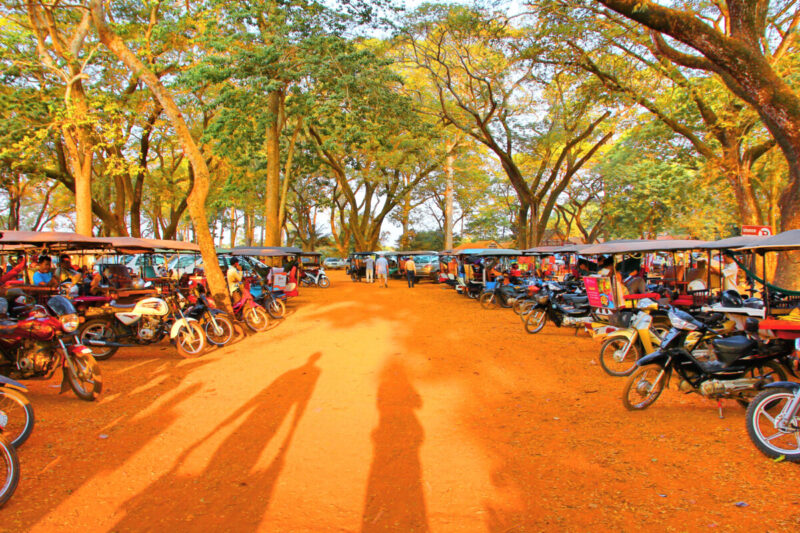
Getting around Cambodia requires a mix of strategies due to its developing infrastructure. While there are no metros or trams, intercity buses like Giant Ibis and Mekong Express are comfortable and reliable for longer hauls, though local city buses exist in Phnom Penh and Siem Reap with limited routes and English signage. Tuk-tuks remain the most practical and charming option for short trips—be sure to negotiate fares in advance unless you’re using Grab or PassApp, the two dominant ride-hailing apps that work well in major cities. Walking is possible in tourist zones, but sidewalks can be inconsistent, so comfortable shoes and a keen eye for traffic are essential; there are no transit passes to speak of, so carrying small cash is key for on-the-go flexibility.
Top experiences in Cambodia
Angkor Wat
Royal Palace (Phnom Penh)
Tuol Sleng Genocide Museum
Royal Palace and Silver Pagoda, Phnom Penh — gilded throne hall and its floor of 5,329 solid-silver tiles
Tuol Sleng Genocide Museum and Choeung Ek — essential and sobering Khmer Rouge memorial sites in Phnom Penh
Editor-curated picks carried over from our original guide. Where a full place guide exists, the card links to it.
Worth booking ahead in Cambodia
Hand-picked from the operators our guides already send readers to. Prices and availability are live on the partner site.
BrowseViator
Tours and tickets in Cambodia on Viator (opens Viator in a new tab)
Viator's full list of bookable tours and tickets in Cambodia.
BrowseGetYourGuide
Experiences in Cambodia on GetYourGuide (opens GetYourGuide in a new tab)
Everything GetYourGuide sells in Cambodia, with the cancellation terms on each listing.
Where to stayBooking.com
Stays in Cambodia (opens Booking.com in a new tab)
Live rates and availability for Cambodia on Booking.com; filter by neighbourhood once you know where your days start.
We earn a commission if you book through these links, at no extra cost to you. It is how we keep the guides free and independent.
Where to stay
Raffles Grand Hotel d'Angkor (Siem Reap)
1 Vithei Charles de Gaulle, Khum Svay Dang Kum, Siem Reap 17252, Cambodia
Luxury hotel steps from the Old Market with Art Deco-inspired rooms, a central courtyard pool, and a highly regarded Khmer restaurant
Shinta Mani Angkor (Siem Reap)
92 Rukhak Vithei Daun Penh, Sangkat Wat Phnom, Phnom Penh 12202, Cambodia
Colonial landmark hotel from 1929 on Monivong Boulevard, with two pools, a renowned Elephant Bar, and period-furnished suites
Rosewood Phnom Penh
River Road, Siem Reap 17252, Cambodia
Modern upscale option in the heart of the city with rooftop pool, spa, and easy access to Angkor Archaeological Park
Editor-curated stays carried over from our original guide. Where we have reviewed the hotel, the card links to the review.
Tips from the field
Highlights
- The magnificent ruins of the Khmer Empire at Angkor Archaeological Park, and a deep, poignant modern history.
Best activities
- Exploring ancient templates at Angkor Wat, learning about history in Phnom Penh, relaxing on southern coast beaches.
Local experiences
- Take a tuk-tuk ride through the streets of Siem Reap. Experience the vibrant Phare, The Cambodian Circus.
Practical tips
- Drink only bottled water. Use insect repellent to prevent mosquito-borne illnesses. U.S. Dollars are widely accepted alongside the local Riel.
Photography tips
- Sunrise at Angkor Wat is iconic—arrive early and secure a spot by the reflecting pools. Wear respectful clothing (covering shoulders/knees) to enter temples.
Timing
- Plan 3 days for Siem Reap and Angkor Wat alone. 1-2 weeks allows for adding Phnom Penh and the southern islands or coast.
Keeping it authentic
- The grandeur of the ancient Khmer empire contrasts sharply with the country's poignant modern history, offering a deeply moving travel experience.
Culture, customs and safety
Cultural heritage
Cambodia’s cultural heritage centers on the Angkorian legacy, where temple complexes preserve classical Khmer architecture, sculpture, and hydraulic engineering. Apsara dance traditions, silk weaving, and shadow puppetry survived the Khmer Rouge to flourish again. Buddhist traditions permeate daily life through pagoda education, water festivals, and merit-making practices. Traditional crafts include silver working in Kampong Cham, pottery in Kampong Chhnang, and pepper cultivation in Kampot, while floating villages maintain unique water-based lifestyles.
Local customs & etiquette
The traditional Cambodian greeting is the Sampeah, which involves placing your palms together in a prayer-like gesture and bowing your head. The head is considered the most sacred part of the body, so it is disrespectful to touch someone head. Similarly, feet are considered the lowest part, so avoid pointing them at people or religious icons.
Safety notes
Generally safe for tourists, but petty theft and bag snatching are common in cities. Do not stray off marked paths in rural areas due to the lingering risk of unexploded ordnance (UXO).

Travel Style
Activities