

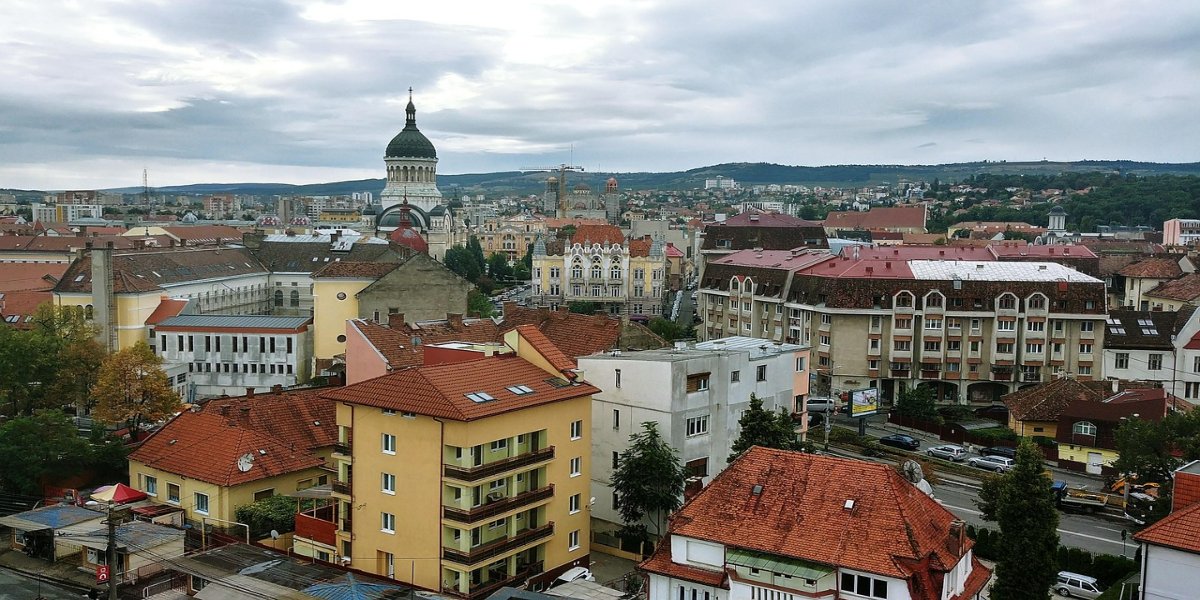
Cluj-Napoca, often referred to simply as Cluj, is a vibrant city in the heart of Transylvania. Known for its rich history, youthful energy, and cultural scene, Cluj is home to numerous festivals, theaters, and museums. The city beautifully blends medieval architecture with modern establishments, making it a perfect destination for history buffs and contemporary culture enthusiasts alike.
The destination guide
Cluj-Napoca
At a glance
CurrencyRON
Time zoneEastern European Time
Languages
- Romanian
Setting
- Transylvanian plateau
- Carpathian foothills
- Gothic architecture
- River gorge
Known for
- Transylvanian History
- University Towns
- Budget Travel
- Music Festivals.
Population325K324,576 residents
VisaDuration: Up to 90 days or less without a visa · Documents: Valid U.S. passport with at least 3 months validity beyond departure and 1 blank page
How Cluj-Napoca scores
5/10OverallFair
Weather7/10
Value for money8/10
Safety7/10
Food & cuisine7/10
Culture & arts4/10
Cultural experience8/10
History8/10
Nature & outdoors6/10
Adventure4/10
Nightlife8/10
Shopping6/10
Family friendly5/10
Romance7/10
Character
Photography score7/10
Authenticity score8/10
Off-the-beaten-path score7/10
Editorial scores on a 10-point scale, weighed against destinations of the same kind.
Travel safety snapshot
Overall80/100High rating
Women travellers80/100
LGBTQ+ travellers75/100
Theft78/100
Medical care80/100
Physical harm82/100
Political freedom78/100
SafePlace indicators use their source 100-point scale; higher is more favourable. Planning context, not a live travel advisory — check official government guidance before you go.
When to go
Best months to visit: April, May, June, July, August, September and October.
- January: -3.8 to 2.9 degrees Celsius, 35.4 millimetres of rain, best-time score 2 out of 5.
- February: -1.7 to 6.6 degrees Celsius, 33.7 millimetres of rain, best-time score 2 out of 5.
- March: 0.7 to 10.8 degrees Celsius, 50.7 millimetres of rain, best-time score 3 out of 5.
- April: 5.1 to 16.2 degrees Celsius, 54.6 millimetres of rain, best-time score 4 out of 5.
- May: 9.7 to 20 degrees Celsius, 82.8 millimetres of rain, best-time score 5 out of 5.
- June: 14.9 to 25.3 degrees Celsius, 101.6 millimetres of rain, best-time score 5 out of 5.
- July: 16 to 26.6 degrees Celsius, 88.9 millimetres of rain, best-time score 4 out of 5.
- August: 16 to 27.4 degrees Celsius, 58.4 millimetres of rain, best-time score 4 out of 5.
- September: 11.7 to 22 degrees Celsius, 62 millimetres of rain, best-time score 5 out of 5.
- October: 6.1 to 15.8 degrees Celsius, 45.4 millimetres of rain, best-time score 5 out of 5.
- November: 2 to 9.2 degrees Celsius, 49.5 millimetres of rain, best-time score 3 out of 5.
- December: -1.4 to 4.3 degrees Celsius, 45.5 millimetres of rain, best-time score 3 out of 5.
Month-by-month conditions and packing advice
- January
- Cold, occasional rain January in Cluj-Napoca: cold winter conditions make this less balanced for a first-time Transylvania stop. Crowds: January in Cluj-Napoca is workable with normal seasonal planning; build in layers, weather checks, and a mix of indoor and outdoor activities. Pack: Pack warm layers, a coat, and comfortable shoes for cold mornings and evenings.
- February
- Cold, occasional rain February in Cluj-Napoca: cold winter conditions make this less balanced for a first-time Transylvania stop. Crowds: February in Cluj-Napoca is workable with normal seasonal planning; build in layers, weather checks, and a mix of indoor and outdoor activities. Pack: Pack warm layers, a coat, and comfortable shoes for cold mornings and evenings.
- March
- Cool to mild, occasional rain March in Cluj-Napoca: culture and food remain useful while cold or changeable weather narrows outdoor plans. Crowds: March in Cluj-Napoca is workable with normal seasonal planning; build in layers, weather checks, and a mix of indoor and outdoor activities. Pack: Pack warm layers, a coat, and comfortable shoes for cold mornings and evenings.
- April
- Cool to mild, occasional rain April in Cluj-Napoca: conditions can still be lively, though summer heat or early spring weather require planning. Crowds: April in Cluj-Napoca is workable with normal seasonal planning; build in layers, weather checks, and a mix of indoor and outdoor activities. Pack: Pack layered clothing and comfortable walking shoes.
- May
- Cool to mild, some rain May in Cluj-Napoca: old-town walks, cafes, festivals, Transylvania day trips, and parks align with mild weather and manageable crowds. Crowds: May in Cluj-Napoca is workable with normal seasonal planning; build in layers, weather checks, and a mix of indoor and outdoor activities. Pack: Pack layered clothing and comfortable walking shoes. Add a rain jacket or compact umbrella.
- June
- Mild to warm, some rain June in Cluj-Napoca: old-town walks, cafes, festivals, Transylvania day trips, and parks align with mild weather and manageable crowds. Crowds: June in Cluj-Napoca is workable with normal seasonal planning; build in layers, weather checks, and a mix of indoor and outdoor activities. Pack: Pack light clothing, sun protection, and comfortable walking shoes. Add a rain jacket or compact umbrella.
- July
- Mild to warm, some rain July in Cluj-Napoca: conditions can still be lively, though summer heat or early spring weather require planning. Crowds: July in Cluj-Napoca is workable with normal seasonal planning; build in layers, weather checks, and a mix of indoor and outdoor activities. Pack: Pack light clothing, sun protection, and comfortable walking shoes. Add a rain jacket or compact umbrella.
- August
- Warm to hot, occasional rain August in Cluj-Napoca: conditions can still be lively, though summer heat or early spring weather require planning. Crowds: August in Cluj-Napoca is comfortable for sightseeing, neighborhoods, food stops, day trips, and outdoor time with limited weather friction. Pack: Pack light clothing, sun protection, and comfortable walking shoes.
- September
- Mild to warm, occasional rain September in Cluj-Napoca: old-town walks, cafes, festivals, Transylvania day trips, and parks align with mild weather and manageable crowds. Crowds: September in Cluj-Napoca is comfortable for sightseeing, neighborhoods, food stops, day trips, and outdoor time with limited weather friction. Pack: Pack layered clothing and comfortable walking shoes.
- October
- Cool to mild, occasional rain October in Cluj-Napoca: old-town walks, cafes, festivals, Transylvania day trips, and parks align with mild weather and manageable crowds. Crowds: October in Cluj-Napoca is workable with normal seasonal planning; build in layers, weather checks, and a mix of indoor and outdoor activities. Pack: Pack layered clothing and comfortable walking shoes.
- November
- Cold, occasional rain November in Cluj-Napoca: culture and food remain useful while cold or changeable weather narrows outdoor plans. Crowds: November in Cluj-Napoca is workable with normal seasonal planning; build in layers, weather checks, and a mix of indoor and outdoor activities. Pack: Pack warm layers, a coat, and comfortable shoes for cold mornings and evenings.
- December
- Cold, occasional rain December in Cluj-Napoca: culture and food remain useful while cold or changeable weather narrows outdoor plans. Crowds: December in Cluj-Napoca is workable with normal seasonal planning; build in layers, weather checks, and a mix of indoor and outdoor activities. Pack: Pack warm layers, a coat, and comfortable shoes for cold mornings and evenings.
Peak season
- July
- August
- May
- June
- September
Off-peak
- January
- February
- March
- April
- October
- November
- December
Know before you go
About
Cluj-Napoca, the largest city in Romania’s Transylvania region and seat of Cluj County, is a lively university and technology hub of about 287,000 people. Its hyphenated name honors the Roman settlement of Napoca, founded after the conquest of Dacia in AD 106, a heritage made official when the modern name was adopted in 1974. The Gothic St. Michael’s Church, built between 1321 and 1444, dominates Union Square and carries the tallest church tower in Romania, beside an equestrian statue of King Matthias Corvinus, who was born in the city. Often considered the unofficial capital of Transylvania, Cluj-Napoca blends Habsburg-era architecture with a young, energetic student population. Today it is one of Romania’s leading cultural, academic and technology centers.
Best time to visit
April to May, September to October
Season by season
Spring and Autumn offer comfortable temperatures minus the festival crowds. Summer is busy with major music festivals taking over. Winter is cold but very affordable.
Crowds
Moderate
Getting there and around
Getting there
Cluj-Napoca International Airport (CLJ), Romania’s second-largest airport, is located 9km east of the city center. Wizz Air operates a major hub here with flights to 44 destinations across 18 countries, including major European cities like London, Paris, Barcelona, Rome, and Vienna. Domestic flights connect to Bucharest via Tarom and other carriers.
Train services connect Cluj-Napoca to Bucharest (5-6 hours), Budapest (6-7 hours), and other Romanian cities via CFR (Romanian Railways). International bus services reach major European cities, while domestic buses connect to cities across Transylvania and Romania through operators like FlixBus and local carriers.
Getting around
CTP Cluj-Napoca operates the city’s public transportation network with 56 bus routes, trolleybus lines, and tram services connecting the city center to residential areas and suburbs. The most useful route for visitors is trolleybus line 5, which connects the airport to the city center in 30 minutes.
Tickets (€1-2) can be purchased from automatic machines or kiosks and must be validated before boarding. The historic city center around Union Square is highly walkable, with most attractions, restaurants, and accommodations within a 10-minute walk of each other. Taxis and ride-sharing services provide convenient transport to destinations outside the center, while rental cars offer flexibility for exploring the surrounding Transylvanian countryside.
Top experiences in Cluj-Napoca
Piața Unirii (Union Square)
Alexandru Borza Botanical Garden
Turda Salt Mine (Day Trip)
Editor-curated picks carried over from our original guide. Where a full place guide exists, the card links to it.
Worth booking ahead in Cluj-Napoca
Hand-picked from the operators our guides already send readers to. Prices and availability are live on the partner site.
BrowseViator
Tours and tickets in Cluj-Napoca on Viator (opens Viator in a new tab)
Viator's full list of bookable tours and tickets in Cluj-Napoca.
BrowseGetYourGuide
Experiences in Cluj-Napoca on GetYourGuide (opens GetYourGuide in a new tab)
Everything GetYourGuide sells in Cluj-Napoca, with the cancellation terms on each listing.
Where to stayBooking.com
Stays in Cluj-Napoca (opens Booking.com in a new tab)
Live rates and availability for Cluj-Napoca on Booking.com; filter by neighbourhood once you know where your days start.
We earn a commission if you book through these links, at no extra cost to you. It is how we keep the guides free and independent.
Where to stay
DoubleTree by Hilton Hotel Cluj
Hotel Beyfin
Platinia Hotel
Editor-curated stays carried over from our original guide. Where we have reviewed the hotel, the card links to the review.
Tips from the field
Highlights
- The Gothic St. Michael's Church, the massive underground chambers of the Turda Salt Mine, and the lively cafe culture surrounding Union Square.
Best activities
- Strolling through the 10,000 plant species in the Botanical Garden, exploring the Ethnographic Museum, and taking a day trip to the Apuseni Mountains.
Local experiences
- Tasting 'varză a la Cluj' (a local cabbage and meat casserole) or attending a performance at the stunning Romanian National Opera.
Practical tips
- Use local ride-hailing apps rather than hailing random taxis on the street. It is an excellent base for renting a car and exploring the wider Transylvania region.
Photography tips
- Capture the panoramic views of the entire city from Cetățuia Park, which is especially beautiful at sunset.
Timing
- 2 days is enough for the city itself, but add 1-2 more days if doing day trips to the Turda Salt Mine or surrounding castles.
Keeping it authentic
- Cluj serves as the unofficial capital of Transylvania, blending historic Hungarian and Romanian influences with a cutting-edge IT sector and vibrant student culture.
Culture, customs and safety
Cultural heritage
Cluj-Napoca embodies Transylvania’s multicultural heritage where Romanian, Hungarian, and German traditions interweave in the unofficial capital of the region. The Gothic St. Michael’s Church dominates Union Square where Matthias Corvinus, Hungary’s Renaissance king, was born. The city maintains its role as Romania’s cultural heart through the National Theatre and Opera, both architectural jewels. Traditional crafts survive in the Hoia Forest’s nearby villages, while the Central Park’s casino hosts cultural events. The University, Romania’s largest, perpetuates 400 years of academic traditions. Local cuisine blends Hungarian goulash, Romanian sarmale, and Saxon pastries, while underground tunnels from various eras create a mysterious labyrinth beneath the streets.
Local customs & etiquette
In Cluj-Napoca, be respectful of local customs and traditions.
Safety notes
Cluj-Napoca is considered one of the safest cities in Europe with very low crime rates. Standard urban precautions apply in crowded spaces or train stations.

