

Delhi, India’s vibrant capital territory, seamlessly blends ancient heritage with modern aspirations. From the majestic Red Fort and India Gate to bustling markets like Chandni Chowk and contemporary business districts, Delhi offers an intoxicating mix of history, culture, and urban energy that captures India’s diverse spirit.
The destination guide
Delhi

Chandni Chowk will overwhelm you — that’s the point. Delhi rewards the traveler willing to eat street food at 9am and visit a Mughal fort by noon.
Travel guides for Delhi
More guides featuring Delhi (3)
At a glance
Currency₹ INRCode: INR
Time zoneIST (UTC+5:30)
Languages
- Hindi
- English
- Urdu
- Punjabi
Setting
- Urban metropolis
- Yamuna River
- Historic monuments
- Arid plains
Known for
- History
- Architecture
- Street Food
- Culture
- Religion
Population16.8M16,800,000 residents
VisaDuration: The 30-day e-Tourist Visa is valid for 30 days from the date of first arrival · Documents: Valid U.S. passport and the approved Indian visa or e-Tourist Visa
How Delhi scores
8/10OverallExcellent
Weather6/10
Value for money8/10
Food & cuisine10/10
Culture & arts10/10
Cultural experience10/10
History10/10
Nature & outdoors4/10
Adventure3/10
Nightlife7/10
Shopping9/10
Family friendly8/10
Romance6/10
Character
Photography score9/10
Authenticity score8/10
Off-the-beaten-path score4/10
Editorial scores on a 10-point scale, weighed against destinations of the same kind.
Travel safety snapshot
Overall55/100Exercise precaution
Women travellers45/100
LGBTQ+ travellers18/100
Theft40/100
Medical care60/100
Physical harm55/100
Political freedom45/100
SafePlace indicators use their source 100-point scale; higher is more favourable. Planning context, not a live travel advisory — check official government guidance before you go.
When to go
Best months to visit: January, February, March, April, October, November and December.
- January: 8.1 to 19.3 degrees Celsius, 31.2 millimetres of rain, best-time score 4 out of 5.
- February: 11.4 to 23.8 degrees Celsius, 19.8 millimetres of rain, best-time score 5 out of 5.
- March: 16.3 to 29.6 degrees Celsius, 24.4 millimetres of rain, best-time score 5 out of 5.
- April: 22.1 to 36.7 degrees Celsius, 6.8 millimetres of rain, best-time score 4 out of 5.
- May: 25.5 to 38.6 degrees Celsius, 36 millimetres of rain, best-time score 2 out of 5.
- June: 27.7 to 38.2 degrees Celsius, 68.8 millimetres of rain, best-time score 2 out of 5.
- July: 26.7 to 33.7 degrees Celsius, 236.5 millimetres of rain, best-time score 2 out of 5.
- August: 26.2 to 32.5 degrees Celsius, 168.2 millimetres of rain, best-time score 2 out of 5.
- September: 24.9 to 32.6 degrees Celsius, 127.3 millimetres of rain, best-time score 3 out of 5.
- October: 20.1 to 31.8 degrees Celsius, 19.5 millimetres of rain, best-time score 5 out of 5.
- November: 14.7 to 26.9 degrees Celsius, 6.1 millimetres of rain, best-time score 5 out of 5.
- December: 9.6 to 21.5 degrees Celsius, 7.4 millimetres of rain, best-time score 5 out of 5.
Month-by-month conditions and packing advice
- January
- Cool to mild, occasional rain January in Delhi: conditions can work with fog, rising heat, or careful scheduling. Crowds: January in Delhi is workable with normal seasonal planning; build in layers, weather checks, and a mix of indoor and outdoor activities. Pack: Pack layered clothing and comfortable walking shoes.
- February
- Mild to warm, mostly dry February in Delhi: cooler, drier weather supports monuments, markets, gardens, food walks, and day trips without severe heat. Crowds: February in Delhi is comfortable for sightseeing, neighborhoods, food stops, day trips, and outdoor time with limited weather friction. Pack: Pack layered clothing and comfortable walking shoes.
- March
- Warm to hot, mostly dry March in Delhi: cooler, drier weather supports monuments, markets, gardens, food walks, and day trips without severe heat. Crowds: March in Delhi is workable with normal seasonal planning; build in layers, weather checks, and a mix of indoor and outdoor activities. Pack: Pack light clothing, sun protection, and comfortable walking shoes.
- April
- Very hot, mostly dry April in Delhi: conditions can work with fog, rising heat, or careful scheduling. Crowds: April in Delhi can be very hot, so travelers should favor early starts, shaded breaks, indoor attractions, and flexible afternoon pacing. Pack: Pack breathable clothing, strong sun protection, and a refillable water bottle.
- May
- Very hot, occasional rain May in Delhi: extreme heat or monsoon conditions make outdoor sightseeing much less comfortable. Crowds: May in Delhi can be very hot, so travelers should favor early starts, shaded breaks, indoor attractions, and flexible afternoon pacing. Pack: Pack breathable clothing, strong sun protection, and a refillable water bottle.
- June
- Very hot, occasional rain June in Delhi: extreme heat or monsoon conditions make outdoor sightseeing much less comfortable. Crowds: June in Delhi can be very hot, so travelers should favor early starts, shaded breaks, indoor attractions, and flexible afternoon pacing. Pack: Pack breathable clothing, strong sun protection, and a refillable water bottle.
- July
- Warm to hot, rainy July in Delhi: extreme heat or monsoon conditions make outdoor sightseeing much less comfortable. Crowds: July in Delhi is one of the wetter periods, so museums, food stops, flexible reservations, and backup indoor plans make the trip easier. Pack: Pack light clothing, sun protection, and comfortable walking shoes. Add a rain jacket or compact umbrella.
- August
- Warm to hot, rainy August in Delhi: extreme heat or monsoon conditions make outdoor sightseeing much less comfortable. Crowds: August in Delhi is one of the wetter periods, so museums, food stops, flexible reservations, and backup indoor plans make the trip easier. Pack: Pack light clothing, sun protection, and comfortable walking shoes. Add a rain jacket or compact umbrella.
- September
- Warm to hot, some rain September in Delhi: post-monsoon humidity and heat can still reduce comfort. Crowds: September in Delhi is workable with normal seasonal planning; build in layers, weather checks, and a mix of indoor and outdoor activities. Pack: Pack light clothing, sun protection, and comfortable walking shoes. Add a rain jacket or compact umbrella.
- October
- Warm to hot, mostly dry October in Delhi: cooler, drier weather supports monuments, markets, gardens, food walks, and day trips without severe heat. Crowds: October in Delhi is workable with normal seasonal planning; build in layers, weather checks, and a mix of indoor and outdoor activities. Pack: Pack light clothing, sun protection, and comfortable walking shoes.
- November
- Mild to warm, mostly dry November in Delhi: cooler, drier weather supports monuments, markets, gardens, food walks, and day trips without severe heat. Crowds: November in Delhi is comfortable for sightseeing, neighborhoods, food stops, day trips, and outdoor time with limited weather friction. Pack: Pack light clothing, sun protection, and comfortable walking shoes.
- December
- Mild to warm, mostly dry December in Delhi: cooler, drier weather supports monuments, markets, gardens, food walks, and day trips without severe heat. Crowds: December in Delhi is comfortable for sightseeing, neighborhoods, food stops, day trips, and outdoor time with limited weather friction. Pack: Pack layered clothing and comfortable walking shoes.
Peak season
- December
- January
- February
Off-peak
- April
- May
- June
- July
- August
- September
- October
Know before you go
About
Delhi, India’s sprawling capital territory in the country’s north, is a layered metropolis where ancient monuments stand amid one of the world’s most populous urban regions—the National Capital Territory counted about 16.8 million residents in 2011, with the wider area far larger. New Delhi, the seat of national government inaugurated in 1931, forms a planned district within the greater city. Delhi’s deep history shows in three UNESCO World Heritage Sites: the soaring 72.5 m Qutub Minar, India’s tallest brick minaret; Humayun’s Tomb, a 16th-century Mughal masterpiece that inspired the Taj Mahal; and the Red Fort, built by Shah Jahan in the 1600s. Old Delhi teems around Chandni Chowk’s bazaars and the Jama Masjid, while New Delhi’s tree-lined avenues lead to India Gate and the lotus-shaped Bahá’í temple. Famous for Mughal heritage, vibrant markets, and legendary street food, Delhi is the gateway to northern India and the Golden Triangle with Agra and Jaipur.
Best time to visit
Winter (October-March)
Season by season
Winter (Oct–Mar): ideal season—cool and pleasant (7–25°C), clear skies, peak festival calendar including Diwali and Republic Day. Summer (Apr–Jun): extremely hot (35–45°C), quieter, lower prices, best for indoor attractions only. Monsoon (Jul–Sep): moderate to heavy rain, humidity, lush green parks, fewer tourists, potential travel disruptions.
Crowds
Very High (crowded year-round, peak in winter tourist season and festival periods)
Getting there and around
Getting there
Indira Gandhi International Airport (DEL) is a major global hub with connections to all continents. From the airport, the Airport Express Metro reaches New Delhi station in 20 minutes. Pre-paid taxis and Uber/Ola are available outside arrivals. Delhi is also connected by rail to all major Indian cities via New Delhi, Old Delhi, and Hazrat Nizamuddin stations.
Getting around
Delhi Metro is the fastest way to move around—air-conditioned, clean, and covering most tourist areas. Uber and Ola ride-hailing apps offer door-to-door service at fair prices. Auto-rickshaws are ubiquitous but require fare negotiation (or insistence on using the meter). Cycle-rickshaws navigate Old Delhi’s narrow lanes. HOHO (Hop On Hop Off) tourist buses connect major sights. Walking is practical within neighborhoods like Connaught Place and Lodhi Colony, but Delhi is too spread out for a fully walkable trip.
Top experiences in Delhi
Red Fort (Lal Qila)
A UNESCO World Heritage Site built in 1638 from red sandstone by Mughal Emperor Shah Jahan. This massive fortress complex served as the Mughal capital for nearly 200 years and features ornate palaces, gardens, and the Diwan-i-Am (Hall of Public Audience).
Qutub Minar
A UNESCO World Heritage Site and India’s tallest brick minaret at 73 meters, built in 1206. The tower’s intricate carvings blend Hindu and Islamic motifs, and the surrounding complex includes the ruins of India’s first mosque and an ancient iron pillar that has resisted rust for 1,600 years.
Humayun's Tomb
A UNESCO World Heritage Site and the first garden tomb on the Indian subcontinent, built in 1570. Its symmetrical Persian design and red sandstone-and-marble construction directly inspired the Taj Mahal. The surrounding Mughal gardens contain over 100 tombs.
India Gate
A 42-meter stone arch built in 1931 as a memorial to 70,000 Indian soldiers who died in World War I. The monument is especially atmospheric at twilight when it’s illuminated, and the surrounding lawns fill with families and street food vendors.
Jama Masjid
One of India’s largest mosques, built by Shah Jahan in 1656 with red sandstone and marble. Its courtyard can hold 25,000 worshippers, and climbing the southern minaret rewards with panoramic views over Old Delhi’s rooftops.
Editor-curated picks carried over from our original guide. Where a full place guide exists, the card links to it.
Worth booking ahead in Delhi
Hand-picked from the operators our guides already send readers to. Prices and availability are live on the partner site.
BrowseViator
Tours and tickets in Delhi on Viator (opens Viator in a new tab)
Viator's full list of bookable tours and tickets in Delhi.
BrowseGetYourGuide
Experiences in Delhi on GetYourGuide (opens GetYourGuide in a new tab)
Everything GetYourGuide sells in Delhi, with the cancellation terms on each listing.
Where to stayBooking.com
Stays in Delhi (opens Booking.com in a new tab)
Live rates and availability for Delhi on Booking.com; filter by neighbourhood once you know where your days start.
We earn a commission if you book through these links, at no extra cost to you. It is how we keep the guides free and independent.
Where to stay
The Leela Palace New Delhi
Diplomatic Enclave, Chanakyapuri, New Delhi 110023, India
Ultra-luxury palace hotel in the diplomatic enclave with world-class spa, rooftop bar, award-winning Indian and international restaurants, and impeccable personalized service.
The Imperial New Delhi
Janpath, New Delhi 110001, India
Heritage Art Deco landmark dating to 1931, set amid expansive gardens with period-accurate rooms, fine-dining restaurants, an outdoor pool, and a history spanning India’s independence era.
The Lodhi
Dr Zakir Hussain Marg, New Delhi 110003, India
Five-star boutique hotel with private plunge pools in every room, an on-site art gallery, expansive grounds, and acclaimed restaurants — a rare urban sanctuary.
Editor-curated stays carried over from our original guide. Where we have reviewed the hotel, the card links to the review.
Tips from the field
Highlights
- Red Fort – Mughal red sandstone masterpiece
- Qutub Minar – 73m Indo-Islamic tower
- Humayun's Tomb – Precursor to the Taj Mahal
- India Gate – National war memorial
- Chandni Chowk – Old Delhi's legendary bazaar
Best activities
- Explore the Red Fort's massive Mughal complex, climb the Qutub Minar complex, marvel at Humayun's Tomb (the 'prototype of the Taj'), walk through the Jama Masjid courtyard, stroll India Gate at twilight, lose yourself in Chandni Chowk's old bazaars, sample street food on Paranthe Wali Gali, visit the ISKCON Temple and Lotus Temple, browse the National Museum, explore Lodhi Gardens among Mughal-era tombs, and take a cycle-rickshaw through Old Delhi.
Local experiences
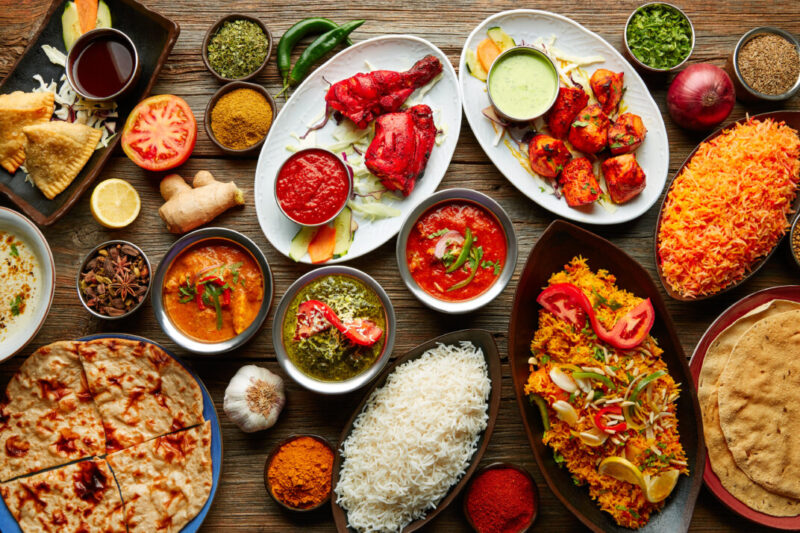
- Take a dawn cycle-rickshaw ride through the chaotic lanes of Old Delhi for a sensory overload of spices, fabrics, and street food, or join a guided Chandni Chowk food walk to taste Delhi's legendary paranthas, jalebis, and kebabs.
Practical tips
- Metro: Delhi Metro is efficient, air-conditioned, and covers most tourist areas—buy a Tourist Card for unlimited rides.
- Bargaining: Expected at markets and with auto-rickshaws; start at half the asking price.
- Cash & Cards: UPI digital payments are widespread, but carry small denominations for street food and rickshaws.
- Dress Modestly: Cover shoulders and knees at religious sites; women should carry a scarf.
- Heat: Summers exceed 40°C—schedule sightseeing for early morning and late afternoon.
- Pollution: Air quality can be poor Nov–Feb; consider an N95 mask for sensitive individuals.
- Uber/Ola: More reliable and fairly priced than metered auto-rickshaws.
Photography tips
- Humayun's Tomb provides the most photogenic Mughal composition—shoot in morning light for warm tones on red sandstone. Jama Masjid's courtyard is magnificent during golden hour. Chandni Chowk's narrow lanes and spice markets offer unmatched street photography—arrive before 9 AM for softer light and thinner crowds. The Qutub Minar complex photographs best in afternoon light emphasizing its carved details. India Gate is most atmospheric at twilight when the eternal flame glows. Agrasen ki Baoli (stepwell) is a hidden gem for symmetrical architectural shots. Always ask before photographing people closely.
Timing
- Three full days cover Old Delhi (Red Fort, Jama Masjid, Chandni Chowk), New Delhi (India Gate, Humayun's Tomb, Lodhi Gardens), and the Qutub Minar complex plus temples. A fourth day allows for the National Museum, Akshardham Temple, and a day trip to Agra for the Taj Mahal.
Keeping it authentic
- Delhi's identity is layered across seven ancient cities built over 3,000 years. Mughal emperors left the Red Fort, Jama Masjid, and Humayun's Tomb
- the British built New Delhi's grand boulevards and India Gate. Today, Old Delhi's labyrinthine bazaars coexist with modernist Lutyens' Delhi, creating a capital where Mughal minarets share skylines with parliament buildings and contemporary shopping malls. Delhi's street food culture—from Paranthe Wali Gali's stuffed flatbreads to Jama Masjid's nihari—is as integral to its identity as any monument.
Culture, customs and safety
Cultural heritage
Delhi layers 3,000 years of history from Indraprastha of the Mahabharata through seven historic cities to India’s modern capital. The Red Fort’s Mughal grandeur hosts Independence Day ceremonies, while Jama Masjid’s courtyard holds 25,000 worshippers. Old Delhi’s Chandni Chowk bazaar maintains Mughal-era trades: silver, spices, and wedding goods in specialized lanes. The city blends Hindu, Islamic, Sikh, and Christian traditions visible in architecture from Qutub Minar to Lotus Temple. Street food culture from paranthe wali galli to chaat corners defines Delhi’s palate. Traditional crafts survive in Karol Bagh’s sari shops and Dariba Kalan’s jewelry makers. The annual Mango Festival celebrates 1,000 varieties while Dilli Haat showcases India’s diverse handicrafts.
Local customs & etiquette
Greet with ‘Namaste’ (palms pressed together). Always use your right hand for eating, passing items, and handshakes—the left is considered unclean. Remove shoes before entering temples, mosques, and homes. Dress modestly at religious sites, especially covering shoulders and knees. Public displays of affection are frowned upon. Tipping 10% at restaurants is appreciated. Bargaining is expected in markets. Don’t point the soles of your feet at anyone; if your feet accidentally touch someone, apologize immediately.
Safety notes
Delhi is generally safe for tourists who take standard precautions. Pickpocketing is common in crowded markets (Chandni Chowk, Connaught Place) and on public transport—use a zipped cross-body bag and avoid displaying valuables. Use Uber, Ola, or pre-paid taxis from official booths; avoid unlicensed vehicles, especially at night. Stick to well-lit, populated areas after dark. Drink only sealed bottled water and eat from reputable establishments. Female travelers should use women-only Metro coaches during rush hours. Avoid political demonstrations. Keep digital copies of passport and visa.
Travel Style
Activities