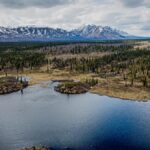
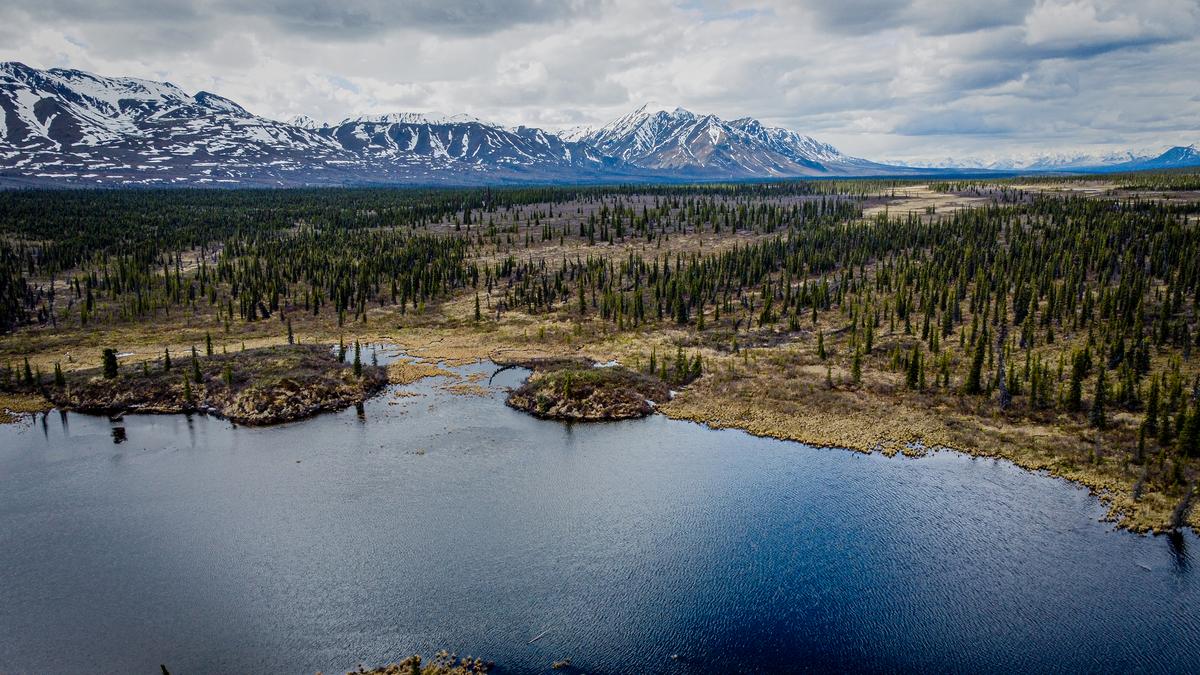
Denali National Park encompasses six million acres of Alaskan wilderness centered around North America’s tallest peak, where protected ecosystems support remarkable wildlife concentrations across taiga forest, alpine tundra, and glacier-carved valleys. The park’s centerpiece, 20,310-foot Denali (formerly Mt. McKinley), creates its own weather systems and dominates the landscape when visible, though clouds often obscure the summit, maintaining a sense of mystery that indigenous Athabascan people acknowledged by naming it “The High One.” Beyond mountain majesty, Denali preserves extraordinary subarctic wildlife viewing opportunities along its 92-mile Park Road, where visitors might spot grizzly bears, wolves, moose, caribou, and Dall sheep (the “Big Five” mammals) against undeveloped landscapes, while restricted private vehicle access maintains wilderness character through a regulated bus system. The park protects intact ecosystems where natural processes like predator-prey relationships continue largely uninfluenced by human activity, creating an exceptional living laboratory for scientific research and a time capsule of pre-development Alaska. Denali offers immersive wilderness experiences through structured activities including ranger-led discovery hikes, sled dog demonstrations connecting to Alaska’s transportation heritage, and flightseeing tours providing aerial perspectives of the Alaska Range, alongside backcountry camping permissions for experienced visitors seeking solitude without established trails. This flagship park represents genuine wilderness where seasonal extremes transform the landscape dramatically, from summer midnight sun and autumn tundra colors to winter dog sledding and northern lights viewing, providing visitors rare opportunities to experience untamed nature in one of America’s most remote national parks.
The destination guide
Denali National Park
National / State Park in United States, North AmericaUpdated
- Overall9/10
- Best forSolo travelers
- PeakJan–Apr
- CurrencyUSD
Denali encompasses six million acres of Alaskan wilderness with North America’s tallest peak at the center — one road in, no road out, and grizzlies everywhere.
Travel guides for Denali National Park
Itineraries & day trips (1)
Things to do (3)
Where to stay (1)
Travel tips & costs (1)
More guides featuring Denali National Park (16)
At a glance
- English
- Tundra wilderness
- Mountain peaks
- Glaciers
- Arctic wildlife
- Wildlife
- Wilderness
- Hiking
- Photography
- Adventure
- National Parks
How Denali National Park scores
Editorial scores on a 10-point scale, weighed against destinations of the same kind.
Travel safety snapshot
SafePlace indicators use their source 100-point scale; higher is more favourable. Planning context, not a live travel advisory — check official government guidance before you go.
When to go
Best months to visit: May, June, July, August and September.
- January: -15 to -7.3 degrees Celsius, 74.6 millimetres of rain, best-time score 2 out of 5.
- February: -14.4 to -6.8 degrees Celsius, 67.3 millimetres of rain, best-time score 2 out of 5.
- March: -13.6 to -7.8 degrees Celsius, 92.6 millimetres of rain, best-time score 2 out of 5.
- April: -8.6 to -4 degrees Celsius, 120.8 millimetres of rain, best-time score 3 out of 5.
- May: -2.9 to 1.5 degrees Celsius, 256.7 millimetres of rain, best-time score 4 out of 5.
- June: 2.4 to 6.8 degrees Celsius, 305 millimetres of rain, best-time score 5 out of 5.
- July: 5.5 to 9.6 degrees Celsius, 431 millimetres of rain, best-time score 5 out of 5.
- August: 4 to 7.7 degrees Celsius, 439.8 millimetres of rain, best-time score 5 out of 5.
- September: -1.3 to 2.3 degrees Celsius, 307.6 millimetres of rain, best-time score 4 out of 5.
- October: -7.3 to -2.5 degrees Celsius, 172.2 millimetres of rain, best-time score 3 out of 5.
- November: -12.8 to -6.3 degrees Celsius, 93.6 millimetres of rain, best-time score 2 out of 5.
- December: -15.1 to -7.6 degrees Celsius, 120.8 millimetres of rain, best-time score 2 out of 5.
Month-by-month conditions and packing advice
- January
- Very cold, some rain January in Denali National Park: winter closures and severe conditions make this unsuitable for most first-time park visits. Crowds: January in Denali National Park is best for winter-ready travelers; outdoor plans need warm gear, shorter daylight expectations, and weather-aware transport planning. Pack: Pack insulated layers, warm footwear, gloves, and a serious winter coat. Add a rain jacket or compact umbrella.
- February
- Very cold, occasional rain February in Denali National Park: winter closures and severe conditions make this unsuitable for most first-time park visits. Crowds: February in Denali National Park is best for winter-ready travelers; outdoor plans need warm gear, shorter daylight expectations, and weather-aware transport planning. Pack: Pack insulated layers, warm footwear, gloves, and a serious winter coat.
- March
- Very cold, some rain March in Denali National Park: winter closures and severe conditions make this unsuitable for most first-time park visits. Crowds: March in Denali National Park is best for winter-ready travelers; outdoor plans need warm gear, shorter daylight expectations, and weather-aware transport planning. Pack: Pack insulated layers, warm footwear, gloves, and a serious winter coat. Add a rain jacket or compact umbrella.
- April
- Very cold, some rain April in Denali National Park: access is limited and conditions are variable, so expectations should be flexible. Crowds: April in Denali National Park is best for winter-ready travelers; outdoor plans need warm gear, shorter daylight expectations, and weather-aware transport planning. Pack: Pack insulated layers, warm footwear, gloves, and a serious winter coat. Add a rain jacket or compact umbrella.
- May
- Very cold, rainy May in Denali National Park: shoulder season can be quieter but services and weather require more planning. Crowds: May in Denali National Park is one of the wetter periods, so museums, food stops, flexible reservations, and backup indoor plans make the trip easier. Pack: Pack warm layers, a coat, and comfortable shoes for cold mornings and evenings. Add a rain jacket or compact umbrella.
- June
- Cold, rainy June in Denali National Park: park buses, lodges, wildlife viewing, long daylight, and hiking access are at their strongest. Crowds: June in Denali National Park is one of the wetter periods, so museums, food stops, flexible reservations, and backup indoor plans make the trip easier. Pack: Pack warm layers, a coat, and comfortable shoes for cold mornings and evenings. Add a rain jacket or compact umbrella.
- July
- Cold, rainy July in Denali National Park: park buses, lodges, wildlife viewing, long daylight, and hiking access are at their strongest. Crowds: July in Denali National Park is one of the wetter periods, so museums, food stops, flexible reservations, and backup indoor plans make the trip easier. Pack: Pack layered clothing and comfortable walking shoes. Add a rain jacket or compact umbrella.
- August
- Cold, rainy August in Denali National Park: park buses, lodges, wildlife viewing, long daylight, and hiking access are at their strongest. Crowds: August in Denali National Park is one of the wetter periods, so museums, food stops, flexible reservations, and backup indoor plans make the trip easier. Pack: Pack layered clothing and comfortable walking shoes. Add a rain jacket or compact umbrella.
- September
- Cold, rainy September in Denali National Park: shoulder season can be quieter but services and weather require more planning. Crowds: September in Denali National Park is one of the wetter periods, so museums, food stops, flexible reservations, and backup indoor plans make the trip easier. Pack: Pack warm layers, a coat, and comfortable shoes for cold mornings and evenings. Add a rain jacket or compact umbrella.
- October
- Very cold, rainy October in Denali National Park: access is limited and conditions are variable, so expectations should be flexible. Crowds: October in Denali National Park is best for winter-ready travelers; outdoor plans need warm gear, shorter daylight expectations, and weather-aware transport planning. Pack: Pack insulated layers, warm footwear, gloves, and a serious winter coat. Add a rain jacket or compact umbrella.
- November
- Very cold, some rain November in Denali National Park: winter closures and severe conditions make this unsuitable for most first-time park visits. Crowds: November in Denali National Park is best for winter-ready travelers; outdoor plans need warm gear, shorter daylight expectations, and weather-aware transport planning. Pack: Pack insulated layers, warm footwear, gloves, and a serious winter coat. Add a rain jacket or compact umbrella.
- December
- Very cold, some rain December in Denali National Park: winter closures and severe conditions make this unsuitable for most first-time park visits. Crowds: December in Denali National Park is best for winter-ready travelers; outdoor plans need warm gear, shorter daylight expectations, and weather-aware transport planning. Pack: Pack insulated layers, warm footwear, gloves, and a serious winter coat. Add a rain jacket or compact umbrella.
- March
- February
- January
- April
- September
- August
- July
- June
Know before you go
Best time to visit
- Visiting in spring or autumn can potentially bring lower accommodation costs and fewer fellow guests! A bonus during autumn is that the local tundra briefly turns to stunning golden autumnal colors.
- Summer is the only season busses operate within the park, so it’s a much more convenient time to visit. You’ll also find all services operating normally and enjoy generally more agreeable weather.
- Winter is a beautiful time at Denali National Park, but services are severely limited, with almost all local businesses closed. Wintertime is not a time for spontaneous trips to Denali, and in-depth pre-planning is needed if you want to visit at this time.
Season by season
Summer (Jun–Aug): warmest weather (mid-60s°F), up to 22 hours of daylight, peak wildlife activity, all lodges and buses operational, highest crowds. Early Summer (mid-May–early Jun): cooler, quieter shoulder season with snow-capped scenery and special lodging rates. Late Summer/Autumn (Aug–early Sep): fall colors ignite, bears forage for berries, aurora viewing begins, crowds thin. Winter (Dec–Feb): most roads and facilities closed, but cross-country skiing, dog sledding, and outstanding Northern Lights opportunities.
Crowds
High (June–August), Moderate (May and September), Low (October–April)
Getting there and around
Getting there
Denali National Park lies strategically positioned between Alaska’s two major cities, accessible via spectacular scenic routes showcasing America’s last frontier. From Anchorage (240 miles south), the Alaska Railroad’s Denali Star train departs daily at 8:20 AM, arriving at 3:40 PM through dramatic mountain passes and glacial valleys, offering Adventure Class or premium GoldStar Dome service. Motorcoach services provide faster 5.5-hour journeys with morning (6:30 AM) and afternoon (3:00 PM) departures via Talkeetna. The five-hour drive follows the Parks Highway through stunning wilderness, though rental cars aren’t available at Denali. From Fairbanks (125 miles northeast), trains depart at 8:20 AM reaching Denali by 12:10 PM, while van transfers take just 2.5 hours. Ted Stevens Anchorage International and Fairbanks airports serve as gateways, with limited air taxi services direct to Denali. Kantishna Air Taxi offers scenic 1.5-hour flights from Anchorage’s Merrill Field directly to the park entrance. Private vehicles access only the first 15 miles of Park Road during summer – beyond requires park buses or special permits. Most accommodations cluster along the Nenana River just one mile from the park entrance, creating a convenient base for wilderness adventures.
Getting around
Within Denali National Park, private vehicle access is highly restricted beyond Mile 15 of the Park Road, making the park’s transit-style shuttle and narrated tour buses the most reliable and scenic way to get around. These buses, which depart from the Denali Bus Depot and Wilderness Access Center, require advance reservations and offer varying routes deep into the wilderness depending on how far you wish to explore. The park isn’t walkable in a traditional urban sense due to its vast size and rugged terrain, and there are no taxis or rideshare services available inside park boundaries, so self-guided exploration requires careful planning or backcountry permits. For the most flexible experience, opt for the transit (non-narrated) buses that allow you to hop on and off to hike or wildlife-watch—just be sure to purchase your passes early during peak season, as seats are limited and weather can impact schedules.
Top experiences in Denali National Park
Denali Park Road
The park’s 92-mile lifeline cuts through boreal forest, alpine tundra, and braided river valleys. Private vehicles are limited to Mile 15; beyond that, narrated tour buses and hop-on shuttle buses carry visitors past prime wildlife habitat and viewpoints including Polychrome Overlook, Stony Hill, Eielson Visitor Center, and Wonder Lake.
Wonder Lake
A large kettle lake at Mile 85 of the park road, offering the most famous reflection views of Denali on calm, clear mornings. A 28-site campground sits on the shore, and the surrounding tundra turns vivid red and gold in late August.
Eielson Visitor Center
Perched at Mile 66, this LEED-certified building provides panoramic views of Denali and the Alaska Range. Rangers give talks on geology and wildlife, and several short hikes start from the center, including routes to alpine ridges above treeline.
Savage River Loop Trail
A gentle 2-mile loop at Mile 15, accessible by private vehicle, winding along the Savage River with views of surrounding peaks. It is one of the few maintained trails in the park and suitable for all fitness levels.
Sled Dog Kennels
The only working sled-dog kennel in the U.S. National Park System, home to roughly 30 Alaskan huskies. Free ranger-led demonstrations run several times daily in summer, showing how the dogs help patrol the park’s vast backcountry in winter.
Editor-curated picks carried over from our original guide. Where a full place guide exists, the card links to it.
Worth booking ahead in Denali National Park
Hand-picked from the operators our guides already send readers to. Prices and availability are live on the partner site.
BrowseViator
Tours and tickets in Denali National Park on Viator (opens Viator in a new tab)
Viator's full list of bookable tours and tickets in Denali National Park.
BrowseGetYourGuide
Experiences in Denali National Park on GetYourGuide (opens GetYourGuide in a new tab)
Everything GetYourGuide sells in Denali National Park, with the cancellation terms on each listing.
Where to stayBooking.com
Stays in Denali National Park (opens Booking.com in a new tab)
Live rates and availability for Denali National Park on Booking.com; filter by neighbourhood once you know where your days start.
We earn a commission if you book through these links, at no extra cost to you. It is how we keep the guides free and independent.
Where to stay
Denali Princess Wilderness Lodge
Mile 238.5 Parks Highway, Denali National Park, AK 99755, USA
A 460-room lodge set on a bluff overlooking the Nenana River, about one mile north of the park entrance. Facilities include multiple restaurants, a dinner theater, a tour desk, and river-view balconies. Shuttle service runs to the park entrance throughout the day.
Camp Denali
Mile 89 Denali Park Road, Kantishna, AK 99755, USA
A historic wilderness lodge deep inside the park near Wonder Lake, accessible only by park bus. The property offers 18 hand-built cabins with direct views of Denali, guided naturalist hikes, canoeing, gold panning, and evening programs—all included in multi-night stays.
Grande Denali Lodge
Mile 238 Parks Highway, Denali National Park, AK 99755, USA
A hillside lodge perched 650 feet above the Nenana River canyon near the park entrance, offering 160 guest rooms with panoramic mountain and valley views. The on-site Alpenglow Restaurant serves Alaskan-inspired cuisine, and a free shuttle connects guests to the Wilderness Access Center.
Editor-curated stays carried over from our original guide. Where we have reviewed the hotel, the card links to the review.
Tips from the field
Highlights
- Denali (20,310 ft) – North America's tallest peak
- Denali Park Road – 92-mile wilderness corridor
- Big Five Wildlife – Moose, caribou, Dall sheep, wolves, grizzlies
- Eielson Visitor Center – Panoramic mountain views
- Wonder Lake – Iconic Denali reflections
- Nenana River Rafting – Class III-IV whitewater
Best activities
- Ride the park bus along the 92-mile Denali Park Road to spot the Big Five (moose, caribou, Dall sheep, wolves, grizzly bears). Hike the Savage River Loop or the more demanding Mount Healy Overlook Trail. Book a flightseeing tour for aerial views of Denali's summit and surrounding glaciers. Raft the Nenana River's Class III-IV rapids just outside the park entrance. Visit the Sled Dog Kennels for a ranger-led demonstration on the park's working dog teams. Camp at Wonder Lake for the most dramatic reflection shots of Denali on clear mornings.
Local experiences
- Join a ranger-led sled dog demonstration at the park kennels, raft the Nenana River at sunset, or take a guided backcountry hike to read tundra ecology with a naturalist.
Practical tips
- Book buses and campgrounds months ahead—summer spots fill fast.
- Private vehicles are restricted past Mile 15; use park shuttle or tour buses.
- Pack layers: summer highs reach the mid-60s°F but nights dip near freezing.
- Bring insect repellent—mosquitoes peak in June and July.
- There are no restaurants inside the park; pack food or eat at the entrance area.
- Gas up in Healy or Cantwell; no fuel available inside the park.
Photography tips
- Wonder Lake at dawn delivers mirror-image reflections of Denali on calm mornings—arrive by 5 AM in summer. The Stony Hill Overlook at Mile 62 offers the first unobstructed mountain view from the road. Use a 200–400 mm telephoto for wildlife shots from the bus. Golden hour light in August and September saturates the fall tundra colors. For aurora photography in September, use a wide-angle lens at f/2.8, ISO 1600–3200, and 10–20 second exposures.
Timing
- Allow 2–3 days minimum: one full day on the park bus to Eielson Visitor Center or Wonder Lake, one day for hiking and the sled-dog demonstration, and a half-day for Nenana River rafting. A 4–5 day stay lets you add a flightseeing tour and overnight backcountry camping.
Keeping it authentic
- Denali's six-million-acre wilderness is deliberately unmanicured—there are almost no maintained trails beyond the entrance area, preserving the raw subarctic landscape the Koyukon Athabascan people have known for millennia. The park's single road and bus-only access policy keep the interior remarkably wild
- visitors stand a genuine chance of seeing grizzlies, wolves, and caribou in undisturbed habitat. The park service's working sled-dog kennel is the only one in the U.S. National Park System, continuing a tradition that predates motorized patrols.
Culture, customs and safety
Cultural heritage
Denali National Park preserves the cultural landscapes of Alaska Native peoples, particularly the Koyukon and Denaiana Athabascans, who have maintained spiritual and subsistence relationships with this wilderness for thousands of years. The area represents the intersection of indigenous Alaska Native traditions, early mountaineering culture, and American wilderness preservation philosophy, where traditional ecological knowledge meets modern conservation science. Denali cultural heritage encompasses Native Alaskan storytelling traditions, mountaineering history, wilderness philosophy, and the ongoing collaboration between traditional indigenous wisdom and contemporary environmental stewardship.
Local customs & etiquette
Denali’s wilderness etiquette centers on profound respect for untamed nature and indigenous heritage spanning thousands of years. Leave No Trace principles guide every interaction – pack out all waste, stay on designated trails near facilities, and minimize impact in the backcountry. Wildlife viewing demands silent reverence: maintain 1/4-mile distance from bears, 25 yards from all other animals, never feeding or harassing creatures. When buses stop for wildlife, absolute silence allows unexpected behaviors to unfold – perhaps revealing kill sites or additional animals. The park’s indigenous Athabascan peoples – Dena’ina, Koyukon, Lower Tanana, Upper Kuskokwim, and Western Ahtna – consider this sacred homeland where the land lives as a respected entity, not merely a resource. Their subsistence traditions continue through carefully managed programs honoring traditional ecological knowledge. Visitors should understand that “Denali” means “the high one” in Koyukon language, representing deep spiritual significance beyond physical grandeur. Rangers and naturalist guides embody Alaska’s frontier hospitality, sharing expertise generously while expecting visitors to embrace self-reliance and preparedness. The unspoken code requires carrying proper gear, understanding weather volatility, and accepting that nature dictates schedules. Manage expectations – seeing two of the “Big Five” (bears, moose, caribou, wolves, Dall sheep) constitutes exceptional luck. This wilderness remains “what America was,” demanding humility, patience, and recognition that humans are temporary guests in an ancient, living landscape.
Safety notes
Denali is remote wilderness—carry bear spray on all hikes and store food in bear-resistant containers at camp. Stay at least 300 yards from bears and 25 yards from other wildlife. Hypothermia is a year-round risk; dress in layers and pack rain gear even in summer. Cell service only works within three miles of the park entrance, so inform someone of your itinerary before heading into the backcountry. Glacial rivers are deceptively deep and cold—never cross alone. In emergencies dial 911 or contact a ranger or bus driver.