The destination guide
Füssen
At a glance
- German
- Alpine town
- Neuschwanstein Castle area
- Bavarian Alps
- Lake Forggen
How Füssen scores
Editorial scores on a 10-point scale, weighed against destinations of the same kind.
Travel safety snapshot
SafePlace indicators use their source 100-point scale; higher is more favourable. Planning context, not a live travel advisory — check official government guidance before you go.
When to go
Best months to visit: April, May, June, July, August, September, October and December.
- January: -7.8 to 1.6 degrees Celsius, 11.1 millimetres of rain, best-time score 3 out of 5.
- February: -8.1 to 4.3 degrees Celsius, 24 millimetres of rain, best-time score 3 out of 5.
- March: -4.5 to 6.6 degrees Celsius, 49.2 millimetres of rain, best-time score 3 out of 5.
- April: -0.3 to 11.5 degrees Celsius, 36.5 millimetres of rain, best-time score 4 out of 5.
- May: 3.2 to 12.9 degrees Celsius, 90 millimetres of rain, best-time score 5 out of 5.
- June: 8.4 to 20.1 degrees Celsius, 54.1 millimetres of rain, best-time score 5 out of 5.
- July: 9.9 to 20.7 degrees Celsius, 52.1 millimetres of rain, best-time score 4 out of 5.
- August: 10.3 to 22.6 degrees Celsius, 56.4 millimetres of rain, best-time score 4 out of 5.
- September: 6.9 to 18.6 degrees Celsius, 12.2 millimetres of rain, best-time score 5 out of 5.
- October: 2 to 12.6 degrees Celsius, 35.6 millimetres of rain, best-time score 5 out of 5.
- November: -1.7 to 9.3 degrees Celsius, 12.9 millimetres of rain, best-time score 3 out of 5.
- December: -6.5 to 2.3 degrees Celsius, 22.9 millimetres of rain, best-time score 5 out of 5.
Month-by-month conditions and packing advice
- January
- Cold weather, mostly dry January in Füssen: winter scenery can appeal, but short days, ice, or shoulder closures limit flexibility.
- February
- Cold weather, mostly dry February in Füssen: winter scenery can appeal, but short days, ice, or shoulder closures limit flexibility.
- March
- Cold weather, some rain March in Füssen: winter scenery can appeal, but short days, ice, or shoulder closures limit flexibility.
- April
- Cool weather, some rain April in Füssen: conditions are useful, though summer crowds or early spring weather need planning.
- May
- Cool weather, some rain May in Füssen: Neuschwanstein views, lake walks, old-town strolls, alpine day trips, and Christmas atmosphere are strongest.
- June
- Cool weather, some rain June in Füssen: Neuschwanstein views, lake walks, old-town strolls, alpine day trips, and Christmas atmosphere are strongest.
- July
- Warm and pleasant, some rain July in Füssen: conditions are useful, though summer crowds or early spring weather need planning.
- August
- Warm and pleasant, some rain August in Füssen: conditions are useful, though summer crowds or early spring weather need planning.
- September
- Cool weather, mostly dry September in Füssen: Neuschwanstein views, lake walks, old-town strolls, alpine day trips, and Christmas atmosphere are strongest.
- October
- Cool weather, some rain October in Füssen: Neuschwanstein views, lake walks, old-town strolls, alpine day trips, and Christmas atmosphere are strongest.
- November
- Cold weather, mostly dry November in Füssen: winter scenery can appeal, but short days, ice, or shoulder closures limit flexibility.
- December
- Cold weather, mostly dry December in Füssen: Neuschwanstein views, lake walks, old-town strolls, alpine day trips, and Christmas atmosphere are strongest.
- June
- July
- August
- September
- December
- January
- February
- March
Know before you go
About
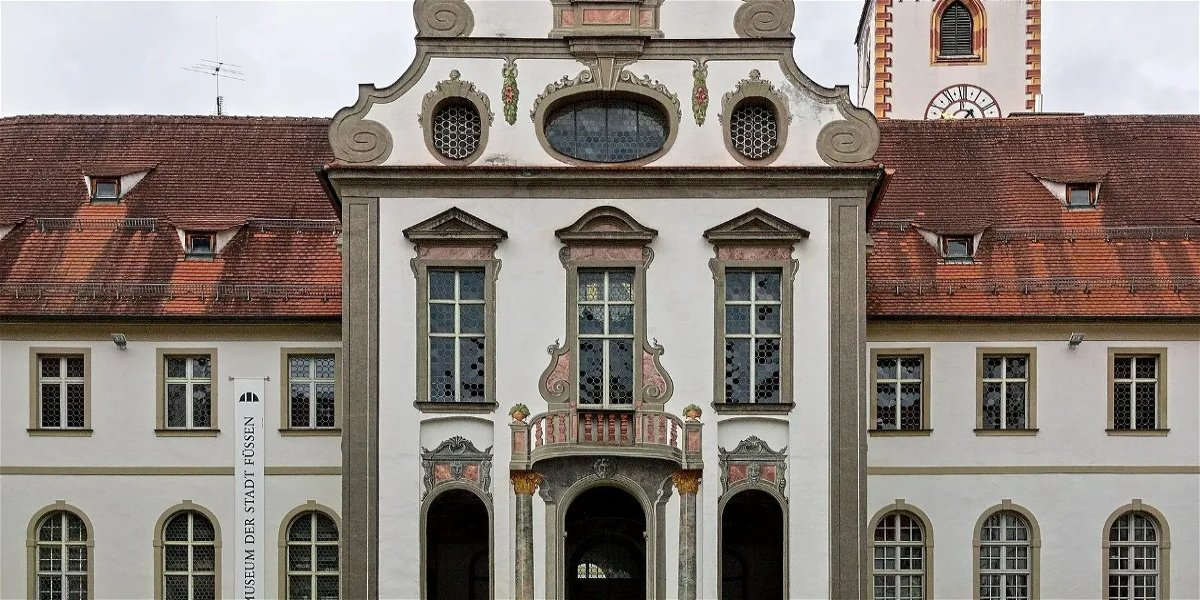
Füssen sits at 808 meters elevation at the foot of the Bavarian Alps, making it Bavaria’s highest town and the southern anchor of the Romantic Road. The medieval old town — painted facades, covered arcades, and a restored Benedictine abbey — clusters beneath the Hohes Schloss fortress, while the surrounding landscape of glacial lakes, mountain meadows, and forested gorges provides the stage for King Ludwig II’s famous castles. Neuschwanstein, 4 kilometers east, is Germany’s most-visited castle, but the town itself rewards exploration beyond the castle crowds.
Best time to visit
Year-round. Summer for hiking/lakes; Winter for magical snowy landscapes and quieter castle visits.
Getting there and around
Getting there
Train from Munich (2 hours, scenic). Driving via the Romantic Road (Romantische Straße).
Getting around
Walkable Old Town. Buses run to the castles. Bikes are great for the lake areas.
Top experiences in Füssen
Neuschwanstein Castle
Read the place guide →Commissioned by King Ludwig II in 1869 and never fully completed, this Romanesque Revival palace rises from a limestone bluff 200 meters above the Pöllat Gorge with the Alps stretched behind it. Designed by theater-set painter Christian Jank, its turrets, towers, and interiors were conceived as a personal fantasy of medieval kingship rather than a practical residence. The Throne Hall, Singer’s Hall, and grotto are highlights of the 30-minute guided interior tour. Around 1.4 million visitors walk through each year, making advance online booking essential — summer slots sell out weeks ahead.
Hohes Schloss (High Castle)
Füssen’s own High Castle dominates the old town from a rocky outcrop, its painted trompe l’oeil windows creating an illusion of architectural depth on the late-Gothic facade. Originally a summer residence for the prince-bishops of Augsburg, the interior now houses a branch of the Bavarian State Painting Collections with late-Gothic and Renaissance works by Swabian masters. The castle’s courtyard terrace provides wide views across the Lech valley to the surrounding Alpine foothills and, on clear days, the Zugspitze.
Lechfall & Lech River Gorge
Where the Lech River narrows into a dramatic gorge at Füssen’s southern edge, a man-made cascade drops the water several meters over concrete steps originally built for flood control. The result is one of Bavaria’s most accessible natural spectacles — a pedestrian bridge spans the gorge directly above the falls, providing views straight down into the turquoise-green water. A marked path continues along the river through a forested canyon toward Lechsteg, a swaying suspension bridge that crosses the gorge at treetop height.
Editor-curated picks carried over from our original guide. Where a full place guide exists, the card links to it.


Worth booking ahead in Füssen
Hand-picked from the operators our guides already send readers to. Prices and availability are live on the partner site.
Day tripViator
Neuschwanstein and Linderhof royal castles day tour (opens Viator in a new tab)
Both royal castles and the coach in one long day; the practical way to see them from Munich without a car.
Where to stayBooking.com
Stays in Füssen (opens Booking.com in a new tab)
Live rates and availability for Füssen on Booking.com; filter by neighbourhood once you know where your days start.
We earn a commission if you book through these links, at no extra cost to you. It is how we keep the guides free and independent.
Where to stay
Hotel Sonne
Prinzregentenplatz 1, 87629 Füssen, Germany
Four-star hotel in the centre of Füssen’s Old Town with panoramic rooftop terrace, spa, and walking access to the Lechfall and Hohes Schloss.
Villa Romantic Hotel
Editor-curated stays carried over from our original guide. Where we have reviewed the hotel, the card links to the review.
Tips from the field
Highlights
- Gateway to Neuschwanstein, Romantic Road, Bavarian Alps, Lakes.
Best activities
- Touring Neuschwanstein Castle interiors (book tickets online in advance)
- Hiking the Marienbrücke bridge above the Pöllat Gorge for castle views
- Cycling around Forggensee lake on the 32km circuit
- Walking Füssen's painted old town and the Hohes Schloss courtyard
- Swimming in Alpsee lake below the castles
- Visiting the Museum of Füssen and its lute-making history
- Riding the Tegelberg cable car for Alpine panoramas
- Walking the Lechfall gorge and the Lechsteg suspension bridge
Practical tips
- Book Neuschwanstein tickets WEEKS in advance online. The walk up to the castle is steep
- consider the horse carriage or shuttle bus. Visit Marienbrücke for the classic castle photo.
Keeping it authentic
- The old town retains a working Bavarian market-town character beneath the tourism
- St. Mang's Abbey documents Füssen's centuries as a center of European lute and violin making
- The Lechfall gorge path is used more by local joggers than tourists
- Farmhouse guesthouses (Gasthöfe) in the surrounding villages offer unvarnished Bavarian hospitality
Culture, customs and safety
Cultural heritage
Füssen’s strategic position on the Lech river crossing made it a Roman garrison (Foetibus, 3rd century AD) and later a key stop on the Via Claudia Augusta trade route to Italy. The Benedictine monastery of St. Mang, founded in the 9th century, became a center of European lute and violin making — a tradition documented in the town’s museum. The Hohes Schloss served the prince-bishops of Augsburg from the 14th century, and its trompe l’oeil facades represent some of Germany’s finest late-Gothic exterior painting. In the 19th century, King Ludwig II’s castle-building obsession transformed the surrounding countryside into a fantasy landscape that now draws 1.4 million annual visitors.
Local customs & etiquette
Bavarians greet with ‘Grüß Gott’ rather than the northern German ‘Guten Tag.’ Punctuality is expected. Tipping 5–10% in restaurants is standard — round up the bill and tell the server the total. Dress codes at churches require covered shoulders. Table manners are formal: say ‘Guten Appetit’ before eating, keep hands on the table (not in laps), and maintain eye contact when clinking glasses.
Safety notes
Very safe. Be careful on icy paths in winter.