Italy’s most intact Renaissance walls forming a complete 4-kilometer loop around the historic center—planted with double-row plane trees (1817) creating spectacular walking, cycling, jogging routes with panoramic views that were never dismantled unlike other Italian cities. Guinigi Tower’s 45-meter medieval marvel crowned by spectacular holm oak roof garden requiring 230-step climbs for breathtaking Tuscan hills panoramas, making it the world’s most recognizable tree-topped tower landmark. Piazza dell’Anfiteatro’s quintessential elliptical square built on 2nd-century Roman amphitheater ruins by architect Lorenzo Nottolini—one of the world’s most photographed squares lined with cafes perfect for aperitivo breaks. Giacomo Puccini’s birthplace preserving the opera composer’s Piazza della Cittadella apartment as museum featuring original furnishings and Steinway & Sons piano used for Turandot composition, plus nightly intimate concerts at San Giovanni Church. Via Fillungo’s elegant medieval streets offering artisan shops, pastry stores serving Buccellato (raisin-aniseed sweet bread), and picturesque alleys creating Tuscany’s most authentic Italian experience—more relaxed than touristy Florence and Pisa while maintaining quintessential medieval charm within these perfectly preserved fortifications.
The destination guide
Lucca
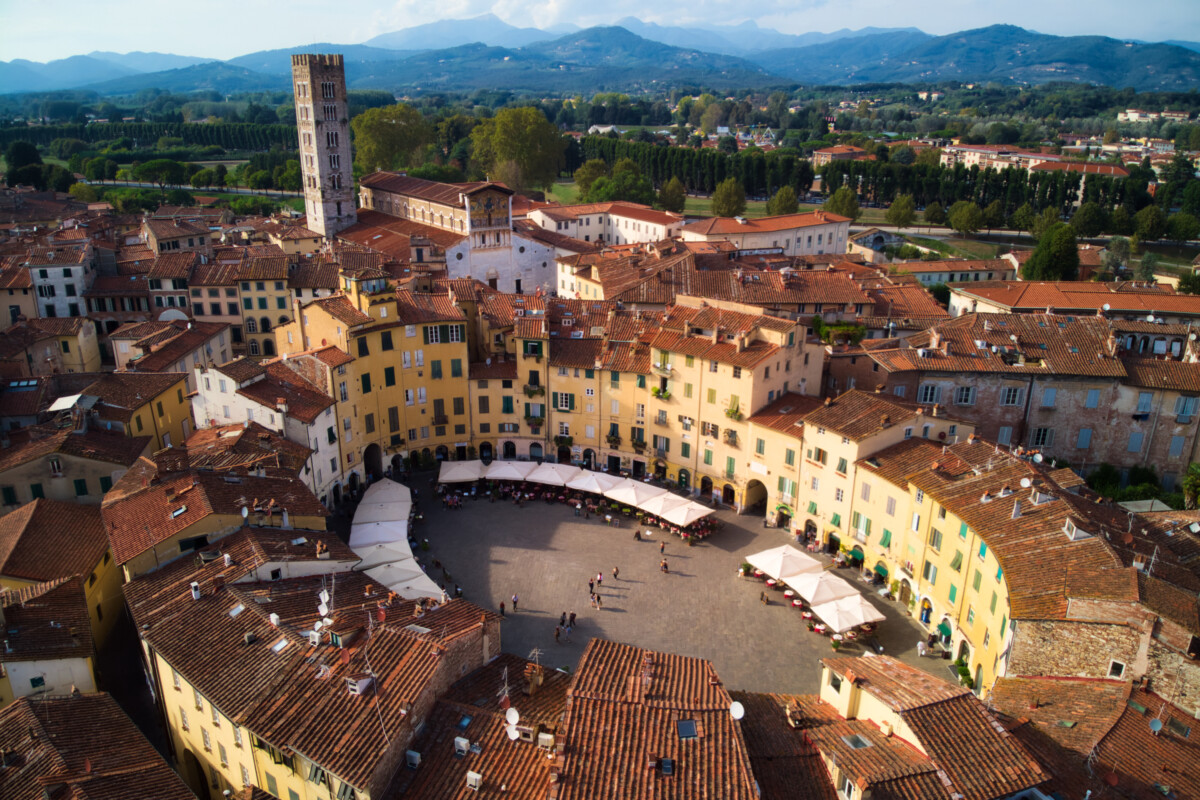
Lucca’s Renaissance walls are still intact — all 4km of them, tree-lined and walkable. Most of Tuscany tore theirs down.
Travel guides for Lucca
More guides featuring Lucca (3)
At a glance
- Italian
- Tuscan walled city
- Olive groves
- Rolling hills
- Medieval architecture
How Lucca scores
Editorial scores on a 10-point scale, weighed against destinations of the same kind.
Travel safety snapshot
SafePlace indicators use their source 100-point scale; higher is more favourable. Planning context, not a live travel advisory — check official government guidance before you go.
When to go
Best months to visit: April, May, June, July, August, September and October.
- January: 2.6 to 9.9 degrees Celsius, 8.3 millimetres of rain, best-time score 2 out of 5.
- February: 2.2 to 11.9 degrees Celsius, 29.7 millimetres of rain, best-time score 2 out of 5.
- March: 4.4 to 14.2 degrees Celsius, 26.4 millimetres of rain, best-time score 3 out of 5.
- April: 7.8 to 18.6 degrees Celsius, 13.8 millimetres of rain, best-time score 4 out of 5.
- May: 10.2 to 18.9 degrees Celsius, 31.3 millimetres of rain, best-time score 5 out of 5.
- June: 15.6 to 25.9 degrees Celsius, 15.1 millimetres of rain, best-time score 5 out of 5.
- July: 18.1 to 29.6 degrees Celsius, 7.6 millimetres of rain, best-time score 5 out of 5.
- August: 18.9 to 29.9 degrees Celsius, 13.8 millimetres of rain, best-time score 5 out of 5.
- September: 15.5 to 26.3 degrees Celsius, 24 millimetres of rain, best-time score 5 out of 5.
- October: 11.3 to 19.9 degrees Celsius, 47.8 millimetres of rain, best-time score 4 out of 5.
- November: 8.1 to 14.6 degrees Celsius, 81.3 millimetres of rain, best-time score 2 out of 5.
- December: 4.2 to 10.7 degrees Celsius, 21.5 millimetres of rain, best-time score 3 out of 5.
Month-by-month conditions and packing advice
- January
- Cool weather, mostly dry Cold winter weather, few tourists. Crowds: January marks the low season for tourism in Lucca, offering travelers a calm and authentic window into Tuscan daily life. Cool, steady temperatures and scarce rainfall make city walks and cultural immersion easy without battling crowds. Hotels and accommodations are generally more affordable, and reservations at popular eateries or visits to artisan shops are straightforward. However, some countryside activities, such as vineyard tours, may be limited due to the dormant season. The quieter streets and shorter lines at landmarks like San Michele in Foro or the Guinigi Tower enhance the sense of discovery. While outdoor dining is limited by the chill, the season is excellent for enjoying hearty Tuscan cuisine in cozy indoor settings. Advance bookings are less critical, making January ideal for spontaneous, budget-conscious travel. Pack: Warm coat suitable for daytime and evening walks; Layered sweaters and long-sleeve shirts for temperature shifts; Scarf, gloves, and hat for cool mornings and evenings; Comfortable waterproof walking shoes for cobblestone streets; Smart casual attire for indoor dining and cultural sites; Compact umbrella for unexpected light showers
- February
- Cool weather, some rain Chilly and quiet, good for museums. Crowds: February falls in Lucca’s low tourism season, meaning travelers benefit from fewer crowds and more relaxed access to its UNESCO-listed old town. While outdoor activities like cycling atop the city walls or countryside excursions may be limited by damp conditions and chill, this is an excellent month for cultural immersion. Museums, churches, and intimate trattorias become the main stage, with locals going about their routines free from tourist congestion. Accommodation rates are notably lower, offering good value compared to spring and summer. Visitors should prepare for shorter daylight hours and occasional rain delays but will be rewarded with a quieter, more authentic Tuscan experience. For those seeking atmosphere and history without the rush of high season, February is a rewarding choice—provided they are dressed warmly and plan for indoor alternatives. Pack: Warm layers including sweaters and thermal tops; Water-resistant jacket or trench coat; Sturdy waterproof walking shoes; Compact umbrella for passing showers; Scarf and gloves for chilly evenings; Smart casual attire for dining in trattorias
- March
- Cool weather, some rain Beginning to warm up, spring blossoms. Crowds: March is shoulder season in Lucca, offering a quieter experience compared to the busy summer months. The cool, occasionally rainy weather may limit prolonged outdoor activities but provides ideal conditions for museum visits, cooking classes, and exploring the city’s historic core without crowds. Accommodation prices are generally more affordable than peak season, though weekends can see small surges due to local events and spring festivals beginning to appear across Tuscany. Cycling atop Lucca’s famed Renaissance walls remains possible on dry days, but travelers should be prepared for rain interruptions. Those seeking authentic, less commercialized experiences will appreciate this time of year, as many local restaurants and shops operate at a slower, more personal pace. Early bookings are not strictly necessary, but flexible planning is recommended to accommodate weather variability. Pack: Waterproof jacket or trench coat for light rain; Layered clothing including sweaters for cool mornings; Sturdy waterproof walking shoes for cobbled streets; Compact umbrella for sudden showers; Scarf or pashmina for added warmth in churches; Daypack with reusable water bottle and small snacks
- April
- Cool weather, mostly dry Pleasant spring weather, great for walking. Crowds: April is an excellent time to visit Lucca, as the mild weather is perfect for walking the city’s famous walls, cycling routes, and open-air cultural experiences. This period sits just before Tuscany’s peak summer tourist season, meaning crowd levels are moderate and accommodation prices remain reasonable compared to July or August. Outdoor events, such as spring markets and early music festivals, begin to animate the city, offering travelers a more authentic cultural immersion. While evenings can still feel chilly, daytime conditions are optimal for sightseeing without the heat or heavy foot traffic of midsummer. Booking accommodations in advance is advisable, as April coincides with increased springtime travel across Tuscany. For those seeking balance between pleasant weather, manageable crowds, and cultural depth, April delivers a rewarding Lucca experience. Pack: Light jacket or trench coat for cool evenings; Comfortable walking shoes for cobblestone streets; Layered tops to adapt to shifting daytime temperatures; Compact umbrella for occasional spring showers; Stylish yet modest clothing for visiting churches; Light scarf for added warmth and cultural versatility
- May
- Cool weather, some rain Excellent weather before the summer crowds. Crowds: May represents shoulder season in Lucca, offering a sweet spot before the summer crowds arrive. While tourist numbers rise steadily due to warm weather and cultural events, the city is still less crowded than peak summer months. Prices for accommodation and flights are moderately high but not at their peak, making it a strategic time for budget-conscious travelers seeking comfort without the intensity of midsummer. The climate is perfect for walking and cycling, two of Lucca’s signature activities, though occasional showers may prompt flexible planning. Outdoor events and music performances begin to populate the calendar, and al fresco dining thrives across piazzas. Travelers will find May a prime time for balanced experiences—comfortable temperatures for active exploration, manageable crowd levels, and an atmosphere that feels authentically Tuscan. Pack: Light jacket or sweater for cool evenings; Compact umbrella or rain-resistant jacket for showers; Comfortable walking shoes for cobblestone streets; Breathable tops and trousers for daytime comfort; Smart casual attire for dining in trattorias; Reusable water bottle for city walks and cycling
- June
- Warm and pleasant, mostly dry Warm, sunny, and lively. Crowds: June brings highly favorable travel conditions to Lucca, positioning it as the start of the peak season. Outdoor activities—from biking the city walls to day trips into the Tuscan countryside—are ideal with reliably warm, mostly dry days. Visitor numbers climb steadily in June, and accommodation prices rise as the month progresses toward summer. The pleasant weather supports longer sightseeing days, though midday sun can be strong, so timing activities earlier or later is wise. Cafés and trattorias extend their seating outdoors, enhancing the atmosphere but also contributing to busier streets in the historic center. Advance booking is recommended for hotels and popular attractions as this is the threshold into high tourist demand. Pack: Lightweight cotton or linen clothing for warm days; Comfortable sandals or walking shoes for cobblestone streets; Sunhat and high-SPF sunscreen for midday protection; Light sweater or shawl for cooler evenings; Reusable water bottle to stay hydrated during long walks; Modest attire for visiting churches and sacred sites
- July
- Warm and pleasant, mostly dry Peak summer heat and peak tourist season. Crowds: July represents Lucca’s high tourist season, coinciding with Italy’s summer holidays and major cultural events such as the Lucca Summer Festival. The warm, dry weather supports all forms of outdoor activities, from cycling to day trips into the surrounding Tuscan countryside. However, crowds and pricing reach their peak, especially around festival dates and weekends. Travelers should expect higher accommodation costs and book well in advance to secure centrally located options. The warm evenings extend café culture late into the night, enhancing the city’s vibrant atmosphere but also drawing more visitors into central squares. For those sensitive to heat, afternoons may feel intense, making early morning or evening exploration more comfortable. Pack: Lightweight linen or cotton clothing for hot daytime conditions; Wide-brimmed hat and high SPF sunscreen for sun protection; Reusable water bottle to stay hydrated during city walks; Comfortable sandals or breathable walking shoes; Light evening jacket for occasional cooler nights outdoors; Smart casual attire for concerts and cultural events
- August
- Warm and pleasant, mostly dry Very warm, many festivals and outdoor dining. Crowds: August represents peak tourism season in Lucca, coinciding with Italy’s national holiday period known as Ferragosto. Visitors can expect bustling piazzas, full restaurants, and higher accommodation rates. The excellent weather makes it ideal for exploring the city’s walls, attending open-air concerts, and venturing into nearby vineyards. However, this popularity also means advanced booking is essential, particularly for boutique hotels and cultural events. Daytime warmth encourages slower pacing, with many travelers opting for shaded cafes or early morning walks. While crowds gather in Florence or Pisa, Lucca offers a slightly more relaxed yet festive environment. Travelers should plan around midday heat by scheduling museum visits or leisurely meals indoors, making the most of cooler mornings and evenings. Despite higher prices, the lively atmosphere and excellent conditions make August a rewarding time to visit if prepared for increased activity levels. Pack: Lightweight linen shirts for daytime comfort; Wide-brimmed hat and high-SPF sunscreen; Comfortable sandals for walking on cobblestones; Reusable water bottle to stay hydrated; Light sweater for cooler evenings; Modest clothing for cathedral visits
- September
- Warm and pleasant, mostly dry Perfect shoulder season with great weather. Crowds: September is one of Lucca’s prime travel months, combining comfortable weather with rich cultural offerings. The mild daytime highs make cycling along the Renaissance walls or wandering narrow lanes effortless, while evenings are perfect for al fresco dining. This period overlaps with Tuscany’s harvest festivals, which attract both locals and travelers, adding to the festive atmosphere. Visitor numbers remain steady but not overwhelming compared to July and August, meaning you’ll encounter fewer queues at main attractions while still experiencing a lively ambiance. Accommodation rates are moderate—slightly lower than peak summer yet higher than winter months—so advance booking is still advisable. Outdoor concerts, open-air food events, and wine tastings thrive in this climate, making it one of the best months to immerse in authentic Tuscan life without the extremes of either crowds or weather. Pack: Lightweight shirts and dresses for warm daytime exploration; Comfortable walking shoes for cobblestone streets; A light sweater or jacket for cooler evenings; Sunglasses and a wide-brimmed hat for sun protection; Breathable fabrics like cotton or linen for comfort; Smart casual attire suitable for dining and local festivals
- October
- Warm and pleasant, some rain Crisp autumn air and beautiful colors. Crowds: October marks the shoulder season in Lucca, offering a sweet spot for travelers who prefer calmer streets and lower accommodation prices compared to summer’s peak. The mild weather supports comfortable walking tours, cycling on the ancient walls, and day trips to nearby vineyards. Rain showers may occasionally adjust outdoor plans, but they rarely disrupt travel significantly. Harvest season brings an array of local food festivals and opportunities to experience Tuscan culinary traditions at their peak. Crowds are thinner, particularly at cultural landmarks, though weekends may see an uptick with regional visitors. For those seeking balance—pleasant weather, reduced crowds, and rich cultural experiences—October is an excellent month to explore Lucca with flexibility in planning. Pack: Water-resistant jacket for occasional showers; Comfortable walking shoes for cobblestone streets; Light sweater or cardigan for cooler evenings; Compact travel umbrella; Scarf for warmth and style at cultural sites; Camera gear for autumn landscapes and festivals
- November
- Cool weather, some rain Cooling down rapidly, often rainy. Crowds: Travel in November to Lucca means stepping into the shoulder-to-low season, where the city is noticeably calmer. Accommodations and flights are typically more affordable compared to peak months, and cultural landmarks like the Guinigi Tower or San Michele in Foro can be enjoyed with minimal wait. Rainy days may limit extended countryside hikes or cycling on the historic walls, but they enhance the appeal of indoor activities such as visiting artisan workshops, churches, and culinary experiences. This is an excellent time for those who prioritize atmosphere and authenticity over sunny weather, with the added benefit of fewer tourists and richer local interactions. Advance bookings aren’t as urgent, though travelers should plan around shorter daylight hours. Pack: Waterproof jacket with hood for frequent rain; Comfortable waterproof walking shoes for cobblestone streets; Warm sweater or fleece for cool evenings; Compact umbrella for sudden showers; Scarf and layers for fluctuating temperatures; Smart-casual attire for trattorias and cultural venues
- December
- Cool weather, mostly dry Cold but festive holiday atmosphere. Crowds: December in Lucca represents the heart of the low tourist season. The cooler temperatures and limited daylight keep outdoor crowds thin, making it an excellent time for travelers seeking quiet streets and a more local rhythm. Hotel rates and flight prices are often more affordable than in spring or summer, and reservations at popular trattorias or cultural events are easier to secure. The holiday season adds vibrancy through markets, concerts, and festive decorations, offering a unique cultural angle for visitors. While hiking and countryside excursions are less appealing due to chilly conditions, city-based activities such as museum visits, church tours, and sampling seasonal cuisine are ideal. This month rewards travelers who embrace the winter pace and appreciate cultural depth over peak-season energy. Pack: Warm coat suitable for daytime and evening temperatures; Scarf, hat, and gloves for chilly mornings and evenings; Water-resistant walking shoes for damp cobblestone streets; Layered clothing such as sweaters and thermals; Smart casual attire for indoor dining and holiday concerts; Travel umbrella for occasional light rain or mist
- June
- July
- August
- November
- December
- January
- February
Know before you go
Neighbourhoods
Centro Storico (inside the walls), San Concordio
Best time to visit
The best time to visit Lucca is from April to June and September to October, when temperatures are warm but comfortable (18-28°C / 64-82°F) and tourist crowds are thinner than the July-August peak. Spring brings blooming flowers along the Renaissance walls and across Tuscan hillsides, while autumn delivers harvest festivals and golden light perfect for photography.
Spring (March-May)
Temperatures range from 12-22°C (54-72°F). Cherry blossoms and wildflowers cover the countryside. Hotel rates are moderate, and the city feels lively without being overwhelmed. The famous walled promenade is at its best with fresh greenery.
Summer (June-August)
Highs reach 30-35°C (86-95°F) with occasional humidity. The Lucca Summer Festival (June-July) draws international music acts to Piazza Napoleone. Book accommodations well in advance. Early mornings and evenings are ideal for wall walks and cycling.
Autumn (September-November)
A favorite season among repeat visitors. Temperatures settle to 15-25°C (59-77°F) in September-October. Grape and olive harvests bring food festivals and agritourism activities. November gets rainier and cooler but offers near-empty streets.
Winter (December-February)
Mild by northern European standards at 5-12°C (41-54°F). Christmas markets fill the piazzas in December. January and February are quietest, with hotel bargains and a chance to experience Lucca as locals do. Some restaurants and shops may have reduced hours.
Crowds
Lucca (Tuscany) is busiest in June–September and during festival weekends (e.g., Lucca Summer Festival), drawing strong day‑trip traffic from Florence and Pisa; quietest in November–March when tourist numbers fall and streets are noticeably calmer.
Getting there and around
Getting there
The nearest airport is Pisa International Airport (Galileo Galilei, PSA), only 18 km from Lucca. From the airport, take the PisaMover monorail (~5 minutes) to Pisa Centrale train station, then a Trenitalia regional train to Lucca (~30 minutes, departures every 30 minutes). Total travel time is about 40 minutes for approximately €10. Florence Airport (Amerigo Vespucci, FLR) is 80 km away — take the bus or tram to Firenze Santa Maria Novella station and then a direct regional train to Lucca (1 hour 20 minutes). Lucca’s train station sits just outside the city walls, a 5-minute walk from Porta San Pietro. Drivers from Florence follow the A11 autostrada (about 80 minutes). Paid parking lots ring the outside of the walls. No cars are permitted inside the historic center.
Getting around
Lucca’s compact, car-free historic center makes walking the most natural way to explore — most major sights are within a 15-minute stroll of each other. Renting a bicycle is the quintessential Lucca experience: multiple rental shops cluster near the city gates, offering hourly or daily rates (from ~€3/hour), and the 4.2 km tree-lined promenade atop the Renaissance walls is one of Italy’s finest cycling paths. Autolinee Toscane operates local buses from Piazzale Verdi (inside the walls) connecting to areas beyond the walls and nearby towns. Taxis line up at stands on Piazza Santa Maria and Piazza Napoleone. Private vehicles are restricted from the historic center; visitors arriving by car should use the paid lots outside the walls and walk or bus in.
Top experiences in Lucca
Renaissance City Walls
Lucca’s remarkably intact 16th-century walls stretch 4.2 km around the entire historic center and are among Europe’s best-preserved Renaissance fortifications. The broad, tree-lined promenade on top has been a public park since the 19th century, offering panoramic views of terracotta rooftops against the Apuan Alps. Rent a bicycle and cycle the full circuit in about 30 minutes, or walk it at a leisurely pace to discover hidden bastions, grassy picnic spots, and shaded benches beneath centuries-old plane trees.
Piazza dell'Anfiteatro
This distinctive elliptical piazza was built directly on the foundations of a 2nd-century Roman amphitheater, and its curved medieval buildings still trace the original oval footprint. Today the enclosed square hosts small cafes, artisan shops, and a daily market. Enter through one of four narrow archways for the full reveal — the sudden opening into the sun-drenched space is one of Lucca’s most memorable moments. Morning light works best for photography, while evenings bring locals gathering for aperitivo.
Torre Guinigi
This 45-meter medieval tower is crowned with a rooftop garden of ancient holm oak trees — a surreal sight that has become Lucca’s visual icon. Climb the 230 steps through the brick interior for a 360-degree panorama over the city’s red rooftops, church towers, and the mountains beyond. The Guinigi family, one of Lucca’s most powerful medieval clans, built the tower in the 14th century as a symbol of their wealth. Open daily; arrive early or near closing to avoid queues.
Duomo di San Martino
Lucca’s cathedral dates to the 11th century and displays an asymmetric Romanesque facade adorned with loggias, sculpted columns, and reliefs depicting biblical scenes and the labors of the months. Inside, the prized treasure is the Volto Santo (Holy Face), a large wooden crucifix tradition attributes to Nicodemus. The tomb of Ilaria del Carretto by Jacopo della Quercia is a masterpiece of early Renaissance sculpture. Don’t miss the sacristy with a luminous altarpiece by Domenico Ghirlandaio.
San Michele in Foro
Rising from the site of Lucca’s ancient Roman forum, this Romanesque basilica boasts one of Italy’s most elaborate church facades — tier upon tier of twisted columns, carved animals, and delicate inlays topped by a large winged statue of the Archangel Michael. The interior is more austere, highlighting a painted crucifix and a terracotta Madonna and Child attributed to Andrea della Robbia. The bustling piazza outside is a natural gathering point surrounded by cafes and shops along Via Fillungo.
Editor-curated picks carried over from our original guide. Where a full place guide exists, the card links to it.
Worth booking ahead in Lucca
Hand-picked from the operators our guides already send readers to. Prices and availability are live on the partner site.
Guided tourGetYourGuide
Colosseum, Forum and Palatine Hill small-group tour (opens GetYourGuide in a new tab)
Small group with the Forum and Palatine Hill included; the standard Colosseum visit done properly.
Where to stayBooking.com
Stays in Lucca (opens Booking.com in a new tab)
Live rates and availability for Lucca on Booking.com; filter by neighbourhood once you know where your days start.
We earn a commission if you book through these links, at no extra cost to you. It is how we keep the guides free and independent.
Where to stay
Grand Universe Lucca, Autograph Collection
Piazza del Giglio 1, 55100 Lucca LU, Italy
A luxury hotel occupying a prime position beside Piazza Napoleone, Grand Universe Lucca combines elegant period architecture with contemporary Marriott-quality amenities. Rooms feature high ceilings, marble bathrooms, and views over the piazza or inner courtyard. The on-site restaurant serves refined Tuscan cuisine, and the bar is a sophisticated spot for evening cocktails. Its central location puts the Duomo, Via Fillungo, and the walls within a 5-minute walk.
Palazzo Dipinto
Piazza del Palazzo Dipinto 9, 55100 Lucca LU, Italy
A 4-star superior boutique hotel set within a beautifully restored 13th-century building overlooking Piazza del Palazzo Dipinto. The property offers spacious, individually designed rooms blending original architectural details — exposed beams, stone walls, frescoed ceilings — with modern comforts. Breakfast features local pastries, fresh fruit, and Tuscan cold cuts. The intimate scale (just a handful of rooms) ensures personal service, and the location is steps from Piazza dell’Anfiteatro and Torre Guinigi.
Editor-curated stays carried over from our original guide. Where we have reviewed the hotel, the card links to the review.
Tips from the field
Highlights
- Renaissance Walls – 4.2 km tree-lined promenade for cycling and strolling
- Piazza dell'Anfiteatro – Elliptical square on Roman amphitheater ruins
- Torre Guinigi – Rooftop oak garden with panoramic views
- Puccini's Birthplace – Museum honoring the opera composer
- Tuscan Cuisine – Tordelli, buccellato, and local olive oil
- Cycling Culture – One of Italy's most bike-friendly cities
Best activities
- The walls of Lucca define the city experience — renting a bike and cycling the 4.2 km tree-lined circuit is an essential activity, offering changing perspectives of the rooftops, mountains, and fortress bastions below. Inside the walls, tower-climbing rewards visitors with sweeping views: Torre Guinigi's rooftop oak garden and Torre delle Ore's clock tower panorama are both worth the stairs.
- Lucca's musical heritage centers on Giacomo Puccini, born here in 1858. His birthplace museum displays personal items, scores, and the piano on which he composed Turandot. From June to July, the Lucca Summer Festival hosts international acts performing on an outdoor stage in Piazza Napoleone. Art lovers should visit Palazzo Pfanner, whose baroque garden and frescoed rooms have appeared in several films. Day trips to the Garfagnana valley, the Lucchese hills' villas, and the marble quarries of Carrara are all within an hour's drive.
Local experiences
- Cycle the full circuit of the Renaissance walls at sunset when coppery light floods the rooftops. Join a cooking class in a Tuscan farmhouse to learn tordelli (local stuffed pasta) and buccellato (sweet bread with raisins and anise). Follow the Puccini trail from his birthplace to the churches where he played organ. Taste cold-pressed olive oil straight from the press at a nearby frantoio during November harvest season.
Practical tips
- Bike Rental: Shops near city gates rent bikes from ~€3/hour — the best way to see the walls.
- Cash Useful: Smaller shops and market stalls may not accept cards.
- Closed Mondays: Some museums close on Mondays; check hours in advance.
- Parking: Use lots outside the walls; centro storico is car-free.
- Water Fountains: Free drinking water fountains dot the city center.
- Market Days: Wednesday and Saturday mornings bring open-air markets.
Photography tips
- The Renaissance walls offer the best elevated vantage points — sunrise from the Baluardo San Paolino catches warm light across the rooftops with the Apuan Alps as backdrop. Torre Guinigi delivers the classic postcard shot with oak trees framing the cityscape. Inside the center, photograph Piazza dell'Anfiteatro in early morning when the curved facades catch golden light without crowds. Via Fillungo's Art Nouveau shopfronts make strong compositions. The asymmetric facade of San Michele in Foro photographs best in afternoon side-light that accentuates the carved columns. For atmospheric shots, explore the narrow side streets where laundry lines and weathered shutters create authentic Italian scenes.
Keeping it authentic
- Lucca stands apart from Tuscany's more touristed destinations by maintaining an active, lived-in character within its famous walls. Unlike nearby Florence or Pisa, the majority of people on its streets are residents going about daily life — shopping at the Wednesday market, sipping espresso at neighborhood bars, or walking dogs along the walls at dawn. The city has preserved its independent spirit since its centuries as a sovereign republic, and that pride shows in well-maintained public spaces, genuine trattorias that haven't converted to tourist menus, and a cultural calendar driven by local traditions rather than visitor expectations. The Lucca Comics & Games festival every October transforms the city into a massive cosplay celebration, revealing a creative, youthful side that surprises first-time visitors.
Culture, customs and safety
Cultural heritage
Lucca preserves one of Italy most perfectly intact Renaissance city cultures, where medieval silk trade prosperity, Renaissance urban planning, and traditional Tuscan craftsmanship created an authentic Italian cultural gem surrounded by intact city walls. The city maintains traditional Italian artisan traditions including paper making, olive oil production, and musical instrument crafting while preserving its unique circular urban design. Lucca cultural heritage encompasses medieval Italian merchant culture, Renaissance urban architecture, traditional Tuscan crafts, and contemporary Italian cultural preservation that continues to represent the essence of authentic Italian city life and Renaissance urban planning ideals.
Local customs & etiquette
Lucca retains a distinctly local character despite its tourism. Greetings matter — a ‘buongiorno’ before any transaction is expected, and shopkeepers appreciate unhurried exchanges. The traditional passeggiata (evening stroll) fills Via Fillungo and the walls around 6-7 PM, and joining in shows cultural awareness. Dress codes at churches require covered shoulders and knees. Lunch typically runs 12:30-2:30 PM and dinner from 7:30 PM; arriving outside these windows may find kitchens closed. Tipping is not obligatory but rounding up or leaving 1-2 euros for good service is appreciated. When visiting the walls, cycling is welcome but pedestrians always have right of way on the shared path.
Safety notes
Lucca is one of Italy’s safest cities, with very low rates of violent crime and a strong sense of community. Petty pickpocketing can occur during peak summer months and at the weekly markets, so keep valuables secure in crowds. The walled historic center feels safe to walk at any hour, with well-lit main streets and an active evening passeggiata culture. Medical facilities include the San Luca Hospital (Ospedale San Luca) on the east side of the city. Pharmacies are well distributed and follow a rotation for after-hours service — look for the green cross signs. Emergency number: 112.