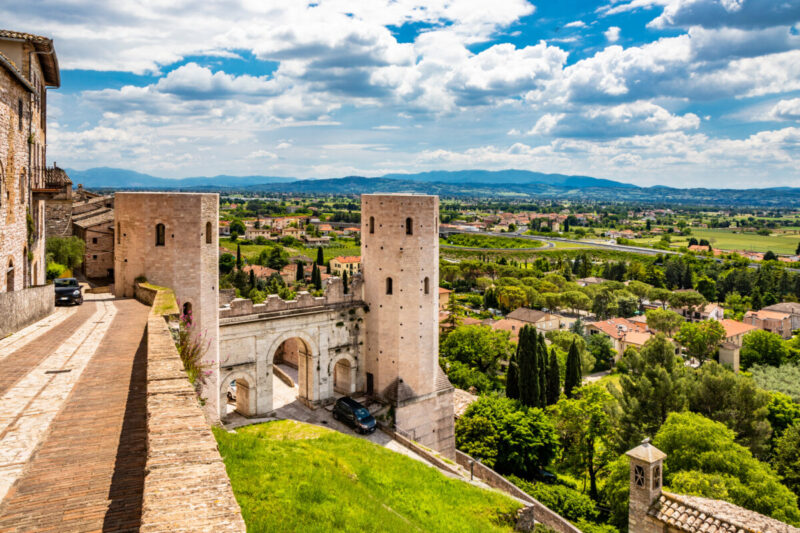
Umbria’s hilltop capital showcasing 700+ years of university heritage through University of Perugia (1308) and Italy’s oldest University for Foreigners welcoming international students to this renowned cultural center built as fortified medieval village encompassed by mighty walls. Piazza IV Novembre’s medieval society landmarks: Cathedral of St. Lawrence and Palazzo dei Priori (municipal government since 1293) housing National Gallery of Umbria, anchored by Fontana Maggiore’s 13th-century masterpiece of medieval sculpture. Etruscan heritage preserved through massive hydraulic Etruscan Well, Volumni Hypogeum’s oldest best-preserved funerary monument, and Etruscan Arch demonstrating ancient architectural founders’ immense works predating Roman civilization. Eurochocolate Festival’s mouth-watering celebration as Europe’s largest, most assorted international chocolate exhibition featuring 6,000+ different chocolates from 100+ brands annually since 1994 at Umbriafiere venue. Galleria Nazionale dell’Umbria’s world-class collection spanning 800 years of artistic excellence through Renaissance paintings, Gothic installations, medieval religious art rated as the province’s top gallery. Umbria Jazz festival filling summer weeks with concerts, while Tiber valley positioning provides stunning countryside views across Italy’s “Green Heart” where medieval fortification meets contemporary academic excellence beneath Etruscan archaeological treasures.
The destination guide
Perugia

- Overall8/10
- Best forCouples, Adventure seekers, Solo travelers
- PeakJun–Aug
- CurrencyEUR
Perugia runs deeper than its chocolate festival — the Etruscan Well alone predates Rome, and the medieval core still feels lived-in.
Travel guides for Perugia
More guides featuring Perugia (1)
At a glance
- Italian
- Umbrian hilltop city
- Olive groves
- Lake Trasimeno
- Medieval architecture
- History
- Architecture
- Food & Wine
- Cultural Festivals
- Hill Towns.
How Perugia scores
Editorial scores on a 10-point scale, weighed against destinations of the same kind.
Travel safety snapshot
SafePlace indicators use their source 100-point scale; higher is more favourable. Planning context, not a live travel advisory — check official government guidance before you go.
When to go
Best months to visit: April, May, June, July, August, September and October.
- January: 1.3 to 8.4 degrees Celsius, 16.4 millimetres of rain, best-time score 2 out of 5.
- February: 0.1 to 9.6 degrees Celsius, 22.9 millimetres of rain, best-time score 2 out of 5.
- March: 2.8 to 12.8 degrees Celsius, 14.4 millimetres of rain, best-time score 3 out of 5.
- April: 6 to 16.3 degrees Celsius, 15.4 millimetres of rain, best-time score 4 out of 5.
- May: 9.1 to 17.9 degrees Celsius, 63.8 millimetres of rain, best-time score 5 out of 5.
- June: 14.4 to 24.9 degrees Celsius, 19.8 millimetres of rain, best-time score 5 out of 5.
- July: 16.8 to 28.9 degrees Celsius, 17.9 millimetres of rain, best-time score 5 out of 5.
- August: 17 to 29.8 degrees Celsius, 8.9 millimetres of rain, best-time score 5 out of 5.
- September: 14.5 to 25.1 degrees Celsius, 39.7 millimetres of rain, best-time score 5 out of 5.
- October: 9.9 to 19.1 degrees Celsius, 36.5 millimetres of rain, best-time score 4 out of 5.
- November: 6.3 to 13.3 degrees Celsius, 41.3 millimetres of rain, best-time score 2 out of 5.
- December: 2.7 to 8.5 degrees Celsius, 33.2 millimetres of rain, best-time score 3 out of 5.
Month-by-month conditions and packing advice
- January
- Cool weather, mostly dry Cold winter weather, few tourists. Crowds: Travelers visiting Perugia in January will find a quieter atmosphere compared to the warmer months. This period is firmly within the low season, meaning fewer crowds at the city’s historic sites, museums, and local trattorias. Hotel rates and dining experiences are more affordable, and it’s easier to immerse yourself in daily Umbrian life without the summer influx of tourists. The cool weather encourages cozy cultural activities such as wine tastings, enjoying hearty Umbrian cuisine, or exploring the city’s underground archaeological sites. Outdoor walks through the medieval streets are pleasant if dressed warmly, though longer countryside excursions can feel chilly. While the weather is less ideal for extensive rural hiking, it offers a contemplative experience of the city’s heritage. Visitors should plan indoor and cultural-focused itineraries, while keeping flexible for occasional damp or misty conditions. Pack: Warm insulated jacket for chilly days; Water-resistant walking shoes for cobblestone streets; Layered sweaters and thermal tops; Scarf, gloves, and hat for cold mornings; Smart casual attire for trattoria dining; Compact umbrella for light rainfall
- February
- Cold weather, mostly dry Chilly and quiet, good for museums. Crowds: February is part of Perugia’s low season, with cold but largely dry weather shaping travel conditions. Visitors benefit from thin crowds at iconic sites such as the Etruscan Arch and Piazza IV Novembre, and accommodation prices are far lower than in spring and summer. While outdoor sightseeing requires bundling up, the lack of rain makes walking tours feasible, particularly in midday when temperatures peak. The quiet streets and absence of tour groups create an authentic, local rhythm that many travelers find appealing. Some rural attractions may have reduced hours, but this is an excellent month for those prioritizing cultural immersion, winter landscapes, and budget-friendly travel. Advance bookings are not critical, and spontaneous exploration is easier than during peak months. Pack: Insulated jacket suitable for cold mornings; Warm scarf, gloves, and wool hat; Layered sweaters for daytime temperature shifts; Sturdy walking shoes with good grip for cobblestones; Compact umbrella for occasional showers; Smart casual attire for indoor dining and cultural sites
- March
- Cool weather, mostly dry Beginning to warm up, spring blossoms. Crowds: March is considered shoulder season in Perugia, offering a quieter experience compared to the busy summer months. Accommodation rates remain moderate, and crowds at cultural landmarks such as the Palazzo dei Priori or the Etruscan Well are minimal. The cool temperatures favor leisurely walking tours and museum visits rather than extended outdoor lounging. Travelers can comfortably explore without battling intense heat or large tourist groups. Local trattorias and enotecas are open and welcoming, giving visitors the chance to enjoy Umbrian cuisine in a more authentic setting. Those seeking events should note that March often coincides with regional festivals celebrating spring’s arrival. Overall, it’s an excellent time for travelers who value cultural immersion and calmer sightseeing, though packing for warmth is essential. Pack: Warm jacket for cool evenings; Layered clothing to adjust to daytime temperature shifts; Comfortable walking shoes for hilly terrain; Compact umbrella or light raincoat for occasional showers; Scarf and gloves for early mornings; Smart casual attire for dining in local trattorias
- April
- Cool weather, mostly dry Pleasant spring weather, great for walking. Crowds: April offers favorable travel conditions in Perugia, striking a balance between cool mornings and pleasant afternoons. This month sits on the shoulder season, when crowds are still light compared to the peak summer months, and accommodation rates remain moderate. Cultural life reawakens, with Easter festivities and spring markets bringing added vibrancy. Outdoor exploration—whether strolling through the historic center or venturing into Umbrian hill towns—is highly enjoyable, though layering clothing is essential for fluctuating temperatures. The relative dryness compared to wetter months makes April ideal for photography and sightseeing without weather interruptions. For travelers, it is a sweet spot: fewer lines at major attractions, reasonable pricing, and a sense of authentic local life before the tourist surge begins in late spring. Booking ahead is advisable for Easter-related events and accommodations. Pack: Light jacket or windbreaker for cool evenings; Layered clothing to adjust to temperature swings; Comfortable walking shoes for cobblestone streets; Compact umbrella for occasional spring showers; Scarf or pashmina for added warmth and modesty in churches; Daypack for carrying water and essentials on excursions
- May
- Cool weather, some rain Excellent weather before the summer crowds. Crowds: May represents one of the most rewarding months to visit Perugia. The weather is comfortably cool for walking tours, countryside hikes, and exploring the historic city center without the oppressive heat of summer. Tourist levels begin to rise but remain moderate compared to the peak months of July and August, which means more affordable accommodations and easier reservations at trattorias. Rainfall may cause the occasional disruption, so indoor cultural sites such as churches and museums become excellent fallback options. Festivals celebrating food and art often start to appear in the Umbrian calendar around this time, adding a cultural dimension to the season. Overall, May balances pleasant weather, cultural vibrancy, and manageable visitor numbers, making it an ideal time for those seeking authentic experiences without the heavy crowds. Pack: Light jacket or sweater for cool evenings; Umbrella or compact raincoat for spring showers; Comfortable walking shoes for cobblestone streets; Layered clothing for fluctuating temperatures; Camera gear for capturing golden-hour landscapes; Smart casual attire for dining in local trattorias
- June
- Warm and pleasant, mostly dry Warm, sunny, and lively. Crowds: June marks the beginning of peak tourist activity in Perugia as summer festivals and cultural events coincide with favorable weather. The city becomes livelier, especially with the lead-up to July’s Umbria Jazz Festival, drawing international visitors and elevating hotel demand. Travelers benefit from warm, dry days that are ideal for outdoor dining, day trips to Assisi or Lake Trasimeno, and evening strolls through the city’s historic core. However, increasing visitor numbers bring higher accommodation costs, and popular attractions may require advance booking. This is an excellent month for cultural immersion and countryside exploration, though travelers seeking quiet escapes should plan excursions beyond midday in the city center when crowds peak. Booking accommodations and transport early is recommended to secure availability and better rates. Pack: Light cotton or linen clothing for warm daytime temperatures; Comfortable walking shoes for cobblestone streets; Light jacket or shawl for cooler evenings; Sunhat and high-SPF sunscreen for midday protection; Reusable water bottle to stay hydrated during long walks; Modest attire for visiting churches and monasteries
- July
- Warm and pleasant, mostly dry Peak summer heat and peak tourist season. Crowds: July is high season in Perugia, coinciding with the renowned Umbria Jazz Festival that draws international crowds. The combination of cultural events and sunny weather means both accommodation and flight prices are elevated, with bookings often required months in advance. Conditions are excellent for open-air concerts, day trips into the Umbrian countryside, and long evenings in wine bars. The warm climate supports vineyard visits and outdoor activities, but midday heat may deter extended hikes. Early morning or late evening exploration is best for comfort. Travelers should expect bustling streets, lively cultural energy, and higher-than-usual costs, but the payoff is an immersive cultural experience at the peak of summer vibrancy. Pack: Light cotton or linen clothing for daytime heat; Wide-brimmed hat and high-SPF sunscreen; Comfortable sandals and supportive walking shoes; Light jacket or shawl for cooler evenings outdoors; Smart casual attire suitable for evening concerts; Reusable water bottle to stay hydrated during city walks
- August
- Warm and pleasant, mostly dry Very warm, many festivals and outdoor dining. Crowds: August is high season in Perugia, coinciding with Italy’s Ferragosto holiday when many locals travel or close businesses, yet cultural life remains lively. Crowds concentrate in the historic center during festivals and on main squares, but rural Umbria often feels quieter. Accommodation rates rise significantly, with early booking essential. Warm weather supports outdoor dining, wine tours, and countryside excursions, but midday hours can be uncomfortable for walking uphill in the city’s steep streets. Travelers benefit most by planning excursions in the cooler mornings or evenings and reserving afternoons for shaded cafés, museums, or countryside drives. For those seeking vibrant local culture with guaranteed sunshine, August offers rewarding experiences but requires planning around heat and holiday closures. Pack: Lightweight linen or cotton clothing for hot daytime temperatures; Comfortable sandals or breathable walking shoes for cobblestone streets; Reusable water bottle to stay hydrated in the summer heat; Wide-brimmed hat and high-SPF sunscreen for strong midday sun; Light sweater or shawl for cooler evenings in hilltop towns; Modest attire for entering churches and religious sites
- September
- Warm and pleasant, some rain Perfect shoulder season with great weather. Crowds: September represents one of Perugia’s most inviting travel windows. With warm, dry conditions, it is an excellent time for cultural exploration, wine tours, and countryside hikes. The month coincides with the grape harvest season, offering unique experiences for food and wine enthusiasts. Crowds thin compared to peak summer, yet the city still retains a lively atmosphere due to local festivals and university life resuming. Prices for accommodation and flights tend to be slightly lower than July and August, though popular agriturismo stays in the countryside should still be booked early. This shoulder-season period delivers a blend of favorable weather, cultural immersion, and manageable visitor numbers, making it one of the best times to experience the authentic rhythm of Umbrian life without the intensity of midsummer tourism. Pack: Light layers for day-to-night temperature shifts; Comfortable walking shoes for hilly terrain; Compact umbrella or light rain jacket; Sunglasses for bright afternoons; Smart-casual clothing suitable for wine tastings; Light scarf or shawl for cooler evenings
- October
- Cool weather, some rain Crisp autumn air and beautiful colors. Crowds: October marks a shoulder season in Perugia, offering moderate tourist activity compared to summer’s peak crowds. The cooler weather is excellent for long walks through historic neighborhoods and countryside hikes, while vineyards and olive groves begin their harvest season. Accommodation prices are generally more favorable than high summer, though Eurochocolate Festival week can lead to higher rates and limited availability. Travelers benefit from fewer crowds at museums and piazzas, yet still enjoy lively cultural events. The occasional rainfall may interrupt outdoor plans, but it rarely lingers long enough to diminish the experience. Those seeking a balance of affordability, atmosphere, and authentic cultural immersion will find October one of the most rewarding months to visit. Pack: Water-resistant jacket or compact umbrella for light rain; Layered clothing such as sweaters and light shirts for variable temperatures; Comfortable walking shoes with good grip for cobblestone streets; Scarf or shawl for cooler evenings and church visits; Daypack to carry festival purchases or wine bottles; Smart-casual attire suitable for dining and cultural events
- November
- Cool weather, some rain Cooling down rapidly, often rainy. Crowds: November is shoulder season in Perugia, bringing quieter streets and a marked reduction in tourist crowds compared to the summer and festival peaks. While cooler temperatures may limit extended outdoor dining or long countryside hikes, the conditions are well-suited for cultural exploration—museums, galleries, and historic churches are more accessible and serene. Accommodation prices typically drop, making it a cost-effective time for travelers who value atmosphere over sunshine. Occasional rain showers mean visitors should plan flexible itineraries and prioritize indoor cultural highlights such as the Galleria Nazionale dell’Umbria or local culinary experiences like truffle tastings. Shorter days and chilly evenings encourage a cozy rhythm of exploration by day and warming meals in trattorias by night. Pack: Waterproof jacket or trench coat for November showers; Warm scarf and gloves for chilly evenings; Comfortable waterproof walking shoes for cobblestone streets; Layered clothing such as sweaters and cardigans; Compact umbrella for sudden rain; Smart-casual attire for dining and cultural sites
- December
- Cool weather, some rain Cold but festive holiday atmosphere. Crowds: December is firmly within Perugia’s low tourist season, meaning far fewer crowds at major sites like the Palazzo dei Priori and Galleria Nazionale dell’Umbria. Travelers benefit from lower accommodation rates and a calmer, more intimate experience of the city’s cultural heritage. The cool and damp weather does limit extended outdoor exploration, yet it enhances the appeal of indoor activities—art exhibitions, cooking classes, or sampling Umbrian chocolate in cozy cafés. Seasonal events, particularly Christmas markets and religious festivities, add cultural depth to a winter visit. Travelers should plan for shorter sightseeing hours and prepare to book festive events in advance, as these remain popular with locals despite the off-season lull. Pack: Warm waterproof jacket for chilly, damp days; Layered sweaters and long-sleeve shirts for fluctuating indoor/outdoor comfort; Sturdy waterproof walking shoes for cobblestone streets; Compact umbrella for sudden showers; Scarf, gloves, and hat for early morning or evening chill; Smart casual attire for cultural sites and festive dining
- June
- July
- August
- November
- December
- January
- February
Know before you go
Neighbourhoods
Centro Storico, Elce, Monteluce
Best time to visit
April to June, September to October
Season by season
Spring and Autumn offer the most comfortable weather for walking and exploring; Summer (July-August) can be quite hot; Winter is cold and quieter but festive.
Crowds
Moderate
Getting there and around
Getting there
Fly into Perugia San Francesco d’Assisi Airport (PEG) or Rome Fiumicino (FCO), then take a 2.5-hour train or drive via the E45. Regional trains connect Perugia to Florence, Rome, and other Umbrian towns.
Top experiences in Perugia
Rocca Paolina
The heart of the city. In the center stands the Fontana Maggiore, a masterpiece of medieval sculpture by the Pisano brothers. The steps of the Cathedral of San Lorenzo are where students and locals gather to eat pizza and chat. It is one of Italy’s most beautiful squares.
Piazza IV Novembre
A ghostly underground city. In the 16th century, the Pope built a fortress over the houses of his enemies (the Baglioni family). The fortress was destroyed, but the streets and houses underneath remain preserved. You walk through these medieval subterranean streets to get from the lower town to the center via escalators.
Palazzo dei Priori
A massive Gothic palace housing the Town Hall and the National Gallery of Umbria. The gallery holds the greatest collection of Umbrian School art (Perugino, Pinturicchio). The Nobile Collegio del Cambio inside features stunning frescoes. The griffin and lion statues outside are the city’s symbols.
Eurochocolate Festival
Perugia is the city of chocolate (home of Perugina/Baci). Every October, the Eurochocolate festival takes over the streets. Massive chocolate sculptures, tastings, and stalls fill the center. The smell of chocolate hangs in the air. It attracts nearly a million visitors.
Etruscan Well
A marvel of hydraulic engineering from the 3rd century BC. This massive well descends 37 meters underground. Visitors can walk across a bridge over the water at the bottom. It proves the Etruscans were masters of infrastructure long before the Romans.
Editor-curated picks carried over from our original guide. Where a full place guide exists, the card links to it.
Worth booking ahead in Perugia
Hand-picked from the operators our guides already send readers to. Prices and availability are live on the partner site.
Guided tourGetYourGuide
Colosseum, Forum and Palatine Hill small-group tour (opens GetYourGuide in a new tab)
Small group with the Forum and Palatine Hill included; the standard Colosseum visit done properly.
Where to stayBooking.com
Stays in Perugia (opens Booking.com in a new tab)
Live rates and availability for Perugia on Booking.com; filter by neighbourhood once you know where your days start.
We earn a commission if you book through these links, at no extra cost to you. It is how we keep the guides free and independent.
Where to stay
Sina Brufani
Piazza Italia 12, 06121 Perugia PG, Italy
The only 5-star hotel in Perugia, located in a historic palazzo. It has hosted royalty and stars for over a century. The standout feature is the glass-bottomed swimming pool that reveals 3,000-year-old Etruscan ruins beneath the water. The views over the Umbrian valley are sweeping.
Locanda della Posta
Corso Pietro Vannucci 97, 06121 Perugia PG, Italy
Located right on the main pedestrian street, Corso Vannucci. This boutique hotel has been welcoming guests since the 18th century (Goethe stayed here). The rooms are modernized but retain the historic shell. It places you in the absolute center of the action.
Castello di Monterone
Via Manna 12, 06129 Perugia PG, Italy
A reliable 4-star option just outside the restricted traffic zone (easy for parking) but a short walk to the Rocca Paolina escalators. It features a heated pool and gym. The rooms are classic and comfortable. A great base for exploring Umbria.
Editor-curated stays carried over from our original guide. Where we have reviewed the hotel, the card links to the review.
Tips from the field
Highlights
- The stunning Fontana Maggiore in the main square, the vast underground historic fortress of Rocca Paolina, and its status as Italy's chocolate capital.
Best activities
- Exploring the underground ruins of Rocca Paolina, people-watching in Piazza IV Novembre, viewing art at the National Gallery of Umbria, tasting local chocolates.
Local experiences
- Take the escalators up through the eerie, fascinating underground streets of Rocca Paolina. Attend the world-famous Eurochocolate festival in October.
Practical tips
- The historic center is perched on a high hill
- park at the bottom and use the escalator system or mini-metro to reach the top. Comfortable walking shoes are essential for the steep, cobbled streets.
Photography tips
- The sweeping views of the Umbrian countryside from the edges of the historic center are beautiful at sunset. The intricate details of the Fontana Maggiore require a closer lens.
Timing
- 2-3 days is perfect to explore Perugia and soak in its atmosphere before moving on to other Umbrian towns like Assisi.
Keeping it authentic
- Perugia serves as the capital of Umbria, showcasing a quintessential medieval Italian hill town that remains a vibrant cultural and university hub.
Culture, customs and safety
Cultural heritage
Perugia preserves Etruscan foundations and medieval university culture atop Umbrian hills, maintaining artistic traditions and chocolate craftsmanship. Etruscan walls and gates frame the historic center while Gothic Palazzo dei Priori showcases civic pride. University for Foreigners promotes Italian language globally while maintaining student quarter vibrancy. Perugino and Raphael artistic legacy appears in National Gallery masterpieces. Eurochocolate festival and Baci production represent sweet traditions. Jazz festival brings international culture to medieval streets creating dynamic blend of ancient and contemporary.
Safety notes
Perugia is generally quite safe. Violent crime is rare, but standard precautions against pickpockets should be taken in crowded areas or during major festivals.