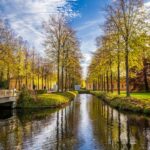
UNESCO World Heritage Sanssouci Palace (1745-1747) embodying Frederick the Great’s “without worry” escape from Berlin’s bustle, personally conceived with vineyard terraces for wine growing where he laid out his grave site on highest terrace (burial wish granted 1991 reinterment). Germany’s largest UNESCO site spanning 2,064 hectares with 300-hectare Sanssouci Park featuring 2-kilometer east-west axis, 230,000+ biannually-arranged parterre plants, baroque central fountain, plus Neue Kammern guest house, Bildergalerie (Germany’s oldest preserved museum), Chinese Tea House rococo-chinoiserie fusion. Neues Palais’s over-the-top Baroque showcase designed to impress the world with Frederick’s power, while cultural landscape collection draws worldly influences from Italy, France, Russia, Netherlands creating German Versailles equivalent. Rococo masterpiece architecture housing beautiful gardens with Neptune Grotto, neo-classical Temple of Friendship (honoring favorite sister), Great Fountain, Chinese House’s three gilded figures across delightful decorative features. World Heritage site extending from Sanssouci Park to Russian colony Alexandrovka, New Garden, Babelsberg Palace representing Europe’s most significant cultural landscapes showcasing centuries of Prussian royal history, architectural excellence, landscape design innovation conveniently accessible from Berlin for comprehensive day-long exploration.
The destination guide
Potsdam
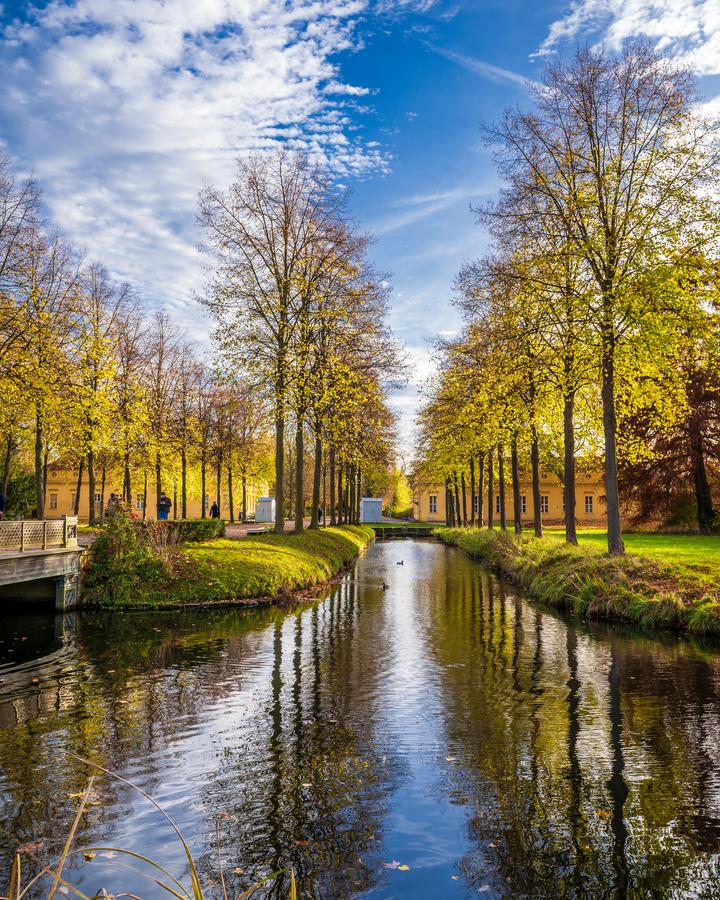
Frederick the Great planned his own grave at Sanssouci’s highest terrace — and was finally buried there in 1991. That detail alone sets the tone.
Travel guides for Potsdam
Things to do (1)
More guides featuring Potsdam (7)
At a glance
- German
- Prussian palaces
- Havel River
- Parks and gardens
- Sanssouci terraces
- {"name": "Prussian palaces and Sanssouci gardens"}
- {"name": "Frederick the Great cultural legacy"}
- {"name": "Bridge of Spies Cold War history"}
Practical basics
- Driving side
- Right
- Electrical standard
- 230V/50Hz Type C/F
- Measurement system
- Metric
- Emergency numbers
- 112
- Country code
- DE
How Potsdam scores
Character
Editorial scores on a 10-point scale, weighed against destinations of the same kind.
Travel safety snapshot
SafePlace indicators use their source 100-point scale; higher is more favourable. Planning context, not a live travel advisory — check official government guidance before you go.
When to go
Best months to visit: April, May, June, July, August, September and October.
- January: -0.8 to 4 degrees Celsius, 60.3 millimetres of rain, best-time score 2 out of 5.
- February: -0.4 to 6.1 degrees Celsius, 52.5 millimetres of rain, best-time score 2 out of 5.
- March: 0.8 to 9.5 degrees Celsius, 50.1 millimetres of rain, best-time score 3 out of 5.
- April: 3.8 to 13.6 degrees Celsius, 44.8 millimetres of rain, best-time score 4 out of 5.
- May: 8.1 to 17.8 degrees Celsius, 58.3 millimetres of rain, best-time score 5 out of 5.
- June: 12.8 to 23 degrees Celsius, 53.4 millimetres of rain, best-time score 5 out of 5.
- July: 14 to 23.8 degrees Celsius, 59 millimetres of rain, best-time score 4 out of 5.
- August: 14.1 to 24.2 degrees Celsius, 60.1 millimetres of rain, best-time score 4 out of 5.
- September: 10.7 to 20.1 degrees Celsius, 46.7 millimetres of rain, best-time score 5 out of 5.
- October: 7.3 to 14.5 degrees Celsius, 54 millimetres of rain, best-time score 5 out of 5.
- November: 2.4 to 7.9 degrees Celsius, 42.7 millimetres of rain, best-time score 3 out of 5.
- December: 0.5 to 5 degrees Celsius, 48.6 millimetres of rain, best-time score 3 out of 5.
Month-by-month conditions and packing advice
- January
- Cold, occasional rain January in Potsdam: cold winter weather makes outdoor garden touring less balanced. Crowds: January in Potsdam is workable with normal seasonal planning; build in layers, weather checks, and a mix of indoor and outdoor activities. Pack: Pack warm layers, a coat, and comfortable shoes for cold mornings and evenings.
- February
- Cold, occasional rain February in Potsdam: cold winter weather makes outdoor garden touring less balanced. Crowds: February in Potsdam is workable with normal seasonal planning; build in layers, weather checks, and a mix of indoor and outdoor activities. Pack: Pack warm layers, a coat, and comfortable shoes for cold mornings and evenings.
- March
- Cold, occasional rain March in Potsdam: cooler, wetter, or darker weather shifts the visit toward palaces and museums. Crowds: March in Potsdam is workable with normal seasonal planning; build in layers, weather checks, and a mix of indoor and outdoor activities. Pack: Pack warm layers, a coat, and comfortable shoes for cold mornings and evenings.
- April
- Cool to mild, occasional rain April in Potsdam: summer and spring buildup remain rewarding with crowd or heat planning. Crowds: April in Potsdam is workable with normal seasonal planning; build in layers, weather checks, and a mix of indoor and outdoor activities. Pack: Pack layered clothing and comfortable walking shoes.
- May
- Cool to mild, occasional rain May in Potsdam: Sanssouci gardens, palaces, lakes, old-town walks, cafes, and Berlin day trips balance pleasant weather and crowds. Crowds: May in Potsdam is workable with normal seasonal planning; build in layers, weather checks, and a mix of indoor and outdoor activities. Pack: Pack layered clothing and comfortable walking shoes.
- June
- Mild to warm, occasional rain June in Potsdam: Sanssouci gardens, palaces, lakes, old-town walks, cafes, and Berlin day trips balance pleasant weather and crowds. Crowds: June in Potsdam is comfortable for sightseeing, neighborhoods, food stops, day trips, and outdoor time with limited weather friction. Pack: Pack layered clothing and comfortable walking shoes.
- July
- Mild to warm, occasional rain July in Potsdam: summer and spring buildup remain rewarding with crowd or heat planning. Crowds: July in Potsdam is comfortable for sightseeing, neighborhoods, food stops, day trips, and outdoor time with limited weather friction. Pack: Pack layered clothing and comfortable walking shoes.
- August
- Mild to warm, occasional rain August in Potsdam: summer and spring buildup remain rewarding with crowd or heat planning. Crowds: August in Potsdam is comfortable for sightseeing, neighborhoods, food stops, day trips, and outdoor time with limited weather friction. Pack: Pack light clothing, sun protection, and comfortable walking shoes.
- September
- Mild to warm, occasional rain September in Potsdam: Sanssouci gardens, palaces, lakes, old-town walks, cafes, and Berlin day trips balance pleasant weather and crowds. Crowds: September in Potsdam is comfortable for sightseeing, neighborhoods, food stops, day trips, and outdoor time with limited weather friction. Pack: Pack layered clothing and comfortable walking shoes.
- October
- Cool to mild, occasional rain October in Potsdam: Sanssouci gardens, palaces, lakes, old-town walks, cafes, and Berlin day trips balance pleasant weather and crowds. Crowds: October in Potsdam is workable with normal seasonal planning; build in layers, weather checks, and a mix of indoor and outdoor activities. Pack: Pack layered clothing and comfortable walking shoes.
- November
- Cold, occasional rain November in Potsdam: cooler, wetter, or darker weather shifts the visit toward palaces and museums. Crowds: November in Potsdam is workable with normal seasonal planning; build in layers, weather checks, and a mix of indoor and outdoor activities. Pack: Pack warm layers, a coat, and comfortable shoes for cold mornings and evenings.
- December
- Cold, occasional rain December in Potsdam: cooler, wetter, or darker weather shifts the visit toward palaces and museums. Crowds: December in Potsdam is workable with normal seasonal planning; build in layers, weather checks, and a mix of indoor and outdoor activities. Pack: Pack warm layers, a coat, and comfortable shoes for cold mornings and evenings.
- April
- May
- June
- July
- August
- September
- October
- December
- January
- February
Peak season
- When
- April to October
- Crowds
- High season for cultural tourism and palace visits. Very busy Sanssouci Palace and gardens.
- Weather
- Perfect German weather 12-24°C (54-75°F), ideal for exploring historic palaces and gardens.
- What to do
- Palace tours, garden walks, cultural exploration, historic site visits, traditional German dining.
Shoulder season
- When
- March, November
- Crowds
- Moderate tourism, fewer tour groups at major attractions.
- Weather
- Cool but comfortable 5-15°C (41-59°F). Good for indoor palace tours.
- What to do
- Palace tours with fewer crowds, cultural sightseeing, indoor attractions.
Off season
- When
- December to February
- Crowds
- Lower tourism, authentic local experiences. Some outdoor garden areas limited.
- Weather
- Cold German winters 0-8°C (32-46°F), occasional snow. Christmas market atmosphere.
- What to do
- Indoor palace tours, Christmas markets, cozy German restaurants, winter photography.
Know before you go
About
Potsdam is an elegant city of palaces, gardens, and layered history – the former summer retreat of Prussian kings that became a Cold War frontier and has since reinvented itself as one of Germany’s most culturally rich smaller cities. Situated on the banks of the Havel River, just 24 km southwest of Berlin, it holds a concentration of UNESCO World Heritage sites that rivals any European capital. Frederick the Great’s Sanssouci Palace and its 289-hectare park anchor a palace landscape spanning multiple centuries of architectural ambition, from Baroque grandeur to Neoclassical refinement. Yet Potsdam transcends its royal past: the Dutch Quarter pulses with independent galleries and craft workshops, Museum Barberini has earned a place among Europe’s top art institutions, and the Babelsberg film studios continue a century-long cinematic tradition. The city also bears powerful markers of 20th-century upheaval – Cecilienhof Palace hosted the conference that reordered post-war Europe, and the Glienicke Bridge witnessed the Cold War’s most dramatic spy exchanges.
Neighbourhoods
Sanssouci Park, Dutch Quarter, Alter Markt, Babelsberg, Alexandrowka, Glienicke Bridge
Season by season
Spring (April-May):
Weather: 10-20°C, warming progressively
Highlights: Gardens in full bloom, wisteria on palace walls, Easter markets
Best For: Garden photography, comfortable palace walking, fewer crowds than summer
Summer (June-August):
Weather: 20-30°C, warmest temperatures, occasional thunderstorms
Highlights: All palaces open, Potsdamer Schlössernacht festival in August, outdoor concerts
Consider: Peak tourist season, book Sanssouci tickets well in advance
Best For: Lake swimming, river cruises, Filmpark Babelsberg, evening garden strolls
Autumn (September-October):
Weather: 10-20°C, gradually cooling
Highlights: Spectacular autumn foliage in the palace parks, fewer tourists
Consider: Some minor palaces reduce hours from November
Best For: Photography, museum visits, romantic getaways, wine harvest events
Winter (November-March):
Weather: 0-5°C, occasional snow
Highlights: Christmas markets including Polish and Dutch Sinterklaas markets, atmospheric palace views
Consider: Some outer palaces closed, shorter daylight hours
Best For: Museum Barberini, indoor exhibitions, Christmas markets, budget travel
Getting there and around
Getting there
Potsdam is most easily reached via Berlin. From Berlin Brandenburg Airport (BER), take the regional train RE22, which runs hourly to Potsdam Hauptbahnhof (main station) in about 50 minutes. Alternatively, the BER2 bus runs 15 times daily to Potsdam. From Berlin Central Station (Hauptbahnhof), S-Bahn line S7 or regional trains RE1 reach Potsdam in under 30 minutes. For Sanssouci Palace specifically, the RE1 train toward Brandenburg stops at Charlottenhof station, a 10-minute walk from the palace grounds. A Berlin ABC transit ticket covers the entire journey, including Potsdam’s public transport network. By car from Berlin, take the A115 motorway southwest – the drive takes about 40 minutes depending on traffic. Long-distance trains (ICE) connect Potsdam directly with cities like Hamburg, Cologne, and Munich.
Getting around
Potsdam’s compact city center is highly walkable, especially the Old Town and Dutch Quarter areas. The city’s efficient public transit system includes trams and buses operated by ViP (Verkehrsbetrieb Potsdam), with frequent service across the city. Potsdam falls within Berlin’s VBB transport network, so a Berlin ABC or BC ticket works on all local buses and trams – remember to validate your ticket upon boarding. Cycling is a popular and practical way to explore the larger palace parks, particularly Sanssouci Park. Bike rental stations operate throughout the city. Driving is less convenient due to pedestrian zones, limited parking in the historic center, and congestion. Consider parking on the city outskirts and taking public transport or walking inward. Water taxis and ferries on the Havel River offer scenic transport during summer months.
Top experiences in Potsdam
Sanssouci Palace and Park
Frederick the Great commissioned this Rococo summer palace in 1747 as his personal sanctuary – the name means ‘without worry’ in French. The relatively intimate palace crowns six terraced vineyard levels overlooking a grand fountain. Inside, the opulent Marble Hall and Frederick’s private concert room where he played flute host roughly 300,000 visitors annually. The surrounding 289-hectare park extends west to encompass the Chinese House pavilion, the Roman Baths complex, the Orangery Palace with its Raphael Hall, and numerous follies. The entire ensemble earned UNESCO World Heritage designation in 1990.
Dutch Quarter (Holländisches Viertel)
This remarkable neighborhood of 134 red-brick houses arranged along four blocks was built between 1733 and 1742 by King Friedrich Wilhelm I to attract Dutch artisans to Potsdam. It remains the largest Dutch colonial housing complex outside the Netherlands, and unlike similar planned quarters elsewhere, it functions as a living neighborhood rather than a museum. Today the ground floors house independent bookshops, antique dealers, galleries, craft workshops, and cafes, while residents occupy the upper stories. The Saturday market and annual Dutch theme festivals (including the Tulip Festival in April) draw locals and visitors alike.
Cecilienhof Palace
Built between 1914 and 1917 as the final palace commissioned by the Hohenzollern dynasty, Cecilienhof is styled as an English Tudor country manor – a dramatic departure from the Baroque and Neoclassical palaces elsewhere in Potsdam. Its historical significance overshadows its architecture: in July-August 1945, Truman, Stalin, and Churchill/Attlee convened here for the Potsdam Conference, which established the post-World War II political order in Europe. The conference rooms have been preserved with original furniture and the famous round negotiating table. The star-shaped flower bed planted by the Soviets in the courtyard for the conference remains.
Glienicke Bridge (Bridge of Spies)
This steel bridge spanning the Havel River between Potsdam and Berlin-Wannsee gained worldwide fame as the site of dramatic Cold War-era prisoner exchanges between the Soviet Union and the United States. Three confirmed spy swaps took place here, including the 1962 exchange of Soviet spy Rudolf Abel for American U-2 pilot Francis Gary Powers – dramatized in Steven Spielberg’s 2015 film ‘Bridge of Spies.’ During the division of Germany, the bridge marked the border between East and West, closed to ordinary traffic. Today it carries normal road traffic, but plaques and interpretive signs mark its extraordinary Cold War history. The walk across offers views of both the Potsdam palace landscape and Berlin’s villa suburbs.
Museum Barberini
Opened in 2017 in the reconstructed Barberini Palace on Alter Markt square, Museum Barberini rapidly established itself as one of Germany’s premier art institutions. Founded by software billionaire Hasso Plattner, the museum houses his exceptional private collection of Impressionist and Post-Impressionist paintings – including over 100 works by Claude Monet, making it the largest Monet collection outside Paris. Rotating exhibitions feature masterworks borrowed from major institutions worldwide. The building itself combines a faithfully reconstructed neoclassical facade with ultra-modern gallery spaces. The museum’s terrace restaurant overlooks the Alte Fahrt waterfront and the reconstructed city center.
Editor-curated picks carried over from our original guide. Where a full place guide exists, the card links to it.
Worth booking ahead in Potsdam
Hand-picked from the operators our guides already send readers to. Prices and availability are live on the partner site.
Day tripViator
Neuschwanstein and Linderhof royal castles day tour (opens Viator in a new tab)
Both royal castles and the coach in one long day; the practical way to see them from Munich without a car.
Where to stayBooking.com
Stays in Potsdam (opens Booking.com in a new tab)
Live rates and availability for Potsdam on Booking.com; filter by neighbourhood once you know where your days start.
We earn a commission if you book through these links, at no extra cost to you. It is how we keep the guides free and independent.
Where to stay
Hotel am Jägertor
Hegelallee 11, 14467 Potsdam, Germany
An elegant 4-star hotel situated in the heart of Potsdam’s historic Old Town, steps from the Dutch Quarter and a 15-minute walk from Sanssouci Palace. Housed in a renovated 19th-century building, its rooms combine period charm with modern amenities including climate control and rain showers. The on-site restaurant serves regional Brandenburg cuisine featuring seasonal ingredients from local producers. French windows in many rooms overlook the quiet leafy streets of the historic district. The hotel’s location makes it an ideal base for exploring Potsdam on foot.
Hotel Brandenburger Tor Potsdam
Brandenburger Str. 1, 14467 Potsdam, Germany
Named for Potsdam’s own Brandenburg Gate (which predates Berlin’s more famous version), this boutique hotel occupies a striking Baroque-facade building at the gateway to pedestrianized Brandenburger Straße. Rooms blend contemporary design with warm tones and custom furnishings. The hotel’s central position puts Sanssouci Park entrance within a 5-minute walk and the Dutch Quarter within 10 minutes. A breakfast buffet featuring regional specialties fuels a day of palace exploration. The surrounding pedestrian zone offers evening dining and shopping within steps of the lobby.
MAXX by Steigenberger Sanssouci Potsdam
Allee nach Sanssouci 1, 14471 Potsdam, Germany
A polished 4-star hotel positioned directly adjacent to Sanssouci Park, allowing guests to enter the palace grounds through a side gate without navigating downtown traffic. Modern rooms feature floor-to-ceiling windows, and many overlook the hotel’s garden and the park beyond. Wellness amenities include a sauna and fitness area. The Friedrichs restaurant serves international cuisine in an atrium-style dining room. Its location along Allee nach Sanssouci places guests equidistant from the palace proper and the Potsdam Hauptbahnhof, each about a 15-minute walk.
Editor-curated stays carried over from our original guide. Where we have reviewed the hotel, the card links to the review.
Tips from the field
Highlights
- Sanssouci Palace and Park – Frederick the Great's summer retreat, Prussia's answer to Versailles
- Dutch Quarter (Holländisches Viertel) – 134 red-brick houses forming Europe's largest Dutch colonial complex outside the Netherlands
- Glienicke Bridge – Cold War-era 'Bridge of Spies' connecting Potsdam to Berlin
- Cecilienhof Palace – Site of the 1945 Potsdam Conference that shaped post-WWII Europe
- Neues Palais – Massive Baroque palace showcasing Prussian power
- Museum Barberini – World-class art museum featuring Impressionist masterworks
- Filmpark Babelsberg – Europe's oldest large-scale film studio with live shows and movie sets
Best activities
- Potsdam's palace landscape deserves at least a full day. Start with Sanssouci Palace and its terraced vineyard gardens, then explore the park's follies including the Chinese House, the Roman Baths, and the Orangery Palace. The Neues Palais at the park's western end showcases opulent Baroque interiors with the Grotto Hall's shell-encrusted walls.
- Beyond palaces, the Dutch Quarter invites leisurely exploration through its 134 red-brick houses housing independent boutiques, galleries, and cafes. The Museum Barberini mounts world-class exhibitions of Impressionist and modern art. Film enthusiasts should visit Filmpark Babelsberg for behind-the-scenes looks at Europe's oldest major film studio. The Havel River offers boat cruises past palace gardens, and Potsdam's lakes provide swimming and kayaking in summer. Walking the Glienicke Bridge provides a tangible connection to Cold War history.
Local experiences
- Take a guided boat tour along the Havel River to see the palaces from the water. Browse the independent galleries and artisan workshops in the Dutch Quarter on a Saturday morning. Visit the Krongut Bornstedt estate near Sanssouci for locally brewed beer and traditional Brandenburg cuisine in a historic farmstead setting. Walk the full length of the Glienicke Bridge at dusk for atmospheric Cold War era reflections.
Practical tips
- Transit Pass: A Berlin ABC or BC ticket covers Potsdam's entire public transport network
- Comfortable Shoes: Essential for exploring the extensive palace parks – Sanssouci Park alone spans 289 hectares
- Sanssouci Timed Entry: Book tickets for Sanssouci Palace online in advance, as daily visitor numbers are limited
- Arrive Early: Visit major palaces at opening time (especially Sanssouci) to avoid tour group crowds
- Weekday Visits: Weekdays are significantly less crowded than weekends
- Currency: Euro (€). Cards widely accepted, but carry some cash for smaller vendors
- Photography: Exterior photography is free everywhere; interior photography may require a permit at some palaces
- Combined Tickets: The Sanssouci+ ticket covers multiple palaces at a discount
Photography tips
- Golden Hour Shots: Capture Sanssouci Palace's vineyard terraces with the Great Fountain at sunrise when the grounds are empty and light rakes across the baroque steps
- Iconic Views:
- Sanssouci Palace – Shoot from the base of the terraced vineyard looking up for dramatic perspective
- Dutch Quarter – Red-brick symmetry photographs beautifully in overcast light
- Glienicke Bridge – Frame from the Potsdam side with the bridge stretching toward Berlin
- Neues Palais – The massive facade benefits from wide-angle lenses
- Park Sanssouci – Reflections in the Roman Baths pools create mirror-image compositions
- Best Months: May for blooming gardens, October for autumn foliage in the parks
- Equipment: Wide-angle lens essential for palace interiors and facades; tripod useful for interior shots where permitted
- Note: Interior photography rules vary by palace – check at ticket offices
Timing
- Peak Season (June-August):
- Warmest weather, longest days
- All palaces and attractions operating full schedules
- Book Sanssouci Palace tickets 2-4 weeks in advance
- Higher accommodation prices, especially on weekends
- Shoulder Season (April-May, September-October):
- Best overall experience – comfortable weather, manageable crowds
- Most palaces still fully operational
- Better hotel rates, easier restaurant bookings
- May: peak bloom season in the gardens
- Low Season (November-March):
- Lowest prices, but some palaces close or limit hours
- Christmas markets (late November-December) draw festive crowds
- January-February: quietest period, good for Museum Barberini visits
- Key Events:
- Potsdamer Schlössernacht (August): Illuminated palace night with music and performances
- Music festivals: Various classical concerts in palace grounds throughout summer
- Christmas Markets (late November-December): Multiple markets including the Dutch Quarter Sinterklaas festival
Keeping it authentic
- Potsdam wears its history openly but without pretension. While Sanssouci draws the crowds, the city's authenticity reveals itself in the layered evidence of its past: Prussian grandeur coexists with the scars of WWII bombing and Cold War division. The Glienicke Bridge still marks where East met West, and older residents remember crossing it. The Dutch Quarter operates as a genuine neighborhood rather than a museum piece – residents live above the craft shops and galleries. The Babelsberg film studios, where Fritz Lang and Marlene Dietrich once worked, continue producing major European films today. Perhaps most telling is how Potsdam handles its complicated heritage: the rebuilt Garrison Church traces Prussian militarism to its darkest chapters, while the rebuilt City Palace now houses the Brandenburg Parliament, giving modern democratic purpose to a royal shell.
Culture, customs and safety
Cultural heritage
Potsdam’s cultural identity was shaped by the Prussian monarchy’s ambition to create a northern Versailles, but its heritage runs far deeper than royal palaces. Frederick the Great’s Enlightenment ideals attracted intellectuals, artists, and refugees from across Europe – the French Huguenot community, Dutch craftsmen, and Russian military colony at Alexandrowka each left architectural and cultural imprints that survive today. The city’s film heritage dates to 1912 when Babelsberg became the cradle of European cinema, producing expressionist masterpieces and early talkies. The 20th century layered traumatic history onto this cultural landscape: the Potsdam Conference of 1945, the division during the Cold War, and the city’s transformation after reunification. Today Potsdam balances heritage preservation with democratic reinvention, exemplified by the Brandenburg Parliament meeting in the reconstructed City Palace.
Local customs & etiquette
Potsdam maintains a relaxed but respectful German culture. Punctuality is valued – arrive on time for tours and reservations. When entering shops and restaurants, greet staff with ‘Guten Tag’ (good day). Tipping 5-10% is customary at restaurants, usually rounded up to the nearest Euro. Quiet hours (Ruhezeiten) are observed from 10 PM to 6 AM and all day Sunday – avoid loud noise during these times. Recycling is taken seriously; separate glass, paper, and plastic. Bottles with a deposit (Pfand) can be returned at supermarkets via automated machines. In palace parks, stay on designated paths and do not touch historic structures. Germans generally prefer personal space – a handshake is the standard greeting. Jaywalking at crosswalks is frowned upon, even when no cars are approaching.
Safety notes
Germany is one of Europe’s safest countries, and Potsdam is among its most secure cities. Exercise normal precautions.
General Safety:
• Very low crime rate, streets are safe day and night
• Petty theft can occur in tourist-heavy areas near Sanssouci – keep valuables secure
• Emergency number: 112 (fire/ambulance), 110 (police)
Transport Safety:
• Public transit is safe and well-maintained
• Cycling paths are well-marked but watch for tram tracks in the city center
• Road rules are strictly enforced – jaywalking at signals can result in fines
Health:
• Tap water is safe to drink throughout Germany
• Pharmacies (Apotheken) are listed on a rotation for after-hours emergencies
• EU Health Insurance Card (EHIC) or travel insurance recommended
Sources: German Federal Foreign Office, U.S. State Department