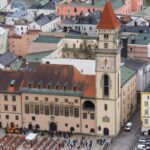
Rostock, one of northern Germany’s most significant Baltic seaports, combines 800 years of Hanseatic heritage with the relaxed atmosphere of a modern university town spread across both banks of the Warnow River. This maritime city rose to prominence during the medieval Hanseatic League trading alliance, which shaped its distinctive architectural character through imposing brick Gothic structures including St. Mary’s Church with its famous astronomical clock from 1472, the 13th-century Town Hall with its baroque façade, and the remaining city gates Kröpeliner Tor and Steintor. Rostock’s identity as a working harbor city manifests annually during Hanse Sail, northern Europe’s largest gathering of traditional sailing vessels, when hundreds of ships from around the Baltic region converge at the city’s waterfront, attracting over a million visitors. The city maintains dual centers: the historical old town featuring gabled merchants’ houses, the bustling New Market Square, and the Cultural History Museum housed in a former Cistercian monastery, counterbalanced by the modern district around the passenger port of Warnemünde, where a 37-meter lighthouse overlooks one of Germany’s widest and whitest beaches stretching 15 kilometers along the Baltic coast. Beyond architectural and maritime attractions, Rostock maintains a youthful energy through the influence of its university, founded in 1419 as northern Europe’s oldest, whose 13,000 students enliven the historic center with cafés, cultural venues, and creative enterprises. Throughout its urban landscape, Rostock balances working port functionality with historic preservation and coastal leisure, offering visitors an authentic northern German experience that combines medieval Hanseatic character with contemporary Baltic Sea culture across all four seasons, though it particularly comes alive during the summer months when daylight extends past 10 PM and countless festivals animate its historic squares and waterfront areas.
The destination guide
Rostock
Travel guides for Rostock
More guides featuring Rostock (1)
At a glance
- German
- Baltic port city
- Gothic architecture
- Warnemünde beach
- Historic old town
- Beaches & Coastline
- History & Architecture
- Maritime Culture.
How Rostock scores
Editorial scores on a 10-point scale, weighed against destinations of the same kind.
Travel safety snapshot
SafePlace indicators use their source 100-point scale; higher is more favourable. Planning context, not a live travel advisory — check official government guidance before you go.
When to go
Best months to visit: May, June, July, August and September.
- January: 0.2 to 4.3 degrees Celsius, 66.1 millimetres of rain, best-time score 2 out of 5.
- February: 0.4 to 5.8 degrees Celsius, 54.7 millimetres of rain, best-time score 2 out of 5.
- March: 1.4 to 8.5 degrees Celsius, 43.7 millimetres of rain, best-time score 2 out of 5.
- April: 4 to 12.3 degrees Celsius, 50.1 millimetres of rain, best-time score 3 out of 5.
- May: 8.7 to 17 degrees Celsius, 52.9 millimetres of rain, best-time score 4 out of 5.
- June: 13 to 21.4 degrees Celsius, 70 millimetres of rain, best-time score 5 out of 5.
- July: 14.5 to 21.8 degrees Celsius, 83.9 millimetres of rain, best-time score 5 out of 5.
- August: 14.5 to 22.6 degrees Celsius, 62.6 millimetres of rain, best-time score 5 out of 5.
- September: 12 to 19.3 degrees Celsius, 57.5 millimetres of rain, best-time score 4 out of 5.
- October: 8.5 to 13.9 degrees Celsius, 72 millimetres of rain, best-time score 3 out of 5.
- November: 3.9 to 8.1 degrees Celsius, 50.4 millimetres of rain, best-time score 2 out of 5.
- December: 1.6 to 5.3 degrees Celsius, 59.8 millimetres of rain, best-time score 2 out of 5.
Month-by-month conditions and packing advice
- January
- Cold, occasional rain January in Rostock: cold, windy winter weather makes coastal touring less balanced. Crowds: January in Rostock is workable with normal seasonal planning; build in layers, weather checks, and a mix of indoor and outdoor activities. Pack: Pack warm layers, a coat, and comfortable shoes for cold mornings and evenings.
- February
- Cold, occasional rain February in Rostock: cold, windy winter weather makes coastal touring less balanced. Crowds: February in Rostock is workable with normal seasonal planning; build in layers, weather checks, and a mix of indoor and outdoor activities. Pack: Pack warm layers, a coat, and comfortable shoes for cold mornings and evenings.
- March
- Cold, occasional rain March in Rostock: cold, windy winter weather makes coastal touring less balanced. Crowds: March in Rostock is workable with normal seasonal planning; build in layers, weather checks, and a mix of indoor and outdoor activities. Pack: Pack warm layers, a coat, and comfortable shoes for cold mornings and evenings.
- April
- Cool to mild, occasional rain April in Rostock: cooler shoulder weather narrows beach and sailing plans. Crowds: April in Rostock is workable with normal seasonal planning; build in layers, weather checks, and a mix of indoor and outdoor activities. Pack: Pack layered clothing and comfortable walking shoes.
- May
- Cool to mild, occasional rain May in Rostock: late spring or early autumn can work with layers and quieter crowds. Crowds: May in Rostock is workable with normal seasonal planning; build in layers, weather checks, and a mix of indoor and outdoor activities. Pack: Pack layered clothing and comfortable walking shoes.
- June
- Mild to warm, occasional rain June in Rostock: Baltic beaches, harbor walks, Warnemünde, old-town streets, cycling, and day trips are most accessible. Crowds: June in Rostock is comfortable for sightseeing, neighborhoods, food stops, day trips, and outdoor time with limited weather friction. Pack: Pack layered clothing and comfortable walking shoes.
- July
- Mild to warm, some rain July in Rostock: Baltic beaches, harbor walks, Warnemünde, old-town streets, cycling, and day trips are most accessible. Crowds: July in Rostock is workable with normal seasonal planning; build in layers, weather checks, and a mix of indoor and outdoor activities. Pack: Pack layered clothing and comfortable walking shoes. Add a rain jacket or compact umbrella.
- August
- Mild to warm, occasional rain August in Rostock: Baltic beaches, harbor walks, Warnemünde, old-town streets, cycling, and day trips are most accessible. Crowds: August in Rostock is comfortable for sightseeing, neighborhoods, food stops, day trips, and outdoor time with limited weather friction. Pack: Pack layered clothing and comfortable walking shoes.
- September
- Cool to mild, occasional rain September in Rostock: late spring or early autumn can work with layers and quieter crowds. Crowds: September in Rostock is workable with normal seasonal planning; build in layers, weather checks, and a mix of indoor and outdoor activities. Pack: Pack layered clothing and comfortable walking shoes.
- October
- Cool to mild, some rain October in Rostock: cooler shoulder weather narrows beach and sailing plans. Crowds: October in Rostock is workable with normal seasonal planning; build in layers, weather checks, and a mix of indoor and outdoor activities. Pack: Pack layered clothing and comfortable walking shoes. Add a rain jacket or compact umbrella.
- November
- Cold, occasional rain November in Rostock: cold, windy winter weather makes coastal touring less balanced. Crowds: November in Rostock is workable with normal seasonal planning; build in layers, weather checks, and a mix of indoor and outdoor activities. Pack: Pack layered clothing and comfortable walking shoes.
- December
- Cold, occasional rain December in Rostock: cold, windy winter weather makes coastal touring less balanced. Crowds: December in Rostock is workable with normal seasonal planning; build in layers, weather checks, and a mix of indoor and outdoor activities. Pack: Pack warm layers, a coat, and comfortable shoes for cold mornings and evenings.
- June
- July
- August
- September
- December
- January
- February
- March
Know before you go
Best time to visit
May to September
Season by season
Summer (June-August) is peak season for beachgoers and the Hanse Sail festival; Spring (May) and Autumn (September) offer pleasant weather for exploring the city’s architecture; Winter features a charming Christmas market.
Crowds
Moderate to High (Especially during Hanse Sail in August)
Getting there and around
Getting there
Fly into Rostock-Laage Airport (RLG) for limited connections, or Hamburg Airport (HAM) 2 hours south. ICE high-speed trains from Berlin take under 2.5 hours. Ferries from Rostock connect to Scandinavia.
Top experiences in Rostock
Warnemünde Beach
The widest sandy beach on the German Baltic coast. It is located in the Warnemünde district. The white sand, the lighthouse, and the ‘Teepott’ building make it iconic. It is perfect for swimming, kite surfing, or just sitting in a ‘Strandkorb’.
Petrikirche (St. Peter's Church)
A massive brick Gothic church in the city center. Its main treasure is the astronomical clock (1472), which is still working and contains the original medieval clockwork. It is a masterpiece of technology and faith.
Neuer Markt & Town Hall
Rostock still has significant parts of its medieval fortifications. The Steintor and Kröpeliner Tor are imposing brick gates. Walking along the wall gives you a sense of the Hanseatic city’s power.
University of Rostock
One of the oldest universities in the world (founded 1419). The main building is a stunning neo-Renaissance palace on Universitätsplatz. It gives the city a young, vibrant student atmosphere.
Alter Strom
The old canal in Warnemünde lined with fishermen’s houses, cutters selling fish sandwiches (Fischbrötchen), and boutiques. It is the strolling mile of the seaside resort. It is charming and maritime.
Editor-curated picks carried over from our original guide. Where a full place guide exists, the card links to it.
Worth booking ahead in Rostock
Hand-picked from the operators our guides already send readers to. Prices and availability are live on the partner site.
Day tripViator
Neuschwanstein and Linderhof royal castles day tour (opens Viator in a new tab)
Both royal castles and the coach in one long day; the practical way to see them from Munich without a car.
Where to stayBooking.com
Stays in Rostock (opens Booking.com in a new tab)
Live rates and availability for Rostock on Booking.com; filter by neighbourhood once you know where your days start.
We earn a commission if you book through these links, at no extra cost to you. It is how we keep the guides free and independent.
Where to stay
Pentahotel Rostock
Seestraße 19, 18119 Rostock, Germany
Situated on the beach promenade in Warnemünde. Every room has a sea view. It was the premier hotel of East Germany. It has a huge wellness area, a sky bar, and direct beach access. It is iconic.
Arthotel ANA Amber
Lange Str. 40, 18055 Rostock, Germany
Located in the city center near the harbor. It offers modern comfort and great views of the city and river. It is convenient for shopping and sightseeing. The rooftop terrace is a highlight.
Blue Doors Hostel Altstadt
Am Yachthafen 1, 18119 Rostock, Germany
A luxury resort at the marina in Warnemünde. It looks like a yacht club. It features a massive spa, multiple restaurants, and its own seal research center. It is upscale, nautical, and expansive.
Editor-curated stays carried over from our original guide. Where we have reviewed the hotel, the card links to the review.
Tips from the field
Highlights
- The sprawling, beautiful Warnemünde beach, the towering spire of Petrikirche, and the colorful historic gabled houses of the Neuer Markt.
Best activities
- Relaxing on the wide sandy beaches of Warnemünde, climbing the Petrikirche tower for panoramic views, exploring the Brick Gothic buildings, and taking a harbor cruise.
Local experiences
- Eat a fresh 'Fischbrötchen' (fish sandwich) directly from a fishing boat along the 'Alter Strom' canal in Warnemünde. Attend the massive Hanse Sail maritime festival.
Practical tips
- Warnemünde is a district of Rostock, easily accessible from the city center via a short ride on the S-Bahn train. The beach area is extremely popular, so book hotels well in advance for summer.
Photography tips
- The observation deck of the Petrikirche provides the best sweeping views of the city's red-brick roofs and the Warnow River leading out to the Baltic Sea.
Timing
- Rostock and Warnemünde can be explored in a busy day trip, but 2-3 days allows for a more relaxed pace to enjoy both the historical city center and the beach.
Keeping it authentic
- Rostock is a historically significant Hanseatic city characterized by its striking Brick Gothic architecture and its lively maritime district, Warnemünde.
Culture, customs and safety
Cultural heritage
Rostock preserves Hanseatic maritime heritage as the largest Baltic port, blending medieval merchant architecture with GDR socialist planning. The historic center features Gothic brick churches, medieval city gates, and gabled merchant houses from prosperous trading era. University founded in 1419 maintains Baltic region oldest academic traditions. Warnemünde fishing village preserves traditional thatched cottages and lighthouse culture. The city balances medieval heritage, socialist-era housing blocks, and contemporary Baltic identity through maritime festivals and cultural renewal.
Safety notes
Rostock is considered very safe for tourists. As with any popular beach destination, watch out for pickpockets in crowded areas like the Alter Strom or Neuer Markt. Pay attention to beach warning flags regarding currents in the Baltic Sea.