

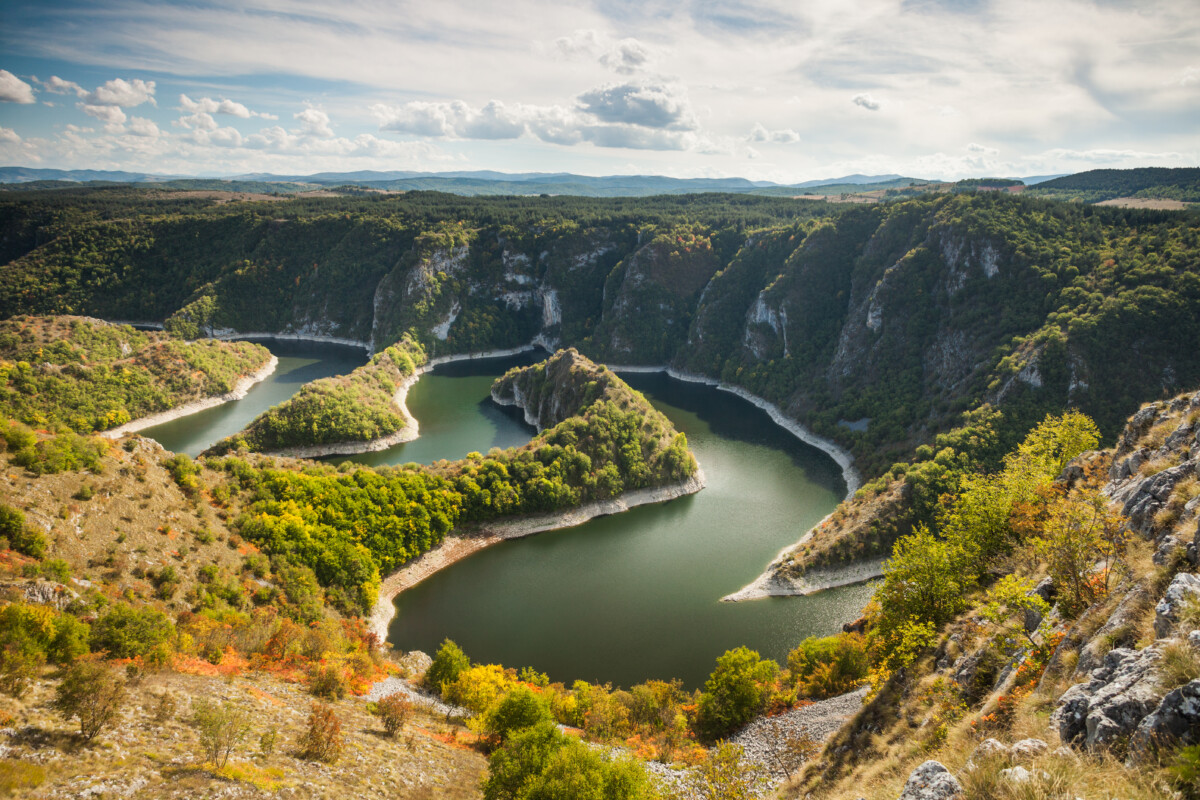
Balkan crossroads nation combining rich Orthodox Christian heritage with vibrant contemporary culture. From medieval monastery treasures to dynamic urban scenes in Belgrade and Novi Sad, Serbia offers authentic southeastern European experiences with renowned hospitality, distinctive cuisine, and deep historical layers.
The destination guide
Serbia
Country in EuropeUpdated
- Overall6/10
- Best forBudget travelers, Solo travelers
- CurrencyRSD
Belgrade hits differently at midnight — rakija in hand, fortress lit up, and a city that genuinely doesn’t sleep. Serbia rewards the detour.
Travel guides for Serbia
More guides featuring Serbia (2)
At a glance
CurrencyRSD
Time zoneBelgrade UTC+01:00Europe/Belgrade UTC+01:00
Languages
- Serbian
Setting
- Danube River
- Mountain terrain
- River valleys
- Historic fortresses
Population6.9M6,945,235 residents
VisaDuration: Up to 90 days · Documents: Valid U.S. passport
How Serbia scores
6/10OverallFair
Weather3/10
Value for money8/10
Safety7/10
Food & cuisine6/10
Culture & arts6/10
Cultural experience7/10
History5/10
Nature & outdoors4/10
Adventure4/10
Nightlife4/10
Shopping6/10
Family friendly5/10
Romance7/10
Character
Photography score5/10
Authenticity score10/10
Off-the-beaten-path score5/10
Editorial scores on a 10-point scale, weighed against destinations of the same kind.
Travel safety snapshot
Overall65/100Moderate rating
Women travellers60/100
LGBTQ+ travellers45/100
Theft60/100
Medical care65/100
Physical harm62/100
Political freedom60/100
SafePlace indicators use their source 100-point scale; higher is more favourable. Planning context, not a live travel advisory — check official government guidance before you go.
When to go
Best months to visit: April, May, June, July, August, September and October.
- January: -3.9 to 3.9 degrees Celsius, 62.9 millimetres of rain, best-time score 2 out of 5.
- February: -0.7 to 8.2 degrees Celsius, 39.9 millimetres of rain, best-time score 2 out of 5.
- March: 1.5 to 11.7 degrees Celsius, 63.7 millimetres of rain, best-time score 3 out of 5.
- April: 5.6 to 16.4 degrees Celsius, 50.8 millimetres of rain, best-time score 4 out of 5.
- May: 10.1 to 20.2 degrees Celsius, 81.9 millimetres of rain, best-time score 5 out of 5.
- June: 15 to 25.5 degrees Celsius, 92.4 millimetres of rain, best-time score 5 out of 5.
- July: 16.8 to 27.6 degrees Celsius, 61.8 millimetres of rain, best-time score 4 out of 5.
- August: 16.6 to 27.6 degrees Celsius, 48.6 millimetres of rain, best-time score 4 out of 5.
- September: 12.4 to 22.8 degrees Celsius, 46.9 millimetres of rain, best-time score 5 out of 5.
- October: 7.5 to 17 degrees Celsius, 52.4 millimetres of rain, best-time score 5 out of 5.
- November: 3.1 to 10.7 degrees Celsius, 69.9 millimetres of rain, best-time score 3 out of 5.
- December: -0.8 to 6 degrees Celsius, 65.4 millimetres of rain, best-time score 2 out of 5.
Month-by-month conditions and packing advice
- January
- Cold, occasional rain January in Serbia: cold winter weather makes broad sightseeing less flexible. Crowds: January in Serbia is workable with normal seasonal planning; build in layers, weather checks, and a mix of indoor and outdoor activities. Pack: Pack warm layers, a coat, and comfortable shoes for cold mornings and evenings.
- February
- Cold, occasional rain February in Serbia: cold winter weather makes broad sightseeing less flexible. Crowds: February in Serbia is workable with normal seasonal planning; build in layers, weather checks, and a mix of indoor and outdoor activities. Pack: Pack warm layers, a coat, and comfortable shoes for cold mornings and evenings.
- March
- Cool to mild, occasional rain March in Serbia: early spring or late fall can be interesting but less predictable. Crowds: March in Serbia is workable with normal seasonal planning; build in layers, weather checks, and a mix of indoor and outdoor activities. Pack: Pack warm layers, a coat, and comfortable shoes for cold mornings and evenings.
- April
- Cool to mild, occasional rain April in Serbia: conditions remain useful with spring buildup or warmer summer planning. Crowds: April in Serbia is workable with normal seasonal planning; build in layers, weather checks, and a mix of indoor and outdoor activities. Pack: Pack layered clothing and comfortable walking shoes.
- May
- Mild to warm, some rain May in Serbia: Belgrade, river walks, fortress views, cafes, wine regions, festivals, and mountain trips balance mild weather and atmosphere. Crowds: May in Serbia is workable with normal seasonal planning; build in layers, weather checks, and a mix of indoor and outdoor activities. Pack: Pack layered clothing and comfortable walking shoes. Add a rain jacket or compact umbrella.
- June
- Mild to warm, some rain June in Serbia: Belgrade, river walks, fortress views, cafes, wine regions, festivals, and mountain trips balance mild weather and atmosphere. Crowds: June in Serbia is workable with normal seasonal planning; build in layers, weather checks, and a mix of indoor and outdoor activities. Pack: Pack light clothing, sun protection, and comfortable walking shoes. Add a rain jacket or compact umbrella.
- July
- Warm to hot, occasional rain July in Serbia: conditions remain useful with spring buildup or warmer summer planning. Crowds: July in Serbia is comfortable for sightseeing, neighborhoods, food stops, day trips, and outdoor time with limited weather friction. Pack: Pack light clothing, sun protection, and comfortable walking shoes.
- August
- Warm to hot, occasional rain August in Serbia: conditions remain useful with spring buildup or warmer summer planning. Crowds: August in Serbia is comfortable for sightseeing, neighborhoods, food stops, day trips, and outdoor time with limited weather friction. Pack: Pack light clothing, sun protection, and comfortable walking shoes.
- September
- Mild to warm, occasional rain September in Serbia: Belgrade, river walks, fortress views, cafes, wine regions, festivals, and mountain trips balance mild weather and atmosphere. Crowds: September in Serbia is comfortable for sightseeing, neighborhoods, food stops, day trips, and outdoor time with limited weather friction. Pack: Pack layered clothing and comfortable walking shoes.
- October
- Cool to mild, occasional rain October in Serbia: Belgrade, river walks, fortress views, cafes, wine regions, festivals, and mountain trips balance mild weather and atmosphere. Crowds: October in Serbia is workable with normal seasonal planning; build in layers, weather checks, and a mix of indoor and outdoor activities. Pack: Pack layered clothing and comfortable walking shoes.
- November
- Cool to mild, occasional rain November in Serbia: early spring or late fall can be interesting but less predictable. Crowds: November in Serbia is workable with normal seasonal planning; build in layers, weather checks, and a mix of indoor and outdoor activities. Pack: Pack layered clothing and comfortable walking shoes.
- December
- Cold, occasional rain December in Serbia: cold winter weather makes broad sightseeing less flexible. Crowds: December in Serbia is workable with normal seasonal planning; build in layers, weather checks, and a mix of indoor and outdoor activities. Pack: Pack warm layers, a coat, and comfortable shoes for cold mornings and evenings.
Know before you go
About
Serbia is a landlocked country in the heart of the Balkans in southeastern Europe, home to about 6.6 million people and centered on its energetic capital, Belgrade. Set at the confluence of the Sava and Danube rivers, Belgrade is the nation’s largest city, with around 1.7 million residents, and a hub known for its riverside nightlife, the hilltop Kalemegdan fortress, and a layered history spanning Roman, Ottoman, and Habsburg eras. Beyond the capital, travelers find Novi Sad—host of the EXIT music festival in the Petrovaradin Fortress—the monasteries of Fruška Gora, and the dramatic Drina and Uvac river gorges. Serbian cuisine leans hearty and grilled, with rakija, the national fruit brandy, never far from the table. Affordable, welcoming, and still off the mainstream tourist track, Serbia rewards visitors with warm hospitality, vibrant café culture, and a rich blend of Central European and Balkan influences.
Best time to visit
Spring (April–May) and autumn (September–October) bring the most pleasant conditions, with comfortable 15–25 °C temperatures, fewer crowds, and good hotel value. Summer (June–August) is ideal for festivals — including the famous EXIT Festival at Petrovaradin Fortress in Novi Sad — and for enjoying Belgrade’s vibrant Danube river-barge nightlife. Winter is cold but atmospheric, with holiday markets in Belgrade and budget-friendly rates. The ski resort of Kopaonik draws winter-sports enthusiasts December through March.
Crowds
Serbia is busiest in late spring and summer (May–August), with Belgrade Nights and Exit Festival in July causing major local crowds; quietest from November to March outside festival dates, overall moderately low international tourism except festival and summer weekends.
Getting there and around
Getting there
Fly into Belgrade Nikola Tesla Airport (BEG) with connections from major European hubs. Air Serbia is the national carrier. Buses from Budapest (6h), Zagreb (6h), and Thessaloniki (6h) are popular budget options.
Top experiences in Serbia
Kalemegdan Fortress & Belgrade panorama
Petrovaradin Fortress (Novi Sad)
Saint Sava Temple (Belgrade)
Knez Mihailova Street & Republic Square
Nikola Tesla Museum
Editor-curated picks carried over from our original guide. Where a full place guide exists, the card links to it.
Worth booking ahead in Serbia
Hand-picked from the operators our guides already send readers to. Prices and availability are live on the partner site.
BrowseViator
Tours and tickets in Serbia on Viator (opens Viator in a new tab)
Viator's full list of bookable tours and tickets in Serbia.
BrowseGetYourGuide
Experiences in Serbia on GetYourGuide (opens GetYourGuide in a new tab)
Everything GetYourGuide sells in Serbia, with the cancellation terms on each listing.
Where to stayBooking.com
Stays in Serbia (opens Booking.com in a new tab)
Live rates and availability for Serbia on Booking.com; filter by neighbourhood once you know where your days start.
We earn a commission if you book through these links, at no extra cost to you. It is how we keep the guides free and independent.
Where to stay
Square Nine Hotel Belgrade
Bulevar Kralja Aleksandra 69, Belgrade 11000, Serbia
Sleek design hotel on Belgrade’s Student Square with a rooftop spa, gourmet restaurant, and interiors by Brazilian architect Isay Weinfeld.
Metropol Palace Belgrade
Strahinjića Bana 65, Belgrade 11000, Serbia
Historic five-star hotel renovated to modern standards, overlooking Tašmajdan Park with a grand ballroom and fine dining.
Hotel Leopold I (Novi Sad)
Svetog Save 10, Novi Sad 21000, Serbia
Located inside Petrovaradin Fortress, this boutique hotel offers Danube views, an on-site restaurant, and direct access to the fortress grounds.
Editor-curated stays carried over from our original guide. Where we have reviewed the hotel, the card links to the review.
Culture, customs and safety
Cultural heritage
Serbia’s cultural and historical heritage is shaped by its position at the crossroads of Eastern and Western civilizations. The legacy of the medieval Serbian Empire is preserved in its Orthodox monasteries, such as Studenica and Gračanica, both UNESCO World Heritage Sites known for their frescoes and architectural harmony. Ottoman rule introduced oriental influences still visible in urban layouts and cuisine, while Austro-Hungarian architecture dominates cities like Novi Sad and Subotica. Folklore, epic poetry, and the traditional “slava” (patron saint celebration) remain core to Serbian identity and were recognized by UNESCO as intangible cultural heritage. The resilience of Serbian culture is expressed through its layered heritage—Byzantine, Ottoman, and Balkan—embodied in both rural traditions and urban revival.
Safety notes
Serbia is generally safe for tourists, with low violent-crime rates. Be cautious of pickpocketing in busy areas, especially around Kalemegdan Fortress, on public transport, and along Knez Mihailova Street. Use licensed taxi companies or ride-hailing apps and confirm the fare before departing. Avoid walking alone late at night in poorly lit areas. Political demonstrations occur periodically and are usually peaceful, but it is best to avoid large gatherings. Respect local customs, including modest dress when visiting Orthodox churches and monasteries. The emergency number is 112.

Travel Style
Season
Activities