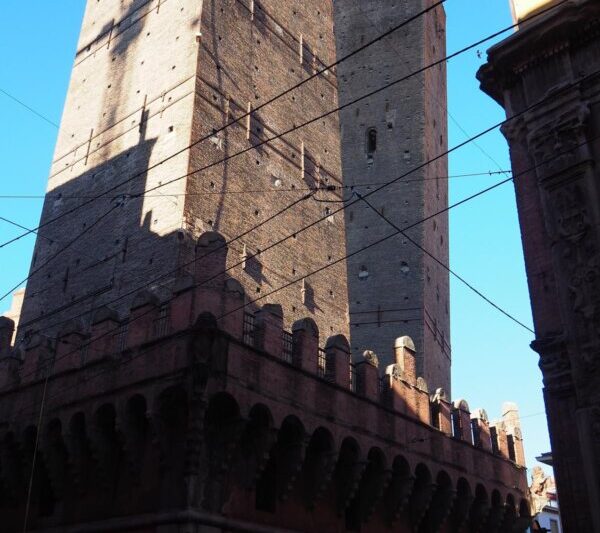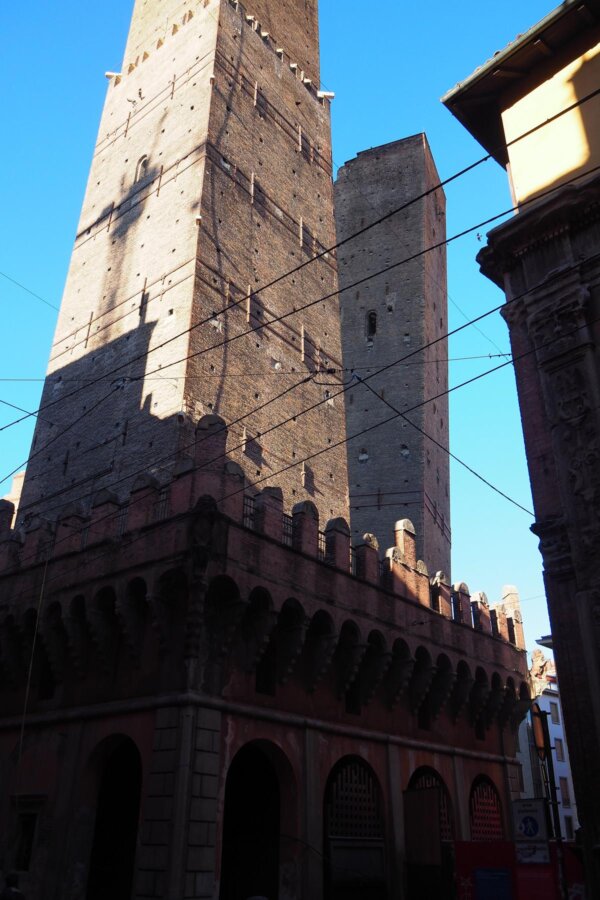
Centro Storico is the historic core of Bologna, enclosed within the ring road that follows the old city walls and bisected by the ancient Via Emilia. The district holds the densest concentration of medieval and Renaissance architecture in the city, alongside markets, university buildings, and restaurants serving the food traditions that earned Bologna the nickname La Grassa.
What is Centro Storico Bologna known for?
Centro Storico Bologna is known above all for its continuous medieval porticoes, its two leaning towers — the Asinelli and the Garisenda — and for hosting the University of Bologna, founded in 1088 and considered the oldest university in the Western world. The neighbourhood is also the epicentre of Bolognese cuisine, including tagliatelle al ragù, tortellini in brodo, and mortadella, all traceable to this district’s markets and trattorie.
Best things to do in Centro Storico Bologna
Climbing the 498 steps of the Torre degli Asinelli rewards visitors with a panoramic view across the terracotta roofscape toward the Apennines. Other essential stops include the Basilica di San Petronio on Piazza Maggiore, one of the largest Gothic churches in Italy, and the adjacent Palazzo d’Accursio with its civic art collections. The Archiginnasio, the principal palace of the old university, houses the ornate anatomical theatre built in 1637.
- Climb Torre degli Asinelli for skyline views
- Visit Basilica di San Petronio, Piazza Maggiore
- Tour the Anatomical Theatre inside the Archiginnasio
- Browse Quadrilatero market streets around Via Pescherie Vecchie
- Walk the Neptune Fountain (Fontana del Nettuno) square
Where to eat in Centro Storico Bologna
The Quadrilatero — the grid of market streets between Piazza Maggiore and Via Rizzoli including Via Pescherie Vecchie, Via Drapperie, and Via Caprarie — is the best area to eat in Centro Storico, offering historic salumerias selling mortadella and aged Parmigiano-Reggiano alongside traditional trattorie serving handmade pasta. Osterie along Via delle Moline and the streets near the university quarter serve affordable tortellini in brodo and tagliatelle al ragù at lunch.
- Tagliatelle al ragù at old-school trattorie near the Quadrilatero
- Tortellini in brodo in university-quarter osterie
- Mortadella and tigelle from historic salumerias on Via Drapperie
- Gelato at long-established gelaterie on Via degli Orefici
Where to walk in Centro Storico Bologna
The most rewarding walking route in Centro Storico runs from Piazza Maggiore east along Via Rizzoli to the Due Torri, then south through the Quadrilatero market streets before looping back via the porticoed Via dell’Indipendenza, covering the district’s architectural and commercial highlights in under two hours. A second route follows Via Zamboni northwest from the towers through the university district past historic palazzi and bookshops to the Pinacoteca Nazionale di Bologna.
How to get to Centro Storico Bologna
Centro Storico is reached most directly from Bologna Centrale railway station via a 15-minute walk south down Via dell’Indipendenza, or by the ATC bus network using stops on Via dell’Indipendenza and Via Ugo Bassi, both of which skirt the pedestrianised historic core. The Aeroporto Guglielmo Marconi is connected to Bologna Centrale by the Marconi Express rail shuttle, from which the centre is then walkable or reachable by bus.
- Walk 15 minutes south from Bologna Centrale station
- ATC buses on Via dell’Indipendenza and Via Ugo Bassi
- Marconi Express shuttle from airport to Bologna Centrale
Best time to visit Centro Storico Bologna
Spring (April–June) and autumn (September–October) offer the most comfortable conditions for exploring Centro Storico on foot, with mild temperatures and fewer summer crowds, while the porticoes make the district walkable year-round in any weather. The weekly Mercato delle Erbe covered market operates daily, and the Quadrilatero street market is liveliest on weekday mornings.