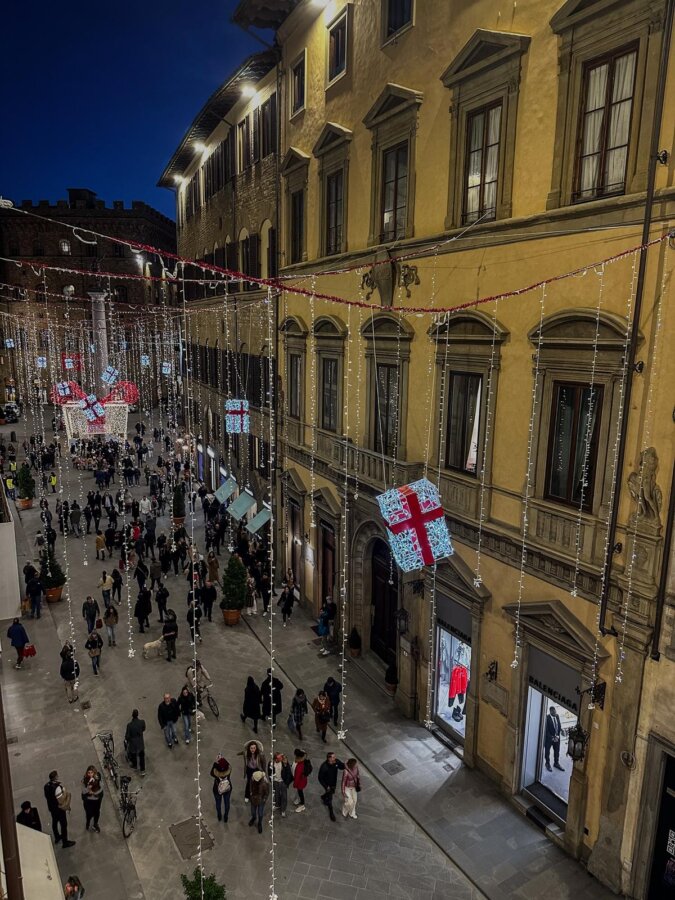
Centro Storico Parma is the historic heart of Parma, a city in Emilia-Romagna renowned as one of Italy’s premier food and art destinations. The district is compact and walkable, anchored by two UNESCO-listed monuments and a grid of medieval streets lined with independent shops, historic cafes, and trattorias serving Parmigiano-Reggiano and prosciutto di Parma. Its pink-toned stone buildings and arcaded streets give the neighborhood a distinctive, unhurried elegance.
What is Centro Storico Parma known for?
Centro Storico Parma is known above all for its exceptional concentration of Romanesque and Renaissance religious art, its role as the capital of Italian food culture, and its association with composer Giuseppe Verdi and the conductor Arturo Toscanini, both of whom are commemorated in the district. The 12th-century Duomo di Parma contains Correggio’s celebrated ceiling fresco Assumption of the Virgin, while the adjacent Battistero—clad in pink Verona marble and decorated with medieval bas-reliefs by Benedetto Antelami—is among the finest Romanesque-Gothic baptisteries in Italy. The Camera di San Paolo, featuring another Correggio fresco cycle, sits just minutes away on Via Melloni.
Best things to do in Centro Storico Parma
The single most rewarding activity is a self-guided walk linking Piazza Duomo, the Battistero, the Palazzo della Pilotta, and the Teatro Regio, Parma’s celebrated opera house on Via Garibaldi, all reachable on foot within thirty minutes. Key stops include the Galleria Nazionale inside the Palazzo della Pilotta, which holds major works by Correggio, Parmigianino, and El Greco, and the Museo Nazionale di Archeologia. The Mercato Centrale on Piazza Ghiaia, just north of the centro, provides an authentic look at local produce including whole wheels of Parmigiano-Reggiano and legs of prosciutto.
- Visit the Duomo di Parma and study Correggio’s 1526–1530 ceiling fresco up close
- Tour the Battistero to see Antelami’s 12th-century carved reliefs and interior painted tiers
- Attend an opera or concert at the historic Teatro Regio
- Browse the Galleria Nazionale in the Palazzo della Pilotta
- Walk Strada Farini and Borgo della Salina for independent food shops
Where to eat in Centro Storico Parma
Centro Storico Parma offers some of the most ingredient-driven traditional eating in Italy, with trattorias and salumerie concentrated on and around Strada Farini, Via Garibaldi, and the streets flanking Piazza Garibaldi. Classic dishes to order include tortelli d’erbetta, anolini in brodo, and culatello served on a wooden board. Storica enoteca Fontana on Strada Farini is a long-established address for local wine and cold cuts, and the Pasticceria Torino on Piazza Garibaldi has served local pastries for generations.
- Order tortelli d’erbetta at a traditional trattoria on Strada Farini
- Try anolini in brodo, a Parma winter staple, in the colder months
- Buy Parmigiano-Reggiano and culatello at a salumeria on Borgo della Salina
Where to walk in Centro Storico Parma
The most rewarding walk in Centro Storico Parma begins at Piazza Garibaldi, follows Via Cavour past the Palazzo del Governatore to Piazza Duomo, then continues to the Palazzo della Pilotta and the green space of Parco Ducale across the Ponte Verdi over the Torrente Parma. A second circuit runs from Piazza Garibaldi along Strada Farini south toward the Teatro Regio and the Casa della Musica on Piazzale San Francesco, covering the cultural and commercial spine of the district.
How to get to Centro Storico Parma
Centro Storico Parma is best reached on foot or by bus from Parma Centrale railway station, which is approximately 1 kilometer north of Piazza Garibaldi and served by Trenitalia regional and high-speed services connecting Milan, Bologna, and Florence. City buses operated by TEP (Trasporti Emiliani Parma) stop at Piazza Garibaldi and along Viale Toschi. The A1 motorway exit Parma Ovest connects drivers to the centro within ten minutes; limited ZTL restricted traffic zones apply inside the historic core.
Best time to visit Centro Storico Parma
Spring (April–June) and early autumn (September–October) offer the most comfortable conditions for exploring Centro Storico Parma on foot, with mild temperatures, active outdoor markets, and major cultural events including the Verdi Festival held each autumn in and around the Teatro Regio. Summer weekday mornings are quieter for visiting the Duomo and Battistero before tourist groups arrive; August sees many local businesses close for several weeks.