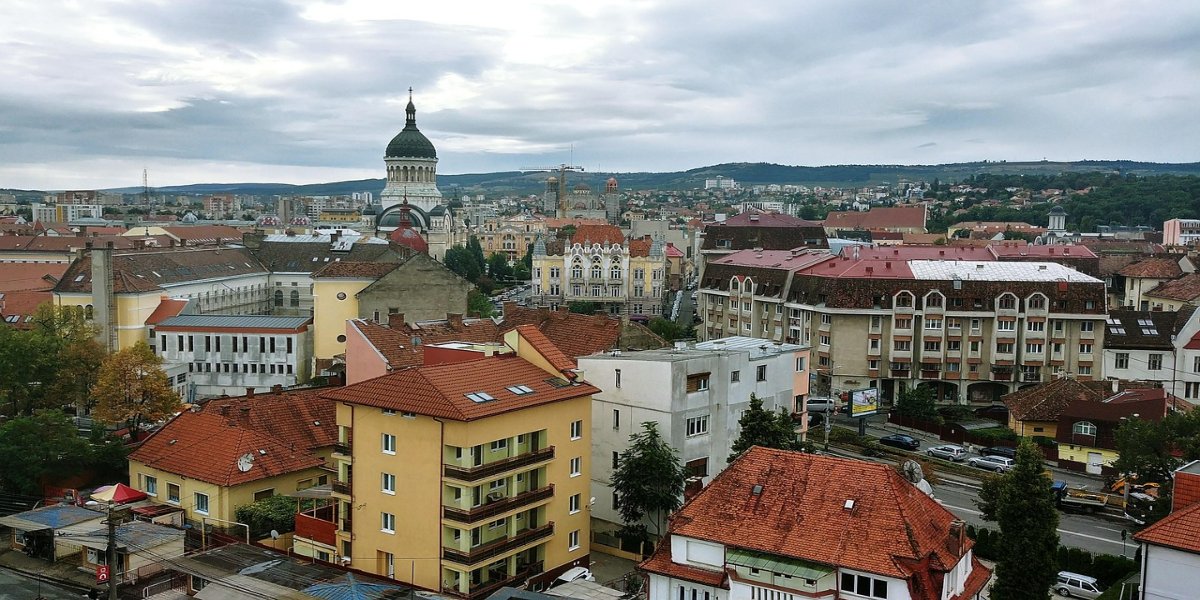
Centru is the historic and administrative heart of Cluj-Napoca, Romania’s second-largest city and the unofficial capital of Transylvania. The district is built around Piața Unirii, one of the largest and best-preserved medieval squares in Romania, ringed by Gothic, Baroque, and neoclassical architecture. Students from Babeș-Bolyai University fill its cafés and terraces, giving the neighborhood an energetic, cosmopolitan atmosphere year-round.
What is Centru Cluj-Napoca known for?
Centru is known primarily for Piața Unirii, dominated by the Roman Catholic St. Michael’s Church — a 14th-to-15th-century Gothic landmark — and the equestrian statue of Matthias Corvinus, the Renaissance king of Hungary born in Cluj in 1443. The square is surrounded by Baroque palaces including the Bánffy Palace, which now houses the Cluj-Napoca Art Museum, and the area contains the oldest street network in the city, with Strada Memorandumului, Strada Regele Ferdinand, and Calea Moților branching out from the central core.
Best things to do in Centru Cluj-Napoca
The top experiences in Centru combine historic monuments, cultural institutions, and lively public life concentrated within easy walking distance of Piața Unirii.
- Visit St. Michael’s Church and climb the tower for panoramic city views.
- Explore the Cluj-Napoca Art Museum inside the 18th-century Bánffy Palace on Piața Unirii.
- Walk through the National Museum of Transylvanian History on Strada Constantin Daicoviciu.
- Browse the Central Market Hall (Piața Centrală / Hala Centrală) on Piața Mihai Viteazul for local produce, cheeses, and charcuterie.
- Stroll Strada Iuliu Maniu and the pedestrian zone around Piața Muzeului for bookshops and artisan shops.
- Attend a performance at the Romanian National Opera or the Hungarian State Theatre, both located in the district.
Where to eat and drink in Centru Cluj-Napoca
Centru has the highest concentration of restaurants and cafés in Cluj-Napoca, ranging from traditional Romanian cuisine to specialty coffee roasters, clustered especially along Strada Napoca, Strada Universității, and the streets immediately south of Piața Unirii.
- Try mămăligă cu brânză (polenta with sheep’s cheese) or sarmale (stuffed cabbage rolls) at traditional Cluj restaurants in the center.
- Specialty coffee culture thrives on Strada Napoca and around Piața Muzeului, with several third-wave roasters operating in the area.
- The Central Market Hall is the best spot for fresh kürtőskalács (chimney cake), a Transylvanian pastry with deep local roots.
- Wine bars and craft-beer venues occupy converted cellars and courtyards throughout the Centru grid.
Where to walk in Centru Cluj-Napoca
The most rewarding walk in Centru begins at Piața Unirii, continues east along Strada Regele Ferdinand past the main Babeș-Bolyai University building, and ends at Parcul Central Simion Bărnuțiu, a formal 19th-century park with a lake, just ten minutes on foot from the main square.
- Strada Matei Corvin, a narrow medieval lane off Piața Muzeului, leads to the purported birthplace house of Matthias Corvinus.
- The pedestrian corridor connecting Piața Unirii south toward Piața Mihai Viteazul passes the Central Market Hall and several Baroque façades.
How to get to Centru Cluj-Napoca
Centru is reachable from Cluj-Napoca’s main railway station (Gara Cluj-Napoca) in about 15 minutes on foot or via tram line 101, which runs along Calea Moților into the city center; multiple bus lines operated by CTP Cluj also serve Piața Unirii and Piața Mihai Viteazul directly.
- Cluj-Napoca International Airport (Aeroportul Internațional Avram Iancu) is roughly 8 km east; bus line 5 connects it to the center.
- Tram line 101 links the railway station to the central district.
- The entire Centru grid is compact and walkable once you arrive.
Best time to visit Centru Cluj-Napoca
Late spring (May–June) and early autumn (September–October) offer the most comfortable temperatures for walking the historic center, with Piața Unirii’s outdoor terraces fully open and major festivals — including TIFF (Transylvania International Film Festival) in late May or early June — animating the squares and courtyards of Centru.