Chora, also called Naxos Town, sits on the northwest coast of Naxos island in the Cyclades and serves as the island’s administrative, commercial, and cultural heart. The town layers ancient, Venetian, and modern Greek history into a compact hillside settlement that rises above one of the Aegean’s busiest island ferry ports. Visitors arrive by sea directly into the heart of town, stepping off ferries within walking distance of the old quarter.
What is Chora Naxos known for?
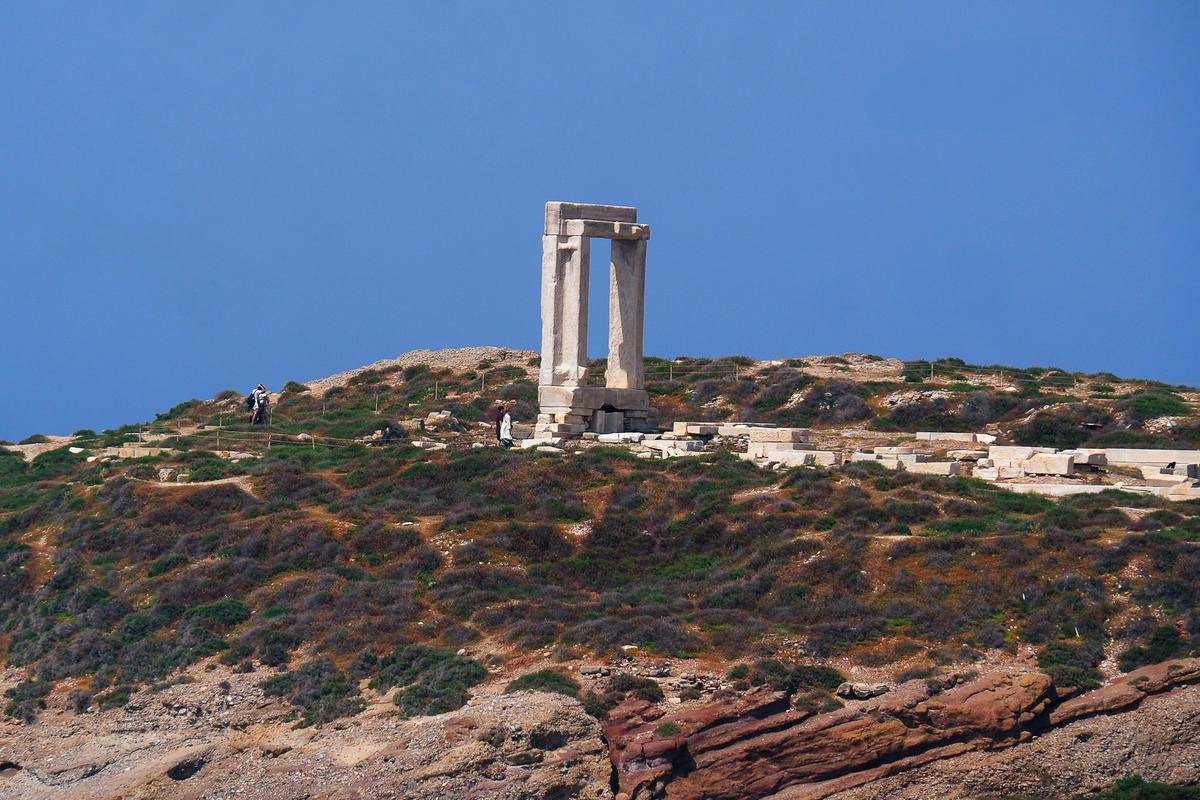
Chora Naxos is best known for the Portara, a massive marble doorway standing on the islet of Palatia connected to the waterfront by a causeway, which is the unfinished entrance to a 6th-century BCE Temple of Apollo and one of the most recognizable monuments in the Cyclades. Beyond the Portara, the town is famous for its Medieval Kastro, a 13th-century Venetian fortified hilltop quarter, and for producing superior local products including Naxian potatoes, graviera cheese, and kitron liqueur made from citron fruit grown only on the island.
Best things to do in Chora Naxos
Walking the Portara causeway at sunset, exploring the Kastro district, and visiting the Archaeological Museum of Naxos housed inside the former Ursuline convent in the Kastro are the top activities in town.
- Walk the causeway to the Portara on Palatia islet at dusk for unobstructed sunset views
- Wander the Kastro’s narrow lanes, passing the Venetian Tower and the Catholic Cathedral of the Presentation
- Visit the Archaeological Museum of Naxos for Cycladic figurines and Mycenaean-era finds
- Browse Bourgo, the old Orthodox quarter below the Kastro, for marble-framed doorways and Byzantine-era churches
- Shop Protopapadaki Street, the main market street, for local graviera, kitron, and Naxian thyme honey
Where to eat in Chora Naxos
The waterfront promenade and the streets immediately behind it concentrate most of Chora’s tavernas and cafes, where menus feature fresh Aegean seafood alongside Naxian specialties such as loukoumades, fresh graviera saganaki, and slow-cooked pork with local potatoes.
- Graviera saganaki: pan-fried Naxian graviera cheese, widely available in waterfront tavernas
- Kitron liqueur tasting at shops along Protopapadaki Street, the sole liqueur produced from Naxos citron
- Fresh seafood meze at harbor-front restaurants overlooking the ferry quay
- Loukoumades (honey-drenched dough balls) at small cafes in the Bourgo quarter
Where to walk in Chora Naxos
The most rewarding walk begins at the ferry port, follows the waterfront north along the causeway to the Portara, then doubles back through the Bourgo quarter and climbs stepped lanes through the Kastro to reach the panoramic terrace near the Catholic Cathedral.
- Portara Causeway to Palatia islet: flat, paved, roughly 300 meters from the waterfront
- Kastro stepped lanes: steep marble-paved alleys rising from Bourgo to the fortified hilltop
- Protopapadaki Street: level pedestrian market street through the commercial center
How to get to Chora Naxos
Chora is reached by ferry from Piraeus port in Athens, with crossings operated by Blue Star Ferries and Fast Ferries taking between 3.5 and 5.5 hours depending on the vessel; the ferry dock lands passengers directly on the Chora waterfront.
- Ferry from Piraeus: Blue Star Ferries conventional route, approximately 5.5 hours
- High-speed catamaran from Piraeus: Fast Ferries or SeaJets, approximately 3.5 hours
- Inter-island ferry connections to Paros, Mykonos, Santorini, and Ios via the same Chora quay
- Naxos National Airport (JNX) lies 3 km south of Chora with seasonal domestic flights from Athens
- Local KTEL buses depart from the Chora bus station on the waterfront for villages across the island
Best time to visit Chora Naxos
Late May through June and September through early October offer the best balance of warm weather, calm seas, and fewer crowds than the peak July–August period, when the Chora waterfront and Kastro lanes become heavily congested.