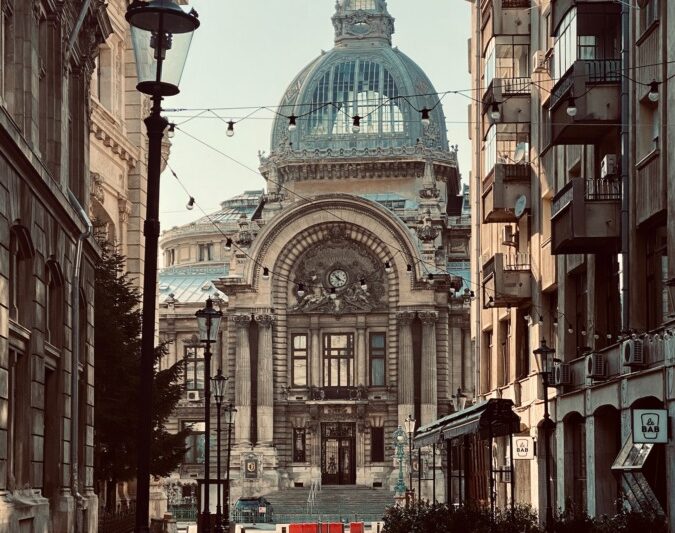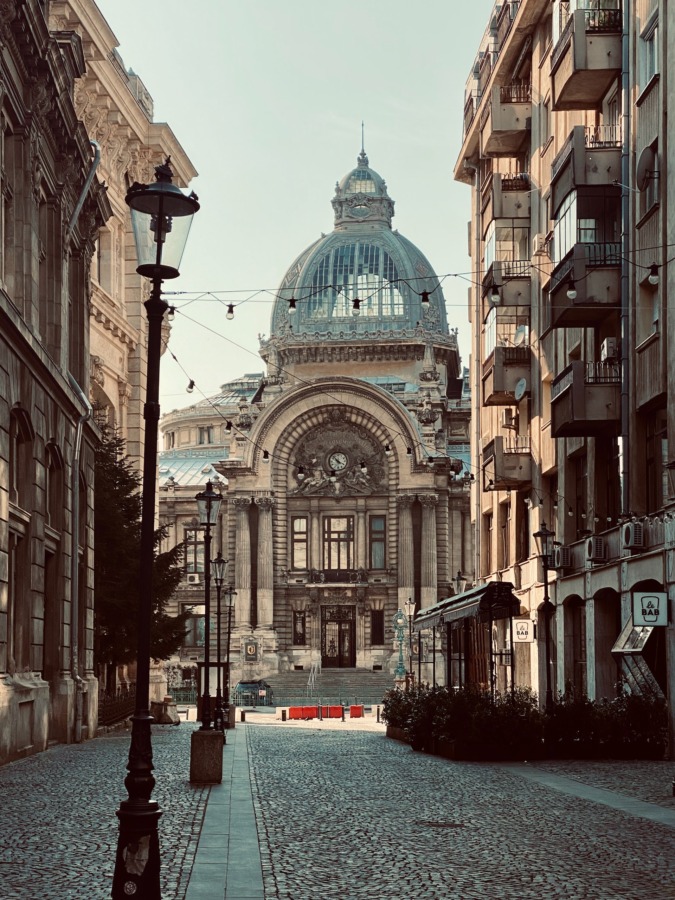
Old Town Bucharest, known locally as Centrul Vechi, is the historic commercial and cultural core of Romania’s capital, centered on Strada Lipscani and the surrounding pedestrian lanes. The district preserves remnants of medieval Wallachia alongside 18th- and 19th-century merchant buildings, Neoclassical facades, and a dense concentration of restaurants, wine bars, and live-music venues. It sits within walking distance of Piața Unirii, Piața Universității, and the broader city center.
What is Old Town Bucharest known for?
Old Town Bucharest is known for Strada Lipscani—a historic merchant street dating to the 15th century—the ruins of the Curtea Veche (Old Princely Court) where Vlad the Impaler once ruled, a cluster of Orthodox churches including Stavropoleos Church, and the highest density of bars and restaurants in the city, making it Bucharest’s primary nightlife and heritage district.
- Curtea Veche, the 15th-century palace ruins and archaeological site on Strada Franceză
- Stavropoleos Church (1724), one of Bucharest’s finest examples of Brâncovenesc architecture
- Strada Lipscani and its network of pedestrian lanes lined with 19th-century facades
- Hanul lui Manuc, an early 19th-century caravanserai inn still operating as a hotel and restaurant
Best things to do in Old Town Bucharest
The best things to do in Old Town Bucharest include touring the Curtea Veche archaeological site, attending an Orthodox service at Stavropoleos Church, browsing antique and vintage shops on Strada Lipscani, visiting the National History Museum on Calea Victoriei at the district’s edge, and exploring the courtyard of Hanul cu Tei.
- Visit the Curtea Veche Museum and its open-air medieval ruins
- Attend a Byzantine choral concert at Stavropoleos Church
- Walk the full length of Strada Lipscani from Calea Victoriei to Piața Unirii
- Explore Hanul cu Tei, a restored 19th-century inn courtyard off Strada Lipscani
Where to eat in Old Town Bucharest
Old Town Bucharest offers Romanian traditional cuisine alongside international dining; standout options include Caru’ cu Bere on Strada Stavropoleos, a landmark 1879 beer hall with Gothic Revival interiors serving dishes like ciorbă de burtă and mici, and Lacrimi și Sfinți on Strada Știrbei Vodă nearby, known for creative Romanian small plates.
- Caru’ cu Bere (Strada Stavropoleos 3): historic beer hall, Romanian classics, stunning stained-glass interior
- Hanul lui Manuc (Strada Franceză 62): traditional Romanian dishes in a 19th-century inn courtyard
- Vatra (Strada Smârdan): Romanian comfort food including sarmale and mămăligă
- Street-food stalls along Strada Lipscani serving covrigi (pretzel rings) and kürtőskalács
Where to walk in Old Town Bucharest
The most rewarding walk in Old Town Bucharest begins on Calea Victoriei at the National History Museum, turns east along Strada Stavropoleos past Caru’ cu Bere and the church, continues to Curtea Veche on Strada Franceză, then loops north through Piața Sfântul Gheorghe Nou back to Strada Lipscani.
- Strada Franceză: wide historic boulevard with 19th-century facades and café terraces
- Piața Sfântul Gheorghe Nou: small square anchored by the Sfântul Gheorghe Nou Church
- Strada Smârdan: quieter parallel lane with independent shops and bars
How to get to Old Town Bucharest
Old Town Bucharest is most easily reached via the Piața Unirii metro station (M1/M3 interchange) on the southern edge of the district, or Piața Universității station (M2) on the northern edge; tram lines and numerous bus routes also serve Calea Victoriei and Bulevardul Brătianu bordering the area.
- Metro: Piața Unirii (M1, M3) — 2-minute walk to Strada Lipscani
- Metro: Piața Universității (M2) — 5-minute walk south to Old Town
- Tram lines running along Calea Victoriei on the western boundary
- Bus routes serving Bulevardul Ion C. Brătianu on the eastern edge
Best time to visit Old Town Bucharest
The best time to visit Old Town Bucharest is late spring (May–June) or early autumn (September–October), when temperatures range from 18–26°C, outdoor terrace seating is fully operational, and the district hosts street festivals and cultural events without the peak-summer tourist congestion or the cold of winter evenings.