MenuClose

A place worth knowing

Hofbrauhaus Munchen

Attractions · Bavarian restaurant in MunichUpdated

  • Google rating4.5/5
  • Typical visit2-4 hours (longer if staying for multiple rounds of drinks, food, and music)
  • EntranceFree
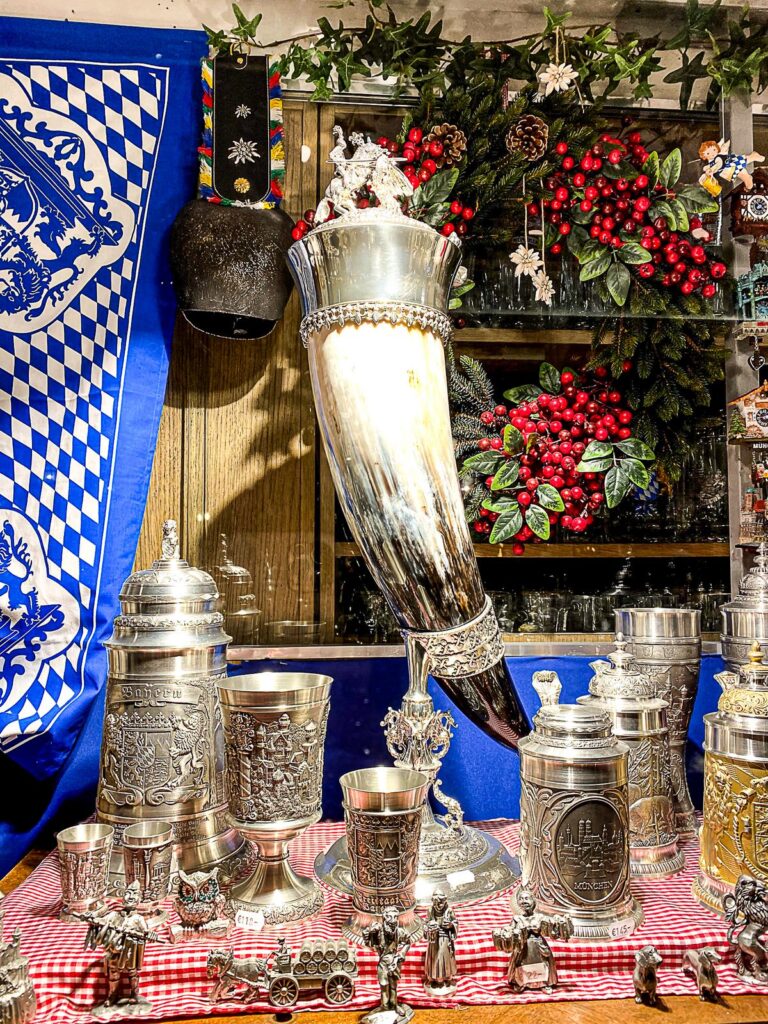
Traditional German beer steins on display at Hofbräuhaus München.
Kyle Kroeger / ViaTravelers
  • Today (Thursday)9:00 AM – 11:30 PM
  • Typical visit2-4 hours (longer if staying for multiple rounds of drinks, food, and music)
  • EntranceFree
  • Google rating4.5/5
  • WebsiteOfficial site ↗
Opening hours all week
Monday
9:00 AM – 11:30 PM
Tuesday
9:00 AM – 11:30 PM
Wednesday
9:00 AM – 11:30 PM
Thursday
9:00 AM – 11:30 PM
Friday
9:00 AM – 11:30 PM
Saturday
9:00 AM – 11:30 PM
Sunday
9:00 AM – 11:30 PM
Traditional German beer steins on display at Hofbräuhaus München.
The short answer

Why it matters

Centuries-old hub of Bavarian festivity and fellowship.

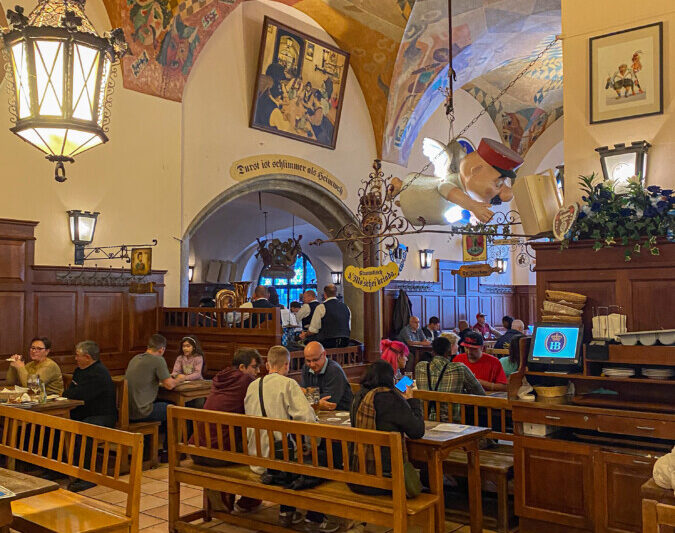
Operating continuously since its founding by Bavarian Duke Wilhelm V in 1589, Munich‘s Hofbräuhaus stands as the world’s most famous beer hall and a living monument to Bavaria’s brewing heritage. The current Renaissance revival building, dating from 1897, retains the democratic spirit of communal drinking with its long wooden tables where locals and visitors sit together beneath vaulted ceilings adorned with historic flags and painted folk scenes. The Schwemme (beer hall) maintains traditions dating back centuries: servers in dirndls and lederhosen deliver massive one-liter steins of beer brewed according to the Reinheitsgebot purity law of 1516, while an oompah band plays traditional music that inevitably inspires communal singing. Regular patrons keep personal steins in the hundreds of locked cabinets lining the walls, continuing a tradition from when wealthy citizens brought their own drinking vessels. The building’s second floor houses the Festsaal where Mozart once performed, while the beer garden offers outdoor seating in warmer months. Though unquestionably a tourist attraction, the Hofbräuhaus remains authentically Bavarian in its commitment to brewing traditions, hearty local cuisine like Schweinshaxe (pork knuckle), and the concept of Gemütlichkeit—that untranslatable sense of warmth, good cheer, and belonging that defines Bavarian hospitality.

Cultural Context

World’s most famous beer hall embodying Bavarian Gemütlichkeit (coziness) and brewing tradition since 1589. The Hofbräuhaus transcends mere drinking establishment to represent Munich’s soul, where locals and tourists unite over Maß (liter) beers, oompah bands, and centuries of beer culture.

Historical Context

Founded by Duke Wilhelm V when Munich’s Augustiner brewery couldn’t meet court demand, initially serving only royalty. Opened to public in 1828 by King Ludwig I, becoming democratic meeting place where Mozart composed, Lenin plotted, and Hitler launched his Beer Hall Putsch in 1923, reflecting Bavaria’s tumultuous political history.

Context

Story and significance

About

Hofbräuhaus München needs no introduction; this iconic beer hall is a testament to Bavarian culture and camaraderie. Dating back to the 16th century, this 3-floor beer hall exudes a historic charm fused with a lively, upbeat atmosphere that captures the essence of traditional German revelry.

Visitors are greeted with the rich aromas of Bavarian culinary delights, complemented by the robust flavors of authentic German brews that have quenched the thirst of locals and travelers for centuries.

Here, the sound of live music and the harmonious clang of beer mugs create a symphony of jubilation, inviting all to partake in the communal joy. Hofbräuhaus München is more than just a beer hall; it’s a historical landmark and a cultural spectacle, offering a glimpse into the spirited heart of Munich.

Historical significance

Hofbräuhaus is significant as a symbol of Munich’s brewing heritage and as a social institution where beer, politics and public life intersected; it has hosted civic gatherings and become an international emblem of Bavarian identity and tourism. Its long continuity links modern Munich to pre-industrial brewing traditions and the city’s development as a center for regional culture.

Historical context

Founded by the Bavarian state brewery tradition in the late 16th century, the Hofbräuhaus developed from a ducal brewery into a public beer hall over centuries, growing especially during the 19th century as Munich urbanized. The building has been rebuilt and renovated after fires and wartime damage, retaining its role as a central public meeting place through successive eras of Bavarian history.

Cultural context

Hofbräuhaus München is one of Munich’s most famous beer halls and a focal point of Bavarian conviviality, drawing locals and tourists for traditional food, live oompah music, and communal long-table dining. It functions as a living showcase of Bavarian beer culture, used for celebrations, tourist visits, and for experiencing regional customs such as Maß servings and brass-band entertainment.

Architecture

The current building reflects large-scale beer-hall architecture with high ceilings, broad open rooms, and rows of wooden tables designed for communal seating; interior decoration includes murals, vaulted ceilings, and carved woodwork characteristic of late 19th- and early 20th-century historicist styles. Its layout prioritizes acoustics and circulation for large crowds rather than residential or ornamental complexity.

Local significance

Hofbräuhaus München is a cultural landmark in Munich where locals and visitors mingle; for many residents it represents Bavarian conviviality—traditional music, beer culture and communal seating that mark celebrations and everyday socializing alike. It functions as both a tourist destination and a living beerhall used for family meals, after-work gatherings and Oktoberfest-related tradition, reinforcing regional identity through food, folklore and language.

Editorial scores

How we rate it

Universal appeal & authenticity10/10
Cultural richness & educational value10/10
Preservation & integrity10/10
Accessibility & visitor engagement10/10

Editorial scores on a 10-point scale, judged against places of the same kind.

Bookable experiences

Worth booking ahead in Munich

Hand-picked from the operators our guides already send readers to. Prices and availability are live on the partner site.

We earn a commission if you book through these links, at no extra cost to you. It is how we keep the guides free and independent.

Updated Data: Editorial research · Google Places ratings · Verified coordinates