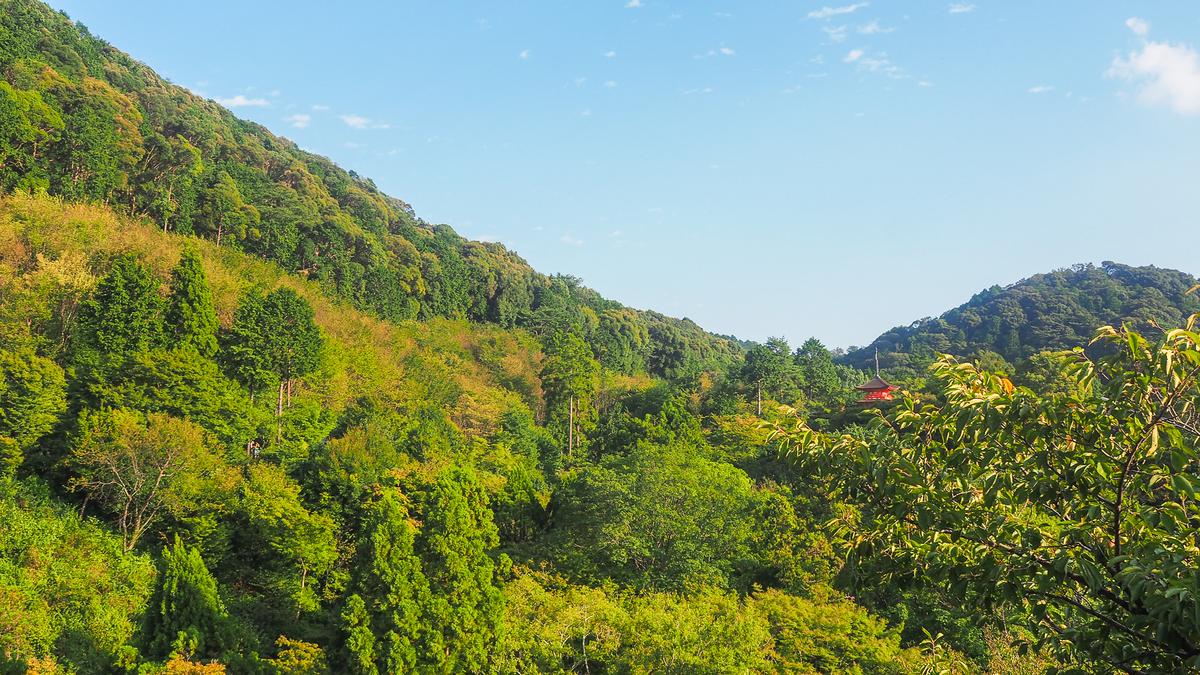

Perched dramatically on Kyoto‘s eastern hills, Kiyomizu-dera Temple commands breathtaking views from its wooden stage that extends 13 meters over a maple and cherry tree-filled valley—built remarkably without a single nail. Founded in 778 CE and rebuilt in its current form in 1633, this UNESCO World Heritage site takes its name (“Pure Water Temple”) from the Otowa Waterfall that cascades through the complex, whose waters visitors sip from long-handled cups for purification and blessings. The temple’s main hall houses the 11-faced, 1000-armed Kannon Bodhisattva statue, representing compassion, though this sacred object is shown publicly only once every 33 years. Beyond its spiritual significance, Kiyomizu-dera embodies Japanese architectural ingenuity with its massive wooden support structure that stabilizes the main hall against earthquakes, historically called “jumping from Kiyomizu stage”—an Edo-period expression akin to “taking the plunge.” The complex includes the vibrant three-storied Koyasu Pagoda, the wish-granting Jishu Shrine with its “love stones” placed 18 meters apart that visitors navigate with closed eyes to find romantic success, and the Tainai Meguri, a pitch-black tunnel symbolizing rebirth when traversed. Spectacular seasonal transformations—spring cherry blossoms, summer firefly displays, autumn’s fiery maple leaves, and winter snowscapes—draw visitors throughout the year to this perfect embodiment of traditional Japanese aesthetics’ harmony with natural landscapes.
Cultural Context
1,200+ year Buddhist pilgrimage site dedicated to Kannon goddess of compassion, representing harmony of traditional Japanese architecture with natural landscape
Historical Context
Founded 778 CE, rebuilt 1633 maintaining original architectural principles, UNESCO World Heritage Site 1994 as Historic Monument of Ancient Kyoto