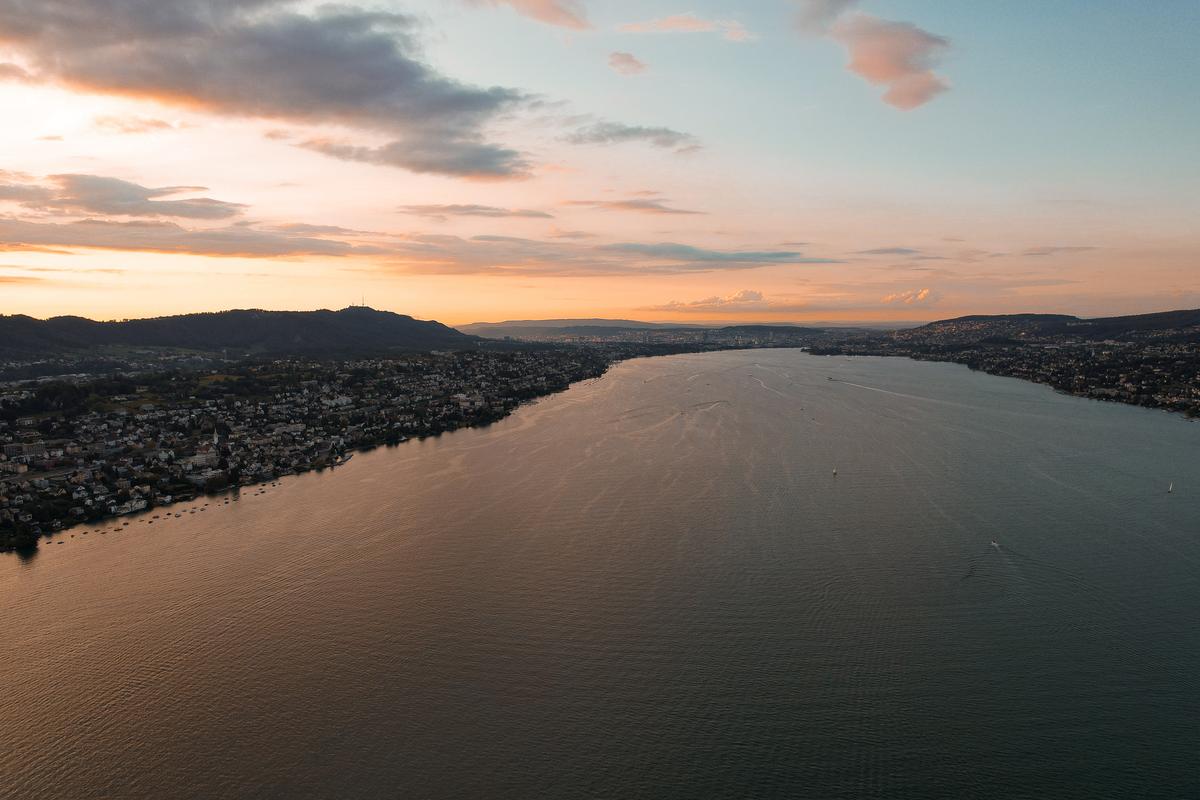

Stretching along Zurich‘s northern shore, Lake Zurich (Zürichsee) forms the shimmering heart of Switzerland’s largest city, blending Alpine panoramas with sophisticated urban culture. This glacial lake spans 25 miles through a valley framed by rolling hills and distant snow-capped mountains, creating a stunning natural backdrop for the city’s refined waterfront. The immaculately maintained promenade transforms seasonally, from summer’s vibrant lakeside bathing areas and sailing regattas to winter’s misty, contemplative atmosphere and festive Christmas markets. Beyond recreational activities, the lake embodies Swiss cultural values through the precise Swiss-German naval operations that maintain its crystal-clear waters and the meticulous engineering of its flood control systems. The shoreline seamlessly integrates historical elements like medieval fishing villages with contemporary architecture, while the evening ambiance offers magical sunset reflections where Alpine silhouettes meet urban lights. Unlike tourist-focused lakes elsewhere, Zürichsee remains central to local life, with Swiss residents treating it as their extended living room for year-round activities, from traditional fondue boat cruises to morning swims, making any visit here an authentic immersion into Swiss lifestyle rather than a fabricated experience.
Cultural Context
Lake Zurich embodies centuries of interwoven cultures. The Roman presence left a lasting impact with Villa Rustica near Wald, a well-preserved Roman farmhouse. The Alemanni established a fortified settlement at Zurich’s original location, shaping the city’s early development.
Historical Context
Lake Zurich, known locally as Zürichsee, has played a central role in the region’s history dating back to prehistoric times. Archaeological evidence indicates that settlements around the lake existed as early as the Neolithic period, with pile dwellings from the Bronze Age still visible underwater. Throughout the Roman era, the area served as a critical trade and transportation link, facilitating movement between the Alps and the Rhine River. During the Middle Ages, the lake became a vital resource for the burgeoning city of Zurich, supporting fishing, transportation, and trade. The lake’s shores were dotted with castles, monasteries, and fortifications that underscored its strategic importance. In the 19th century, industrialization brought changes to the lake’s use, with steamships beginning to ply its waters and the development of promenades that made the lake a recreational destination. The 20th century saw efforts to preserve the lake’s natural beauty while accommodating urban expansion, including water quality improvements and the establishment of protected areas. Today, Lake Zurich remains an enduring symbol of the city’s historical evolution, reflecting centuries of human interaction with this vital natural resource and its surrounding landscape. The lake’s rich historical layers continue to attract scholars and visitors interested in the deep cultural heritage of the region.