Cultural Context
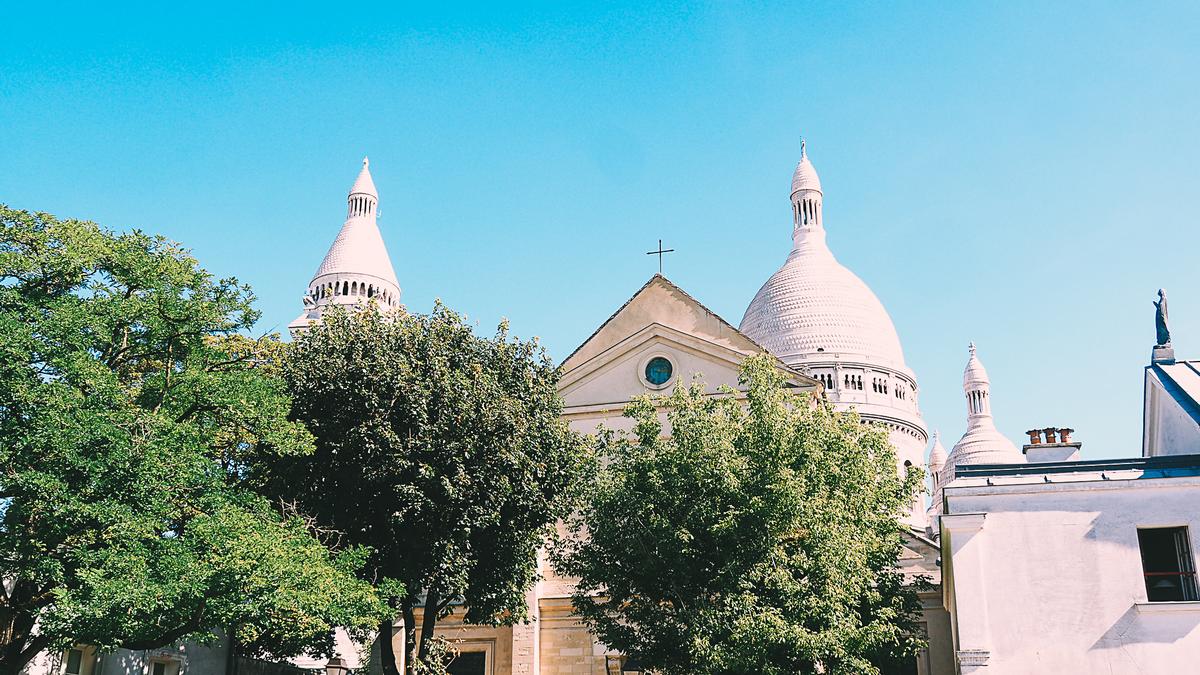
Perched on Montmartre—“the Hill of Martyrs,” where Saint Denis was beheaded and Jesuit founders vowed poverty—Sacré‑Cœur layers Christian memory onto an earlier pagan summit. The project was conceived in 1870 as a national vow: conservative Catholics read France’s defeat in the Franco‑Prussian War as divine punishment for a century of “moral decline,” and pledged a shrine of reparation to the Sacred Heart. Because the basilica overlooks the killing grounds of the 1871 Paris Commune, left‑wing Parisians still view it as an architectural rebuke—“built on the blood of the Communards.” Yet the same hill fostered avant-garde cabarets and studios, where Renoir, Picasso, and Toulouse-Lautrec reinvented modern art, making Sacré-Cœur an uneasy neighbor to Montmartre’s bohemian mythos. Continuous pilgrimage, round‑the‑clock prayer, and panoramic city views translate this 19th‑century penitential statement into a 21st‑century magnet for five million visitors a year. After decades of ideological sparring, the basilica finally gained protected “Monument Historique” status in 2022, symbolically fusing heritage preservation with still‑raw political memory.Historical Context
The Basilique du Sacré-Cœur de Montmartre was conceived in the aftermath of the Franco-Prussian War and the Paris Commune, serving as both a religious and national symbol. Construction began in 1875 following a public subscription initiated to atone for the perceived moral decline of France and to honor the victims of the war and civil unrest. The basilica was designed by architect Paul Abadie, who won the competition to create a monument that would represent spiritual renewal and national reconciliation. It took nearly four decades to complete, with the basilica consecrated in 1919 after World War I, symbolizing peace and resilience. Over time, the Sacré-Cœur has witnessed numerous historical events, including its role as a site of pilgrimage and reflection during times of national crisis. Its location atop Montmartre hill, a historically working-class neighborhood known for its vibrant artistic community, connects the basilica to both the political and cultural fabric of Paris. The basilica thus stands not only as a religious edifice but also as a monument deeply intertwined with France’s complex 19th and early 20th-century history, embodying themes of penance, patriotism, and spiritual revival that continue to resonate today.Plan your visit with our complete Boston travel guide featuring top sights, itineraries, and local travel tips.