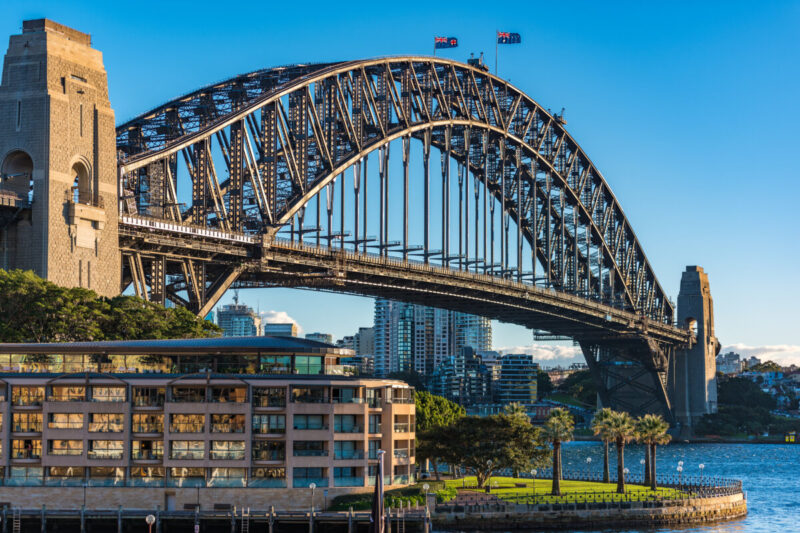
Sydney Harbour Bridge is an iconic steel arch bridge spanning Sydney Harbour, connecting the central business district with the North Shore. Affectionately known as “the Coathanger” for its distinctive arch design, this engineering marvel stands as one of the world’s greatest arch bridges. Completed in 1932 during the Great Depression, it represents triumph over adversity and Australian ingenuity, featuring the longest steel arch span in the southern hemisphere.
Cultural Context
Sydney Harbour Bridge symbolizes Australian national identity, progress, and resilience. Built during the Great Depression, it provided employment for 1,400 workers and became a symbol of hope and national pride. The bridge has been the focal point of major celebrations including New Year’s Eve fireworks, Olympic ceremonies, and national events, cementing its status as Australia’s most recognizable landmark.
Historical Context
First proposed in 1815 by Francis Greenway, the bridge concept evolved over a century before John Bradfield’s vision came to fruition in 1932. Construction began in 1923 under the supervision of Bradfield, known as the “Father of the Bridge,” with British firm Dorman Long & Co. The project required demolishing 469 buildings and cost £10 million, not fully paid off until 1988.