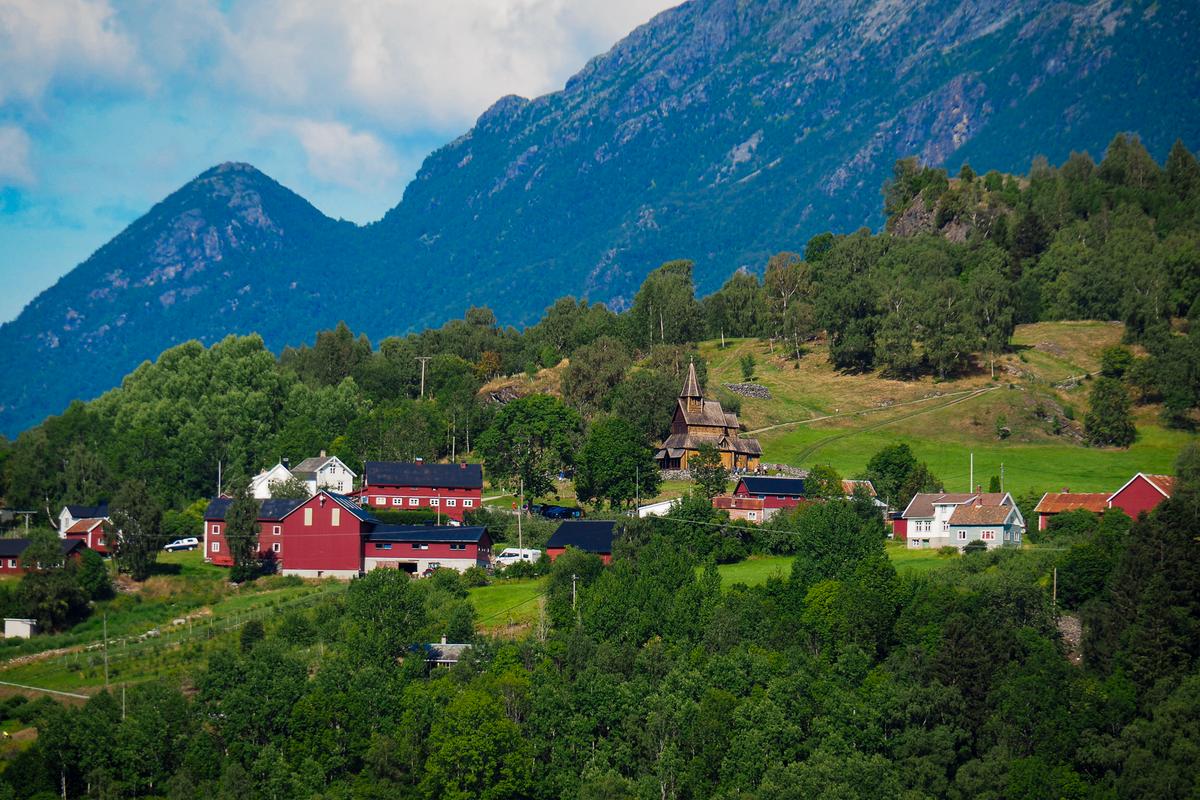
Explore Norway's oldest stave church in stunning fjord.
- Universal Appeal and Cultural Authenticity
- Urnes Stave Church stands as one of Norway’s oldest and most well-preserved stave churches, drawing in history buffs and casual visitors alike.
- Sitting in a scenic fjord, the church offers visitors a cultural experience and a breathtaking natural backdrop.
- Guided tours conducted by locals provide a rich narrative of the church’s origins and significance, enhancing its cultural credibility.
- Though a bit pricy, visitors repeatedly stress the experience is worth the cost for its uniqueness and authenticity.
- Cultural Richness and Educational Value
- The church is rich in historical narratives, offering glimpses into medieval Norwegian culture and architecture through detailed guided tours.
- Thanks to knowledgeable guides, visitors can access intricate details and stories about the church’s construction and the era in which it was built.
- Small museums and visitor centers augment the educational experience, providing context and supplementary information.
- Opportunities to ask questions and interact with the guides enhance the depth of cultural and historical understanding gained from a visit.
- Preservation and Integrity
- Efforts to maintain the structure have been successful, ensuring the church remains as close to its original state as possible.
- The church’s continued use adds a layer of living history, making it more than just a relic but a part of the community’s active heritage.
- However, as guided tours are the only means of accessing the interior, some have found it crowded, which, if not managed carefully, might impact the preservation efforts.
- Accessibility and Visitor Engagement
- While getting to Urnes Stave Church can be an adventure, involving ferries and uphill walks, the journey itself is part of the allure for many visitors.
- Guided tours every half hour ensure that even in busy seasons, most visitors can see inside the church and learn from the guides.
- The requirement to park at Solvorn and take the ferry, followed by a steep walk, might be challenging for some but is generally considered part of the unique experience.
- The guides’ willingness to impart knowledge and engage in Q&A sessions adds a personable element to the visits, enhancing overall engagement.
Urnes Stave Church Review: A Hidden Gem of Medieval Norway
History and Significance
You’ll be amazed by the rich history of
Urnes Stave Church. Built around 1130, it’s
Norway’s oldest stave church still standing. Can you believe it’s survived for nearly 900 years?
The church is located in a beautiful spot overlooking Lustrafjorden, Norway’s longest fjord. It replaced two earlier churches on the same site.
Urnes is famous for its unique blend of architectural styles. The intricate wood carvings show Celtic, Viking, and Romanesque influences. The north portal, with its stunning animal motifs, is a standout feature.
In 1979, Urnes became a UNESCO World Heritage Site. It’s the only stave church in Norway with this honor. Pretty special, right?
The church has seen its share of changes over the centuries. In the 1600s and 1700s, new windows and a pulpit were added. However, much of the original medieval structure remains intact.
Today, Urnes is a testament to Norway’s medieval craftsmanship and religious history. It’s a must-see for anyone interested in Viking-era architecture or early Christianity in Scandinavia.
Main Attractions and Activities
You’ll be awestruck by the intricate carvings on Urnes Stave Church’s north portal. These ancient designs date back to an older church, showing impressive Norse-inspired artistry. As you step inside, take in the peaceful atmosphere and admire the wooden interior that’s stood for nearly 900 years.
Don’t miss the chance to explore the church grounds and soak in breathtaking views of the surrounding fjords. Bring your camera – you’ll want to capture the stunning scenery!
Popular activities include:
• Guided tours (available May-September)
• Photography sessions
• Picnicking on the grounds
• Hiking nearby trails
I was struck by how well-preserved the church is. The ornate wooden details transport you back in time. Walking around the exterior, I couldn’t help but marvel at the
skilled craftsmanship that’s endured for centuries.
Remember to check opening hours before your visit. The church is typically open from May to September, 10:30 AM to 5:45 PM. Plan to spend about an hour exploring this remarkable UNESCO World Heritage site.
Visitor Experience
You’ll be in awe as you approach Urnes Stave Church. Its stunning wooden architecture and fjord backdrop create a magical atmosphere. The church is usually quiet, so you can soak in the history and craftsmanship without crowds.
The staff are super friendly and knowledgeable. They’ll happily share fascinating stories about the church’s 900-year history. You might even get lucky and catch a guided tour for more in-depth info.
Inside, you’ll be amazed by the intricate wood carvings and ancient artifacts. The Viking-inspired decor is unlike anything you’ve seen before. Explore every nook and cranny – there’s so much detail!
Don’t forget to step outside and admire the views. The church’s perch overlooking the fjord is breathtaking. It’s the perfect spot for quiet reflection or snapping that perfect photo.
Visiting Urnes is truly a one-of-a-kind experience you won’t soon forget!
Tips for Visitors
You’ll want to plan your trip to Urnes Stave Church carefully. The best time to visit is
early summer when the weather is mild and the crowds are smaller. Aim for June if you can—that’s when I went, and it was perfect.
Don’t forget to dress in layers. The church can get chilly inside, even on warm days. Comfy shoes are a must, too, as you’ll be doing some walking.
Tickets are 90 NOK for adults and 45 NOK for kids. You can buy them on-site, but I’d recommend booking online to skip the line.
Pro tip: If you’re visiting other attractions in the area, look into the Norway in a Nutshell pass. It includes entry to Urnes and can save you some cash.
Oh, and bring a camera! The views of the fjord from the church grounds are stunning. You’ll kick yourself if you forget.
Accessibility and Facilities
Getting around Urnes Stave Church can be tricky if you have mobility issues. The terrain is uneven, with some steep paths leading up to the church. Wheelchair access is limited, so plan accordingly.
You’ll find basic restrooms near the parking area. They’re clean but nothing fancy. Bring your hand sanitizer, just in case.
Hungry? Pack a picnic! There’s no cafe on-site, but you can enjoy lunch with stunning fjord views. The nearby village has a small shop for snacks and drinks.
Parking is available but fills up fast in summer. Arrive early to snag a spot. The lot is gravel, so watch your step.
Pro tip: Wear comfy shoes and layers. The weather can change quickly, and you’ll be doing some walking.
Despite some limitations, the church’s beauty makes it worth the visit. Come prepared to enjoy exploring this historic gem.
Unique Features
You’ll be amazed by Urnes Stave Church’s one-of-a-kind features. The intricate wood carvings on the north portal are simply breathtaking. They’re in the Urnes style, named after this very church! You can feel the history beneath your touch as you run your fingers along the carvings.
Inside, you’ll spot the ship-shaped candlestick on the altar. It’s not just for show – it’s an authentic piece from the 1100s! And don’t miss the bishop’s chair in the choir. It’s also from the same era, making you wonder who might have sat there centuries ago.
The church’s construction is also a marvel. Can you believe it was built without a single nail? The load-bearing posts, called “staves,” give the church its name and strength.
Walking around, you’ll notice the church has been rebuilt several times. Each rebuild adds a layer to its rich history. It’s like a time capsule, with parts dating back to 950!
Best Time to Visit
- Weekday Mornings (Monday – Friday, 10:30 AM – 12:00 PM): Visiting on a weekday morning, soon after the church opens, is ideal for avoiding the larger crowds, particularly those from cruise tours that typically arrive later in the day. This allows for a more peaceful and immersive experience with fewer people during the guided tours.
- Late Spring or Early Autumn (May – June or September): These periods offer milder weather and fewer tourists compared to the peak summer months. Visiting during these shoulder seasons provides a balance of good weather and a less crowded experience, enhancing both the scenic beauty of the fjord and the cultural richness of the visit.
- Afternoon Visits (3:00 PM—5:45 p.m.) in High Season (July – August): If visiting during the busy summer months, aim for late afternoon. This timing allows you to experience the church after the peak mid-day rush, giving you a chance to explore with smaller groups. Additionally, the afternoon light beautifully illuminates the fjord and the church, making for stunning views and photography opportunities.
Overall Impressions
You’ll be awestruck by Urnes Stave Church. This 900-year-old wooden wonder sits perched on a hillside, offering stunning views over the fjord below. As you approach, the intricate carvings and unique architecture immediately catch your eye.
Inside, you’re transported back in time. The dim lighting and smoky scent create an almost mystical atmosphere, and you can’t help but marvel at the craftsmanship that’s endured for centuries.
The remote location adds to the charm. Getting there involves a scenic but challenging drive along narrow roads. The effort is worth it, though – you’ll feel like you’ve discovered a hidden gem.
Don’t miss the chance to chat with the knowledgeable guides. Their stories bring the church’s rich history to life, and you’ll leave with a deeper appreciation for Norway’s cultural heritage.
While small in size, Urnes packs a big punch. Its UNESCO World Heritage status is well-deserved. You’ll likely rank this as a highlight of your
Norway trip. Just remember to check opening hours before you go!
Pros and Cons
Let’s break down the good and not-so-good parts of visiting Urnes Stave Church:
Pros:
• Breathtaking fjord views from its hilltop perch
• rich history as the oldest stave church in Norway
• Unique Norse-inspired architecture
• UNESCO World Heritage site status
• Peaceful, almost fairytale-like setting
Cons:
• Remote location can be tricky to reach
• Limited opening hours
• Small interior may feel cramped during busy times
• Parking can be a challenge
• Not wheelchair accessible due to steep terrain
You’ll find the journey to Urnes both rewarding and a bit challenging. The narrow, winding roads test your driving skills but reward you with stunning scenery. Once there, you’re stepping into a slice of
medieval Norway.
The church’s intricate wood carvings will amaze you, but you might wish you had more time to soak them all in. The guides are knowledgeable, but large groups can make it hard to hear everything.
Don’t forget your camera – the views of Lustrafjorden are postcard-perfect. Just be prepared for a bit of a hike up to the church. Wear comfy shoes and bring water, especially on warm days.