Qatar

Country in Asia, Qatar, AsiaUpdated

  • Overall8/10
  • Best forLuxury travelers
  • PeakNov–Mar
  • CurrencyQAR

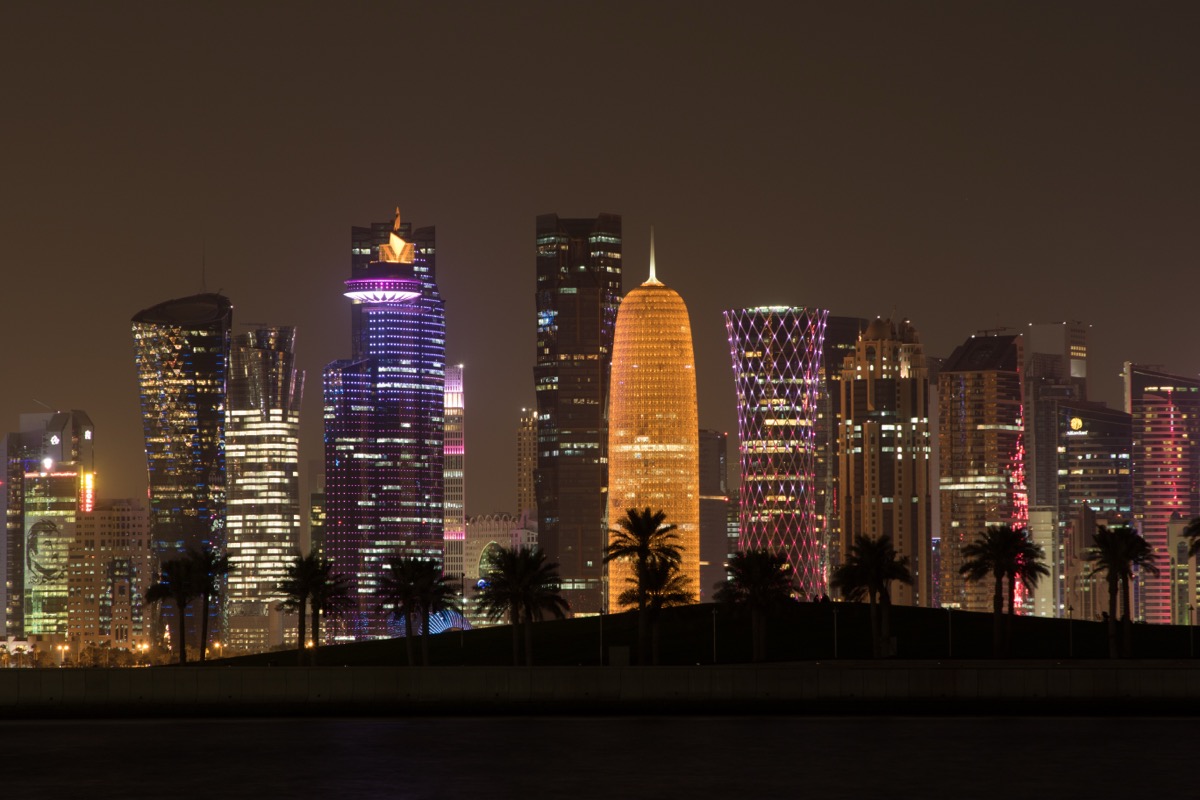
Doha’s skyline is genuinely jarring — glass towers with Islamic geometry rising from flat desert, 45 minutes from an inland sea swallowed by dunes.

Doha, Qatar skyline at night with illuminated skyscrapers, amber lantern tower, and waterfront reflections.
Essentials

At a glance

CurrencyQAR
Time zoneQatar UTC+03:00Asia/Qatar UTC+03:00
Languages
  • Arabic
  • English
Setting
  • Desert peninsula
  • Modern skyline
  • Coastal beaches
  • Cultural museums
Population2.9M2,881,060 residents
VisaDuration: Visa waiver on arrival valid for up to 30 days (for US, UK, Canada, Australia) or up to 90 days (for EU/Schengen nations) from issuance. · Documents: Passport with at least 6 months validity, confirmed return/onward flight ticket, and confirmed hotel booking.
Daily budget$70–$600 / day Full budget guide →Luxury destination
Scorecard

How Qatar scores

8/10OverallExcellent
Weather9/10
Value for money5/10
Safety4/10
Food & cuisine9/10
Culture & arts6/10
Cultural experience5/10
History7/10
Nature & outdoors4/10
Adventure4/10
Nightlife6/10
Shopping9/10
Family friendly5/10
Romance7/10

Editorial scores on a 10-point scale, weighed against destinations of the same kind.

Safety

Travel safety snapshot

Overall78/100Moderate rating
Women travellers75/100
LGBTQ+ travellers20/100
Theft88/100
Medical care80/100
Physical harm85/100
Political freedom40/100

SafePlace indicators use their source 100-point scale; higher is more favourable. Planning context, not a live travel advisory — check official government guidance before you go.

Seasonality

When to go

Best months to visit: January, February, March, April, November and December.

  1. January: 13.3 to 22.4 degrees Celsius, 13.3 millimetres of rain, best-time score 5 out of 5.
  2. February: 14 to 24.1 degrees Celsius, 14.5 millimetres of rain, best-time score 5 out of 5.
  3. March: 17.1 to 28.9 degrees Celsius, 12.2 millimetres of rain, best-time score 5 out of 5.
  4. April: 21.5 to 34.6 degrees Celsius, 9.3 millimetres of rain, best-time score 4 out of 5.
  5. May: 25.9 to 39.9 degrees Celsius, 1.6 millimetres of rain, best-time score 2 out of 5.
  6. June: 28.5 to 43.1 degrees Celsius, 0 millimetres of rain, best-time score 1 out of 5.
  7. July: 30.1 to 44.1 degrees Celsius, 2.4 millimetres of rain, best-time score 1 out of 5.
  8. August: 29.9 to 44.1 degrees Celsius, 0.1 millimetres of rain, best-time score 1 out of 5.
  9. September: 27.4 to 41.6 degrees Celsius, 0.2 millimetres of rain, best-time score 2 out of 5.
  10. October: 23.8 to 36.6 degrees Celsius, 0.9 millimetres of rain, best-time score 3 out of 5.
  11. November: 20 to 29.9 degrees Celsius, 7.8 millimetres of rain, best-time score 5 out of 5.
  12. December: 15.7 to 24.6 degrees Celsius, 12.8 millimetres of rain, best-time score 5 out of 5.
Month-by-month conditions and packing advice
January
Mild to warm, mostly dry Perfect mild winter weather, ideal for desert safaris. Crowds: January in Qatar is comfortable for sightseeing, neighborhoods, food stops, day trips, and outdoor time with limited weather friction. Pack: Pack layered clothing and comfortable walking shoes.
February
Mild to warm, mostly dry Very pleasant and cool, great for outdoor dining. Crowds: February in Qatar is comfortable for sightseeing, neighborhoods, food stops, day trips, and outdoor time with limited weather friction. Pack: Pack light clothing, sun protection, and comfortable walking shoes.
March
Warm to hot, mostly dry Warming up but still very comfortable. Crowds: March in Qatar is comfortable for sightseeing, neighborhoods, food stops, day trips, and outdoor time with limited weather friction. Pack: Pack light clothing, sun protection, and comfortable walking shoes.
April
Very hot, mostly dry Getting hot, but manageable for most activities. Crowds: April in Qatar can be very hot, so travelers should favor early starts, shaded breaks, indoor attractions, and flexible afternoon pacing. Pack: Pack breathable clothing, strong sun protection, and a refillable water bottle.
May
Very hot, mostly dry Summer heat kicks in, outdoor activities become difficult. Crowds: May in Qatar can be very hot, so travelers should favor early starts, shaded breaks, indoor attractions, and flexible afternoon pacing. Pack: Pack breathable clothing, strong sun protection, and a refillable water bottle.
June
Very hot, mostly dry Extremely hot, stay indoors. Crowds: June in Qatar can be very hot, so travelers should favor early starts, shaded breaks, indoor attractions, and flexible afternoon pacing. Pack: Pack breathable clothing, strong sun protection, and a refillable water bottle.
July
Very hot, mostly dry Peak summer heat and high humidity. Crowds: July in Qatar can be very hot, so travelers should favor early starts, shaded breaks, indoor attractions, and flexible afternoon pacing. Pack: Pack breathable clothing, strong sun protection, and a refillable water bottle.
August
Very hot, mostly dry Oppressive heat, everything moves indoors. Crowds: August in Qatar can be very hot, so travelers should favor early starts, shaded breaks, indoor attractions, and flexible afternoon pacing. Pack: Pack breathable clothing, strong sun protection, and a refillable water bottle.
September
Very hot, mostly dry Still very hot, but slightly cooling towards the end. Crowds: September in Qatar can be very hot, so travelers should favor early starts, shaded breaks, indoor attractions, and flexible afternoon pacing. Pack: Pack breathable clothing, strong sun protection, and a refillable water bottle.
October
Very hot, mostly dry Temperatures start becoming bearable again. Crowds: October in Qatar can be very hot, so travelers should favor early starts, shaded breaks, indoor attractions, and flexible afternoon pacing. Pack: Pack breathable clothing, strong sun protection, and a refillable water bottle.
November
Warm to hot, mostly dry Start of peak season, excellent comfortable weather. Crowds: November in Qatar is workable with normal seasonal planning; build in layers, weather checks, and a mix of indoor and outdoor activities. Pack: Pack light clothing, sun protection, and comfortable walking shoes.
December
Mild to warm, mostly dry Fantastic cool weather and peak tourist season. Crowds: December in Qatar is comfortable for sightseeing, neighborhoods, food stops, day trips, and outdoor time with limited weather friction. Pack: Pack light clothing, sun protection, and comfortable walking shoes.
Peak season
  • November
  • December
  • January
  • February
  • March
Off-peak
  • June
  • July
  • August
  • April
  • May
  • September
  • October
Overview

Know before you go

About

Qatar, officially the State of Qatar, is a small but wealthy nation located on the northeastern coast of the Arabian Peninsula. This sovereign country extends into the Persian Gulf as a peninsula, sharing its only land border with Saudi Arabia to the south. With an area of approximately 11,571 square kilometers, Qatar may be compact in size but boasts immense global influence due to its vast natural gas and oil reserves.

The capital city of Doha, home to over 80% of the country’s population, showcases Qatar’s dramatic transformation from a pearl fishing economy to one of the world’s richest nations per capita. Doha’s skyline features bold, ultramodern architecture including skyscrapers with distinctive Islamic-inspired designs. The Corniche, a waterfront promenade extending seven kilometers along Doha Bay, offers spectacular views of this futuristic cityscape.

Qatar’s landscape is predominantly flat and arid desert with minimal vegetation. The country experiences a subtropical desert climate characterized by extremely hot summers, with temperatures often exceeding 45°C (113°F), and mild winters. Despite the harsh desert environment, Qatar has rich marine ecosystems along its 563 km coastline, with mangrove forests, coral reefs, and the unique Khor Al Adaid (Inland Sea) – a UNESCO-recognized natural reserve where the sea penetrates deep into the desert, creating a spectacular landscape of tidal lakes surrounded by crescent-shaped sand dunes.

Culturally, Qatar maintains a delicate balance between preserving traditional Bedouin heritage and embracing global modernity. Islam is the predominant religion, significantly influencing daily life, architecture, and social customs. Traditional Qatari culture is preserved through various practices, including majlis (community gatherings), seafaring traditions, falconry (the national sport), and camel racing.

Tourism in Qatar has flourished in recent years, particularly following the country’s hosting of the 2022 FIFA World Cup, which showcased Qatar to a global audience. Cultural attractions include the world-class Museum of Islamic Art designed by architect I.M. Pei, the National Museum of Qatar designed by Jean Nouvel resembling a desert rose, and Katara Cultural Village, which hosts art exhibitions and cultural events. Souq Waqif, a reconstructed traditional marketplace, offers visitors an authentic Arabian experience with its mud-rendered shops, exposed timber beams, and vendors selling traditional garments, spices, handicrafts, and souvenirs.

For those seeking adventure, Qatar offers desert safaris, dune bashing, camel rides, and water sports along its coastline. The Pearl-Qatar, an artificial island spanning nearly four million square meters, features Mediterranean-style yacht-lined marinas, upscale residential towers, luxury villas, and high-end shopping.

Qatar’s economy, once heavily dependent on pearl diving and fishing, was transformed dramatically following the discovery of oil in 1939 and later, the world’s third-largest natural gas reserves. This wealth has allowed Qatar to develop rapidly while also investing in education, healthcare, and cultural initiatives. The country has positioned itself as a regional hub for education through Education City, which hosts branch campuses of renowned international universities.

As Qatar continues to evolve and diversify its economy beyond hydrocarbons through its National Vision 2030 plan, it remains a fascinating destination where visitors can experience the intersection of traditional Arabian heritage and ambitious futuristic development in a uniquely compact setting.
Neighbourhoods

West Bay, The Pearl-Qatar, Souq Waqif, Lusail, Msheireb Downtown

Best time to visit

Winter (November-April)

Season by season

Winter (November-April):
Weather: 60-80°F, mild and pleasant with minimal rain
Highlights: Perfect outdoor weather, desert safaris comfortable, cultural festivals
Best For: All activities, desert adventures, Corniche walks, outdoor dining
Consider: Peak prices; book early; most crowded season

Spring (April-May):
Weather: 75-95°F, warming rapidly toward summer heat
Highlights: Shoulder season savings, still manageable temperatures early April
Best For: Indoor attractions, early morning/evening activities, budget travel
Consider: May becomes uncomfortably hot; heat building daily

Summer (May-September):
Weather: 100-115°F, extreme heat with high humidity
Highlights: Lowest prices, ultra-modern air-conditioned spaces, uncrowded
Best For: Mall shopping, museum visits, indoor attractions, extreme budget travel
Consider: Dangerously hot outdoors; limit activities to air-conditioned venues

Fall (October-November):
Weather: 85-95°F in October, cooling to 70-80°F by November
Highlights: Improving weather, moderate rates, transition to pleasant season
Best For: Shoulder season value, increasingly comfortable outdoor activities
Consider: October still hot; November much more pleasant

Crowds

Qatar experiences peak visitor numbers in cooler months (November–March) with major spikes during Qatar Airways/DOHA events and the 2022 World Cup legacy traffic during high-profile matches or conferences; quietest and hottest months are June–August when temperatures suppress leisure visits, overall Doha gets very busy during international events and conferences.

Logistics

Getting there and around

Getting there

Hamad International Airport (DOH) serves as Qatar’s ultra-modern aviation hub and Qatar Airways’ home base, located 5 kilometers east of Doha offering direct flights to 150+ destinations worldwide. Qatar Airways operates one of world’s most extensive networks connecting Doha to all continents with premium service and modern fleet. The airport earned ‘World’s Best Airport’ awards for its architecture, amenities, and transit experience. Major routes include direct flights from U.S. cities (New York, Washington, Los Angeles, Dallas, Miami, Chicago, San Francisco), European capitals, Asian hubs, and Middle Eastern cities. Visa on arrival is available for 95+ nationalities (free for U.S. citizens, valid 30 days) or apply for e-Visa via Hayya platform in advance. Present passport, onward ticket, and visa documents at immigration. Ground transportation includes Doha Metro Red Line directly from airport to city center (23.5 minutes, 9 stops to DECC, ~7-10 QAR), taxis (metered, ~50-70 QAR to downtown), limousine services (Standard, VIP, Luxury via Karwa app), and rental cars. The airport features sleeping pods, premium lounges (Al Mourjan Lounge for transit passengers), duty-free shopping, diverse dining, and transit hotel.

Getting around

Doha Metro revolutionized Qatar transportation with three lines (Red, Green, Gold) connecting 37 stations across Doha and Lusail using driverless trains operating 6 AM-11 PM Sunday-Thursday, extended hours Friday-Saturday. Red Line connects Hamad Airport to city center and major attractions. Fares ~7-10 QAR per journey; rechargeable travel cards available at stations. The metro is ultra-modern, air-conditioned, and efficient with Gold Class available for premium fare. Free Metrolink buses connect to metro stations from areas without direct access (tap travel card required). Taxis are plentiful and metered (~10 QAR starting fare) – use official Karwa taxis (turquoise and white). Karwa app allows booking Standard, VIP, and Luxury limousines. Uber operates but Karwa is dominant. Rental cars available though traffic can be congested and driving aggressive. Qatar’s road network features five main highways connecting Doha to neighboring cities. Lusail Tram serves the new northern city. Many attractions cluster in central Doha walkable from Corniche. The Pearl-Qatar island is best explored on foot or by rental car. Doha is NOT a walking city due to heat (except winter) and car-centric design – metro and taxis are essential. Free shuttle buses connect major hotels to malls and attractions. Most visitors rely on combination of metro (efficient, cheap) and taxis (convenient for direct routes). Desert safari tours include pickup/dropoff from hotels.

Qatar, officially the State of Qatar, is a small but wealthy nation located on the northeastern coast of the Arabian Peninsula. This sovereign country extends into the Persian Gulf as a peninsula, sharing its only land border with Saudi Arabia to the south. With an area of approximately 11,571 square kilometers, Qatar may be compact in size but boasts immense global influence due to its vast natural gas and oil reserves.

The capital city of Doha, home to over 80% of the country’s population, showcases Qatar’s dramatic transformation from a pearl fishing economy to one of the world’s richest nations per capita. Doha’s skyline features bold, ultramodern architecture including skyscrapers with distinctive Islamic-inspired designs. The Corniche, a waterfront promenade extending seven kilometers along Doha Bay, offers spectacular views of this futuristic cityscape.

Qatar’s landscape is predominantly flat and arid desert with minimal vegetation. The country experiences a subtropical desert climate characterized by extremely hot summers, with temperatures often exceeding 45°C (113°F), and mild winters. Despite the harsh desert environment, Qatar has rich marine ecosystems along its 563 km coastline, with mangrove forests, coral reefs, and the unique Khor Al Adaid (Inland Sea) – a UNESCO-recognized natural reserve where the sea penetrates deep into the desert, creating a spectacular landscape of tidal lakes surrounded by crescent-shaped sand dunes.

Culturally, Qatar maintains a delicate balance between preserving traditional Bedouin heritage and embracing global modernity. Islam is the predominant religion, significantly influencing daily life, architecture, and social customs. Traditional Qatari culture is preserved through various practices, including majlis (community gatherings), seafaring traditions, falconry (the national sport), and camel racing.

Tourism in Qatar has flourished in recent years, particularly following the country’s hosting of the 2022 FIFA World Cup, which showcased Qatar to a global audience. Cultural attractions include the world-class Museum of Islamic Art designed by architect I.M. Pei, the National Museum of Qatar designed by Jean Nouvel resembling a desert rose, and Katara Cultural Village, which hosts art exhibitions and cultural events. Souq Waqif, a reconstructed traditional marketplace, offers visitors an authentic Arabian experience with its mud-rendered shops, exposed timber beams, and vendors selling traditional garments, spices, handicrafts, and souvenirs.

For those seeking adventure, Qatar offers desert safaris, dune bashing, camel rides, and water sports along its coastline. The Pearl-Qatar, an artificial island spanning nearly four million square meters, features Mediterranean-style yacht-lined marinas, upscale residential towers, luxury villas, and high-end shopping.

Qatar’s economy, once heavily dependent on pearl diving and fishing, was transformed dramatically following the discovery of oil in 1939 and later, the world’s third-largest natural gas reserves. This wealth has allowed Qatar to develop rapidly while also investing in education, healthcare, and cultural initiatives. The country has positioned itself as a regional hub for education through Education City, which hosts branch campuses of renowned international universities.

As Qatar continues to evolve and diversify its economy beyond hydrocarbons through its National Vision 2030 plan, it remains a fascinating destination where visitors can experience the intersection of traditional Arabian heritage and ambitious futuristic development in a uniquely compact setting.
Curated picks

Top experiences in Qatar

  1. Museum of Islamic Art

    The Museum of Islamic Art stands as I.M. Pei’s final major work, a geometric masterpiece rising from an artificial island in Doha Bay with its distinctive stacked cubic form inspired by Ibn Tulun Mosque in Cairo. The museum houses one of world’s finest collections of Islamic art spanning 1,400 years and three continents (Middle East, Asia, Africa) across ceramics, textiles, metalwork, glass, manuscripts, and jewelry. The five-story galleries progress chronologically through Islamic dynasties and regions. Highlights include Mughal jewelry, Persian manuscripts, Syrian woodwork, and rare Quranic texts. The building itself is architectural triumph with geometric patterns, Islamic-inspired design, and dramatic atrium with chandelier of interlocking glass discs. The waterfront location provides stunning Doha skyline views from MIA Park surrounding the museum. Operating hours Saturday-Thursday 9 AM-7 PM, Friday 1:30-7 PM; admission free. The museum café and restaurant offer Corniche views. Allow 2-3 hours for comprehensive viewing. The museum demonstrates Qatar’s commitment to preserving and celebrating Islamic heritage while creating world-class cultural institutions. Audio guides available in multiple languages. The building’s stark geometric beauty and island setting create memorable approach. Best photographed from MIA Park showing full structure with Doha towers behind. Combine with Souq Waqif visit (15 minutes by taxi). The museum is essential for understanding Islamic art and Qatar’s cultural ambitions.

  2. Souq Waqif

    Souq Waqif represents Doha’s oldest marketplace, reconstructed in traditional Qatari architectural style with mud-rendered shops, exposed timber beams, and narrow alleyways creating authentic Arabian bazaar atmosphere in the city’s heart. The souq features hundreds of vendors selling spices, perfumes, traditional garments (thobes, abayas), textiles, handicrafts, and souvenirs. The falcon souq offers these prized birds for sale alongside falconry equipment – falconry is Qatar’s national sport and passion. The spice market displays colorful pyramids of saffron, cardamom, dried limes, and regional spices. Restaurants serve authentic Qatari and Middle Eastern cuisine from traditional grills to upscale Levantine dining – Bandar Aden and Shay Al Shoomos are local favorites. The souq comes alive evenings when temperatures cool and locals gather for shopping, dining, and socializing. Traditional musicians and craftsmen demonstrate their skills. Arabic coffee shops serve cardamom-spiced coffee with dates. The souq represents living cultural heritage rather than tourist recreation. Free to explore; most shops open 8 AM-10 PM though many close midday Friday for prayers. The atmosphere is most vibrant Thursday-Friday evenings when families stroll. Bargaining is expected for goods (not food). The souq connects to nearby Al Souq area and sits close to Corniche. Allow 2-3 hours for browsing and dining. The reconstruction maintained traditional architecture while adding modern facilities. This is Doha’s most authentic cultural experience showcasing Qatari hospitality and traditions.

  3. Katara Cultural Village

    Katara Cultural Village occupies prime beachfront real estate as Qatar’s premier cultural destination, featuring traditional Qatari architecture, an open-air amphitheater hosting international performances, art galleries, exhibition spaces, and diverse restaurants spanning Arabic, Mediterranean, and Asian cuisines. The village showcases Qatar and broader Arab culture through rotating art exhibitions, theater productions, music festivals, and cultural events year-round. The distinctive blue mosaic mosque (Katara Mosque) features intricate tilework and golden crescents. The amphitheater hosts Qatar International Food Festival, Katara Traditional Dhow Festival, and concerts by international artists. The beach provides public access to Persian Gulf waters with watersports available. Galleries display contemporary Arab art and traditional crafts. Restaurants range from casual Arabic grills to fine dining with waterfront terraces. The village combines cultural education with leisure creating family-friendly atmosphere. Free to explore; events have separate ticketing. Operating hours vary by venue though most open 9 AM-9 PM. The village is most active during festivals and weekend evenings. The architecture blends traditional Qatari elements with modern cultural center functionality. Located on The Corniche north of downtown, accessible by metro (Katara station on Gold Line) or taxi. Allow 2-3 hours for browsing galleries, dining, and enjoying beach. The village represents Qatar’s investment in arts and culture as soft power. Photography welcomed in public areas. Combine with Pearl-Qatar visit (adjacent). The cultural village demonstrates Qatar’s evolution from trading outpost to cultural hub.

  4. The Pearl-Qatar

    The Pearl-Qatar spans nearly 4 million square meters as an artificial island reclaimed from the Persian Gulf, featuring Mediterranean and Arabian-inspired architecture with yacht-lined marinas, luxury residential towers, upscale villas, and high-end shopping creating Qatar’s most exclusive address. The development’s districts each offer distinct character: Porto Arabia with Venetian-style canals and boardwalk, Qanat Quartier with Venetian architecture and colorful facades, and Medina Centrale with boutiques and dining. The marinas host mega-yachts and waterfront restaurants including international chains and local concepts. Shopping ranges from Cartier and Louis Vuitton to specialty boutiques. The 1.5-kilometer boardwalk provides scenic walking with gulf views. The Pearl represents Qatar’s only freehold property allowing foreign ownership, attracting wealthy expatriates and creating cosmopolitan enclave. The island demonstrates Qatar’s ambition in urban development and luxury living. Restaurants offer alcohol licenses (rare in Qatar). Free to explore; shops and restaurants set own hours. The area is most vibrant evenings when temperatures cool and diners fill terraces. Parking available throughout. Located north of Doha, accessible by taxi or car (no direct metro though nearby station serves area). The Mediterranean aesthetic feels transplanted from Europe creating unique atmosphere in Arabian Gulf. Allow 2-3 hours for walking, shopping, and dining. The Pearl caters to luxury market with prices reflecting exclusive positioning. Photography of the marinas and architecture is popular. The development represents Qatar’s vision for cosmopolitan lifestyle.

  5. Khor Al Adaid (Inland Sea)

    Khor Al Adaid (Inland Sea) creates one of Qatar’s most spectacular natural phenomena – a UNESCO-recognized natural reserve where the Persian Gulf penetrates 10 kilometers inland creating a tidal sea surrounded by towering crescent-shaped sand dunes reaching 40 meters height. The unique ecosystem where desert meets sea supports diverse wildlife including fish, crabs, and rare plants adapted to saline-desert conditions. The landscape is accessible only by 4×4 vehicles driving 60 kilometers southeast from Doha through desert terrain – organized tours are essential and strongly recommended over attempting independent access (easy to get stuck in sand). Desert safari tours (half-day or full-day, ~$70-150 per person) combine the Inland Sea visit with dune bashing, sandboarding, camel rides, and swimming in the shallow tidal waters. The scenery is otherworldly with golden dunes contrasting against blue-green waters creating postcard-perfect compositions. Sunset illuminates the dunes with golden-pink light. The area borders Saudi Arabia with the coastline marking the frontier. Swimming is possible in the calm, shallow waters providing refreshing contrast to desert heat. Best visited November-March when temperatures are comfortable (avoid summer’s 110°F+ heat). Tours depart morning and include picnic lunch or Bedouin-style dinner. The Inland Sea represents Qatar’s natural beauty beyond urban development. Photography is spectacular with unique desert-sea juxtaposition. The UNESCO designation recognizes the ecological and geological significance. No facilities exist – tours provide all necessities. This is Qatar’s premier natural attraction requiring full half-day minimum including desert drive.

Editor-curated picks carried over from our original guide. Where a full place guide exists, the card links to it.

Curated picks

Where to stay

The St. Regis Doha

West Bay, Doha, Qatar

Ultra-luxury hotel on Doha’s waterfront with panoramic Gulf views, a private beach, three pools, spa, and twelve dining venues.

Sharq Village & Spa, a Ritz-Carlton Hotel

Katara Cultural Village, Doha, Qatar

Five-star resort in the Katara Cultural Village with Arabesque architecture, a lagoon pool, private beach, and world-class spa.

Banana Island Resort Doha by Anantara

Banana Island, Doha, Qatar

Exclusive island resort 20 minutes offshore with overwater villas, a championship golf course, marine sports, and one of the Middle East’s largest spas.

Editor-curated stays carried over from our original guide. Where we have reviewed the hotel, the card links to the review.

Insider tips

Tips from the field

Highlights
  • Museum of Islamic Art – I.M. Pei-designed masterpiece housing 1,400 years of Islamic art spanning three continents
  • Souq Waqif – Reconstructed traditional marketplace with spice vendors, falcons, textiles, and authentic Qatari dining
  • Katara Cultural Village – Waterfront complex with amphitheater, galleries, restaurants showcasing Qatari and Arab culture
  • The Pearl-Qatar – Artificial island with Mediterranean-style marinas, luxury residences, upscale shopping, and dining
  • Doha Corniche – 7-kilometer waterfront promenade with parks, public art, and futuristic skyline views
  • National Museum of Qatar – Jean Nouvel's desert rose-inspired building chronicling Qatar's transformation
  • Khor Al Adaid (Inland Sea) – UNESCO-recognized natural reserve where Persian Gulf penetrates desert creating tidal lakes and dunes
  • Al Zubarah Fort – UNESCO World Heritage 18th-century desert fortress and archaeological site
Best activities
  • Explore Museum of Islamic Art viewing 1,400 years of Islamic art from ceramics to textiles and manuscripts
  • Wander Souq Waqif discovering spices, traditional textiles, falcon market, and authentic Qatari cuisine
  • Take desert safari with dune bashing, sandboarding, camel rides, and Bedouin dinner under stars
  • Visit Katara Cultural Village attending cultural events, art exhibitions, and traditional performances
  • Stroll The Pearl-Qatar's Mediterranean-style marinas shopping luxury brands and dining at waterfront restaurants
  • Walk Doha Corniche enjoying 7-kilometer waterfront promenade with parks and skyline views
  • Experience Khor Al Adaid (Inland Sea) UNESCO site where desert meets Persian Gulf in stunning landscape
  • Tour National Museum of Qatar learning about country's transformation from pearling to prosperity
  • Visit falcon hospital observing training and care of falcons (Qatar's national sport)
  • Attend camel races at Al Shahaniya racetrack watching traditional sport with modern robot jockeys
  • Explore Msheireb Museums discovering Qatari family life, cultural heritage, and history
  • Take dhow boat cruises along the Corniche viewing illuminated skyline from traditional vessel
Local experiences
  • Join desert safari experiencing dune bashing in 4×4 vehicles, sandboarding, and camel rides across golden Mesaieed dunes
  • Attend traditional Bedouin dinner under stars with Arabic coffee, dates, grilled meats, and cultural performances
  • Explore Souq Waqif at sunset browsing spice shops, falcon market, and traditional textiles with Arabic coffee breaks
  • Experience Qatari hospitality at majlis (traditional gathering) learning about Bedouin culture and customs
  • Take dhow boat cruise along Doha Corniche viewing illuminated skyline from traditional wooden vessel
  • Visit falcon hospital and training center learning about Qatar's national sport of falconry
  • Attend camel races at Al Shahaniya (winter mornings) watching traditional sport with robot jockeys
  • Sample Qatari cuisine: machboos (spiced rice with meat), harees (wheat and meat porridge), luqaimat (sweet dumplings)
  • Join guided tours of pearl diving heritage and Maritime Museum understanding Qatar's pre-oil economy
  • Experience modern Qatari art at Mathaf: Arab Museum of Modern Art and Fire Station artist residency
  • Visit Inland Sea (Khor Al Adaid) for unique desert-meets-sea landscape accessible only by 4×4
  • Attend cultural festivals at Katara Cultural Village with traditional music, dance, and art exhibitions
  • Shop for gold jewelry, perfumes, and traditional goods at Gold Souq and perfume shops
Practical tips
  • Doha Metro Transit: Ride the world-class automated driverless Doha Metro (Red, Gold, Green lines) connecting Hamad Airport directly to Msheireb Downtown, Souq Waqif, and Lusail for just 2 QAR per journey with a reusable standard card.
  • Souq Waqif & Falcon Souq: Visit Souq Waqif in the evening for traditional Arabian spices, artisanal oud perfumes, dining, and the dedicated Falcon Hospital and camel pens.
  • Museum of Islamic Art (MIA) & National Museum: Explore I.M. Pei's iconic Museum of Islamic Art on the Corniche and Jean Nouvel's desert-rose-inspired National Museum of Qatar.
  • Khor Al Adaid (Inland Sea): Take a guided 4WD desert safari to the UNESCO-recognized Inland Sea, where towering sand dunes plunge directly into the Arabian Gulf.
Photography tips
  • Best Time for Photography:
  • Golden hour (sunrise/sunset) illuminates desert dunes, Corniche, and modern skyline with warm glow
  • Blue hour for illuminated Museum of Islamic Art against twilight sky and waterfront reflections
  • Winter (November-April) for clear skies and comfortable outdoor shooting
  • Avoid midday harsh desert sun creating washed-out images
  • Iconic Shots:
  • Museum of Islamic Art from MIA Park with Doha skyline backdrop across the bay
  • Souq Waqif's traditional architecture, spice displays, and falcon souq
  • Doha Corniche skyline particularly at sunset/blue hour with illuminated skyscrapers
  • Inland Sea (Khor Al Adaid) where desert dunes meet Persian Gulf waters
  • The Pearl-Qatar's Mediterranean-style marinas with luxury yachts
  • National Museum of Qatar's distinctive desert rose architecture
  • Desert safari dunes with camels silhouetted against sunset
  • Katara Cultural Village's amphitheater and cultural architecture
  • Equipment:
  • Wide-angle lens (16-35mm) for skyline and desert landscapes
  • Telephoto (70-200mm) for architectural details and distant subjects
  • Tripod for blue hour cityscape and long exposures (though restricted in some areas)
  • Polarizing filter to reduce glare and enhance desert sky blues
  • Lens hood and protective gear for sand/dust in desert
  • Restrictions:
  • NO photography of government buildings, military installations, or airports without permission
  • Always ask permission before photographing Qatari people, especially women
  • Some museums restrict photography or flash
  • Respect privacy in traditional areas
  • Respect: Qatari women typically do not wish to be photographed; men in traditional dress may decline or expect payment
Timing
  • Peak Season (November-February):
  • Most pleasant weather (60-75°F)
  • Highest hotel rates and largest crowds
  • Major cultural events and festivals
  • Book 2-3 months ahead
  • Ideal for all outdoor activities
  • Shoulder Season (March-April, October-November):
  • March-April: Warming (75-85°F) but still comfortable
  • October-November: Cooling from summer heat
  • Moderate crowds and hotel rates
  • Good balance of weather and value
  • Increasing tourism as weather improves
  • Summer (May-September):
  • Extreme heat (100-115°F), oppressive conditions
  • Lowest hotel rates (40-50% below winter)
  • Smallest crowds, many locals travel abroad
  • Indoor activities only during day
  • Evening-only outdoor activities feasible
  • Not recommended for first-time visitors
  • Ramadan (Varies – Islamic Calendar):
  • Business hours change significantly
  • Restaurants closed/curtained during daylight
  • Respect fasting – no public eating/drinking/smoking during day
  • Unique cultural experience if respectful
  • Some attractions have reduced hours
  • Special Considerations:
  • FIFA World Cup legacy attracts sports tourism year-round
  • Desert safaris best November-March
  • Book luxury hotels far in advance for winter peak
Context

Culture, customs and safety

Cultural heritage

Qatar’s cultural and historical heritage is rooted in its Bedouin traditions, maritime legacy, and strategic position on ancient trade and pilgrimage routes. The country’s architecture reflects its evolution from desert fortresses like Al Zubarah Fort—part of the UNESCO World Heritage-listed Al Zubarah Archaeological Site—to cutting-edge modernist landmarks in Doha. Traditional practices such as falconry, dhow boat building, and pearl diving remain integral to national identity, often celebrated through museums and annual festivals. Islamic art and calligraphy flourish in institutions like the Museum of Islamic Art, which bridges regional heritage with global narratives. Despite rapid modernization, Qatar actively preserves its intangible heritage through cultural villages, oral storytelling, and preservation of Arabic poetry.

Local customs & etiquette

Qatar is conservative Islamic state where local customs and religious laws strictly govern behavior – visitors must demonstrate respect for traditions to avoid legal issues. Greet people with ‘As-salaam alaikum’ (peace be upon you) – handshakes are acceptable among same gender but avoid between men and women unless woman initiates. Dress modestly in public: men should wear long pants and shirts with sleeves; women must cover shoulders, upper arms, and knees (loose-fitting clothing preferred). Swimwear only at private hotel pools and beaches. Remove shoes when entering homes and some traditional restaurants. Use right hand for eating, giving/receiving items, and greetings (left hand considered unclean). During Ramadan (Islamic holy month), respect fasting by not eating, drinking, or smoking in public during daylight hours – restaurants close or use curtained areas. Friday is holy day with many businesses closed for prayers; Thursday-Friday is weekend. Tipping is appreciated (10-15%) though service charge often included. Alcohol is prohibited except in licensed hotel venues – never bring alcohol to public areas or attempt to import. LGBTQ+ travelers must exercise extreme discretion as same-sex relationships are illegal with severe penalties. Photography restrictions apply near government buildings, military sites, and women – always ask permission. Public displays of affection should be minimal. Punctuality is expected for business but more relaxed socially.

Safety notes

As of 2026, Qatar is ranked among the safest countries in the world with virtually non-existent violent crime, policed by the Ministry of Interior.

Key Legal Codes, Customs & Cultural Realities:
• Customs & Contraband Prohibitions: Customs at Hamad Airport (DOH) strictly X-rays all baggage. Bringing in alcohol (including airport duty-free), e-cigarettes/vapes, pork, or illicit narcotics is illegal and results in immediate seizure and potential prosecution.
• Alcohol & Modesty Laws: Alcohol is only permitted in licensed 4- and 5-star hotel lounges and restaurants; public intoxication, open consumption, and disorderly conduct are strictly punished by law. Modest dress (covering shoulders and knees) is required in shopping malls, public streets, and cultural centers.
• Photography Laws: Photographing military sites, government ministries, security personnel, or local citizens without explicit permission is prohibited under Qatari law.
• Emergency: National Emergency (Police, Ambulance, Fire) 999.

Last reviewed Data: Editorial research · Climate normals · SafePlace safety indicators