Quick answer: Okinawa Churaumi Aquarium is worth visiting for its whale sharks, manta rays, living coral displays, deep-sea exhibits, and research-focused interpretation. The main tradeoff is location: the aquarium is in Motobu, about two hours by car or three hours by express bus from Naha Airport. Plan it as a half-day or full-day northern Okinawa outing rather than a brief stop.
Visitor information in this guide was last verified on July 15, 2026. Admission prices, programs, transport schedules, and opening hours can change, particularly during typhoons and peak travel periods. Check the aquarium’s official opening-hours page before traveling.
Affiliate disclosure: This article contains affiliate links. ViaTravelers may earn a commission when you make a purchase through one of these links, at no additional cost to you.

Okinawa Churaumi Aquarium at a Glance
| Location | 424 Ishikawa, Motobu, northern Okinawa Main Island |
|---|---|
| Standard adult admission | ¥2,180 |
| Standard hours | 8:30 a.m.–6:30 p.m.; last admission at 5:30 p.m. |
| July 18–31, 2026 | 8:30 a.m.–8:00 p.m.; last admission at 7:00 p.m. |
| August 1–31, 2026 | 8:30 a.m.–9:00 p.m.; last admission at 8:00 p.m. |
| Time needed | Official estimate: 1.5–2 hours; practical plan: 2–3 hours inside or 4–6 hours with Ocean Expo Park |
| From Naha Airport | About 2 hours by car or 3 hours by express bus |
| Parking | Free; P7 North Parking is closest to the aquarium |
| Main attraction | The 7,500-cubic-meter Kuroshio Sea tank with whale sharks and manta rays |
| Important distinction | Ocean Expo Park is free to enter; the aquarium requires a paid ticket |
What to Know Before You Go
- The aquarium is one paid attraction inside the much larger, free-to-enter Ocean Expo Park.
- Whale sharks are displayed in the Kuroshio Sea tank, but the number of animals and exact exhibit lineup can change.
- Keep your ticket if you plan to leave for lunch or visit an outdoor facility; same-day re-entry is allowed.
- P7 is the most convenient parking area. All Ocean Expo Park parking lots are free.
- Bring rain protection. Part of the walk between the parking area, aquarium, and outdoor attractions is uncovered.
In This Guide
- Is the aquarium worth visiting?
- Tickets, prices, and opening hours
- Whale sharks and other exhibits
- How long to spend and the best route
- Best time to visit and feeding schedule
- Getting there from Naha
- Family and accessibility information
- Free Ocean Expo Park attractions
- Hotels near the aquarium
Is Okinawa Churaumi Aquarium Worth Visiting?
For most first-time visitors to northern Okinawa, yes. The Kuroshio Sea tank provides a scale of whale shark and manta ray viewing that is difficult to reproduce elsewhere, while the Coral Sea, Shark Research Lab, and deep-sea sections make the visit more substantial than a single headline exhibit.
The aquarium is particularly well suited to families, marine-life enthusiasts, photographers, and travelers who need a weather-flexible indoor attraction. It is less efficient for travelers with only a short stay in Naha who are not planning to see anything else in northern Okinawa. A return journey from Naha can consume four to six hours before time inside the attraction is counted.
The strongest itinerary combines the aquarium with one or two nearby places, such as Emerald Beach, Bise’s fukugi-lined lanes, or Nakijin Castle Ruins. That turns the transport time into a full northern Okinawa day rather than a long round trip for one attraction.
What Is Okinawa Churaumi Aquarium?

Okinawa Churaumi Aquarium is a marine-science and visitor facility inside Ocean Expo Park on the Motobu Peninsula. The current aquarium opened on November 1, 2002. Its 83 exhibition tanks hold a combined water volume of about 10,000 cubic meters.
The name describes its focus. Chura means beautiful in the Okinawan dialect, while umi means sea. The visitor route recreates the waters around Okinawa in stages, moving from shallow coral habitats to the Kuroshio Current and finally to the deep sea.
The aquarium also conducts research, breeding, rescue, husbandry, and conservation work. That scientific role is one reason its displays include specimens, research findings, and detailed ecological interpretation rather than only large viewing tanks. For broader destination context, see these reasons to visit Japan.
Okinawa Churaumi Aquarium Tickets, Prices, and Hours
2026 Admission Prices
| Visitor category | General admission | Annual passport |
|---|---|---|
| Adults | ¥2,180 | ¥4,360 |
| High school students | ¥1,440 | ¥2,880 |
| Elementary and junior high students | ¥710 | ¥1,420 |
| Children under 6 | Free | Not applicable |
Visitors with a qualifying physical, rehabilitation, or mental-disability certificate can receive free admission. One caregiver can also enter free. The official site lists accepted documentation from several countries and recommends contacting the aquarium when a certificate is not listed.
There is no viewing-time limit, and same-day re-entry is permitted when you retain and show your admission ticket.
Buying Tickets
Tickets can be purchased at the aquarium or through available online channels. An advance e-ticket can reduce the need to deal with the ticket counter during busy periods, but compare the final price, validity period, cancellation terms, and redemption instructions before paying.
The aquarium’s current standard fee schedule does not list the old general after-4 p.m. discount. Seasonal evening products can still appear through ticket platforms, so check the eligible date and entry window rather than assuming that every late visit receives a discount.
2026 Opening Hours
| Dates | Aquarium hours | Last admission |
|---|---|---|
| Standard schedule | 8:30 a.m.–6:30 p.m. | 5:30 p.m. |
| July 18–31, 2026 | 8:30 a.m.–8:00 p.m. | 7:00 p.m. |
| August 1–31, 2026 | 8:30 a.m.–9:00 p.m. | 8:00 p.m. |
The aquarium has no scheduled closing days through March 31, 2027, but temporary closures can occur because of typhoons, severe weather, animal care, maintenance, or other operational issues. Confirm the live schedule on the official hours page on the day of travel.
What to See at Okinawa Churaumi Aquarium
Kuroshio Sea Tank

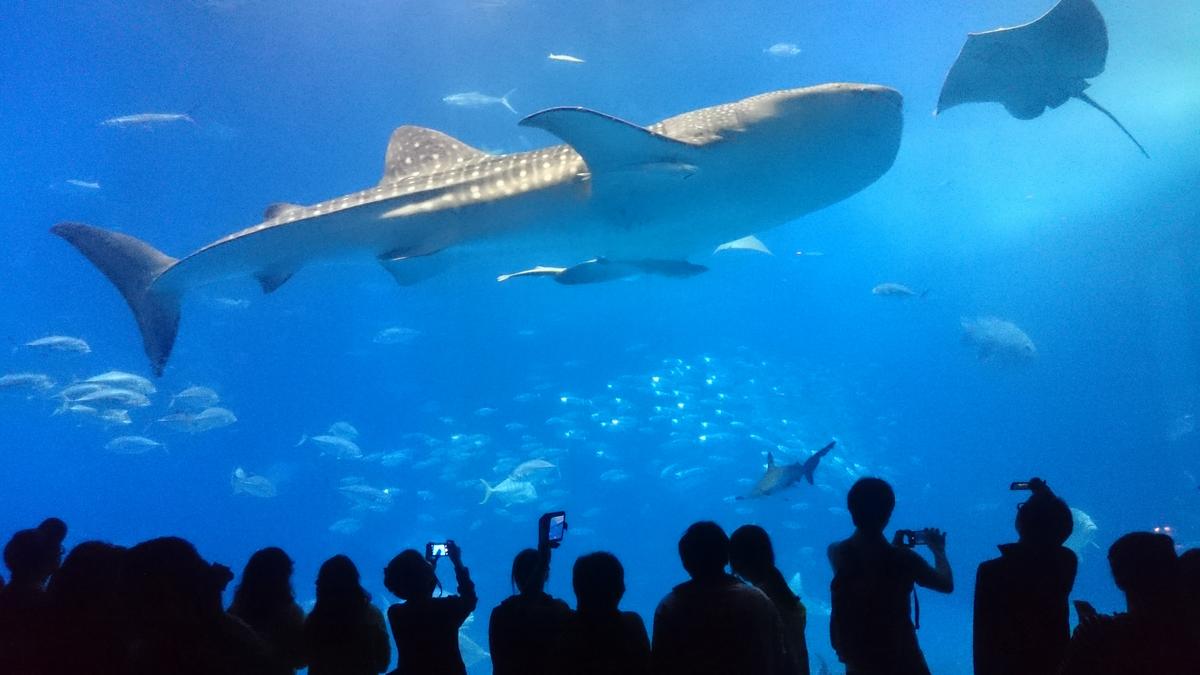
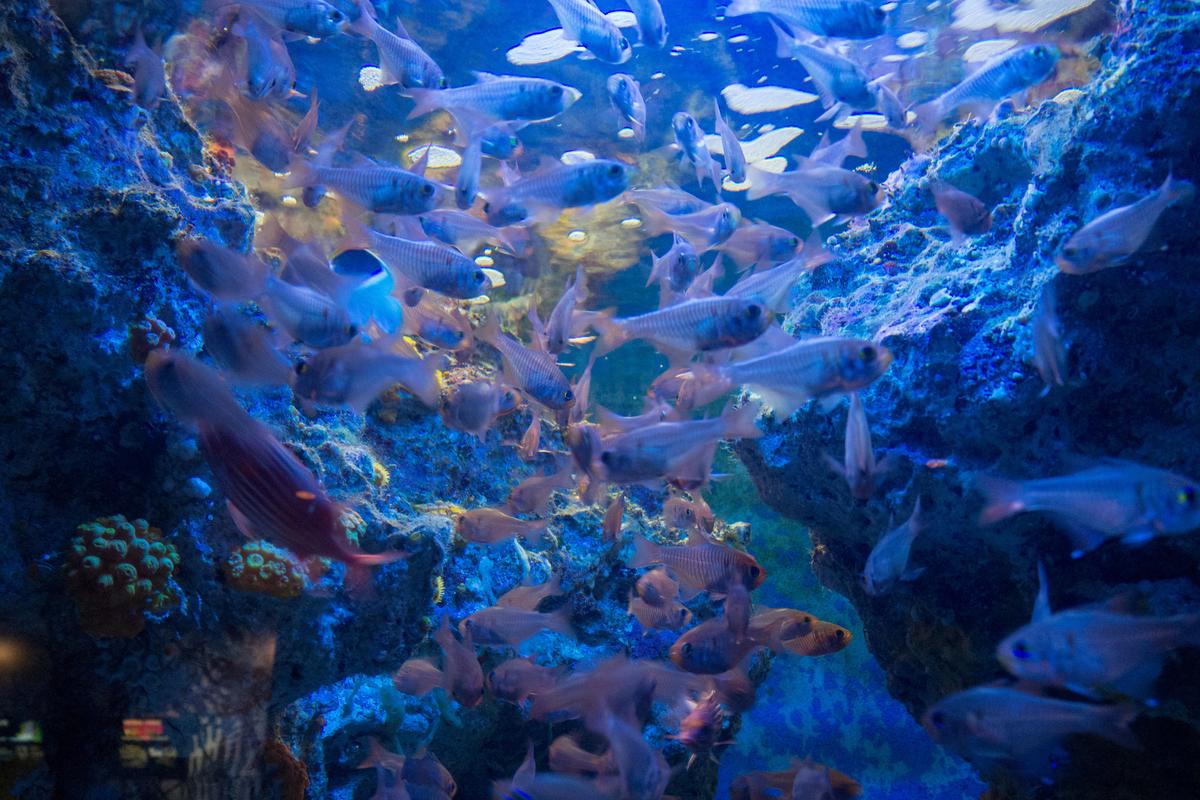
The Kuroshio Sea is the aquarium’s largest tank. It holds 7,500 cubic meters of water and measures 10 meters deep, 35 meters wide, and 27 meters long. Approximately 80 species were displayed in the tank as of January 2026.
Whale sharks and manta rays are the main draw, but schools of smaller migratory fish help convey the scale and biodiversity of the Kuroshio Current. Do not plan around a fixed whale shark count. Animals can be moved, rested, or temporarily removed from public display according to health and husbandry needs.

Current scheduled feedings are 9:30 a.m. for manta rays and 3:00 p.m. and 5:00 p.m. for whale sharks. A feeding can be changed or canceled according to the animals’ condition, so treat the schedule as a target rather than a guarantee.
The above-water Kuroshio observation course reopened on July 1, 2026. Standard viewing periods are 9:00–10:45 a.m. and 5:30–6:15 p.m. On selected extended summer dates, the evening period continues until 6:45 p.m. Reservations are not normally required, but access is restricted outside the posted times for animal-health management.
Coral Sea Tank

The Coral Sea tank is open at the top, allowing direct sunlight to reach the coral. Fresh seawater is continuously supplied from the sea in front of the aquarium.
The 300-cubic-meter tank contained about 400 colonies representing roughly 80 types of reef-building coral as of January 2026. Many colonies have grown in the exhibit for close to 20 years. This is a cultivated living system rather than a static decorative backdrop.
Shark Research Lab
The Shark Research Lab combines a live shark tank with jaws, skin specimens, reproductive material, and findings from the aquarium’s research work. Its tank holds 800 cubic meters of water and displayed ten species as of January 2026.
Allow time for the interpretation panels. They explain shark anatomy and reproduction and correct the assumption that most sharks pose a serious threat to humans.
Deep-Sea Exhibits
The 7,500-cubic-meter figure sometimes attributed to the deep-sea area belongs to the Kuroshio Sea tank. The dedicated Deep Sea tank holds 230 cubic meters and displayed about 40 species as of January 2026.
The wider Journey into the Deep Sea section presents approximately 130 species, many collected from waters deeper than 200 meters around Okinawa. Low lighting, small-species displays, research exhibits, and bioluminescence interpretation make this section slower and more detailed than the headline main tank.
Whale Shark and Manta Ray Research

The aquarium has maintained whale sharks over long periods to study growth, behavior, physiology, and reproduction. It should not be described as the first aquarium to breed whale sharks. Its documented world-first achievement concerns the successful raising and breeding of the reef manta ray, Mobula alfredi.
The research continues beyond display management. In 2026, researchers from the Okinawa Churashima Foundation and partner institutions published a chromosome-scale whale shark genome assembly intended to support studies of reproduction, evolution, genetic diversity, and conservation. The aquarium maintains a current list of research publications and activities.
Image Gallery




How Long to Spend at Okinawa Churaumi Aquarium
The aquarium’s official estimate is about 1.5 to 2 hours. The marked route is approximately 500 meters and descends through the building from the upper entrance to the deep-sea level.
For an unhurried visit, plan 2 to 3 hours inside. That allows time to read the research displays, wait for a clearer view at the Kuroshio Sea panel, and coordinate at least one feeding or program. Plan 4 to 6 hours when adding the outdoor dolphin, sea turtle, manatee, beach, garden, or museum facilities in Ocean Expo Park.
A Practical Aquarium Route
- Start at the upper entrance and take in the ocean and Coral Sea views before descending.
- Explore the Coral Sea, tropical-fish tanks, and smaller coral-reef displays.
- Continue to the Kuroshio Sea tank and time this section around a feeding when practical.
- Visit the Shark Research Lab before moving to the lower level.
- Finish with the deep-sea exhibits, Aqua Lab, and freshwater displays near the exit.
- Use same-day re-entry when you need lunch or want to see an outdoor program before returning inside.
Best Time to Visit and Whale Shark Feeding Times
Arriving close to the 8:30 a.m. opening gives you the best chance of seeing the coral and smaller exhibits before the largest tour groups arrive. A late-afternoon visit can also work during extended summer hours, but check the last-admission time and the earlier closing schedule for outdoor facilities.
| Program | Current scheduled time | Planning note |
|---|---|---|
| Manta ray feeding | 9:30 a.m. | Useful for an opening-time visit |
| Whale shark feeding | 3:00 p.m. | Often fits a half-day afternoon route |
| Whale shark feeding | 5:00 p.m. | Check closing time and outdoor-facility hours |
| Above-water Kuroshio observation | 9:00–10:45 a.m. and selected evening periods | Access is closed outside posted animal-management hours |
Japanese public holidays, school breaks, Golden Week, and the August travel period can produce heavier traffic and longer walks from overflow parking. Check the aquarium’s current schedule and allow additional road time during large Ocean Expo Park events.
Typhoon conditions can affect the aquarium, buses, roads, and outdoor facilities. Bring an umbrella or rain jacket even during ordinary rain because the route from the parking area is not fully covered and umbrellas are not rented onsite.
How to Get to Okinawa Churaumi Aquarium
The aquarium is at 424 Ishikawa, Motobu-cho, Kunigami-gun, Okinawa 905-0206. Okinawa has no rail line to Motobu, so visitors generally travel by car, express bus, local bus, taxi, or organized tour.
| Transport | Typical time from Naha Airport | Best for | Main tradeoff |
|---|---|---|---|
| Rental car | About 2 hours via the expressway | Families, groups, and travelers combining several northern sights | Traffic and parking congestion on peak dates |
| Express bus | About 3 hours | Travelers who do not want to drive | Less flexibility and a long same-day return |
| Local bus connections | Varies by route and transfer | Budget-focused travelers with flexible schedules | Longer and more complex journey |
| Taxi or private vehicle | Traffic dependent | Groups prioritizing door-to-door convenience | Higher cost |
Driving and Parking
Parking is free throughout Ocean Expo Park. P7 North Parking, a multistory parking structure, is the closest major lot to the aquarium. P6 is also convenient. Follow signs for “Aquarium Parking,” and arrive with enough time to walk from the car park before the last-admission cutoff.
Express Bus from Naha
Services can include the Yanbaru Express Bus, Okinawa Airport Shuttle, and routes 111 or 117, depending on the departure point and current timetable. The Kinen Koen Mae stop is about a ten-minute walk from the aquarium. Routes, fares, reservations, and stop locations vary, so consult the official access page and the operating bus company before departure.
A private or organized northern Okinawa tour can reduce the transport work, but tours limit how long you can spend at the aquarium and may not align with the feeding times. Check the actual itinerary rather than booking solely because an aquarium stop is mentioned.
Visiting with Children and Accessibility Information
Strollers, Nursing Rooms, and Changing Tables
Free stroller rentals are available on a first-come, first-served basis at locations including the P7 parking structure and Park Information Center. Reservations are not accepted.
The aquarium has nursing rooms with seating and hot-water dispensers for preparing formula. Changing tables are available in selected restrooms on multiple floors. Families needing a particular facility should review the official infant-services page before arriving.
Wheelchair Access
The main aquarium route is accessible by ramps and elevators. Wheelchairs are available free of charge on a first-come, first-served basis, and multipurpose toilets are provided throughout the aquarium and Ocean Expo Park. P7 has the largest concentration of designated accessible parking spaces.
Visitors with qualifying disability documentation and one caregiver may receive free aquarium admission. Travelers who need transport assistance between the parking area and aquarium should review the barrier-free information and contact the facility in advance when necessary.
Food, Photography, and Visitor Rules
Where to Eat
Restaurant Inoh is on the fourth floor and can be accessed without entering the paid aquarium. It serves Okinawan dishes with views over the East China Sea. Ocean Blue is inside the aquarium on the first floor beside the Kuroshio Sea tank and serves light food, drinks, and desserts.
Restaurant hours vary during extended summer operations. Check the aquarium’s current restaurant and shop information when meal timing matters.
Rules That Affect Trip Planning
- Food and ordinary drinks cannot be consumed in aquarium exhibit areas. Hydration drinks are permitted in resealable containers.
- Personal photography is allowed when it does not obstruct other visitors.
- Flash is permitted in most areas, but posted no-flash restrictions take priority.
- Selfie sticks and tripods are not allowed. Other large camera equipment may also be restricted.
- Continuous video lights and livestreaming are prohibited.
- Pets cannot enter, except recognized assistance dogs.
- Free Wi-Fi and a free smartphone audio guide are available inside the aquarium.
Free Attractions in Ocean Expo Park

Ocean Expo Park is free to enter, although the aquarium and several other facilities charge admission. The outdoor marine-animal facilities near the aquarium can be visited without an aquarium ticket.
| Attraction | General observation fee | Planning note |
|---|---|---|
| Okichan Theater | Free | Dolphin performances can change or be canceled because of weather or animal condition |
| Dolphin Lagoon | Free | Provides closer observation; paid feeding programs may be offered separately |
| Sea Turtle Pool | Free | Turtles can be viewed from above and from an underground observation area |
| Manatee Pool | Free | Includes above-water and underwater viewing |
| Emerald Beach | Free | Swimming season normally runs from April 1 through October 31 |
Outdoor facilities commonly close before the aquarium, even during extended evening operations. Check the Ocean Expo Park schedule before building the day around a dolphin program or beach visit.
Things to Do Near Churaumi Aquarium
- Emerald Beach is inside Ocean Expo Park and works well as a short walk before or after the aquarium.
- Bise Fukugi Tree Avenue has shaded village lanes lined with fukugi trees and is close to the northern edge of the park.
- Tropical Dream Center adds botanical displays and an observation tower but may require a separate ticket.
- Oceanic Culture Museum and Planetarium covers Pacific maritime culture and navigation and can extend a rainy-day itinerary.
- Nakijin Castle Ruins is a UNESCO-listed gusuku site and a practical historical addition for travelers with a car.
- Kouri Island is farther away but can fit a full northern Okinawa driving route.
Extending the Trip Beyond Motobu

Northern Okinawa rewards a slower itinerary. Staying overnight in Motobu or nearby reduces the Naha round trip and makes it easier to visit the aquarium at opening time, return after lunch, and add the coast, castle ruins, or Kouri Island without rushing.
Hotels Near Okinawa Churaumi Aquarium

Staying near the aquarium is most useful for travelers who plan to explore the Motobu Peninsula or want to avoid a same-day return to Naha. Rates and availability change by season, so the comparison below focuses on property type and location rather than quoting a temporary price.
| Property | Best for | Aquarium access | Tradeoff |
|---|---|---|---|
| The Orion Hotel Motobu Resort & Spa | Travelers wanting a full-service oceanfront resort, pools, spa facilities, and restaurants | About a seven-minute walk | Usually the most expensive option in this group |
| Yukurina Resort Okinawa | Families and longer stays needing a kitchen, appliances, and more residential space | About a three-minute drive | Condominium-style service rather than a full resort operation |
| Cinema Resorts 3 | Small groups seeking a private holiday home with a kitchenette and laundry facilities | Less than one kilometer from the aquarium | Limited inventory and fewer hotel-style services |
Okinawa Churaumi Aquarium FAQ
How much does Okinawa Churaumi Aquarium cost?
General admission is ¥2,180 for adults, ¥1,440 for high school students, ¥710 for elementary and junior high students, and free for children under 6. Prices were last verified on July 15, 2026.
How long should I spend at Okinawa Churaumi Aquarium?
The official estimate is 1.5 to 2 hours. Allow 2 to 3 hours for a more relaxed aquarium visit or 4 to 6 hours when adding the free outdoor attractions in Ocean Expo Park.
Can you see whale sharks at Okinawa Churaumi Aquarium?
Yes. Whale sharks are displayed in the Kuroshio Sea tank with manta rays and other migratory fish. The number of animals and exact exhibit lineup can change according to health and husbandry needs.
How do I get to Okinawa Churaumi Aquarium from Naha?
Allow about two hours by car from Naha Airport via the expressway or about three hours by express bus. There is no train service to Motobu, so check current bus schedules before traveling.
Is parking free at Okinawa Churaumi Aquarium?
Yes. All Ocean Expo Park parking areas are free. P7 North Parking is the closest large parking structure to the aquarium, with P6 also providing convenient access.
Are the dolphin, sea turtle, and manatee facilities included with aquarium admission?
The outdoor dolphin, sea turtle, and manatee facilities can be observed free of charge and do not require an aquarium ticket. Optional feeding activities may have a separate fee, and schedules can change.
Plan Your Visit
Confirm the official hours, choose your transport before buying a date-specific ticket, and decide whether the day will cover only the aquarium or the wider Motobu Peninsula. Travelers coming from Naha should account for the return journey before committing to a late feeding or evening admission slot.
For the rest of the trip, use these practical Japan travel tips and compare other places to visit in Japan.