Tanah Lot is worth visiting for its offshore temple silhouette, Balinese Hindu significance, and west-coast sunset views. The tradeoff is crowding: sunset is the busiest period. Allow about 1.5 to 2.5 hours, arrive early in the morning for a quieter visit or 60 to 90 minutes before sunset for photography, and check the tide on the day you go. High tide creates the isolated “temple in the sea” view; low tide may allow visitors to approach the rock and holy-spring area when conditions and staff permit.
Pura Tanah Lot stands in Beraban, Kediri District, Tabanan Regency, on Bali’s southwest coast. It is an active sacred site, not only a photo stop. Respect ceremonies, restricted areas, offerings, wildlife, and instructions from temple staff throughout your visit.
| Visitor detail | Current planning information |
|---|---|
| Location | Beraban Village, Kediri District, Tabanan Regency, Bali |
| Officially listed hours | Daily, 6:00 a.m.–7:00 p.m. WITA |
| International admission | Adult IDR 75,000; child IDR 40,000 |
| Domestic admission | Adult IDR 30,000; child age 5–10 IDR 20,000 |
| Parking | Two wheels IDR 3,000; four wheels IDR 5,000; six wheels IDR 10,000 |
| Best time for fewer people | Early morning |
| Best time for the classic view | Late afternoon through sunset |
| Time needed | About 1.5–2.5 hours; longer if you watch Kecak or eat on-site |
| Last fact-check | July 2026; verify prices, hours, tides, and performances before departure |
Important: The official Tanah Lot ticket page lists the current admission and parking charges. International visitors may also need to pay Bali’s separate IDR 150,000 foreign-tourist levy once per trip. Confirm exemptions and payment status through the Bali Provincial Government’s Love Bali system.
Is Tanah Lot Temple worth visiting?
Yes—provided the experience you want matches what Tanah Lot does best. Visit for the coastal setting, the silhouette of Pura Tanah Lot at high tide, sunset photography, and the wider complex of temples, viewpoints, gardens, shops, and cultural attractions. It is less suitable for travelers seeking a quiet, unrestricted temple interior or an uncrowded sunset.
| Tanah Lot is a strong choice if you want | Consider another stop if you mainly want |
|---|---|
| A recognizable Bali sea-temple landscape | A long architectural tour inside a temple sanctuary |
| Sunset photography from multiple viewpoints | A low-crowd sunset during peak travel periods |
| A visit that pairs easily with Tabanan or west-coast stops | A beach-swimming destination |
| Markets, food, viewpoints, and cultural context in one complex | A short roadside photo stop with no walking |
The strongest visit is planned around one clear goal: early-morning space, a high-tide panorama, a low-tide approach, a ceremony, or sunset. Trying to optimize for all of them at once usually means spending most of the day waiting for conditions to change.
Where is Tanah Lot? Location, map, and transport

Tanah Lot is roughly 30 kilometers from Denpasar and Ngurah Rai International Airport, but Bali road travel is governed more by congestion than distance. Check live navigation immediately before leaving and build in extra time if sunset, a ceremony, or a booked performance matters.
Best ways to get to Tanah Lot
- Private driver: Usually the simplest option for combining Tanah Lot with Taman Ayun, Jatiluwih, Kedungu, or Canggu. Agree on waiting time and parking before departure.
- Taxi or ride-hailing app: Practical for a direct trip, but return availability and pickup points may vary near closing time. Arrange the return before sunset if possible.
- Guided tour: Useful when you want transport, context, and several stops handled in one itinerary. Check whether admission, parking, meals, and the Kecak performance are included.
- Scooter or car rental: Best reserved for licensed, experienced drivers comfortable with Bali traffic, local road rules, and night riding. Never rush the return after sunset.
For a broader route, use this guide to less-obvious places in Bali to decide whether Tanah Lot should be your main destination or the final stop on a Tabanan day trip.
Map of Bali tourist attractions
This overview shows how Tanah Lot relates to other major destinations across Bali. Use it for orientation rather than drive-time estimates; traffic conditions can change quickly.

Tanah Lot tickets, opening hours, and extra costs
Tanah Lot is officially listed as open daily from 6:00 a.m. to 7:00 p.m. WITA. The official Tanah Lot ticket page lists the following rates:
| Category | Officially listed price |
|---|---|
| International adult | IDR 75,000 |
| International child | IDR 40,000 |
| Domestic adult | IDR 30,000 |
| Domestic child, age 5–10 | IDR 20,000 |
| Two-wheel parking | IDR 3,000 |
| Four-wheel parking | IDR 5,000 |
| Six-wheel parking | IDR 10,000 |
Carry a backup payment method and enough local currency for parking, small purchases, donations, or a performance ticket. The official page also requires visitors planning commercial photography, filming, or drone use to report to management. A normal entrance ticket should not be treated as commercial-shoot or drone permission.
Bali’s separate foreign-tourist levy
Most international visitors must pay a separate IDR 150,000 Bali tourist levy once per trip. It is not the same as Tanah Lot admission. Use the official Love Bali portal to pay or verify the levy, and review the government FAQ for exemptions and accepted payment channels.
Best time to visit Tanah Lot: morning, sunset, tide, and season
| Your priority | Best planning choice | Main tradeoff |
|---|---|---|
| Fewer people | Arrive soon after opening | Less dramatic light than sunset |
| Classic silhouette | Arrive 60–90 minutes before sunset | Largest crowds and slower exits |
| “Floating” temple effect | Visit around high tide | You usually cannot approach the rock |
| Approach the base and holy spring | Visit around low tide, if staff permit | The isolated-island effect is weaker |
| More predictable dry weather | Generally April through October | Popular periods can be busy |
| Greener scenery and fewer peak-season visitors | Generally November through March | Rain and cloud are more likely |
Bali’s seasons are increasingly variable, so treat the dry- and wet-season pattern as a planning guide rather than a guarantee. Check the same-day forecast, sunset time, and tide table. If photography matters, stay after the sun drops below the horizon; the strongest sky color can occur several minutes later.
High tide and low tide produce different experiences, not a better and worse version of the same visit. High tide is usually stronger for the iconic offshore composition. Low tide is more useful if you want to see the rock base and sacred spring at closer range. Never cross water, barriers, or slick rock merely because other visitors are doing it.
What to see and do at Tanah Lot
1. View Pura Tanah Lot from the coastal path

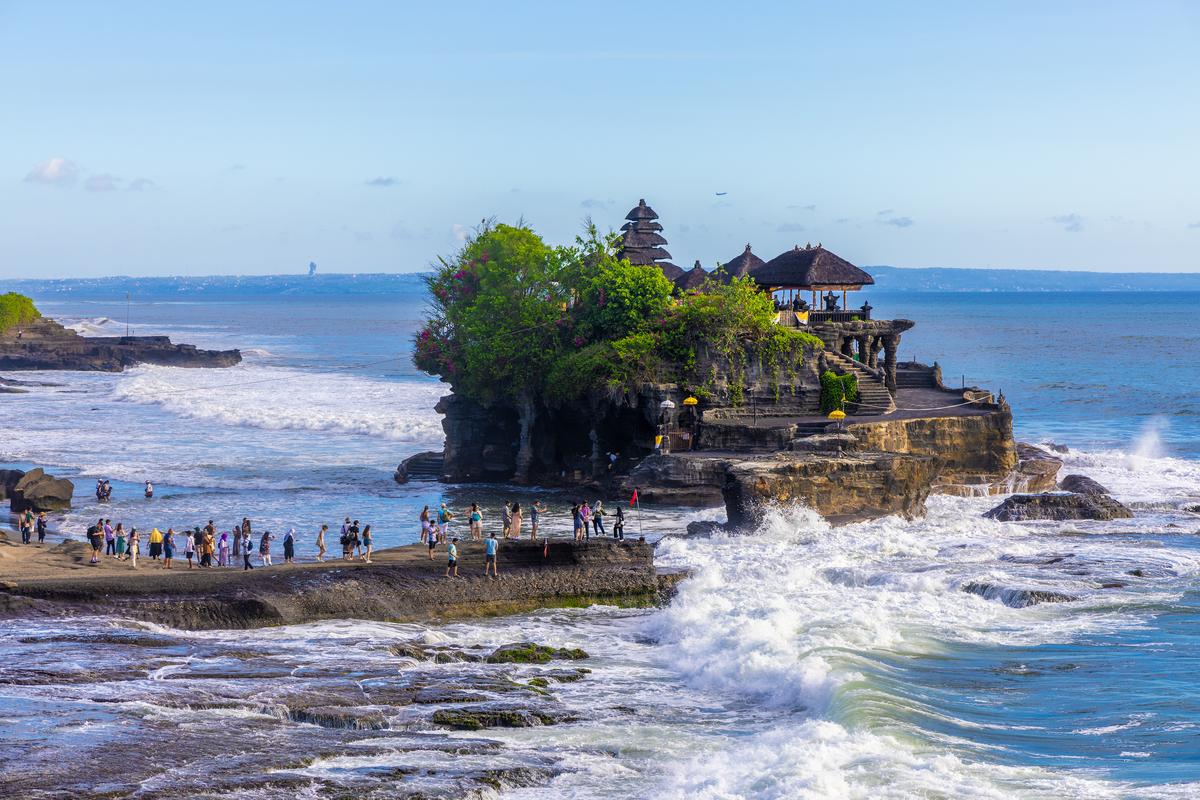
The primary shrine sits on a wave-cut rock off the coast. At high tide, water closes over the approach and creates Tanah Lot’s defining silhouette. At low tide, the exposed foreground reveals more of the rock formation, but access depends on surf, tide, ceremonies, and staff instructions.

2. Photograph the Sunset Terrace and Enjung Galuh viewpoints

The Sunset Terrace is the obvious sunset location, but it is not the only useful angle. Walk the coastal path before choosing a position. Enjung Galuh and the viewpoints toward Pura Batu Bolong can give you stronger foregrounds, more separation between the temple and horizon, or more room when the main terrace is crowded.
For better results, expose for the sky, keep the horizon level, and make several compositions before the light changes. These travel photography techniques can help you plan silhouettes without blocking paths or stepping into restricted areas.
3. Observe ceremonies without interrupting them

Religious processions and offerings are part of the site’s living function. Stay behind worshippers, keep voices low, do not step over offerings, and ask before photographing people at close range. A long lens is more respectful than moving into a procession for a closer picture.
4. See the sea-snake area—but do not touch wildlife

Local legend says a sea snake created from Dang Hyang Nirartha’s sash guards the temple. Treat that story as part of Tanah Lot’s religious tradition, not as a safety guarantee. Sea snakes are wild animals. Do not handle, corner, feed, or provoke them, even if an informal interaction is being offered.
5. Visit the Tirta Pabersihan holy spring at low tide

The freshwater spring beneath the coastal rock is treated as sacred. Visitors may be able to approach it at low tide and receive a blessing or use the water according to local practice. Follow the priest or attendant, make any donation voluntarily, and do not repeat health or fertility claims as medical fact. The spring’s importance is religious and cultural.
6. Time a visit for the Odalan temple anniversary

Tanah Lot’s Odalan, or temple anniversary, returns every 210 days. It can be an exceptional time to understand the site’s spiritual role, but it is not staged for visitors. Check the official Tanah Lot ceremony calendar, expect access changes, and give worshippers priority.
7. Check the current Kecak performance

The official Tanah Lot site currently places the Kecak performance at De Jukung Resto & Bar and says it begins at sunset. Performance days, start times, venue details, and ticket arrangements can change. Confirm the show on the day of your visit rather than building a fixed itinerary around an old schedule.
8. Add context at the Majapahit Tanah Lot Museum
The official complex now presents the Majapahit Tanah Lot Museum as an introductory space with artifacts, statues, heirlooms, dioramas, and augmented-reality interpretation. It is a useful stop before the coastal path if you want historical context rather than only the sunset view. Confirm current admission and hours locally.
9. Browse the art market and food outlets selectively
The approach to the temple passes through a substantial commercial area. You will find handicrafts, clothing, food, drinks, and souvenirs. Compare quality before buying, agree on prices politely, and leave enough time to walk from the market to your chosen viewpoint before sunset.
Tanah Lot history, meaning, and religious context
“Tanah Lot” is commonly translated as “land in the sea,” a name that describes the shrine’s offshore setting. The site is dedicated to the powers associated with the sea, often identified in visitor accounts as Bhatara Segara or Dewa Baruna.
Tanah Lot’s founding story centers on Dang Hyang Nirartha, also known as Dang Hyang Dwijendra, a Hindu priest associated with the late Majapahit period and the spread of religious teaching in Bali. Official sources do not give one perfectly consistent date: Indonesia’s national tourism site places the temple tradition in the 16th century, while the current Majapahit Tanah Lot Museum describes Nirartha’s journey in the 15th century. The responsible conclusion is that the tradition belongs broadly to the late 15th or 16th century, while the precise construction chronology remains uncertain.
In the best-known legend, Nirartha recognized the rock as a sacred location and instructed local people to establish a shrine. Stories then attribute the rock’s movement offshore and the creation of a guardian sea snake to his supernatural power. These accounts explain the site’s religious meaning; they should be presented as Balinese tradition rather than documented physical history.
Coastal restoration and reinforcement
Wave erosion threatened the rock supporting Tanah Lot. Under the Japan International Cooperation Agency’s Bali Beach Conservation Project, reinforcement work was carried out and completed in February 2003. The project used coastal-engineering measures to stabilize the site and reduce erosion. This is the defensible restoration claim; the often-repeated statement that a specific fraction of the rock is artificial is not necessary unless a current engineering source verifies it.
The restoration history matters because the postcard view is not an untouched geological scene. Tanah Lot is both a sacred landscape and a conserved coastal structure that requires ongoing management.
Dress code, temple access, safety, and accessibility

What to wear
- Choose clothing that covers shoulders and knees in sacred areas.
- Carry or rent a sarong and sash if an attendant requires them for an active temple space.
- Wear shoes or sandals with reliable grip; exposed rock can be wet and uneven.
- Bring sun protection, drinking water, and a compact rain layer.
Can visitors enter the main temple?
Do not assume that every visible shrine is open for sightseeing. At low tide, visitors may be able to approach the rock base and holy-spring area when staff permit, but the active shrine itself can be restricted to worshippers or closed for ceremonies and safety. Follow signs and attendants; do not climb gates, walls, or shrine structures.
Coastal safety
- Never cross the approach while water is rising or waves are breaking across it.
- Keep away from cliff edges and obey fences, especially in wind or rain.
- Do not touch sea snakes or other wildlife.
- Supervise children closely near slopes, steps, rock pools, and surf.
- Ask management before using a drone or conducting a commercial shoot.
Accessibility considerations
The tourist complex includes parking, restrooms, shops, seating, and paved or maintained paths in many areas, but the most dramatic coastal viewpoints can involve slopes, steps, crowds, and uneven ground. The rock base is not an accessible route. Because the official site does not publish a detailed step-free access guide, travelers with mobility, vision, or balance concerns should contact Tanah Lot management in advance at the phone number shown on the official site and ask about the current route from parking to the upper viewpoints.

A practical two-hour Tanah Lot sunset itinerary
| Timing | What to do | Why it works |
|---|---|---|
| About 120 minutes before sunset | Arrive, buy tickets, use restrooms, and walk through the market without stopping for long. | It protects your photography time from traffic, parking, and queues. |
| About 95 minutes before sunset | Walk toward Pura Batu Bolong and Enjung Galuh. | You see the wider complex before the main viewpoints fill. |
| About 65 minutes before sunset | Check the tide and main temple viewpoint; approach the base only if open and safe. | You can adapt to the actual sea conditions rather than an assumed schedule. |
| About 35 minutes before sunset | Choose a final position at Sunset Terrace or a less crowded coastal viewpoint. | You avoid losing the best light while moving through crowds. |
| Sunset through 15 minutes after | Photograph the silhouette and remain for afterglow. | Color often improves after the sun disappears. |
| After sunset | Watch Kecak if confirmed, eat on-site, or meet your driver at a prearranged point. | It prevents confusion during the busiest departure period. |
This plan is deliberately relative to sunset rather than tied to a fixed clock time. Sunset, weather, tide, and the Kecak schedule change; the sequence remains useful throughout the year.
Affiliate disclosure: This article contains affiliate links. If you book through one, ViaTravelers may earn a commission at no additional cost to you. Tour and hotel suggestions below are based on route fit, current listing status, and stated amenities; no personal visit or stay is claimed.
Before booking, compare pickup area, cancellation terms, included admissions, guide language, and whether the itinerary leaves enough time at Tanah Lot. This guide to the best tour-booking platforms explains what to compare beyond the headline price.
Where to stay near Tanah Lot
Staying near Tanah Lot makes sense if you want a quieter west-coast base, easy access to Kedungu or Nyanyi, or an early-morning temple visit. It is less convenient if most of your itinerary is in Uluwatu, Nusa Dua, or central Ubud. Rates and availability change, so the fixed nightly prices in older versions of this article have been removed.
Best for budget-conscious surfers: Swell Hotel, Pool Bar & Restaurant

Swell Hotel suits travelers who prioritize Kedungu Beach, a social atmosphere, a pool, and an on-site bar and restaurant. Its official site places the property about 300 meters from the Kedungu surf break. Check the current room type carefully because the property has been described as both a hotel and hostel over time.
Best for a quiet mid-range stay: Coco Verde Bali Resort

Coco Verde is a stronger fit for couples or families who want a garden setting, pool, restaurant, and a quieter resort atmosphere. Its official site describes the property as a few minutes from the beach and Tanah Lot. Confirm room configuration, breakfast, transfers, and cancellation terms for your dates.
Best for privacy and groups: Villa Sulastri, part of Villa58

Villa Sulastri is the current name attached to the former Villa 58 Tanah Lot booking URL. It is intended for travelers who value privacy, multiple bedrooms, a pool, and a beachfront-villa format over hotel services. Confirm the exact property name, bedroom count, staffing, access, and payment terms before booking.
For a broader comparison process, use these hotel-booking sites and rate-checking strategies before committing to a nonrefundable rate.
Things to do near Tanah Lot Temple
Walk to the supporting coastal temples

Tanah Lot is part of a wider sacred landscape. Nearby sites include Pura Batu Bolong, Pura Pakendungan, Pura Jero Kandang, Pura Enjung Galuh, and Pura Batu Mejan. Pura Batu Bolong is especially useful for photography because its shrine stands above a natural opening in the coastal rock. Allow time to walk the path rather than treating the complex as one viewpoint.
Check conditions at the Melasti coastal waterfall

The beachside waterfall near the Tanah Lot coast is seasonal. Flow, access, and beach conditions vary with rainfall, tide, erosion, and local restrictions. Ask on-site before making a detour, and do not descend unstable cliffs or cross rough water for a photograph.
See the black-sand shoreline

The dark volcanic sand and rock platform add texture to the temple view. Ocean conditions can be rough, and the beach is not the reason to visit if your priority is relaxed swimming. For more context, compare Tanah Lot with other black-sand beaches around the world.
Shop at the Tanah Lot Art Market

The market is convenient, but it is also easy to lose the best light there. Shop after your morning visit or after choosing your sunset position. For higher-value crafts, ask where the item was made and inspect finishing, material, and size before bargaining.
Pair the visit with Kedungu or Canggu

Kedungu is the more logical nearby beach stop; Canggu offers a larger concentration of restaurants, cafes, and surf services. Use current traffic, not map distance alone, to decide whether to combine them. Leave a wide buffer before sunset.
Build a Tabanan culture-and-landscape day
| Pairing | Best for | Planning note |
|---|---|---|
| Taman Ayun + Tanah Lot | Temple architecture and a manageable culture-focused route | Place Tanah Lot last for sunset |
| Jatiluwih + Tanah Lot | Rice-terrace landscapes and a full Tabanan day | Start early and avoid adding too many stops |
| Kedungu + Tanah Lot | Surf, beach time, and a slower west-coast day | Check surf and tide conditions separately |
| Canggu + Tanah Lot | Dining, cafes, and sunset | Traffic can make the simple route unreliable |
Travelers comparing Indonesia’s major sacred sites may also find this guide to Borobudur Temple useful. The sites belong to different religious traditions and should not be treated as interchangeable photo attractions.
Tanah Lot image gallery
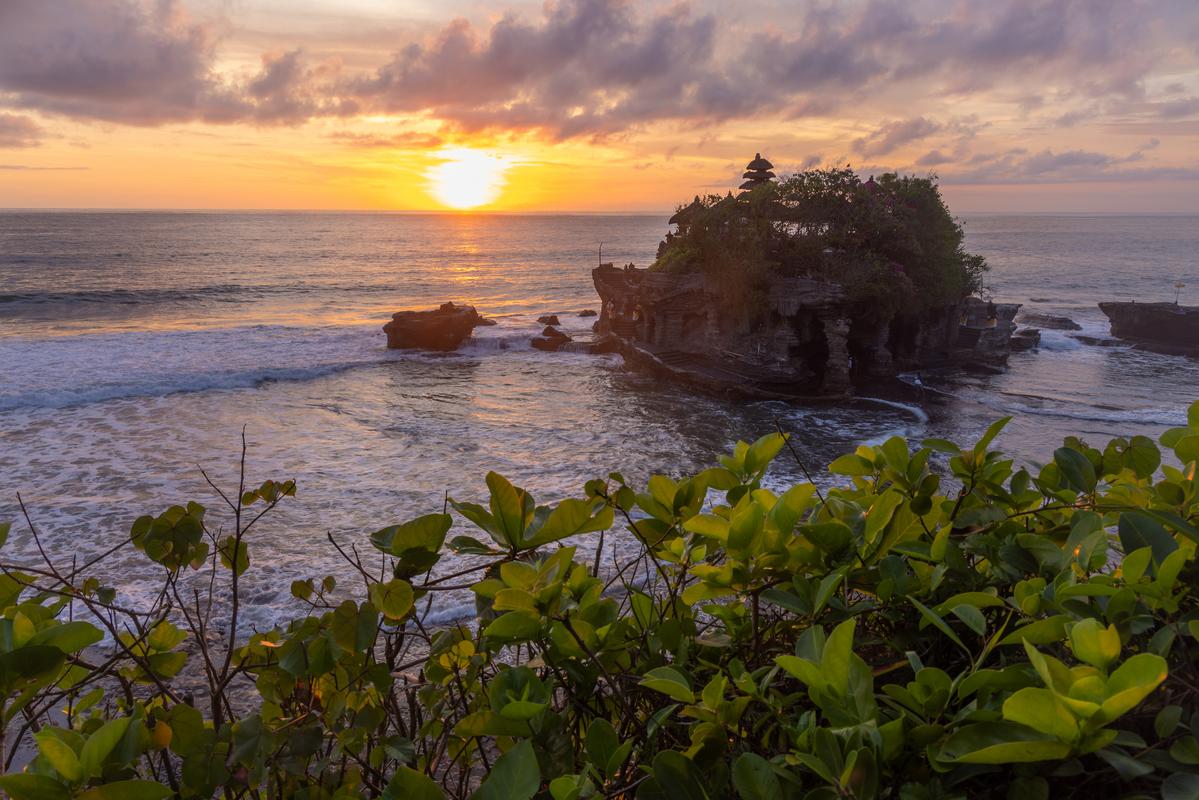
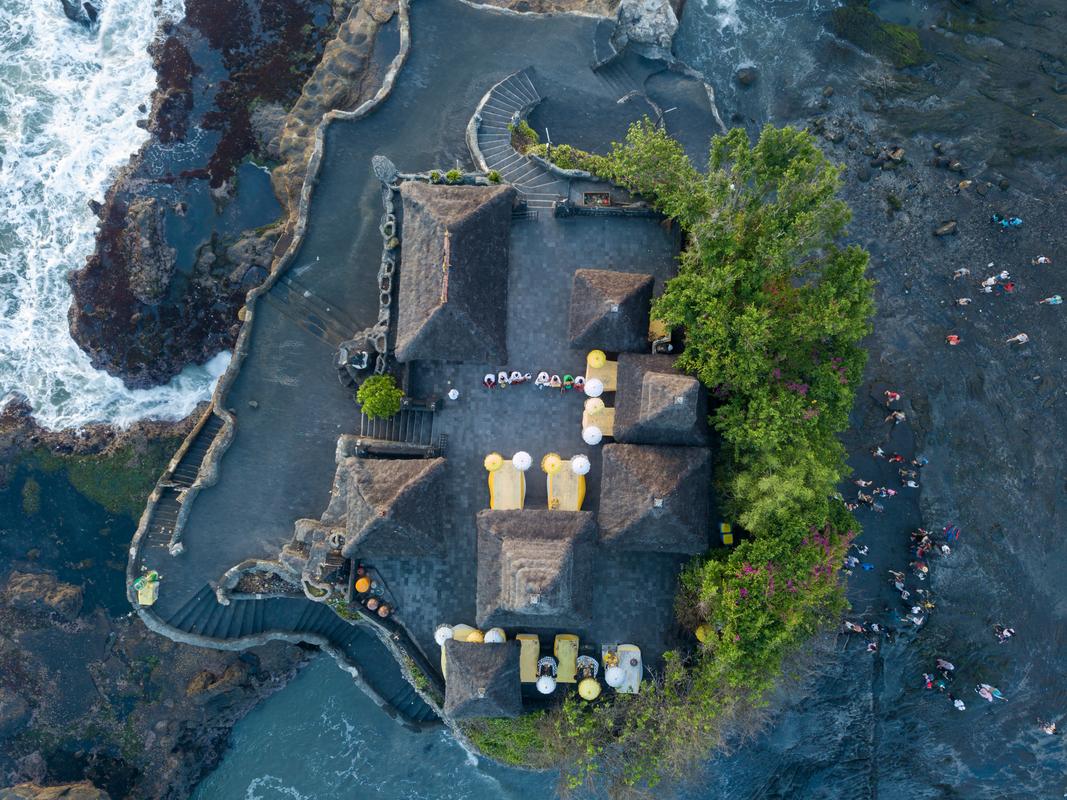
The gallery below shows additional angles, ceremonies, and details from the complex. Before publishing, audit each media item in the WordPress Media Library so every image has scene-specific alt text, an accurate credit, and an appropriate license record.




Frequently asked questions about Tanah Lot
Is Tanah Lot Temple worth visiting?
Yes. Tanah Lot is worth visiting for its offshore temple silhouette, religious significance, coastal viewpoints, and sunset. Expect heavy crowds late in the day and do not expect unrestricted access to the active shrine.
How much is the Tanah Lot entrance fee?
The official site currently lists international admission at IDR 75,000 per adult and IDR 40,000 per child. Domestic admission is IDR 30,000 per adult and IDR 20,000 for children age 5 to 10. Parking costs extra.
What are Tanah Lot opening hours?
Tanah Lot is officially listed as open daily from 6:00 a.m. to 7:00 p.m. WITA. Hours may change for ceremonies, maintenance, weather, or management decisions, so verify before traveling.
What is the best time to visit Tanah Lot?
Visit soon after opening for fewer people. For the classic sunset silhouette, arrive 60 to 90 minutes before sunset. Check the tide too: high tide creates the offshore look, while low tide may allow an approach to the rock base when staff permit.
Can visitors enter Tanah Lot Temple?
Visitors can explore the tourist complex and may approach the rock base at low tide when conditions and staff permit. The active shrine is not an unrestricted sightseeing area and can be limited to worshippers or closed for ceremonies and safety.
How long should you spend at Tanah Lot?
Allow about 1.5 to 2.5 hours for the coastal path, viewpoints, market, and sunset. Add more time if you plan to visit the museum, eat on-site, or watch a confirmed Kecak performance.
What should you wear to Tanah Lot?
Wear modest clothing that covers shoulders and knees in sacred areas, and carry a sarong and sash if temple staff require them. Choose footwear with grip because the coastal rock can be wet and uneven.
Is Tanah Lot better at high tide or low tide?
High tide is better for the isolated temple-in-the-sea composition. Low tide is better for seeing the rock base and possibly approaching the holy spring. Safety barriers, waves, ceremonies, and staff instructions always take priority.
Tanah Lot works best when you treat it as a sacred coastal complex rather than a single sunset photograph. Decide whether tide, quiet, ceremony, or sunset is your priority; verify the volatile details; and leave enough time to walk beyond the first viewpoint. That approach produces a safer, more respectful, and more rewarding visit.