If you have always considered planning a visit to Utah, you will join a million others who come to see the national parks and other great places to enjoy. A Utah travel adventure is among the most exciting in the USA or the world. International visitors from Canada and other countries across the world come to visit the canyons and national parks. Places like Bryce Point and Rainbow Point have some of the most lucrative views spanning Utah’s red rock and unique formations. Even a part of the Grand Canyon is located in the state. Planning to visit Utah means knowing all the ins and outs and what you can expect when you travel to the area.Below is a travel guide to Utah that will help you plan your itinerary on things to do, where to stay, and how to get around the state.
Utah
State in United States, North AmericaUpdated
- Overall9/10
- Best forAdventure seekers, Solo travelers
- PeakJan–Apr
- CurrencyUSD
Utah has five national parks in one state — Zion, Bryce, Arches, Canyonlands, Capitol Reef — and most visitors only scratch the surface.

At a glance
- English
- Red rock canyons
- Salt flats
- Mountain ranges
- Arches and hoodoos
- National Parks
- Hiking
- Geology
- Stargazing
- Photography
- Winter Sports
- Scenic Drives
How Utah scores
Editorial scores on a 10-point scale, weighed against destinations of the same kind.
Travel safety snapshot
SafePlace indicators use their source 100-point scale; higher is more favourable. Planning context, not a live travel advisory — check official government guidance before you go.
When to go
Best months to visit: March, April, May, June, September, October and November.
- January: -11.5 to -3.7 degrees Celsius, 33.8 millimetres of rain, best-time score 3 out of 5.
- February: -10.8 to -1.7 degrees Celsius, 29.6 millimetres of rain, best-time score 3 out of 5.
- March: -7 to 2.6 degrees Celsius, 36.7 millimetres of rain, best-time score 4 out of 5.
- April: -2.6 to 9.1 degrees Celsius, 18.5 millimetres of rain, best-time score 5 out of 5.
- May: 2.7 to 15 degrees Celsius, 23 millimetres of rain, best-time score 5 out of 5.
- June: 9.6 to 23.3 degrees Celsius, 13.7 millimetres of rain, best-time score 4 out of 5.
- July: 13.6 to 26.4 degrees Celsius, 12.8 millimetres of rain, best-time score 2 out of 5.
- August: 12.4 to 24.7 degrees Celsius, 19.7 millimetres of rain, best-time score 2 out of 5.
- September: 8 to 19.8 degrees Celsius, 19.6 millimetres of rain, best-time score 5 out of 5.
- October: 0.7 to 11.1 degrees Celsius, 21 millimetres of rain, best-time score 5 out of 5.
- November: -4.8 to 3.8 degrees Celsius, 23.9 millimetres of rain, best-time score 4 out of 5.
- December: -10 to -1.8 degrees Celsius, 33.5 millimetres of rain, best-time score 3 out of 5.
Month-by-month conditions and packing advice
- January
- Very cold, occasional rain January in Utah: winter cold and snow narrow some park and mountain options. Crowds: January in Utah is best for winter-ready travelers; outdoor plans need warm gear, shorter daylight expectations, and weather-aware transport planning. Pack: Pack insulated layers, warm footwear, gloves, and a serious winter coat.
- February
- Very cold, mostly dry February in Utah: winter cold and snow narrow some park and mountain options. Crowds: February in Utah is best for winter-ready travelers; outdoor plans need warm gear, shorter daylight expectations, and weather-aware transport planning. Pack: Pack insulated layers, warm footwear, gloves, and a serious winter coat.
- March
- Cold, occasional rain March in Utah: conditions can work with snow, early heat, or late-fall planning. Crowds: March in Utah is best for winter-ready travelers; outdoor plans need warm gear, shorter daylight expectations, and weather-aware transport planning. Pack: Pack insulated layers, warm footwear, gloves, and a serious winter coat.
- April
- Cold, mostly dry April in Utah: national parks, desert hikes, red-rock drives, photography, and city add-ons balance cooler weather and access. Crowds: April in Utah is workable with normal seasonal planning; build in layers, weather checks, and a mix of indoor and outdoor activities. Pack: Pack warm layers, a coat, and comfortable shoes for cold mornings and evenings.
- May
- Cool to mild, mostly dry May in Utah: national parks, desert hikes, red-rock drives, photography, and city add-ons balance cooler weather and access. Crowds: May in Utah is workable with normal seasonal planning; build in layers, weather checks, and a mix of indoor and outdoor activities. Pack: Pack warm layers, a coat, and comfortable shoes for cold mornings and evenings.
- June
- Mild to warm, mostly dry June in Utah: conditions can work with snow, early heat, or late-fall planning. Crowds: June in Utah is comfortable for sightseeing, neighborhoods, food stops, day trips, and outdoor time with limited weather friction. Pack: Pack layered clothing and comfortable walking shoes.
- July
- Mild to warm, mostly dry July in Utah: summer heat makes exposed desert hiking less balanced. Crowds: July in Utah is comfortable for sightseeing, neighborhoods, food stops, day trips, and outdoor time with limited weather friction. Pack: Pack light clothing, sun protection, and comfortable walking shoes.
- August
- Mild to warm, mostly dry August in Utah: summer heat makes exposed desert hiking less balanced. Crowds: August in Utah is comfortable for sightseeing, neighborhoods, food stops, day trips, and outdoor time with limited weather friction. Pack: Pack light clothing, sun protection, and comfortable walking shoes.
- September
- Cool to mild, mostly dry September in Utah: national parks, desert hikes, red-rock drives, photography, and city add-ons balance cooler weather and access. Crowds: September in Utah is workable with normal seasonal planning; build in layers, weather checks, and a mix of indoor and outdoor activities. Pack: Pack layered clothing and comfortable walking shoes.
- October
- Cool to mild, mostly dry October in Utah: national parks, desert hikes, red-rock drives, photography, and city add-ons balance cooler weather and access. Crowds: October in Utah is workable with normal seasonal planning; build in layers, weather checks, and a mix of indoor and outdoor activities. Pack: Pack warm layers, a coat, and comfortable shoes for cold mornings and evenings.
- November
- Cold, mostly dry November in Utah: conditions can work with snow, early heat, or late-fall planning. Crowds: November in Utah is workable with normal seasonal planning; build in layers, weather checks, and a mix of indoor and outdoor activities. Pack: Pack warm layers, a coat, and comfortable shoes for cold mornings and evenings.
- December
- Very cold, occasional rain December in Utah: winter cold and snow narrow some park and mountain options. Crowds: December in Utah is best for winter-ready travelers; outdoor plans need warm gear, shorter daylight expectations, and weather-aware transport planning. Pack: Pack insulated layers, warm footwear, gloves, and a serious winter coat.
- March
- February
- January
- April
- September
- August
- July
- June
Know before you go
About
If you have always considered planning a visit to Utah, you will join a million others who come to see the national parks and other great places to enjoy. A Utah travel adventure is among the most exciting in the USA or the world. International visitors from Canada and other countries across the world come to visit the canyons and national parks. Places like Bryce Point and Rainbow Point have some of the most lucrative views spanning Utah’s red rock and unique formations. Even a part of the Grand Canyon is located in the state. Planning to visit Utah means knowing all the ins and outs and what you can expect when you travel to the area.Below is a travel guide to Utah that will help you plan your itinerary on things to do, where to stay, and how to get around the state.
Best time to visit
Mid-May and early October for comfortable 15–21 °C days, open facilities, and golden light. Summer (June–September) brings the warmest weather but also afternoon thunderstorms and peak crowds. Winter offers snow-dusted hoodoos and near solitude, though some roads and trails close.
Season by season
Spring (Apr–May): 5–15 °C, wildflowers, occasional snow, trails opening. Summer (Jun–Aug): 15–27 °C during the day, afternoon thunderstorms, peak crowds. Autumn (Sep–Oct): 5–20 °C, golden light, thinning crowds, some snow possible late Oct. Winter (Dec–Feb): -10 to 5 °C, snow-dusted hoodoos, cross-country skiing, very few visitors.
Crowds
High in summer (June–August); moderate in shoulders; low in winter
Getting there and around
Getting there
Fly into Salt Lake City International Airport (SLC). Major hub for Delta.
Getting around
Car is essential for visiting National Parks. Shuttles available in Zion.
Top experiences in Utah
Bryce Amphitheater
The park’s centerpiece: a 12-mile-long, half-mile-deep bowl of flame-colored hoodoos — the largest concentration on Earth. Four overlooks (Bryce, Inspiration, Sunset, Sunrise) line the rim. At sunrise, the amphitheater glows a deep orange that has no equal in the American Southwest.
Queen's Garden–Navajo Loop Trail
The park’s signature hike (combined 2.9 miles, moderate) descends through the Wall Street slot section and past Thor’s Hammer before looping through a garden of white and pink hoodoos. Allow 2–3 hours; start early to avoid afternoon thunderstorms.
Sunset & Sunrise Points
Two of the four Bryce Amphitheater overlooks, connected by the paved Rim Trail. Sunrise Point catches first light on Queen’s Garden hoodoos; Sunset Point looks across the Silent City. Both are wheelchair-accessible and reach peak color within 30 minutes of dawn and dusk.
Natural Bridge Viewpoint
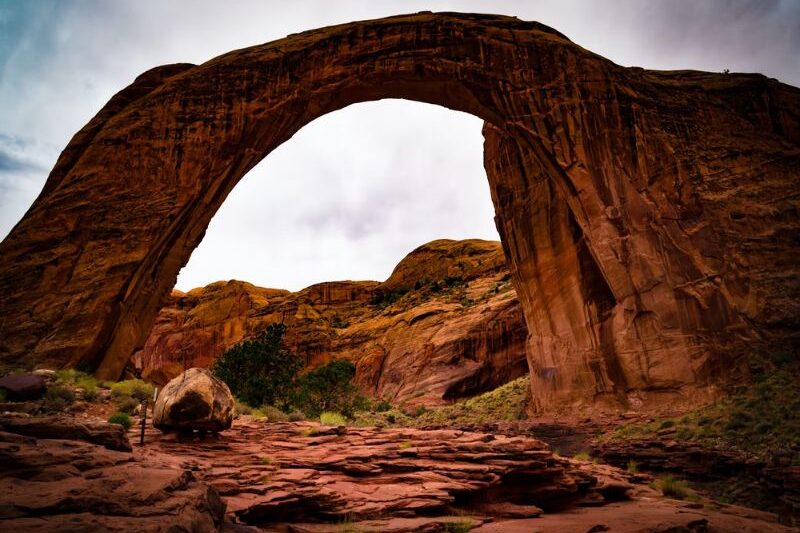
A massive natural arch (85 feet wide) framed against the sky at mile 13 of the Scenic Drive. Despite its name, it is technically an arch, not a bridge — formed by frost-wedging rather than water erosion. A short paved path from the parking area leads to the viewpoint.
Mossy Cave Trail
A family-friendly 0.8-mile out-and-back trail outside the main fee area, following a stream to a small waterfall and a shallow cave coated in hanging moss. The trail stays flat and shaded, making it a welcome cool-off on hot afternoons.
Editor-curated picks carried over from our original guide. Where a full place guide exists, the card links to it.
Places worth your time
Where to stay
The Lodge at Bryce Canyon
1 Lodge at Bryce Canyon, Bryce Canyon, UT 84764, USA
The only lodge inside the park, perched on the canyon rim with direct trail access. Log-and-stone cabins, motel rooms, and suites embrace a 1920s national-park aesthetic. No TVs in cabins by design — the view from the porch replaces all screens. Open seasonally May–October for cabins.
Best Western Plus Ruby's Inn
26 S Main St, Bryce Canyon City, UT 84764, USA
A full-service resort just outside the park entrance offering Western-themed rooms, an indoor pool, a rodeo arena, horseback rides, and multiple restaurants. A convenient base with easy shuttle access to the Bryce Amphitheater.
Purple Sage Inn
30 N 300 W, Panguitch, UT 84759, USA
A restored 1930s brick building on Main Street in Panguitch (25 min from the park). Ten individually decorated rooms with period furniture, a garden courtyard, and a full breakfast. A budget-friendly alternative with small-town charm.
Editor-curated stays carried over from our original guide. Where we have reviewed the hotel, the card links to the review.
Tips from the field
Highlights
- Bryce Amphitheater – Largest Hoodoo Collection
- Queen's Garden–Navajo Loop Trail
- Sunrise & Sunset Points
- Scenic 18-Mile Drive
- Dark Sky Stargazing
- Natural Bridge Viewpoint
- Fairyland Loop Trail
- Snow-Capped Hoodoos in Winter
Best activities
- Hike the Queen's Garden–Navajo Loop combo trail, photograph hoodoos at sunrise from Inspiration Point, drive the 18-mile Scenic Drive, stargaze during a ranger-led astronomy program, snowshoe among snow-capped hoodoos in winter, ride horseback below the rim, explore the Rim Trail between overlooks, and hike the strenuous Fairyland Loop for solitude and sweeping views.
Local experiences
- Join a ranger-led Full Moon Hike (summer, limited tickets), attend the RimFest astronomy festival in June, ride horseback along the canyon floor with Canyon Trail Rides, or drive 30 minutes to Red Canyon for mountain biking through crimson rock tunnels.
Practical tips
- Altitude: 8,000–9,115 ft — drink extra water and take it easy on day one.
- Footwear: Hiking boots with ankle support are essential on steep, sandy trails.
- Water: Carry 1 L per hour of hiking; refill at Sunset Point and the Visitor Center.
- Shuttle: Free park shuttle operates May–September between Bryce Canyon City and Bryce Point.
- Gas: Fill up in Panguitch or Tropic; there is no gas inside the park.
Photography tips
- Sunrise from Sunset Point or Inspiration Point produces the best warm light on the amphitheater's east-facing hoodoos. Thor's Hammer is best framed from the Navajo Loop switchbacks. Use a polarizing filter to deepen the blue sky behind orange rock. In winter, snow on hoodoos creates striking contrast — bracket exposures to preserve detail. For Milky Way shots, photograph from Sunset Point or Rainbow Point between May and September on moonless nights.
Timing
- Allow 1–2 full days for Bryce Canyon's essential trails and viewpoints. Combine with a multi-day Utah Mighty 5 itinerary: Zion (80 min south), Capitol Reef (110 min east), Arches and Canyonlands (200 min northeast).
Keeping it authentic
- Bryce Canyon's hoodoos are a geological anomaly: iron-rich limestone pinnacles carved by 200 freeze-thaw cycles per year at 8,000+ feet of elevation. The Paiute people call them 'Legend People' — figures turned to stone by the trickster god Coyote. The park's Dark Sky designation draws astronomers worldwide: on a clear moonless night, more than 7,500 stars are visible, along with the Milky Way and distant galaxies. Rangers host seasonal astronomy programs with telescopes.
Culture, customs and safety
Cultural heritage
Utah’s cultural and historical heritage is deeply intertwined with Indigenous presence, pioneer settlement, and unique religious foundations. For thousands of years, the Ancestral Puebloans and Fremont cultures left behind cliff dwellings, petroglyphs, and ceremonial sites, especially visible in protected areas like Bears Ears and Capitol Reef. The 19th century saw the arrival of Mormon pioneers who shaped Utah’s architectural landscape with monumental structures such as the Salt Lake Temple and laid the foundation for many of the state’s cultural traditions. Utah’s legacy also includes the Golden Spike National Historical Park, where the transcontinental railroad was completed in 1869, linking America coast to coast. While Utah has no individual UNESCO World Heritage Sites, many of its parks and archaeological landscapes are under international conservation focus due to their geological and cultural significance.
Safety notes
The park’s main hazards are altitude (8,000–9,100 ft), dehydration, and afternoon lightning. Wear hiking boots — sandals and sneakers cause the most injuries on steep, sandy trails. Stay on marked trails and away from cliff edges. Afternoon thunderstorms are common in July–August; descend from exposed ridges if thunder is audible. Wildlife (mule deer, pronghorn, occasional mountain lion) should not be fed or approached. Cell service is unreliable in the park. Emergency: 911 or ranger station (435) 834-5322.