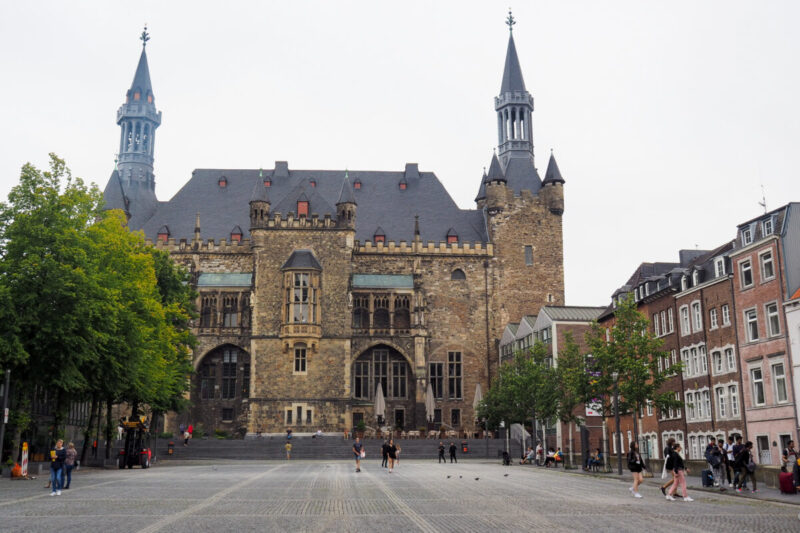
Historic Gothic city hall, once a place of Charlamagne.
Global Influence
The Aachen Town Hall, a landmark of cultural significance, attracts international visitors due to its historical and architectural importance. Aachen’s City Hall is a significant tourist attraction, drawing visitors from around the world to marvel at its stunning architecture and historical significance.
The City Hall’s rich history and architectural grandeur influence global culture and art, making it a subject of fascination and inspiration for artists, historians, and architects worldwide. City Hall Aachen has been involved in international events, serving as a venue for cultural and historical exhibitions, conferences, and collaborations that promote global cultural exchange and understanding.
Historical Impact
City Hall Aachen has witnessed significant historical events. It has been integral to the city’s governance and administration for centuries, reflecting the continuity of Aachen’s history. The architectural and archaeological significance of the Aachen Town Hall is evident in its Gothic design, representing a blend of historical and cultural influences that have shaped the region over the centuries.
City Hall Aachen has substantially contributed to local and national history, symbolizing the region’s governance and authority and shaping the city’s identity and development. Notable historical figures associated with City Hall Aachen include Emperor Charlemagne, whose legacy is intertwined with the city’s history and the Aachen Cathedral’s development.
Preservation Efforts
Current preservation projects focus on maintaining City Hall Aachen’s structural integrity and historical authenticity, ensuring that it continues to stand as a testament to the city’s rich heritage. Organizations involved in preserving City Hall Aachen include local historical societies, architectural conservation groups, and government bodies dedicated to heritage preservation.
Funding and support for preserving City Hall Aachen come from public and private sources, including government grants, philanthropic donations, and contributions from heritage conservation initiatives. Community involvement in preservation efforts is evident through volunteer programs, educational initiatives, and public awareness campaigns to foster a sense of ownership and pride in preserving Aachen’s cultural heritage.
Historical Significance
The Aachen Town Hall, established around 1350, is celebrated as a remarkable achievement in secular architecture, reflecting the grandeur of the medieval era. The building stands on the historic grounds of Charlemagne’s palace hall, emphasizing its deep historical roots. Notably, the hall was the location of coronation banquets for 30 German kings and 12 queens, adding to its historical prestige.
Cultural Importance
Aachen Town Hall is immensely culturally relevant within the local community and beyond. It symbolizes Aachen’s rich heritage and is vital in preserving and promoting local traditions and arts. The building’s association with significant historical events and figures contributes to its cultural significance, attracting visitors keen on exploring the region’s cultural heritage.
Architectural Style
The architectural style of Aachen Town Hall is predominantly late Gothic, with elements that showcase the grandeur and sophistication of medieval design. The building’s historic facade and artfully designed rooms reflect the unique design elements of the era, providing visitors with a glimpse into the architectural splendor of the past.
Visitor Experience
Visitors to Aachen Town Hall can expect an enriching experience that offers insights into the region’s history and cultural legacy. Guided tours allow visitors to explore the building’s historical and architectural significance. The ambiance is characterized by grandeur and historical resonance, creating a captivating atmosphere for exploration and learning.
Aachen Town Hall is accessible to various groups, including families and disabled individuals, with facilities such as restrooms to ensure visitor comfort. While specific amenities may be limited due to the building’s historical nature, the town hall’s central location provides easy access to nearby cafes and gift shops.
Ratings and Reviews
The consensus among reviewers and visitors highlights Aachen Town Hall’s awe-inspiring historical significance and architectural beauty. Praises often center around its rich historical background and well-preserved architectural features. However, some visitors note the limited amenities and accessibility challenges for individuals with mobility issues.
For the best experience, visitors should check the town hall’s schedule for guided tours and special exhibitions. Exploring nearby attractions such as Aachen Cathedral, located nearby, can complement the visit to Aachen Town Hall. Planning the visit during quieter times is recommended to fully appreciate the building’s grandeur.
Photographic Opportunities
Aachen Town Hall offers numerous photogenic spots, including its historic facade and artfully designed rooms. The courtyard and surrounding areas also provide excellent vantage points for capturing the building’s architectural splendor. Early morning or late afternoon visits may offer the best lighting for capturing memorable photos.
Aachen City Hall (Rathaus) is a magnificent Gothic masterpiece located in the heart of Aachen, Germany. Built in the 14th century on the foundations of Charlemagne’s King’s Hall, the building served a dual purpose: as the seat of the free imperial city’s civic administration and as the celebration hall for coronation banquets of German kings. The imposing structure features the historic Granus Tower, which dates back to Charlemagne’s era, with its lower four stories from the 8th-9th centuries. The richly ornamented north façade once boasted around 60 painted and partially gilded figures, and the building’s architectural influence was so significant that it became a model for many Flemish town halls. Though damaged multiple times by fires and wars throughout its history, including during both World Wars, it has been meticulously restored. Today, the City Hall continues to function as the seat of Aachen’s mayor and city council while also serving as a popular tourist attraction. Since 2009, it has been a station on the Route Charlemagne, a cultural heritage pathway through the city. Visitors can explore its grand halls, including the impressive Coronation Hall, through guided tours available on weekends.
Cultural Context
Gothic civic landmark representing imperial power in Holy Roman Empire. Part of Route Charlemagne cultural heritage trail, houses historical exhibitions and hosts prestigious Charlemagne Prize ceremony.
Historical Context
Built 1330-1349 on foundations of Charlemagne’s Aula Regia palace. Hosted imperial coronation banquets for Holy Roman Emperors until 1531. Survived Napoleonic occupation and WWII bombing.
Context
Story and significance
About
Aachen Town Hall, located in Aachen, Germany, is of significant historical, cultural, and architectural importance, making it a must-visit destination for those interested in exploring the region’s rich heritage.
Around 1350, a Gothic municipal palace was constructed on the foundations of Charlemagne’s King’s Hall: the Rathaus of the Imperial City of Aachen. Its grand festival hall hosted the coronation banquets of Roman-German kings for centuries.
Since 1950, the Coronation Hall has been home to the annual International Charlemagne Prize, which underscores Aachen’s contemporary status as a European city. As a key stop on the Route Charlemagne, the Town Hall embodies the emergence of civic self-government and European democracy.
The Rathaus symbolizes the city’s rich historical legacy, tracing its roots to Charlemagne’s reign while representing the growth of democratic ideals and civil autonomy in Europe. The surrounding landmarks, such as the Couven-Museum, Super C, the Newspaper Museum, and Elisenbrunnen, further enrich Rathaus’s cultural significance.
Visitors to this remarkable building can immerse themselves in the architectural beauty of the Gothic era while gaining insight into the pivotal role Aachen played in shaping European unity and governance. The Rathaus stands proudly as a testament to the city’s storied past, linking the medieval world to the modern European identity.
Historical significance
Aachen City Hall is significant as the municipal center of a city that played an outsized role in medieval imperial history and as a symbol of urban self-government. Its halls and collections document municipal administration, civic rituals and the city’s connections to imperial ceremonies and regional politics.
Historical context
The present hall stands on foundations of earlier medieval municipal buildings and was constructed in its current Gothic revival-influenced form over centuries as the city’s seat of government and a place for imperial coronation festivities’ receptions. It housed administrative functions, civic archives and ceremonial spaces tied to Aachen’s urban governance.
Cultural context
Aachen City Hall functions as a civic heart for Aachen, hosting official events, exhibitions and public tours that connect residents and visitors with the city’s medieval municipal traditions. It is a focal point for local ceremonies and cultural programming and forms a key stop for visitors exploring Aachen’s UNESCO-listed heritage alongside the cathedral.
Architecture
The City Hall combines a Gothic facade with a richly ornamented council chamber and a large hall historically used for receptions; its exterior features stepped gables, pointed arches and decorative stonework characteristic of late medieval civic architecture. Interior elements include stately halls and historical rooms that preserve painted decoration and woodwork from different periods.
Local significance
Aachen City Hall functions as a civic centerpiece and symbol of municipal government, embodying the city’s long political history dating back to its medieval importance. Locals associate the building with official ceremonies, public events and cultural programming, and it regularly appears in local education about Aachen’s past. The hall also anchors the market square and contributes to local identity by providing a visible reminder of the city’s administrative continuity and historic significance.
Editorial scores
How we rate it
Universal appeal & authenticity10/10
Cultural richness & educational value10/10
Preservation & integrity10/10
Accessibility & visitor engagement10/10
Editorial scores on a 10-point scale, judged against places of the same kind.