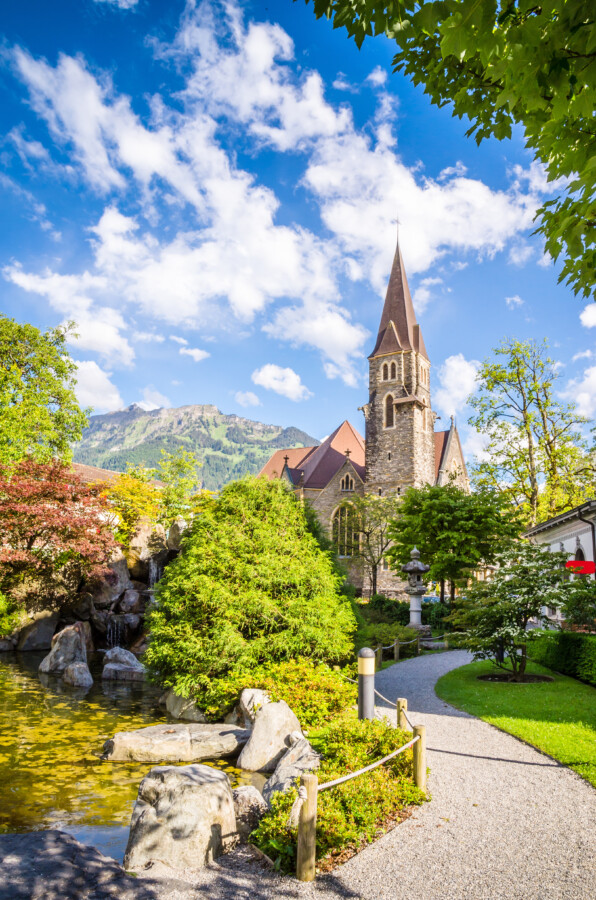
Interlaken, nestled between Lake Thun and Lake Brienz, is a stunning resort town in the heart of the Swiss Alps. Known for its breathtaking landscapes and adventure sports, Interlaken is the gateway to some of the most spectacular mountain scenery in Switzerland. Whether you’re seeking thrilling outdoor activities or serene moments by the lakes, Interlaken offers a unique blend of natural beauty and Swiss charm.
Interlaken
City in Switzerland, Switzerland, EuropeUpdated
- Overall5/10
- Best forCouples, Adventure seekers, Luxury travelers
- PeakJan, Feb, Jul, Aug
- CurrencyCHF
Interlaken sits between Lake Thun and Lake Brienz with the Jungfrau massif towering behind it — an adrenaline capital where paragliding is a lunch break activity.
Best For
Activities
Season
Budget
At a glance
CurrencyCHF
Time zoneCentral European Time
Languages
- German
- French
- Italian
- Romansh
Setting
- Alpine valley
- Lake Brienz
- Mountain funiculars
- Jungfrau region
Known for
- Adventure Sports
- Alpine Scenery
- Lakes
- Hiking
- Skiing
- Train Journeys
- Photography
- Nature
Population5,6335,633 residents
VisaDuration: Up to 90 days within any 180-day period in the Schengen Area · Documents: Valid passport issued within the last 10 years and valid for at least 3 months after planned departure, plus proof of accommodation, onward or return travel, and sufficient funds if requested
How Interlaken scores
5/10OverallFair
Weather8/10
Value for money7/10
Safety8/10
Food & cuisine7/10
Culture & arts4/10
Cultural experience7/10
History6/10
Nature & outdoors10/10
Adventure6/10
Nightlife5/10
Shopping4/10
Family friendly5/10
Romance9/10
Character
Photography score7/10
Authenticity score10/10
Off-the-beaten-path score7/10
Editorial scores on a 10-point scale, weighed against destinations of the same kind.
Travel safety snapshot
Overall87/100High rating
Women travellers86/100
LGBTQ+ travellers76/100
Theft82/100
Medical care83/100
Physical harm88/100
Political freedom88/100
SafePlace indicators use their source 100-point scale; higher is more favourable. Planning context, not a live travel advisory — check official government guidance before you go.
When to go
Best months to visit: January, February, May, June, July, August, September, October and December.
- January: -7.2 to 0.9 degrees Celsius, 23.5 millimetres of rain, best-time score 4 out of 5.
- February: -5.4 to 3.4 degrees Celsius, 31.9 millimetres of rain, best-time score 4 out of 5.
- March: -3.4 to 4.9 degrees Celsius, 48.6 millimetres of rain, best-time score 3 out of 5.
- April: 26.7 millimetres of rain, best-time score 3 out of 5.
- May: 2.6 to 9.7 degrees Celsius, 78.3 millimetres of rain, best-time score 4 out of 5.
- June: 9.1 to 17.6 degrees Celsius, 47.1 millimetres of rain, best-time score 5 out of 5.
- July: 10.8 to 19 degrees Celsius, 52.5 millimetres of rain, best-time score 5 out of 5.
- August: 10.9 to 19.9 degrees Celsius, 92.1 millimetres of rain, best-time score 5 out of 5.
- September: 8.6 to 16 degrees Celsius, 24.6 millimetres of rain, best-time score 5 out of 5.
- October: 2.7 to 10.3 degrees Celsius, 60.6 millimetres of rain, best-time score 4 out of 5.
- November: -0.7 to 7.1 degrees Celsius, 36.7 millimetres of rain, best-time score 3 out of 5.
- December: -5.5 to 1.4 degrees Celsius, 27.4 millimetres of rain, best-time score 4 out of 5.
Month-by-month conditions and packing advice
- January
- Cold weather, mostly dry January in Interlaken: shoulder months or winter sports can work well, but match plans to lift and trail operations. Crowds: January represents the height of winter tourism in Interlaken, drawing visitors for its proximity to Jungfrau, Grindelwald, and Lauterbrunnen ski areas. Conditions are excellent for snow sports, ice climbing, and winter hiking, though outdoor sightseeing is limited by short daylight hours and freezing temperatures. Crowds are moderate to high in ski resorts, with accommodation pricing reflecting peak winter demand. Those not skiing will still find value in scenic train rides like the Jungfraujoch railway or enjoying thermal spas and fondue in mountain lodges. Travelers should plan early for accommodation, as prime chalets and resorts book quickly during this season.
- February
- Cold weather, some rain February in Interlaken: shoulder months or winter sports can work well, but match plans to lift and trail operations. Crowds: February is a prime time for winter sports enthusiasts visiting Interlaken, as surrounding ski areas such as Grindelwald and Mürren are in full swing. Conditions are cold but stable, with reliable snow at higher altitudes. This month falls within Switzerland’s winter tourism high season, so expect busier hotels, ski lifts, and restaurants, along with elevated prices. Travelers more interested in cultural and scenic exploration than skiing may find shorter daylight hours limiting, but clear days reveal some of the most breathtaking alpine views of the year. Advance booking is essential during this period, particularly for mountain excursions and lodging. The festive winter atmosphere adds charm, though non-skiers should plan indoor cultural visits to balance exposure to the cold.
- March
- Cold weather, some rain March in Interlaken: weather and mountain access are less predictable, so keep flexible indoor and lowland options. Crowds: March travel in Interlaken sits between the peak winter ski season and the upcoming spring hiking season. While nearby ski resorts remain active, crowds are lighter compared to the December–February rush, which means more affordable hotel rates and quieter mountain villages. Visitors can still enjoy skiing, snowboarding, and sledding in higher alpine areas, but valley-level hikes may be muddy or icy, limiting lower-altitude trail options. The weather can change quickly, so flexibility in planning is essential. This shoulder period rewards travelers seeking fewer tourists, photogenic misty lakes, and opportunities to explore both snow-covered mountains and the quieter, atmospheric streets of Interlaken without the bustle of peak crowds. Early bookings are still recommended for ski areas, but city stays tend to be more accessible.
- April
- Cold weather, some rain April in Interlaken: weather and mountain access are less predictable, so keep flexible indoor and lowland options. Crowds: April represents shoulder season in Interlaken, when winter sports are winding down and summer activities have yet to begin. Visitor numbers remain moderate, with lower hotel rates compared to peak summer months. The cool conditions mean many alpine trails are still closed, but paragliding, scenic train rides, and boat excursions across the lakes operate comfortably. Travelers will find fewer crowds at iconic viewpoints like Harder Kulm, making it an ideal month for photographers and those seeking a quieter pace. Layered clothing is essential, as temperatures fluctuate significantly between morning and afternoon. Booking ahead isn’t as critical as in summer, but accommodations in town still fill quickly during weekends.
- May
- Cool weather, some rain May in Interlaken: shoulder months or winter sports can work well, but match plans to lift and trail operations. Crowds: May represents shoulder season in Interlaken, offering a balance between fewer crowds and increasing accessibility to outdoor activities. While higher-altitude hiking routes may still be closed due to lingering snow, valley walks, lake cruises, and cultural excursions are fully enjoyable in the cool, moist conditions. Prices for accommodation are more moderate than in peak summer, though advanced booking is recommended for popular hotels and tours as spring draws international visitors. The rainfall can disrupt plans, but it also ensures dramatic landscapes and fewer tourist bottlenecks compared to July and August. Travelers seeking quieter moments in the Swiss Alps will find May ideal, though flexibility with scheduling is key. This is a month best suited to cultural explorations, lakeside relaxation, and low-altitude trails, with occasional bursts of clear skies perfect for photography.
- June
- Cool weather, some rain June in Interlaken: lakes, mountain railways, paragliding, hiking, and Jungfrau-region day trips have the strongest access. Crowds: June represents the start of Interlaken’s summer tourist season, drawing visitors eager for outdoor adventures. While not yet at peak crowd levels of July and August, hotels and excursions begin to fill, so early booking is wise. Prices start to climb in tandem with demand, especially for mountain railway tickets and lake cruises. Weather is highly favorable for hiking, paragliding, and lake activities, though travelers should be prepared for sudden rain showers. This month offers an excellent balance: vibrant alpine landscapes, accessible trails free from heavy snow, and manageable tourist density. For travelers seeking both activity and tranquility, June strikes an ideal compromise before the height of summer rush.
- July
- Warm and pleasant, some rain July in Interlaken: lakes, mountain railways, paragliding, hiking, and Jungfrau-region day trips have the strongest access. Crowds: July is one of Interlaken’s busiest months, aligning with the European summer holiday season. Excellent weather conditions make it prime time for outdoor pursuits like paragliding, alpine hiking, and lake cruises. The town and surrounding villages experience heavy tourist traffic, and accommodation prices peak accordingly. Early booking is essential for both lodging and popular activities. While crowds may be dense in central Interlaken, venturing into nearby valleys or higher-altitude trails offers more tranquility. Occasional rain showers rarely disrupt plans but add to the refreshing alpine atmosphere. This is the ideal time for active travelers willing to balance busier tourist flows with the reward of optimal conditions for Switzerland’s signature outdoor adventures.
- August
- Warm and pleasant, some rain August in Interlaken: lakes, mountain railways, paragliding, hiking, and Jungfrau-region day trips have the strongest access. Crowds: August represents peak tourist season in Interlaken, with the combination of pleasant warmth and cultural events drawing international crowds. Accommodation fills quickly, and prices for hotels, transport, and guided excursions are at their highest of the year. Trails and mountain railways experience heavy foot traffic, though the expansive alpine network still offers quieter paths for those willing to venture off the main routes. Weather conditions are excellent for adventure activities—hiking, climbing, and water sports—but travelers should remain flexible, as sudden mountain storms can temporarily disrupt visibility and schedules. Despite the occasional rain, most activities resume quickly, and the festive summer atmosphere ensures plenty to enjoy. Booking well in advance is essential, especially for scenic trains and mountain excursions.
- September
- Cool weather, mostly dry September in Interlaken: lakes, mountain railways, paragliding, hiking, and Jungfrau-region day trips have the strongest access. Crowds: September marks the shoulder season in Interlaken, offering quieter experiences compared to the busy summer months. Comfortable hiking conditions make it ideal for outdoor pursuits, from alpine trails to paragliding, while the early autumn colors enhance scenic appeal. Accommodation prices begin to drop slightly after the peak August rush, though popular hotels still recommend advance booking. Attractions remain open, but with reduced tourist traffic, allowing more authentic encounters with local life. Weather is generally stable, but cooler evenings suggest bringing warm layers for late-night activities. Travelers can enjoy a balance between pleasant weather, moderate crowds, and cultural events without the higher costs and congestion of summer. For those seeking both adventure and tranquility, September is one of the best times to visit Interlaken.
- October
- Cool weather, some rain October in Interlaken: shoulder months or winter sports can work well, but match plans to lift and trail operations. Crowds: October marks the shoulder season in Interlaken, a quieter window between the summer hiking rush and the onset of ski tourism. Fewer visitors mean reduced crowd levels and often more favorable pricing for accommodations and tours. While higher-altitude trails may become slippery or partially snow-dusted, valley walks, lake cruises, and cultural explorations remain accessible and rewarding. This is an excellent time for travelers seeking a more reflective and less commercialized experience, with authentic encounters in village cafés and alpine farms. However, cooler, wetter conditions require flexibility in planning as outdoor activities may be affected by sudden weather changes. Booking spontaneous excursions is easier now, but some high mountain attractions may operate on reduced schedules.
- November
- Cold weather, some rain November in Interlaken: weather and mountain access are less predictable, so keep flexible indoor and lowland options. Crowds: November represents a shoulder season in Interlaken, positioned between the vibrant fall foliage period and the busy winter ski season. Tourist crowds thin significantly, leading to more affordable accommodation rates and a calmer atmosphere across the town. While major ski resorts may not yet be fully operational, hiking trails at lower elevations remain accessible, though conditions can be damp and chilly. The cooler weather is perfect for scenic rail journeys, hot spring visits, and cultural exploration in nearby villages. Visitors should plan for shorter days, with limited sunlight affecting outdoor schedules. Those seeking fewer crowds and atmospheric Alpine views will find November appealing, though activity options are narrower than in peak seasons.
- December
- Cold weather, some rain December in Interlaken: shoulder months or winter sports can work well, but match plans to lift and trail operations. Crowds: December marks the start of the high winter season in Interlaken, driven by ski tourism and festive holiday travel. The cold conditions are excellent for snow-based activities, from skiing and snowboarding to sledding and winter hikes. Accommodation prices rise in line with Christmas and New Year demand, and availability can be tight in popular resorts. Travelers should plan well in advance if visiting during the holidays. Towns and mountain villages sparkle with seasonal markets and decorations, making it a photogenic and atmospheric time to visit. The downside: cold weather limits long casual strolls and some lake activities are paused until spring. For those seeking winter adventure and festive spirit, December is ideal.
Peak season
- December
- January
- February
- July
- August
Off-peak
- April
- May
- October
- November
- March
- June
- September
Know before you go
About
Interlaken, nestled between Lake Thun and Lake Brienz, is a stunning resort town in the heart of the Swiss Alps. Known for its breathtaking landscapes and adventure sports, Interlaken is the gateway to some of the most spectacular mountain scenery in Switzerland. Whether you’re seeking thrilling outdoor activities or serene moments by the lakes, Interlaken offers a unique blend of natural beauty and Swiss charm.
Neighbourhoods
Interlaken consists of several charming neighborhoods:
- Interlaken West: A lively area with shops, restaurants, and easy access to the lakes.
- Interlaken Ost: The main train station area, bustling with tourists and activity.
- Matten: A quieter residential area with stunning views of the mountains.
- Wilderswil: A picturesque village just a short distance from Interlaken, known for its charming atmosphere.
Each neighborhood offers a unique experience, from vibrant social scenes to peaceful retreats.
Best time to visit
June through September for warm 20–25 °C weather, open hiking trails, and maximum daylight. July–August is peak season. December through March for skiing and Christmas markets. May and October offer calm shoulder conditions with thinner crowds and lower prices.
Season by season
Spring (Apr–May): 10–18 °C, waterfalls at peak flow, wildflowers, fewer tourists. Summer (Jun–Aug): 20–28 °C, peak season, all trails open, paragliding. Autumn (Sep–Oct): 8–18 °C, golden larch forests, quieter, scenic train rides. Winter (Dec–Mar): -5 to 5 °C, skiing, Christmas markets, Jungfraujoch snow activities.
Crowds
Very High in July–August and around Jungfraujoch year-round; moderate in May–June and September; low in winter (except ski season)
Getting there and around
Getting there
Interlaken is accessible via train from major Swiss cities, with connections every 30 minutes from Zurich (2 hours), Bern (50 minutes), Geneva (2.5 hours), and Basel (2 hours). The nearest airports are Zurich Airport (2.5 hours by train) and Geneva Airport (3 hours). Private transfers and shuttle services operate from both airports, with the SBB train network providing reliable connections through Bern or Spiez.
Getting around
Interlaken’s compact center is walkable, connecting the two train stations (Interlaken Ost and West) in 20 minutes. The local Roam bus network covers surrounding villages and mountain base stations. Many hotels provide guest cards for free public transport. The SBB Mobile app handles all Swiss public transport tickets and real-time schedules. Bicycle rentals are popular for exploring the lakeside paths along Lakes Thun and Brienz.
Top experiences in Interlaken
Jungfraujoch – Top of Europe
Europe’s highest railway station at 3,454 m, reached by a cogwheel train climbing from Kleine Scheidegg through the Eiger and Mönch. At the summit: the Sphinx Observatory panorama deck, the Ice Palace carved inside the Aletsch Glacier (a UNESCO site), and snow-fun activities. Book the first train to avoid crowds. Round-trip from Interlaken Ost ~CHF 233 (Swiss Travel Pass holders get 25 % off).
Harder Kulm
The ‘Top of Interlaken’ viewpoint (1,322 m) reached via a 10-minute funicular from the edge of town. A glass-floored platform — the Two Lakes Bridge — extends over the cliff, offering a panoramic sweep of Lake Thun, Lake Brienz, and the Eiger–Mönch–Jungfrau trio. A restaurant at the top serves cheese fondue with the view. Admission ~CHF 36 return.
Lake Thun & Lake Brienz
Two glacier-fed alpine lakes flanking the town. Lake Thun (west) is larger and warmer, dotted with medieval castles (Oberhofen, Spiez, Thun). Lake Brienz (east) is turquoise and quieter, home to the Giessbach Falls and the open-air museum at Ballenberg. Paddle-steamer cruises on both lakes are covered by the Swiss Travel Pass.
Lauterbrunnen Valley
A U-shaped glacial valley south of Interlaken containing 72 waterfalls, including the 297 m Staubbach Falls and the Trümmelbach Falls (10 glacier-fed cascades accessible inside the mountain). The car-free villages of Mürren and Gimmelwald cling to the cliffs above. A cog railway connects Lauterbrunnen to Wengen and Kleine Scheidegg.
Grindelwald First
An adventure mountain above Grindelwald (30 min from Interlaken) with a cliff walk, zip line, mountain carts, trottibike, and a gondola ride to Lake Bachalpsee — one of the most photographed alpine lakes in Switzerland. The First Glider and First Flyer provide bird’s-eye views over the valley.
Editor-curated picks carried over from our original guide. Where a full place guide exists, the card links to it.
Places worth your time

Where to stay
Victoria Jungfrau Grand Hotel & Spa
Höheweg 41, 3800 Interlaken, Switzerland
Switzerland’s grandest Belle Époque hotel, commanding the Höheweg since 1865. Features two Michelin-level restaurants, an ESPA spa, indoor/outdoor pools, and rooms facing the Jungfrau massif. Afternoon tea in the lobby is an institution.
Hotel Interlaken
Centralstrasse 3, 3800 Interlaken, Switzerland
A mid-range design hotel on the main shopping street between the two stations, with compact modern rooms, a lively bar, and a roof terrace with mountain views. Popular with younger travelers who want a central location without the luxury price tag.
Metropole Hotel Interlaken
Höheweg 74, 3800 Interlaken, Switzerland
A reliable 4-star hotel across from Höhematte park, offering lake- and mountain-view rooms, a traditional Swiss restaurant, and direct access to town. A good mid-range base for day trips to the Jungfrau Region.
Editor-curated stays carried over from our original guide. Where we have reviewed the hotel, the card links to the review.
Tips from the field
Highlights
- Jungfraujoch – Top of Europe
- Harder Kulm
- Lake Thun & Lake Brienz
- Lauterbrunnen Valley & 72 Waterfalls
- Grindelwald First
- Paragliding
- Swiss Paddle-Steamer Cruises
- Mürren & Gimmelwald
Best activities
- Take the cogwheel train to Jungfraujoch, paraglide over Interlaken, ride the funicular to Harder Kulm, cruise Lake Thun on a paddle steamer, hike to Lake Bachalpsee, walk through the Trümmelbach Falls, visit the car-free village of Mürren, zip-line at Grindelwald First, eat cheese fondue at Harder Kulm restaurant, and kayak on Lake Brienz.
Local experiences
- Paraglide tandem above Höhematte park, take a local cheese-making class, cruise Lake Thun on a restored paddle steamer, hike to Lake Bachalpsee at sunrise before the crowds, attend a yodeling concert in Grindelwald, ride the mountain carts on First, or eat rösti and raclette at a farmstead restaurant.
Practical tips
- Swiss Travel Pass: Covers boats, trains, and buses, plus 25 % off Jungfraujoch. Essential for saving money.
- Currency: Swiss Franc (CHF). Everything is expensive — budget CHF 50–70/meal, CHF 5–6/coffee.
- Trains: Interlaken Ost is the hub for mountain railways; Interlaken West is closer to town center.
- Weather: Mountain weather changes fast — pack layers and rain gear even in summer.
- Jungfraujoch: Book the earliest train (6:35 AM) to avoid bus-tour crowds.
Photography tips
- Harder Kulm's Two Lakes Bridge offers the iconic shot of both lakes with the Jungfrau behind — arrive for the first funicular to avoid crowds. Lake Bachalpsee's reflections of the Schreckhorn are best in early morning. The Staubbach Falls in Lauterbrunnen catch rainbow light mid-morning. For Jungfraujoch, clear skies are critical — check webcams before booking.
Timing
- Allow 3–5 days for Interlaken and the Jungfrau Region (Jungfraujoch day, Lauterbrunnen day, Grindelwald First day, lake cruise). Combine with Lucerne (2 hrs by train) or Bern (50 min) for a wider Swiss itinerary.
Keeping it authentic
- Interlaken is unapologetically a tourist hub — but its setting between two lakes beneath the Jungfrau is genuine Alpine grandeur. The town's real character is found in the surrounding valleys: Lauterbrunnen's car-free cliffs, Grindelwald's working farms, and Bönigen's lakeside fishing boats. Cheese fondue and rösti are local staples. Paraglider sails fill the sky above Höhematte park every afternoon — Interlaken holds its title as Europe's adventure sports capital.
Culture, customs and safety
Cultural heritage
Interlaken embodies the romantic Swiss Alpine tourism culture that pioneered mountain recreation and international travel, where traditional Swiss mountain farming, tourism innovation, and Alpine sports development created the archetypal Swiss resort destination. The region preserves traditional Swiss crafts, mountain festivals, and agricultural practices while maintaining its role as gateway to the Jungfrau region and Alpine adventure culture. Interlaken cultural heritage encompasses traditional Swiss mountain culture, tourism industry innovation, Alpine sports development, and the ongoing preservation of authentic Swiss cultural traditions that continue to define Swiss identity and international Alpine tourism standards.
Local customs & etiquette
Swiss punctuality is paramount in Interlaken, with trains and tours departing exactly on time. Quiet hours are strictly observed after 10 PM and on Sundays. Greet shop owners with “Grüezi” and say “Merci vilmal” when thanking. Tipping is not expected as service charges are included, though rounding up is appreciated. Environmental consciousness is strong – always use designated recycling bins and respect hiking trail regulations.
Safety notes
Interlaken is extremely safe. The main risks are mountain-related: sudden weather changes, altitude sickness at Jungfraujoch, and adventure-sport injuries. Use certified operators for paragliding and canyoning. Keep valuables secure on crowded trains and at busy viewpoints — petty theft is rare but possible. Emergency: 112.