Meteora’s six ancient monasteries perch dramatically atop towering sandstone pillars in central Greece, creating one of the world’s most spectacular religious landscapes. Among these architectural marvels, Roussanou Monastery stands out for its accessibility, stunning frescoes, and breathtaking views across the Thessalian Plain.
Rising 400 meters above the valley floor, these monasteries represent an extraordinary fusion of Byzantine architecture, natural wonder, and spiritual devotion. Built by monks seeking refuge from Ottoman persecution in the 14th-16th centuries, Meteora remains one of Greece’s most important pilgrimage sites and a UNESCO World Heritage treasure.
This comprehensive guide covers all six functioning monasteries with current visitor information, practical travel tips, and insider knowledge to help you experience the magic of these “suspended in air” sanctuaries that have inspired travelers for over 700 years.
Meteora has six functioning monasteries atop sandstone pinnacles in central Greece; in 2025 each costs €3 per entry, follows strict Orthodox dress codes, and operates on seasonal hours with fixed closure days—plan 1–2 days for a meaningful visit.
Meteora’s six monasteries: complete visitor guide

Each monastery offers unique architecture, artwork, and experiences. Current entrance fees are €3 per monastery for all six locations, with varying opening hours and closure days. Here’s your complete guide to visiting these sacred sites.
Great Meteoron Monastery (Megalo Meteoro)

The largest and oldest monastery, founded in 1356 by Saint Athanasios. Great Meteoron houses the most extensive collection of manuscripts, religious artifacts, and Byzantine art. The monastery’s museum displays precious icons, embroidered vestments, and ancient manuscripts that survived centuries of turbulent history.
Opening Hours:
- Summer (April-October): 9:00 AM – 5:00 PM
- Winter (November-March): 9:00 AM – 4:00 PM
- Closed: Tuesdays year-round
- Entrance Fee: €3
Highlights: Main church (Katholikon), museum with medieval manuscripts, panoramic terrace views, wine cellar, and kitchen preserved from monastic life
Varlaam Monastery

Named after hermit monk Varlaam who first settled the rock in 1350, this monastery features exceptional 16th-century frescoes by renowned painter Frangos Katelanos. The katholikon (main church) showcases some of Meteora’s finest religious artwork, particularly the striking Crucifixion scene.
2025 Opening Hours:
- Summer (April-October): 9:00 AM – 4:00 PM
- Winter (November-March): 9:00 AM – 3:00 PM
- Closed: Fridays year-round
- Entrance Fee: €3
Highlights: Frangos Katelanos frescoes, traditional rope and basket pulley system, spectacular valley views, hermit’s cell
Roussanou Monastery (Agias Varvaras)

Perhaps the most photographed monastery, Roussanou, appears to grow directly from its narrow rock pinnacle. Now a nunnery dedicated to Saint Barbara, this monastery offers the most accessible visit with relatively easy walking paths and spectacular sunset views.
The monastery’s unique position creates dramatic silhouettes at golden hour, making it a favorite for photographers. Inside, beautiful 16th-century frescoes and a peaceful courtyard provide intimate glimpses into contemporary monastic life.
2025 Opening Hours:
- Summer (April-October): 9:00 AM – 6:00 PM
- Winter (November-March): 9:00 AM – 2:00 PM
- Closed: Wednesdays year-round
- Entrance Fee: €3
Highlights: Most photogenic monastery, sunset views, active nunnery, 16th-century frescoes, accessible walkways
Holy Trinity Monastery (Agia Triada)

Featured in the James Bond film “For Your Eyes Only,” Holy Trinity requires the most challenging climb—140 steps carved into the rock face. This smaller monastery rewards the athletic with unparalleled 360-degree views and fewer crowds than the more accessible sites.
The monastery’s 15th-century katholikon contains beautiful frescoes, while the peaceful atmosphere reflects its continued use by monks who maintain traditional practices.
Opening Hours:
- Summer (April-October): 9:00 AM – 5:00 PM
- Winter (November-March): 10:00 AM – 4:00 PM
- Closed: Thursdays year-round
- Entrance Fee: €3
Highlights: James Bond filming location, challenging 140-step climb, panoramic views, fewer crowds, active monastery
St. Nicholas Anapausas Monastery

The smallest and lowest monastery, St. Nicholas, offers intimate spaces and exceptional frescoes by celebrated painter Theophanis Strelitzas (also known as Theophanis the Cretan). Due to limited space on its narrow rock, the monastery is built vertically with three levels of chapels.
Opening Hours:
- Summer (April-October): 9:00 AM – 3:30 PM
- Winter (November-March): 9:00 AM – 3:00 PM
- Closed: Fridays year-round
- Entrance Fee: €3
Highlights: Theophanis Strelitzas’ frescoes, unique vertical architecture, intimate setting, earliest closing time
St. Stephen’s Monastery
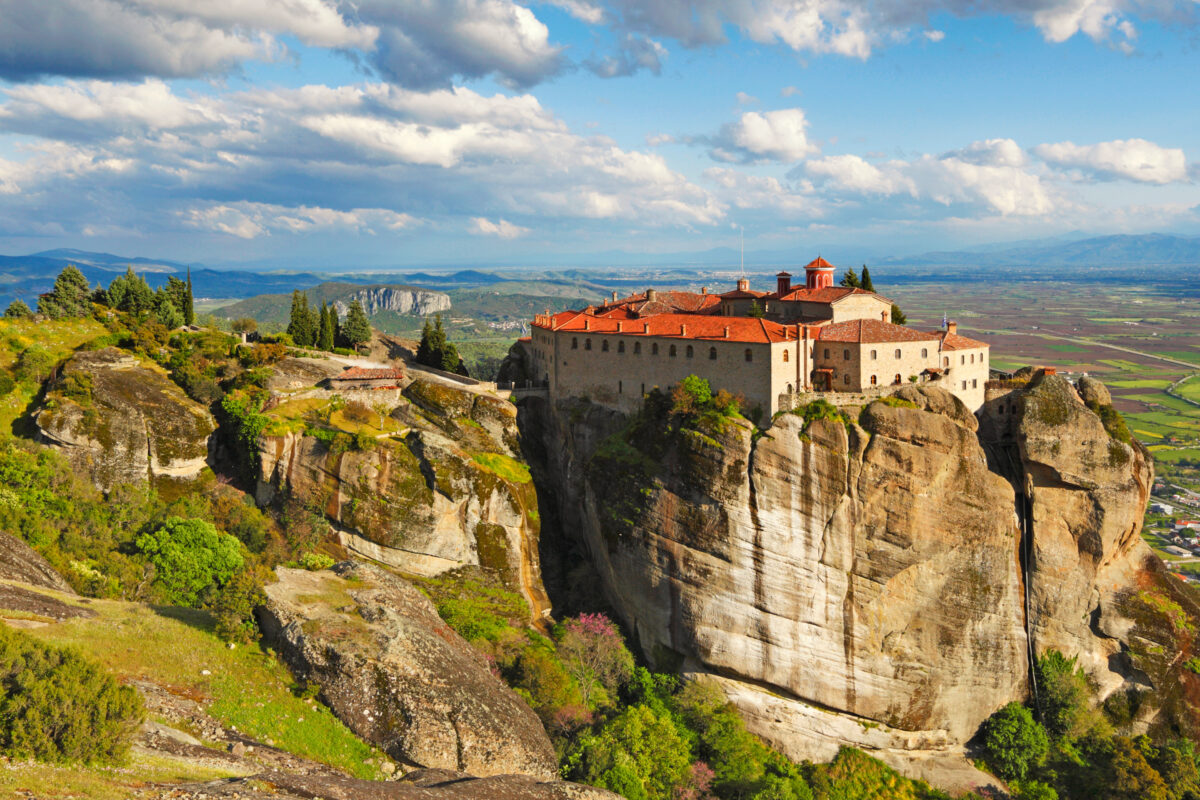
The most accessible monastery, reached by a pedestrian bridge rather than climbing steps, St. Stephen’s serves as an active nunnery. The monastery features two churches and houses precious relics, including Saint Charalambos’ skull, believed to protect from disease.
The nuns here produce religious icons, embroidery, and painted woodwork available for purchase, supporting the monastery’s preservation and daily operations.
Opening Hours:
- Summer (April-October): 9:00 AM – 1:30 PM, 3:30 PM – 5:30 PM
- Winter (November-March): 9:30 AM – 1:00 PM, 3:00 PM – 5:00 PM
- Closed: Mondays year-round
- Entrance Fee: €3
Highlights: Most accessible (no climbing), active nunnery, Saint Charalambos relics, handicraft shop, two historic churches
Planning your Meteora visit
Getting to Meteora

- By Train from Athens: Direct trains to Kalambaka (4.5 hours, €15-20) with spectacular mountain scenery. The station is 2km from the town center.
- By Bus: KTEL buses from Athens (5 hours, €25-30) and Thessaloniki (2.5 hours, €20). More comfortable than trains with air conditioning.
- By Car: Most flexible option, allowing monastery hopping at your own pace. Rental cars are available in Kalambaka (€25-40/day). GPS is essential for narrow mountain roads.
Base Towns:
- Kalambaka: A Larger town with more hotels, restaurants, and services
- Kastraki: Smaller village closer to monasteries, more atmospheric
Best times to visit

Peak Season (June-August): Longest daylight hours, warmest weather, but significant crowds and heat. Arrive early morning (8 AM) or late afternoon for better light and fewer people.
Shoulder Seasons (April-May, September-October): Ideal weather, moderate crowds, perfect light for photography. Spring offers wildflowers; autumn provides clear, crisp views.
Winter (November-March): Fewer crowds, dramatic weather, shorter daylight hours. Some days may be too cloudy for views, but snow-covered rocks create magical scenes.
Best Photography Times:
- Sunrise: 6:30-8:00 AM (golden light on eastern faces)
- Sunset: 6:00-7:30 PM summer, 4:30-6:00 PM winter
- Blue Hour: 30 minutes after sunset for illuminated monasteries
Visiting etiquette and dress code
Mandatory dress requirements

All monasteries strictly enforce traditional Orthodox dress codes. Entry is refused for inappropriate clothing—no exceptions.
Women must wear:
- Long skirts (below the knee)
- Covered shoulders and arms
- No shorts, mini-skirts, or sleeveless tops
- Head scarves are often provided at entrances
Men must wear:
- Long pants (no shorts)
- Covered shoulders
- Closed-toe shoes recommended
General guidelines:
- Maintain respectful silence inside churches
- No flash photography of frescoe
- Remove hats before entering churches
- Avoid pointing or loud conversations
Transportation between monasteries
Walking trails

Well-marked hiking paths connect the monasteries through scenic countryside and offer spectacular views. Most trails are moderate difficulty with some steep sections.
Popular hiking routes:
- Kastraki to Great Meteoron: 30 minutes uphill
- Great Meteoron to Varlaam: 20 minutes
- Varlaam to Roussanou: 15 minutes downhill
- Roussanou to Holy Trinity: 45 minutes (challenging)
- Complete circuit: 3-4 hours with monastery visits
Driving and parking
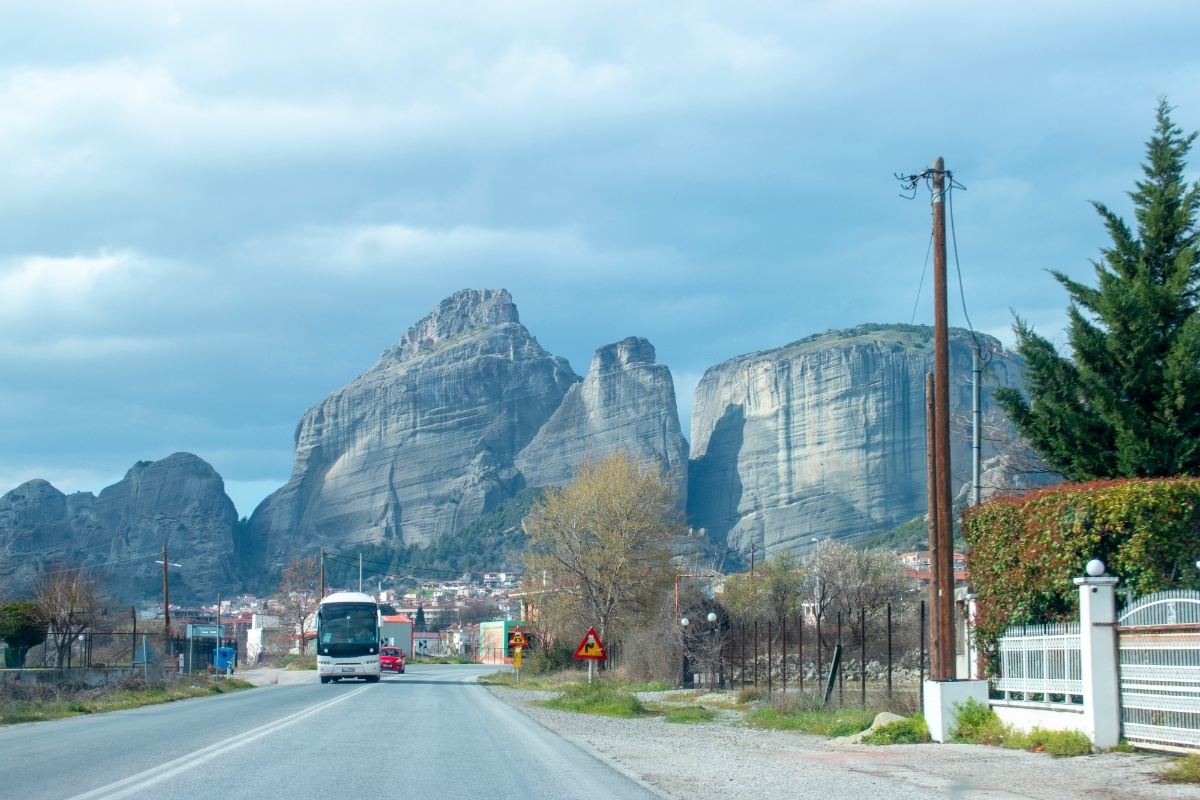
Each monastery has dedicated parking areas, though spaces fill quickly during peak season. Roads are narrow with hairpin turns—drive cautiously and yield to tour buses.
Parking tips:
- Arrive before 9 AM for guaranteed spaces
- Free parking at all monasteries
- Great Meteoron has the largest parking area
- Holy Trinity parking requires a steep uphill drive
Beyond the monasteries: Meteora activities
Rock climbing and hiking

Meteora offers some of Europe’s most unique climbing experiences with over 200 established routes on the sandstone pillars. Climbers must obtain permits and follow strict guidelines to protect nesting birds and respect the religious sites.
Climbing seasons:
- Best: April-May, September-October
- Restrictions: February-July (bird nesting)
- Guides available: Meteora Rock Climbing, Climbers Nest
Sunset and sunrise viewpoints

Top sunset spots:
- Psaropetra Rock: Classic view of Roussanou and Holy Trinity
- Great Meteoron viewpoint: Panoramic valley vistas
- Meteora Thrones: Instagram-famous rock formations
Sunrise locations:
- Kalambaka town cemetery: Elevated views without hiking
- Adrachti trail: Peaceful morning hike with monastery views
Accommodation recommendations
Luxury options

Meteora Hotel (5-star): Modern luxury with monastery views, spa facilities, and a gourmet restaurant. Located in Kalambaka with a shuttle service to monasteries.
Grand Meteora Hotel (4-star): Traditional architecture with contemporary amenities, outdoor pool, and panoramic terrace dining.
Budget-friendly stays

Kastraki village guesthouses: Family-run accommodations with authentic Greek hospitality, home-cooked meals, and proximity to hiking trails.
Kalambaka hostels: Social atmosphere perfect for solo travelers, walking distance to restaurants and the train station.
Local cuisine and dining
Traditional specialties

Meteora region offers hearty mountain cuisine featuring locally-raised lamb, wild game, mushrooms, and herbs. Trikala plains produce excellent wines and dairy products.
Must-try dishes:
- Kontosouvli: Slow-roasted pork or lamb
- Meteora mushrooms: Wild varieties found on the rocks
- Local cheese: Kasseri and graviera from mountain herds
- Tsipouro: Traditional grape-based spirit
Recommended restaurants

Taverna Gardenia (Kalambaka): Family-run restaurant serving traditional recipes for over 30 years. Famous for lamb kleftiko and homemade desserts.
Paramithi Restaurant (Kastraki): Romantic setting with monastery views, creative takes on local dishes, extensive Greek wine selection.
Practical travel information
What to bring

Essential items:
- Comfortable walking shoes with good grip
- Sun hat and sunscreen (strong mountain sun)
- Water bottle (limited facilities between monasteries)
- Small backpack for day trips
- Camera with extra batteries
- Cash for entrance fees (€18 total for all six monasteries)
Clothing considerations:
- Layered clothing for temperature changes
- Modest attire meeting monastery dress codes
- Light jacket for early morning or evening
- Comfortable pants suitable for walking and climbing
Meteora’s monasteries represent an extraordinary synthesis of human faith, architectural ingenuity, and natural wonder that has inspired visitors for seven centuries. These “suspended in air” sanctuaries offer profound experiences, unlike anything else in the world.
Frequently asked questions

How many days do you need for Meteora?
Most visitors spend 1-2 days exploring Meteora’s monasteries. One day allows visits to 3-4 monasteries, while two days enable a more relaxed pace with hiking, sunset viewing, and deeper exploration of each site. Photography enthusiasts often prefer 3 days for optimal lighting conditions.
Can you visit all six monasteries in one day?
While technically possible by car, visiting all six monasteries in one day creates a rushed experience. Plan 45-60 minutes per monastery, including travel time. Consider prioritizing 3-4 monasteries for a more meaningful visit with time to appreciate the art, architecture, and spiritual atmosphere.
Which monasteries are easiest to access?
St. Stephen’s Monastery is most accessible with a pedestrian bridge and no climbing required. Great Meteoron and Varlaam have well-maintained paths with moderate climbing. Holy Trinity requires the most challenging 140-step climb. Roussanou and St. Nicholas offer middle-ground accessibility.
Are the monasteries wheelchair accessible?
Unfortunately, the monasteries’ historic nature and clifftop locations make wheelchair access extremely limited. St. Stephen’s Bridge crossing is most feasible, but interior spaces still have steps and narrow passages. Contact individual monasteries directly for current accessibility options.
What happens if the weather is bad?
Monasteries remain open during light rain, but may close during severe weather for safety. Winter fog can obscure views completely, while lightning storms shut down clifftop access. Check weather forecasts and have indoor backup plans like Kalambaka’s Natural History Museum or local workshops.
Can you stay overnight in a monastery?
The monasteries at Meteora do not offer overnight accommodation for tourists. Visitors must stay in hotels, guesthouses, or hostels in Kalambaka or Kastraki villages. Some remote Greek Orthodox monasteries offer pilgrim lodging, but Meteora’s tourism focus excludes overnight stays.