China, the world’s most populous country and a civilization spanning over 5,000 years, offers an extraordinary blend of ancient traditions and cutting-edge modernity. From the iconic Great Wall snaking across northern mountains to the futuristic skylines of Shanghai and Shenzhen, China presents travelers with unparalleled diversity. The country encompasses vast deserts, pristine lakes, towering mountains, and bustling megacities, each region maintaining distinct cultural identities within the greater Chinese tapestry. Home to UNESCO World Heritage sites, philosophical traditions, revolutionary cuisine, and technological innovations, China provides transformative experiences ranging from spiritual journeys through ancient temples to exploration of natural wonders that inspired legends and modern films alike.
The destination guide
China

Country in AsiaUpdated
- Overall6/10
- Best forSolo travelers
- PeakJun–Aug
- CurrencyCNY
Five thousand years of history and a bullet train that runs on time. China rewards the traveler willing to plan past the obvious stops.
Travel guides for China
Things to do (1)
More guides featuring China (4)
At a glance
- Mandarin Chinese
- Vast continent
- Mountain ranges
- River valleys
- Desert plateaus
- Coastal regions
- {"name": "Adventurers"}
- {"name": "Culture Seekers"}
- {"name": "History Buffs"}
Practical basics
- Driving side
- Right
- Electrical standard
- 220V/50Hz Type A/C/I
- Measurement system
- Metric
- Emergency numbers
- 110/119/120
- Country code
- CN
How China scores
Character
Editorial scores on a 10-point scale, weighed against destinations of the same kind.
Travel safety snapshot
SafePlace indicators use their source 100-point scale; higher is more favourable. Planning context, not a live travel advisory — check official government guidance before you go.
When to go
Best months to visit: March, April, May, June, September, October and November.
- January: -9.3 to 1.2 degrees Celsius, 6.4 millimetres of rain, best-time score 3 out of 5.
- February: -6.9 to 4.2 degrees Celsius, 12.9 millimetres of rain, best-time score 3 out of 5.
- March: -1.5 to 11.3 degrees Celsius, 17.1 millimetres of rain, best-time score 4 out of 5.
- April: 3.5 to 16.8 degrees Celsius, 34.6 millimetres of rain, best-time score 5 out of 5.
- May: 7.8 to 21.4 degrees Celsius, 47.5 millimetres of rain, best-time score 5 out of 5.
- June: 12.7 to 24.9 degrees Celsius, 53.3 millimetres of rain, best-time score 4 out of 5.
- July: 15.2 to 26.9 degrees Celsius, 82.4 millimetres of rain, best-time score 2 out of 5.
- August: 14.9 to 25.4 degrees Celsius, 107 millimetres of rain, best-time score 2 out of 5.
- September: 10.8 to 20.9 degrees Celsius, 81.7 millimetres of rain, best-time score 5 out of 5.
- October: 4.1 to 14 degrees Celsius, 53.3 millimetres of rain, best-time score 5 out of 5.
- November: -2.4 to 8.1 degrees Celsius, 11 millimetres of rain, best-time score 5 out of 5.
- December: -7.6 to 2.5 degrees Celsius, 3.6 millimetres of rain, best-time score 3 out of 5.
Month-by-month conditions and packing advice
- January
- Very cold, mostly dry January in China: winter cold narrows the trip but keeps major cities and some festivals viable. Crowds: January in China is best for winter-ready travelers; outdoor plans need warm gear, shorter daylight expectations, and weather-aware transport planning. Pack: Pack insulated layers, warm footwear, gloves, and a serious winter coat.
- February
- Cold, mostly dry February in China: winter cold narrows the trip but keeps major cities and some festivals viable. Crowds: February in China is best for winter-ready travelers; outdoor plans need warm gear, shorter daylight expectations, and weather-aware transport planning. Pack: Pack insulated layers, warm footwear, gloves, and a serious winter coat.
- March
- Cool to mild, mostly dry March in China: conditions can still work at the edge of the best seasons with regional planning. Crowds: March in China is workable with normal seasonal planning; build in layers, weather checks, and a mix of indoor and outdoor activities. Pack: Pack warm layers, a coat, and comfortable shoes for cold mornings and evenings.
- April
- Cool to mild, occasional rain April in China: spring or autumn weather supports Beijing, Xi’an, Shanghai, mountain areas, food trips, and rail itineraries. Crowds: April in China is workable with normal seasonal planning; build in layers, weather checks, and a mix of indoor and outdoor activities. Pack: Pack layered clothing and comfortable walking shoes.
- May
- Mild to warm, occasional rain May in China: spring or autumn weather supports Beijing, Xi’an, Shanghai, mountain areas, food trips, and rail itineraries. Crowds: May in China is comfortable for sightseeing, neighborhoods, food stops, day trips, and outdoor time with limited weather friction. Pack: Pack layered clothing and comfortable walking shoes.
- June
- Mild to warm, occasional rain June in China: conditions can still work at the edge of the best seasons with regional planning. Crowds: June in China is comfortable for sightseeing, neighborhoods, food stops, day trips, and outdoor time with limited weather friction. Pack: Pack light clothing, sun protection, and comfortable walking shoes.
- July
- Mild to warm, some rain July in China: summer heat, humidity, rain, and holiday crowds make broad travel less comfortable. Crowds: July in China is workable with normal seasonal planning; build in layers, weather checks, and a mix of indoor and outdoor activities. Pack: Pack light clothing, sun protection, and comfortable walking shoes. Add a rain jacket or compact umbrella.
- August
- Mild to warm, some rain August in China: summer heat, humidity, rain, and holiday crowds make broad travel less comfortable. Crowds: August in China is workable with normal seasonal planning; build in layers, weather checks, and a mix of indoor and outdoor activities. Pack: Pack light clothing, sun protection, and comfortable walking shoes. Add a rain jacket or compact umbrella.
- September
- Mild to warm, some rain September in China: spring or autumn weather supports Beijing, Xi’an, Shanghai, mountain areas, food trips, and rail itineraries. Crowds: September in China is workable with normal seasonal planning; build in layers, weather checks, and a mix of indoor and outdoor activities. Pack: Pack layered clothing and comfortable walking shoes. Add a rain jacket or compact umbrella.
- October
- Cool to mild, occasional rain October in China: spring or autumn weather supports Beijing, Xi’an, Shanghai, mountain areas, food trips, and rail itineraries. Crowds: October in China is workable with normal seasonal planning; build in layers, weather checks, and a mix of indoor and outdoor activities. Pack: Pack layered clothing and comfortable walking shoes.
- November
- Cold, mostly dry November in China: spring or autumn weather supports Beijing, Xi’an, Shanghai, mountain areas, food trips, and rail itineraries. Crowds: November in China is workable with normal seasonal planning; build in layers, weather checks, and a mix of indoor and outdoor activities. Pack: Pack warm layers, a coat, and comfortable shoes for cold mornings and evenings.
- December
- Cold, mostly dry December in China: winter cold narrows the trip but keeps major cities and some festivals viable. Crowds: December in China is best for winter-ready travelers; outdoor plans need warm gear, shorter daylight expectations, and weather-aware transport planning. Pack: Pack insulated layers, warm footwear, gloves, and a serious winter coat.
- June
- July
- August
- December
- January
- February
Peak season
- Crowds
- High
- Weather
- Warm summers
- Prices
- High
Shoulder season
- Crowds
- Moderate
- Weather
- Pleasant temperatures
- Prices
- Moderate
Off season
- Crowds
- Low
- Weather
- Cold winters
- Prices
- Low
Know before you go
Neighbourhoods
Beijing’s Forbidden City, hutong alleyways, and Temple of Heaven define the capital. Shanghai’s Bund waterfront and French Concession combine colonial architecture with modern skyscrapers. Chengdu in Sichuan province is the gateway to giant panda conservation centres and fiery hotpot cuisine. Xi’an in Shaanxi province guards the Terracotta Warriors and the eastern terminus of the ancient Silk Road. Guilin and Yangshuo in Guangxi province offer karst mountain landscapes along the Li River.
Getting there and around
Getting there
China requires visa preparation for most travelers including U.S. citizens, with passports needing six months validity and two blank pages. U.S. citizens may qualify for ten-year multiple-entry tourist visas. China offers visa-free policies for many nationalities for 30-day stays and 240-hour visa-free transit through major airports. Primary gateways are Beijing (PEK, PKX), Shanghai (PVG), and Guangzhou (CAN). All visitors must register residence with local police within 24 hours and carry passport and visa at all times.
Getting around
High-speed trains, Buses, Subways (in major cities), Domestic flights
Top experiences in China
Great Wall of China
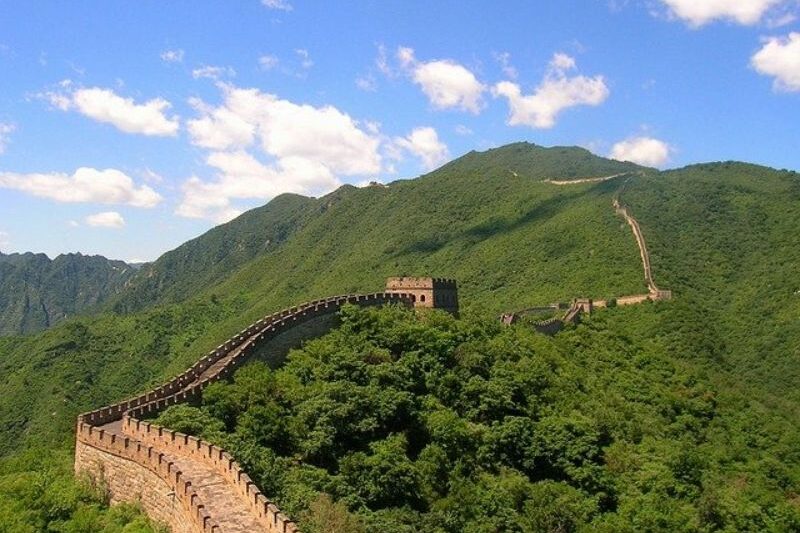
A UNESCO World Heritage Site stretching over 21,000 km across northern China, the Great Wall was built and rebuilt from the 7th century BCE through the 17th century CE. Popular sections near Beijing include Badaling (most accessible), Mutianyu (less crowded, with cable car), and Jinshanling (best for photography and hiking). The wall’s watchtowers, beacon towers, and stone battlements offer sweeping views of mountain ridgelines and forested valleys.
Terracotta Warriors, Xi'an
Discovered by farmers in 1974, this archaeological site near Xi’an houses the buried army of China’s first emperor, Qin Shi Huang (ruled 221–210 BCE). Three pits contain an estimated 8,000 life-size terracotta soldiers, 130 chariots, and 670 horses—each warrior with a unique face. Pit 1 alone covers 14,260 square metres. On-site museums display bronze chariots, weapons, and restored figures.
Li River Cruise, Guilin to Yangshuo
A 4-hour boat journey between Guilin and Yangshuo passes through a corridor of towering karst limestone peaks, dense bamboo groves, water buffalo wading at river bends, and fishing rafts with trained cormorants. The scenery depicted on the 20 yuan banknote lies along this stretch. Yangshuo, at the journey’s end, is a backpacker hub with rock climbing, cycling through rice paddies, and nightly light shows.
Forbidden City, Beijing
The world’s largest palace complex, covering 72 hectares with 980 buildings, served as the Chinese imperial residence from 1420 to 1912 across 24 emperors of the Ming and Qing dynasties. Visitors enter through the Meridian Gate and pass through a sequence of ceremonial halls—Hall of Supreme Harmony, Hall of Central Harmony, Hall of Preserving Harmony—before reaching the inner court and imperial gardens. The Palace Museum now houses 1.8 million artefacts.
Zhangjiajie National Forest Park
Located in Hunan province, Zhangjiajie protects over 3,000 sandstone pillar formations rising up to 200 metres from subtropical forest. The park inspired the floating mountains in the film Avatar; the ‘Avatar Hallelujah Mountain’ is a renamed pillar. The glass-bottomed Zhangjiajie Grand Canyon Bridge (430 metres long, 300 metres above the canyon floor) and the Bailong Elevator (326-metre glass-fronted cliffside lift) add vertigo-inducing viewpoints.
Editor-curated picks carried over from our original guide. Where a full place guide exists, the card links to it.
Worth booking ahead in China
Hand-picked from the operators our guides already send readers to. Prices and availability are live on the partner site.
BrowseViator
Tours and tickets in China on Viator (opens Viator in a new tab)
Viator's full list of bookable tours and tickets in China.
BrowseGetYourGuide
Experiences in China on GetYourGuide (opens GetYourGuide in a new tab)
Everything GetYourGuide sells in China, with the cancellation terms on each listing.
Where to stayBooking.com
Stays in China (opens Booking.com in a new tab)
Live rates and availability for China on Booking.com; filter by neighbourhood once you know where your days start.
We earn a commission if you book through these links, at no extra cost to you. It is how we keep the guides free and independent.
Where to stay
The Peninsula Beijing
33 East Chang An Avenue, Dongcheng, Beijing 100004, China
Legendary luxury hotel facing the Forbidden City with opulent rooms, a world-class spa, indoor pool, and multiple fine-dining restaurants.
Fairmont Peace Hotel, Shanghai
No. 12, Zhongshan Dong Yi Road, Shanghai 200002, China
Art-deco heritage hotel on Shanghai’s waterfront Bund with restored 1929 interiors, a rooftop terrace with Pudong skyline views, and a jazz bar.
Shangri-La Hong Kong
1 Shangri-La Hotel, Central, Hong Kong SAR, China
Five-star harbour-front hotel with panoramic Victoria Harbour views, a spa, multiple Michelin-starred restaurants, and direct access to the MTR.
Editor-curated stays carried over from our original guide. Where we have reviewed the hotel, the card links to the review.
Tips from the field
Highlights
- Experience ancient history, stunning landscapes, and vibrant culture in the world's most populous country.
Local experiences
- Chinese cuisine encompasses eight major regional styles, each reflecting local geography, climate, and cultural influences across this vast nation. Sichuan province offers fiery, numbing flavors with dishes like mapo tofu and kung pao chicken. Cantonese cuisine emphasizes fresh ingredients and subtle flavors, best experienced through dim sum and roasted meats. Beijing's imperial cuisine features Peking duck and jianbing breakfast crepes. Shanghai contributes xiaolongbao soup dumplings and red-braised pork. Regional specialties include Xinjiang's lamb dishes, Hunan's spicy fare, and coastal seafood preparations. Street food culture thrives with regional variations of noodles, dumplings, and grilled meats, while tea culture provides the perfect complement to China's diverse culinary landscape.
Practical tips
- Join a hands-on dumpling-making class in Beijing’s historic Hutongs, hosted by local families, typically available in the late afternoon for around 150 RMB per person.
- Attend a traditional tea ceremony in a centuries-old tea house in Hangzhou’s Longjing tea plantations, best scheduled mid-morning when tea masters are available for detailed explanations.
- Plan your trip to coincide with Yunnan’s Torch Festival, celebrated by the Yi ethnic group, usually held in late June to early July, where you can join local singing, dancing, and bonfire ceremonies.
- Use city-specific transit apps like Beijing’s 'Beijing Subway' or Shanghai’s 'Metro Official' and purchase tourist travel cards for unlimited metro rides, which typically cost around 20-30 RMB per day.
- Explore Shanghai’s French Concession early on a weekday morning to enjoy tree-lined streets, boutique cafés, and colonial architecture without crowds; stop by local art galleries that often open around 10 AM.
Timing
- Winter: Harbin Ice and Snow Festival (January-February) – world's largest ice festival with crystalline city sculptures and winter activities. Chinese New Year/Spring Festival (January-February) – 15-day lunar celebration with dragon dances, fireworks, family reunions, and red lantern displays. Spring: Qingming Festival (April) – solemn tomb-sweeping day honoring ancestors with cemetery visits and offerings. Summer: Dragon Boat Festival (June) – thrilling boat races and zongzi rice dumplings commemorating poet Qu Yuan. Autumn: Mid-Autumn Festival (September-October) – luminous mooncake sharing and family gatherings under the full moon. China's festivals span from ancient Confucian traditions to spectacular winter artistry.
Culture, customs and safety
Cultural heritage
China possesses 60 UNESCO World Heritage Sites, ranking second globally, representing 5,000 years of continuous civilization. The Great Wall stretches 21,000 kilometers across 15 provinces as humanity greatest construction achievement, built from 7th century BC as defense against invasions. The Forbidden City served as imperial residence for 24 emperors across Ming and Qing dynasties, embodying traditional Chinese palatial architecture with feng shui principles, Confucian ideology, and cosmic symbolism. UNESCO recognizes 44 Chinese intangible cultural heritage elements, the world highest number, from nearly 87,000 domestic ICH items including folk literature, traditional music, dance, drama, crafts, and medicine. Traditional arts encompass Chinese calligraphy evolved from ancient pictographs, Peking Opera as one of three major world dramatic forms alongside Greek tragedy and Indian Sanskrit drama, and martial arts traditions. Archaeological marvels include Mogao Grottoes with 735 caves containing 45,000 square meters of Buddhist murals, and Qin Emperor Mausoleum featuring the Terracotta Army. Chinese traditional theater (Xiqu) integrates over 300 opera styles combining singing, dancing, and acting, while philosophical influences of Confucianism, Buddhism, and Taoism shape architectural heritage throughout the nation.
Local customs & etiquette
Chinese culture is deeply rooted in tradition, collectivism, and the concept of face (mianzi) representing reputation and dignity. Avoid causing public embarrassment, showing anger, or open criticism as this causes loss of face. Greetings are formal with gentle handshakes or nods, addressing eldest or most senior person first. Punctuality is virtuous. Never stick chopsticks upright in rice bowls as this resembles funeral incense. Use both hands when giving or receiving items. Personal questions about age, marital status, and income are asked to find common ground, not to be intrusive.