

A jewel in France’s Alsace region, Colmar enchants visitors with its fairy-tale canals, half-timbered houses, and rich cultural heritage. This perfectly preserved medieval town features cobbled streets, brightly colored facades, and the romantic Little Venice district, offering an authentic blend of French and Germanic influences.
The destination guide
Colmar
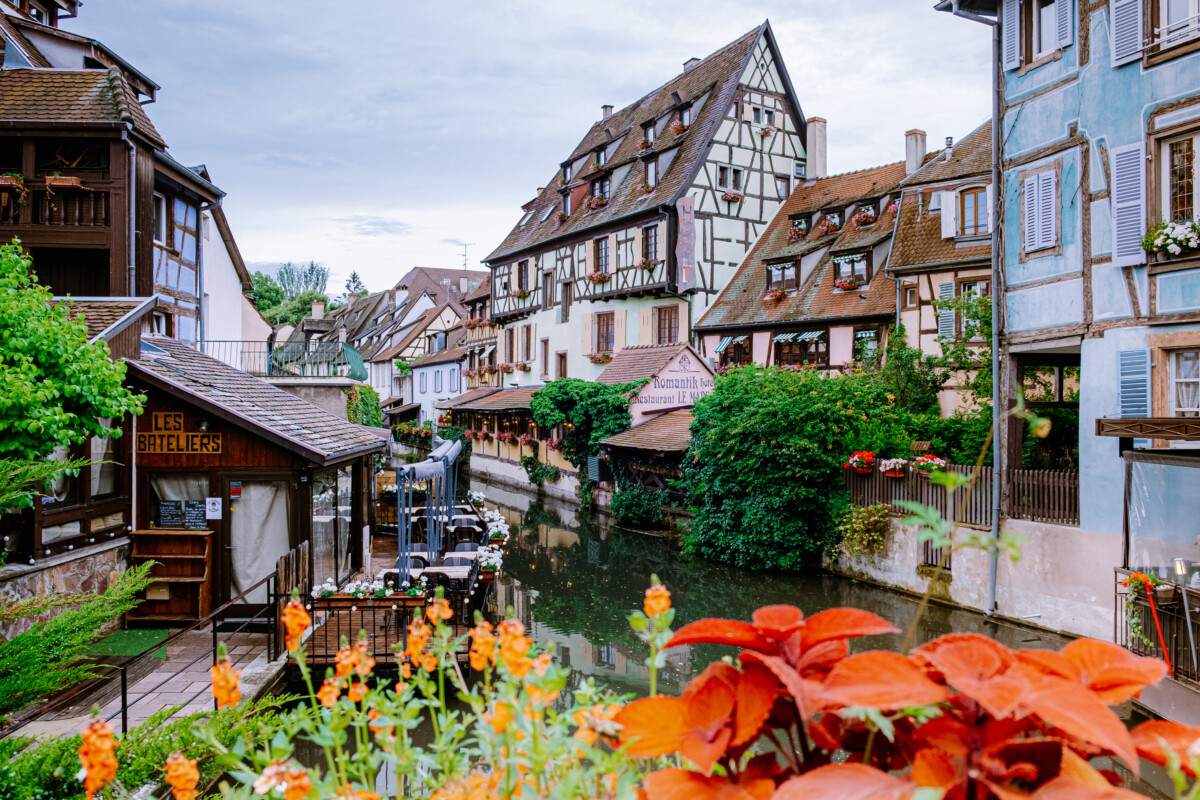
Colmar’s Little Venice canal district looks almost too perfect — but it’s real, walkable, and far quieter than Strasbourg.
Travel guides for Colmar
Things to do (1)
More guides featuring Colmar (8)
At a glance
Currency€ EURCode: EUR
Time zoneParisEurope/Paris
Languages
- French
Setting
- Alsatian half-timbered town
- Rhine River plain
- Vineyard hills
- Canal quarter
Population68,00068,000 residents
VisaDuration: Up to 90 days within any 180-day period in the Schengen Area · Documents: Valid passport issued within the last 10 years and valid for at least 3 months after planned departure, plus proof of accommodation, onward or return travel, and sufficient funds if requested
How Colmar scores
8/10OverallExcellent
Weather6/10
Value for money7/10
Food & cuisine9/10
Culture & arts6/10
Cultural experience8/10
History8/10
Nature & outdoors6/10
Adventure4/10
Nightlife5/10
Shopping6/10
Family friendly7/10
Romance9/10
Character
Photography score9/10
Authenticity score9/10
Off-the-beaten-path score7/10
Editorial scores on a 10-point scale, weighed against destinations of the same kind.
Travel safety snapshot
Overall90/100High rating
Women travellers88/100
LGBTQ+ travellers82/100
Theft78/100
Medical care85/100
Physical harm90/100
Political freedom85/100
SafePlace indicators use their source 100-point scale; higher is more favourable. Planning context, not a live travel advisory — check official government guidance before you go.
When to go
Best months to visit: April, May, June, July, August, September, October, November and December.
- January: -0.1 to 5.8 degrees Celsius, 102.1 millimetres of rain, best-time score 2 out of 5.
- February: 1.3 to 8.8 degrees Celsius, 74.7 millimetres of rain, best-time score 2 out of 5.
- March: 2.9 to 11.9 degrees Celsius, 66 millimetres of rain, best-time score 3 out of 5.
- April: 5.8 to 15.5 degrees Celsius, 70.2 millimetres of rain, best-time score 4 out of 5.
- May: 9.8 to 19.1 degrees Celsius, 91.4 millimetres of rain, best-time score 5 out of 5.
- June: 14.7 to 24.4 degrees Celsius, 88.1 millimetres of rain, best-time score 5 out of 5.
- July: 15.7 to 25.6 degrees Celsius, 71.5 millimetres of rain, best-time score 4 out of 5.
- August: 15.7 to 25.7 degrees Celsius, 75.2 millimetres of rain, best-time score 4 out of 5.
- September: 12.3 to 21.4 degrees Celsius, 60.9 millimetres of rain, best-time score 5 out of 5.
- October: 8.5 to 16.5 degrees Celsius, 70 millimetres of rain, best-time score 5 out of 5.
- November: 3.5 to 9.6 degrees Celsius, 82.6 millimetres of rain, best-time score 4 out of 5.
- December: 1.2 to 6.8 degrees Celsius, 80.4 millimetres of rain, best-time score 5 out of 5.
Month-by-month conditions and packing advice
- January
- Cold, some rain January in Colmar: cold winter months outside the festive period narrow the trip. Crowds: January in Colmar is workable with normal seasonal planning; build in layers, weather checks, and a mix of indoor and outdoor activities. Pack: Pack warm layers, a coat, and comfortable shoes for cold mornings and evenings. Add a rain jacket or compact umbrella.
- February
- Cold, some rain February in Colmar: cold winter months outside the festive period narrow the trip. Crowds: February in Colmar is workable with normal seasonal planning; build in layers, weather checks, and a mix of indoor and outdoor activities. Pack: Pack warm layers, a coat, and comfortable shoes for cold mornings and evenings. Add a rain jacket or compact umbrella.
- March
- Cool to mild, occasional rain March in Colmar: early spring is usable but cooler and less settled. Crowds: March in Colmar is workable with normal seasonal planning; build in layers, weather checks, and a mix of indoor and outdoor activities. Pack: Pack warm layers, a coat, and comfortable shoes for cold mornings and evenings.
- April
- Cool to mild, some rain April in Colmar: spring buildup, summer flowers, or late-fall market setup can still be rewarding. Crowds: April in Colmar is workable with normal seasonal planning; build in layers, weather checks, and a mix of indoor and outdoor activities. Pack: Pack layered clothing and comfortable walking shoes. Add a rain jacket or compact umbrella.
- May
- Cool to mild, some rain May in Colmar: seasonal highlights such as flowers, wine-route villages, harvest color, canals, and Christmas markets create the strongest experience. Crowds: May in Colmar is workable with normal seasonal planning; build in layers, weather checks, and a mix of indoor and outdoor activities. Pack: Pack layered clothing and comfortable walking shoes. Add a rain jacket or compact umbrella.
- June
- Mild to warm, some rain June in Colmar: seasonal highlights such as flowers, wine-route villages, harvest color, canals, and Christmas markets create the strongest experience. Crowds: June in Colmar is workable with normal seasonal planning; build in layers, weather checks, and a mix of indoor and outdoor activities. Pack: Pack light clothing, sun protection, and comfortable walking shoes. Add a rain jacket or compact umbrella.
- July
- Mild to warm, some rain July in Colmar: spring buildup, summer flowers, or late-fall market setup can still be rewarding. Crowds: July in Colmar is workable with normal seasonal planning; build in layers, weather checks, and a mix of indoor and outdoor activities. Pack: Pack light clothing, sun protection, and comfortable walking shoes. Add a rain jacket or compact umbrella.
- August
- Mild to warm, some rain August in Colmar: spring buildup, summer flowers, or late-fall market setup can still be rewarding. Crowds: August in Colmar is workable with normal seasonal planning; build in layers, weather checks, and a mix of indoor and outdoor activities. Pack: Pack light clothing, sun protection, and comfortable walking shoes. Add a rain jacket or compact umbrella.
- September
- Mild to warm, occasional rain September in Colmar: seasonal highlights such as flowers, wine-route villages, harvest color, canals, and Christmas markets create the strongest experience. Crowds: September in Colmar is comfortable for sightseeing, neighborhoods, food stops, day trips, and outdoor time with limited weather friction. Pack: Pack layered clothing and comfortable walking shoes.
- October
- Cool to mild, some rain October in Colmar: seasonal highlights such as flowers, wine-route villages, harvest color, canals, and Christmas markets create the strongest experience. Crowds: October in Colmar is workable with normal seasonal planning; build in layers, weather checks, and a mix of indoor and outdoor activities. Pack: Pack layered clothing and comfortable walking shoes. Add a rain jacket or compact umbrella.
- November
- Cold, some rain November in Colmar: spring buildup, summer flowers, or late-fall market setup can still be rewarding. Crowds: November in Colmar is workable with normal seasonal planning; build in layers, weather checks, and a mix of indoor and outdoor activities. Pack: Pack layered clothing and comfortable walking shoes. Add a rain jacket or compact umbrella.
- December
- Cold, some rain December in Colmar: seasonal highlights such as flowers, wine-route villages, harvest color, canals, and Christmas markets create the strongest experience. Crowds: December in Colmar is workable with normal seasonal planning; build in layers, weather checks, and a mix of indoor and outdoor activities. Pack: Pack warm layers, a coat, and comfortable shoes for cold mornings and evenings. Add a rain jacket or compact umbrella.
Peak season
- July
- August
- December
Off-peak
- January
- February
- March
- November
Know before you go
About
Colmar, the capital of the Haut-Rhin department in France’s Alsace region, is a storybook town of cobbled lanes and brightly painted half-timbered houses near the German border. Home to roughly 68,000 residents, it is best known for La Petite Venise (Little Venice), a romantic quarter where flower-decked timber houses line the canals of the River Lauch and visitors glide past in flat-bottomed boats. The Unterlinden Museum, founded in 1853 in a former 13th-century Dominican convent, houses the renowned Isenheim Altarpiece by Matthias Grünewald. As a gateway and capital of the Alsace Wine Route, Colmar pours crisp Rieslings and Gewürztraminers amid a blend of French and German culture reflected in its architecture and cuisine. It was also the birthplace of sculptor Frédéric Auguste Bartholdi, who designed the Statue of Liberty. With its medieval old town and famous Christmas markets, Colmar is one of Alsace’s most enchanting destinations.
Best time to visit
April to June for blooming flowers, mild weather, and manageable crowds. September to October for fall foliage, wine harvest season, and pleasant temperatures. Late November to late December for the renowned Colmar Christmas markets (six distinct markets across the Old Town). July and August are warmest (25-30°C) but also the most crowded. Winter outside Christmas market season is cold and quiet.
Crowds
Colmar is busiest in summer (June–August) and during the Christmas markets (late November–December), with narrow old‑town streets becoming congested; quietest January–February (post‑Christmas) when visitor numbers fall — generally high seasonal crowds in peak months.
Getting there and around
Getting there
The nearest airports are EuroAirport Basel-Mulhouse-Freiburg (60 km south) and Strasbourg-Entzheim (70 km north). Direct TGV trains from Paris Gare de l’Est reach Colmar in about 2.5 hours. Strasbourg is 30 minutes by regional train. Basel is 45 minutes and Zürich about 2 hours by train. Colmar’s train station is a 10-minute walk from the Old Town. By car, the European motorway network provides straightforward access.
Getting around
The historic center is small and entirely walkable — most attractions are within a 15-minute stroll. Flat-bottomed boat rides through Little Venice offer a waterside perspective. The Petit Train Touristique runs narrated tours through the Old Town. Local Trace buses connect wider areas of the city. Bicycle rental is available for exploring the surrounding Alsace Wine Route. Taxis are useful for airport transfers and evening travel.
Top experiences in Colmar
Little Venice (Petite Venise)
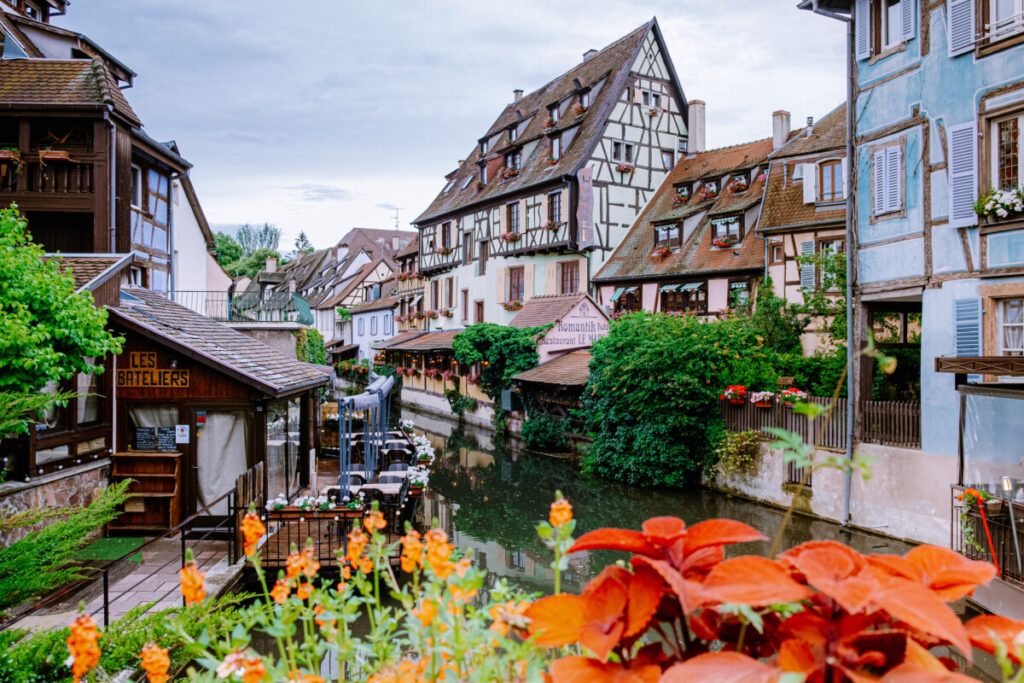
Read the place guide →Colmar’s most iconic quarter, where brightly painted half-timbered houses line the banks of the River Lauch. Former fishermen’s and tanners’ cottages lean over the water, their window boxes overflowing with geraniums in summer. Flat-bottomed boat tours thread through the canals, reaching perspectives invisible from the streets. The Quai de la Poissonnerie offers the classic postcard view. This neighborhood inspired the village in Disney’s Beauty and the Beast — and walking through it, the resemblance is unmistakable.
Unterlinden Museum
Housed in a 13th-century Dominican convent, this museum holds one of Northern Europe’s most powerful artworks: the Issenheim Altarpiece by Matthias Grünewald, a monumental polyptych commissioned for a hospital chapel, whose intensity of color and emotional charge remain startling five centuries later. The museum’s modern extension, designed by Herzog & de Meuron, connects the medieval cloisters to galleries of contemporary art, archaeological finds, and Alsatian folk art — making it one of France’s most significant regional museums.
Maison Pfister
Colmar’s compact medieval center reads like an encyclopedia of Alsatian architecture across six centuries. The Maison des Têtes (House of Heads), built in 1609, is studded with over 100 carved stone faces and grotesque masks across its ornate Renaissance facade. The Pfister House displays an elaborate oriel window and 16th-century frescoes. The Koïfhus (Old Custom House) served as the economic hub of Alsace for centuries. St. Martin’s Gothic church, often called the cathedral, anchors the skyline with its distinctive polychrome tile roof.
Maison des Têtes
Dating to 1865, this market hall on the banks of the Lauch River operates as Colmar’s daily food hub. Stalls overflow with Alsatian specialties: Munster cheese in varying ages, locally cured charcuterie, foie gras, pretzels, and seasonal produce. Small café-counters inside serve fresh oysters, quiche, and Alsatian wines by the glass. Saturday mornings draw the largest crowds, when the market spills outdoors with regional farmers. The building itself — cast-iron structure with arched windows — is a fine example of 19th-century market architecture.
Old Customs House (Koïfhus)
Just 7 km from Colmar, Eguisheim has been voted France’s favorite village twice, and it’s easy to see why: concentric circles of pastel half-timbered houses radiate from a central fountain, the entire perimeter walkable in 20 minutes. The village produces excellent Grand Cru wines, and family-run caves (wine cellars) welcome tasters along every street. Beyond Eguisheim, the Alsace Wine Route stretches 170 km through over 70 villages — Colmar serves as the ideal base for exploring this landscape of Riesling and Gewürztraminer vineyards.
Editor-curated picks carried over from our original guide. Where a full place guide exists, the card links to it.

Worth booking ahead in Colmar
Hand-picked from the operators our guides already send readers to. Prices and availability are live on the partner site.
Day tripGetYourGuide
Versailles Palace guided tour with coach transfer (opens GetYourGuide in a new tab)
Guided palace visit with the coach transfer handled, so you skip the RER connection and the ticket-office line.
Where to stayBooking.com
Stays in Colmar (opens Booking.com in a new tab)
Live rates and availability for Colmar on Booking.com; filter by neighbourhood once you know where your days start.
We earn a commission if you book through these links, at no extra cost to you. It is how we keep the guides free and independent.
Where to stay
Hôtel & Spa Le Maréchal
30 Rue de la 1ère Armée, 68000 Colmar, France
A 5-star hotel housed in a grand Renaissance-era building with its famous facade carved with over 100 grotesque masks. The 21 individually designed rooms blend historic architecture — beamed ceilings, stone walls, period furnishings — with contemporary luxury. The Michelin-starred restaurant under chef Éric Girardin serves refined Alsatian cuisine with an emphasis on seasonal produce. Its central location on Rue des Têtes places guests within a 5-minute walk of the Unterlinden Museum and Petite Venise.
Grand Hôtel Bristol
38 Grand Rue, 68000 Colmar, France
An intimate 14th-century half-timbered mansion converted into a 4-star boutique hotel on Colmar’s most picturesque street. The 28 rooms are individually decorated with a mix of antique furnishings and modern amenities, some overlooking the courtyard garden. Breakfast features local pastries, charcuterie, and Alsatian cheeses served in a vaulted stone dining room. The location on Grand Rue puts the Unterlinden Museum, Petite Venise, and the Covered Market all within a 5-minute stroll.
Editor-curated stays carried over from our original guide. Where we have reviewed the hotel, the card links to the review.
Tips from the field
Highlights
- Little Venice — Canal-side district with colorful half-timbered houses and boat tours. Unterlinden Museum — Home to the Isenheim Altarpiece by Matthias Grünewald, with collections spanning 7,000 years. Half-timbered architecture — Medieval Maison Pfister (1537), Maison des Têtes (100+ sculptured heads), and the Fishmonger's District. Christmas Markets — Six distinct markets from late November, among the most celebrated in France. Alsace Wine Route — Wine-tasting excursions through surrounding villages. Bartholdi Museum — Birthplace museum of the Statue of Liberty's creator.
Best activities
- Colmar rewards slow exploration. A flat-bottomed boat tour through Petite Venise reveals the canal quarter from water level, passing beneath bridges and past flower-draped balconies. The Unterlinden Museum demands at least two hours to absorb the Issenheim Altarpiece and its supporting collections. Wine tasting in the Old Town ranges from casual glasses at market stalls to structured flights at historic caves.
- Day trips define Colmar's appeal as a base camp: cycle the vineyard path (Voie des Vignes) to Eguisheim, explore the Alsace Wine Route by car or the seasonal Kutzig hop-on-hop-off bus, or spend a half-day at Château du Haut-Koenigsbourg. The Covered Market delivers a hands-on culinary education in Alsatian specialties. During December, six interconnected Christmas markets transform the town into one of Europe's most atmospheric holiday destinations.
Local experiences
- Take a flat-bottomed boat through Petite Venise with a local guide who shares neighborhood stories. Join a cooking class to learn tarte flambée (flammekueche) and baeckeoffe. Cycle the vineyard path to Eguisheim and stop at a family cave for a Gewürztraminer tasting poured by the winemaker. Browse the Saturday morning Marché Couvert for Munster cheese, kouglof, and Alsatian honey.
Practical tips
- Book accommodation well in advance for Christmas market season (late November-December) and summer — prices rise significantly. The Christmas markets are busiest on weekends
- visit on weekday evenings for a more atmospheric experience. The Unterlinden Museum deserves 2-3 hours
- the Isenheim Altarpiece alone justifies the visit. Alsace wines (Riesling, Gewürztraminer, Pinot Gris) pair well with local cuisine — try tarte flambée and choucroute garnie. Colmar is one of the driest cities in France thanks to the Vosges rain shadow. The Alsace Wine Route starts right outside the city.
Photography tips
- Petite Venise photographs best from the Quai de la Poissonnerie bridge at dawn, before crowds arrive, with canal reflections at their clearest. The Maison des Têtes facade rewards telephoto close-ups of its carved grotesque masks. St. Martin's church framed through the half-timbered streets offers strong leading-line compositions. For Christmas market shots, arrive at blue hour (20 minutes after sunset) to capture the warm glow of lights against twilight. Eguisheim's circular streets photograph well from any angle — the concentric geometry creates natural compositions.
Timing
- Annual marathon, half-marathon, and relay races through Alsatian vineyards
- City-wide free concerts by local and visiting musicians marking the summer solstice
- Series of jazz performances in historic venues and open-air stages
- Iconic Alsatian Christmas markets across the old town with crafts, mulled wine, and festive lights
- Traditional parade and festivities honoring Saint Nicholas
- Renowned classical music festival hosting world-class orchestras and soloists
- Artisan market, floral displays, and Easter-themed celebrations welcoming spring
- Celebration of the season's first wine paired with roasted chestnuts
- Ten-day regional wine exposition with tastings, concerts, and gastronomic events
Keeping it authentic
- Colmar has maintained its architectural integrity with remarkable discipline — the Old Town is a genuine medieval and Renaissance streetscape, not a reconstruction or theme park. The bakeries selling kouglof and mannala still operate on traditions passed down through generations. The wine cellars lining the streets are owned by families who work the surrounding vineyards. Even the Christmas markets, which now draw international crowds, grew from authentic Advent traditions documented since the 16th century. The city's Alsatian-German-French cultural blend is lived, not performed — restaurant menus switch naturally between choucroute and coq au vin, and older residents converse in Alsatian dialect.
Culture, customs and safety
Cultural heritage
Colmar preserves Alsatian identity where French and German cultures blend seamlessly in half-timbered houses reflecting in Little Venice’s canals. The Unterlinden Museum houses Isenheim Altarpiece, Grünewald’s masterpiece painted for plague sufferers. Wine capital of Alsace, the city maintains a 1,000-year viticultural tradition with urban vineyards inside city limits. The Bartholdi Museum celebrates the local sculptor who created the Statue of Liberty and Belfort Lion. Traditional stork nests crown medieval buildings, symbolizing good fortune since the Middle Ages. Christmas markets transform the city into a fairytale with traditional bredele cookies, mulled wine, and artisan crafts maintaining centuries-old Advent traditions.
Local customs & etiquette
Greet shopkeepers with ‘bonjour’ upon entering and ‘au revoir’ when leaving — it’s essential etiquette in Alsace. Wine tasting at domaines is a courteous exchange: sip thoughtfully, ask about the terroir, and purchasing a bottle is considered good form. Sunday is a genuine rest day — most shops close, and restaurants fill for long family lunches. During Christmas market season, locals participate actively in Advent traditions; approaching the markets with cultural respect enhances the experience. Tipping 5-10% is customary at restaurants, though service charge is often included in the bill.
Safety notes
Colmar is very safe with notably low crime rates. The city center and train station area are well-lit and secure even at night. Standard precautions apply in crowded Christmas market areas. No significant safety concerns for solo travelers. Emergency: 112 (EU) or 15 (SAMU medical) / 17 (police).

Travel Style
Activities