Volcanic island marvel featuring eight voluminous mountain peaks rising from translucent lagoons, dominated by Mount Rotui towering between picturesque Opunohu Bay and Cook’s Bay creating distinctive rugged silhouette with panoramic 360° summit views of entire volcanic rim. Crystal-clear turquoise lagoons protected by coral reefs enabling sea turtle, stingray, reef shark, tropical fish habitat within large quiet waters perfect for boat rides, jet-skiing, water sports, plus Ta’ahiamanu and Temae beaches’ excellent snorkeling conditions. Overwater bungalow paradise at Hilton Moorea Lagoon Resort centrally positioned between iconic bays for sunrise-sunset admiration from private lagoon accommodations, while budget-friendly hostels to luxury resorts cater to all preferences. Rose Garden coral reef showcasing Moorea’s best underwater scenery with numerous sharks, Ray’s Corridor’s drift diving through fish-filled natural lagoon where eagle ray schools congregate, plus sandbar swimming with blacktip lagoon sharks and stingrays. Tahiti proximity via 30-minute catamaran rides from Papeete (Aremiti, Terevau ferries hourly, 25-45 minutes, $11) providing more peaceful, scenic alternative to famous Bora Bora. Belvédère lookout revealing French Polynesia’s most beautiful views where lagoon, reef, mountain create magnificent spectacles, plus August-November humpback whale swimming tours completing this emerald-peaked paradise.
The destination guide
Moorea
Island in French Polynesia, OceaniaUpdated
- Overall6/10
- Best forCouples, Adventure seekers
- PeakJun–Sep
- CurrencyXPF
Moorea is a 30-minute ferry from Tahiti with volcanic peaks, a lagoon that glows blue-green, and a quieter pace that makes Bora Bora feel like a resort and Moorea feel like an island.
Travel guides for Moorea
More guides featuring Moorea (5)
At a glance
- French
- Tahitian
- Volcanic island
- Turquoise lagoon
- Coral reef
- Tropical rainforest
How Moorea scores
Character
Editorial scores on a 10-point scale, weighed against destinations of the same kind.
Travel safety snapshot
SafePlace indicators use their source 100-point scale; higher is more favourable. Planning context, not a live travel advisory — check official government guidance before you go.
When to go
Best months to visit: April, May, June, July, August, September, October and November.
- January: 23.4 to 26.4 degrees Celsius, 310.6 millimetres of rain, best-time score 2 out of 5.
- February: 23.8 to 26.8 degrees Celsius, 268.9 millimetres of rain, best-time score 2 out of 5.
- March: 24 to 27.1 degrees Celsius, 163 millimetres of rain, best-time score 3 out of 5.
- April: 23.8 to 26.8 degrees Celsius, 223.1 millimetres of rain, best-time score 4 out of 5.
- May: 23.4 to 26.4 degrees Celsius, 117.9 millimetres of rain, best-time score 5 out of 5.
- June: 22.6 to 25.5 degrees Celsius, 126.7 millimetres of rain, best-time score 5 out of 5.
- July: 22.1 to 25 degrees Celsius, 87.1 millimetres of rain, best-time score 5 out of 5.
- August: 21.8 to 24.8 degrees Celsius, 84.2 millimetres of rain, best-time score 5 out of 5.
- September: 21.9 to 25 degrees Celsius, 100.3 millimetres of rain, best-time score 5 out of 5.
- October: 22.3 to 25.4 degrees Celsius, 141.1 millimetres of rain, best-time score 5 out of 5.
- November: 22.8 to 25.7 degrees Celsius, 199.3 millimetres of rain, best-time score 4 out of 5.
- December: 23.3 to 26.5 degrees Celsius, 289.2 millimetres of rain, best-time score 3 out of 5.
Month-by-month conditions and packing advice
- January
- Mild to warm, rainy January in Moorea: wetter, hotter conditions make outdoor and lagoon plans less dependable. Crowds: January in Moorea is one of the wetter periods, so museums, food stops, flexible reservations, and backup indoor plans make the trip easier. Pack: Pack light clothing, sun protection, and comfortable walking shoes. Add a rain jacket or compact umbrella.
- February
- Mild to warm, rainy February in Moorea: wetter, hotter conditions make outdoor and lagoon plans less dependable. Crowds: February in Moorea is one of the wetter periods, so museums, food stops, flexible reservations, and backup indoor plans make the trip easier. Pack: Pack light clothing, sun protection, and comfortable walking shoes. Add a rain jacket or compact umbrella.
- March
- Warm to hot, rainy March in Moorea: rain and humidity are more likely, so keep plans flexible. Crowds: March in Moorea is one of the wetter periods, so museums, food stops, flexible reservations, and backup indoor plans make the trip easier. Pack: Pack light clothing, sun protection, and comfortable walking shoes. Add a rain jacket or compact umbrella.
- April
- Mild to warm, rainy April in Moorea: shoulder months can work well with fewer crowds and improving or lingering dry weather. Crowds: April in Moorea is one of the wetter periods, so museums, food stops, flexible reservations, and backup indoor plans make the trip easier. Pack: Pack light clothing, sun protection, and comfortable walking shoes. Add a rain jacket or compact umbrella.
- May
- Mild to warm, some rain May in Moorea: dry-season lagoons, beaches, hiking, whale season, snorkeling, and island drives are most reliable. Crowds: May in Moorea is workable with normal seasonal planning; build in layers, weather checks, and a mix of indoor and outdoor activities. Pack: Pack light clothing, sun protection, and comfortable walking shoes. Add a rain jacket or compact umbrella.
- June
- Mild to warm, some rain June in Moorea: dry-season lagoons, beaches, hiking, whale season, snorkeling, and island drives are most reliable. Crowds: June in Moorea is workable with normal seasonal planning; build in layers, weather checks, and a mix of indoor and outdoor activities. Pack: Pack light clothing, sun protection, and comfortable walking shoes. Add a rain jacket or compact umbrella.
- July
- Mild to warm, some rain July in Moorea: dry-season lagoons, beaches, hiking, whale season, snorkeling, and island drives are most reliable. Crowds: July in Moorea is workable with normal seasonal planning; build in layers, weather checks, and a mix of indoor and outdoor activities. Pack: Pack light clothing, sun protection, and comfortable walking shoes. Add a rain jacket or compact umbrella.
- August
- Mild to warm, some rain August in Moorea: dry-season lagoons, beaches, hiking, whale season, snorkeling, and island drives are most reliable. Crowds: August in Moorea is workable with normal seasonal planning; build in layers, weather checks, and a mix of indoor and outdoor activities. Pack: Pack light clothing, sun protection, and comfortable walking shoes. Add a rain jacket or compact umbrella.
- September
- Mild to warm, some rain September in Moorea: dry-season lagoons, beaches, hiking, whale season, snorkeling, and island drives are most reliable. Crowds: September in Moorea is workable with normal seasonal planning; build in layers, weather checks, and a mix of indoor and outdoor activities. Pack: Pack light clothing, sun protection, and comfortable walking shoes. Add a rain jacket or compact umbrella.
- October
- Mild to warm, rainy October in Moorea: dry-season lagoons, beaches, hiking, whale season, snorkeling, and island drives are most reliable. Crowds: October in Moorea is one of the wetter periods, so museums, food stops, flexible reservations, and backup indoor plans make the trip easier. Pack: Pack light clothing, sun protection, and comfortable walking shoes. Add a rain jacket or compact umbrella.
- November
- Mild to warm, rainy November in Moorea: shoulder months can work well with fewer crowds and improving or lingering dry weather. Crowds: November in Moorea is one of the wetter periods, so museums, food stops, flexible reservations, and backup indoor plans make the trip easier. Pack: Pack light clothing, sun protection, and comfortable walking shoes. Add a rain jacket or compact umbrella.
- December
- Mild to warm, rainy December in Moorea: rain and humidity are more likely, so keep plans flexible. Crowds: December in Moorea is one of the wetter periods, so museums, food stops, flexible reservations, and backup indoor plans make the trip easier. Pack: Pack light clothing, sun protection, and comfortable walking shoes. Add a rain jacket or compact umbrella.
- July
- August
- June
- September
- January
- February
- November
- December
- March
- April
Know before you go
About
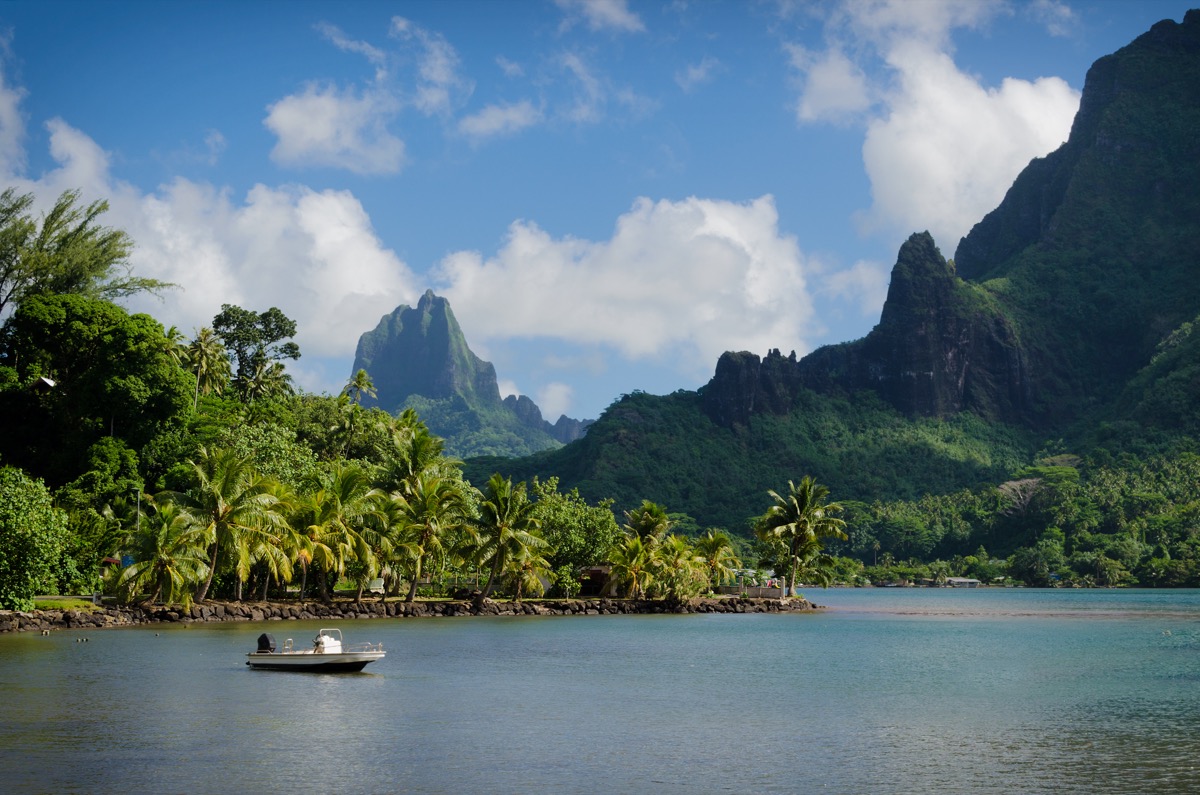
Moorea rises from the South Pacific like a vision of the primordial world – eight jagged volcanic peaks draped in emerald rainforest, encircled by a luminous turquoise lagoon, and fringed by white-sand beaches that seem too perfect to exist outside a screen saver. Yet this heart-shaped island 17 km northwest of Tahiti is entirely real, and up close it delivers on every promise its silhouette makes from a distance. Twin deep-water bays – Cook’s Bay and Opunohu Bay – carve dramatically into the mountainous interior, creating a landscape of vertiginous peaks and protected waters that ranks among the most photographed in the Pacific. Beneath the surface, the shallow lagoon supports an accessible marine ecosystem where blacktip reef sharks cruise knee-deep turquoise shallows and humpback whales breach offshore between July and November. Overwater bungalows perch above the reef, pineapple plantations stripe the valley floors, and Polynesian dance traditions endure in village cultural centers. Moorea manages to feel both impossibly exotic and genuinely welcoming.
Best time to visit
The best time to visit Moorea is during the dry season from May to October when the weather is warm and less humid. This period is ideal for outdoor activities like hiking and snorkeling. The wet season runs from November to April, bringing more rain and humidity, but also lush landscapes.
Season by season
Dry Season (May-October):
Weather: 24-28°C, lower humidity, sunny days, calm seas, trade winds
Highlights: Best overall weather, whale season (July-November), optimal diving visibility
Consider: High season pricing at resorts, book well in advance
Best For: Snorkeling, diving, whale encounters, hiking
Wet Season (November-April):
Weather: 27-32°C, higher humidity, afternoon tropical showers (usually brief), lush vegetation
Highlights: Fewer tourists, greener landscapes, warmer water temperatures
Consider: Occasional heavy rain, cyclone risk (rare but possible December-March)
Best For: Budget travelers, surfing, photography (dramatic cloud formations)
Shoulder Months (May, September-October):
Weather: Transitional, generally excellent
Best For: Ideal combination of good weather, reasonable prices, and manageable crowds
Crowds
Moorea’s busiest months are June–August and December–January with peak French and European holiday travel; low season is the wet season (November–April) when visitor numbers fall, but the island never feels extremely crowded compared with major cities.
Getting there and around
Getting there
All international flights to French Polynesia arrive at Faa’a International Airport (PPT) in Papeete, Tahiti. Airlines serving Tahiti include Air Tahiti Nui, Air France, United, French Bee, and Air New Zealand, with direct routes from Los Angeles, San Francisco, Seattle, Tokyo, Auckland, and Paris. From Tahiti, the 17 km crossing to Moorea takes 30-60 minutes by high-speed ferry from the Papeete ferry terminal. Ferry companies Aremiti, Terevau, and Vaeara’i run multiple daily departures from approximately 6 AM to 7 PM. Walk-on passenger fares are roughly 1,300-2,000 XPF one way (approximately $11-17 USD). Ferries arrive at Vaiare Marina on Moorea’s east coast. If arriving in Tahiti on a late evening international flight, plan to overnight in Papeete, as no ferry service operates after dark. Air Tahiti also offers a 15-minute domestic flight between the islands, with fares starting around $115 return.
Getting around
Renting a car is the most practical way to explore Moorea independently, as the island has limited public transport. The coastal road circles the entire island (about 60 km). Rental companies including Avis and Europcar operate from the ferry terminal and major hotels – book automatic transmission vehicles in advance, as most available cars are manual. Scooters and eBikes offer lighter alternatives for the coastal road and flat sections. Many resorts provide complimentary kayaks and paddleboards for lagoon exploration. Taxis exist but should be booked in advance; they’re expensive and not always readily available. Organized tours (4WD, ATV, boat) are the most common way to reach interior viewpoints and snorkeling sites. Hitchhiking is culturally accepted and common on the island – locals regularly offer rides to walking travelers. Keep in mind that the island has no ride-sharing apps.
Top experiences in Moorea
Cook's Bay and Opunohu Bay
These twin volcanic bays define Moorea’s silhouette and rank among the South Pacific’s most photographed landscapes. Cook’s Bay (named not for Captain Cook, who actually anchored in the adjacent Opunohu Bay) carves 3 km into the island’s interior, flanked by jagged green peaks including the iconic Mount Mouaputa with its distinctive hole near the summit – Polynesian legend says the demigod Pai punched through it with his spear. Opunohu Bay, slightly larger and less developed, retains a wild character with dense tropical forest descending to the waterline. Both bays offer calm waters for kayaking and paddleboarding, and their depths shelter gardens of stony coral accessible by snorkel from shore.
Bélvédère Lookout (Three Coconut Trees Pass)
This mountaintop viewpoint delivers Moorea’s most iconic panorama – a sweeping vista encompassing both Cook’s Bay and Opunohu Bay separated by the volcanic ridge of Mount Rotui, with the patchwork of pineapple plantations carpeting the Opunohu Valley below. The lookout sits at the end of a winding road through agricultural land and tropical forest. On clear mornings, the view extends beyond the reef to Tahiti’s shadowy outline 17 km across the channel. The site connects to several hiking trails through the island’s interior, including paths leading through ancient Polynesian marae (temple) sites hidden in the forest. The Three Coconut Trees that give the pass its name are still standing, framing the view like a natural gateway.
Lagoon Snorkeling with Sharks and Rays
Moorea’s shallow lagoon supports a remarkable ecosystem that brings visitors into close contact with marine life more typically observed from a distance. Guided snorkeling excursions enter designated areas where blacktip reef sharks (typically 1-1.5 meters long and harmless to humans) and southern stingrays have been habituated to human presence through decades of respectful feeding. The sharks glide through knee-deep turquoise water with an indifference to snorkelers that allows extended observation at arm’s length. Stingrays, smoother and more curious, sometimes brush against waders seeking interaction. These encounters take place over white sand flats inside the barrier reef, where water clarity often exceeds 30 meters. The experience is genuinely thrilling without being dangerous – a combination that explains its status as Moorea’s most popular activity.
Magic Mountain
This short but steep hike (roughly 30 minutes each way) climbs to a privately maintained viewpoint 240 meters above sea level, delivering a 360-degree panorama that many visitors describe as Moorea’s most spectacular view. From the summit, the full geometry of the island reveals itself: the barrier reef traces a near-perfect circle around the lagoon, its turquoise shallows contrasting with the deep ocean blue beyond. Cook’s Bay and Opunohu Bay indent the northern coast, volcanic peaks spike along the interior ridgeline, and on clear days the island of Tahiti materializes across the channel to the east. The trail begins near an unmarked access road off the coastal road on the south side of the island – most visitors access it via 4WD tour or ATV excursion rather than attempting to find it independently.
Tiki Village Cultural Center
More than a tourist show, the Tiki Village operates as a working recreation of a pre-European Polynesian village, demonstrating traditional crafts, cooking methods, and cultural practices that might otherwise be lost to modernization. Daytime visits include hands-on workshops in pareo (sarong) dyeing, coconut weaving, and wood carving guided by local artisans. The evening program features a traditional earth-oven feast (ahi ma’a) where food is slow-cooked underground on hot volcanic stones – a cooking method pre-dating metal cookware by centuries. The main attraction is the professional dance troupe performing ori Tahiti (Tahitian dance), accompanied by live drumming that builds from contemplative rhythms to explosive, high-energy choreography. Fire dancing concludes the evening show. The village was established by a local Polynesian family and continues to operate as a community cultural preservation effort rather than a corporate entertainment venue.
Editor-curated picks carried over from our original guide. Where a full place guide exists, the card links to it.
Worth booking ahead in Moorea
Hand-picked from the operators our guides already send readers to. Prices and availability are live on the partner site.
BrowseViator
Tours and tickets in Moorea on Viator (opens Viator in a new tab)
Viator's full list of bookable tours and tickets in Moorea.
BrowseGetYourGuide
Experiences in Moorea on GetYourGuide (opens GetYourGuide in a new tab)
Everything GetYourGuide sells in Moorea, with the cancellation terms on each listing.
Where to stayBooking.com
Stays in Moorea (opens Booking.com in a new tab)
Live rates and availability for Moorea on Booking.com; filter by neighbourhood once you know where your days start.
We earn a commission if you book through these links, at no extra cost to you. It is how we keep the guides free and independent.
Where to stay
Hilton Moorea Lagoon Resort & Spa
BP 1005, Haapiti, Moorea 98729, French Polynesia
Perched on a hillside between Cook’s Bay and Opunohu Bay, the Hilton occupies one of Moorea’s most dramatic positions – the only resort with views of both legendary bays simultaneously. Its overwater bungalows extend over a crystal-clear lagoon teeming with tropical fish visible through glass floor panels. The resort’s contemporary Polynesian design incorporates local materials and open-air architecture that maximizes the natural setting. Two restaurants serve French-Polynesian fusion cuisine with volcanic peak backdrops. The Moorea Lagoon Spa draws on traditional Polynesian wellness rituals. Free kayaks and paddleboards are available for lagoon exploration.
Sofitel Kia Ora Moorea Beach Resort
BP 28, Temae, Moorea 98728, French Polynesia
This Sofitel property occupies a white-sand beachfront on Moorea’s northeast coast with direct views to Tahiti across the channel. Overwater bungalows feature glass floor panels and private sundecks extending directly over turquoise water. The resort blends French luxury standards with Polynesian warmth – fresh tiare flowers, woven pandanus accents, and tropical gardens surrounding the property. The K Restaurant delivers refined French-Polynesian fine dining, while the Pure Snacking bar offers poolside light bites. The on-site dive center provides PADI-certified instruction and guided reef explorations. Complimentary snorkeling gear and kayaks encourage independent lagoon exploration.
Manava Beach Resort & Spa Moorea
PK 5.5, Maharepa, Moorea 98728, French Polynesia
A 4-star resort offering overwater bungalows at significantly lower prices than the island’s 5-star properties, making the iconic Polynesian overwater experience more accessible. Located in Maharepa (Moorea’s main commercial area), the hotel provides convenient access to restaurants, shops, and banks within walking distance – a practical advantage on an island where most resorts are isolated. The overwater units feature glass floor panels and private balconies. Two restaurants serve French and Polynesian cuisine. The Manava Spa offers traditional Polynesian massage treatments. The swimming pool overlooks the lagoon and Mount Mouaroa.
Editor-curated stays carried over from our original guide. Where we have reviewed the hotel, the card links to the review.
Tips from the field
Highlights
- Cook's Bay and Opunohu Bay – Twin volcanic bays carving into emerald peaks, creating the South Pacific's most dramatic landscape
- Lagoon Snorkeling – Swim alongside blacktip reef sharks and stingrays in crystal-clear turquoise shallows
- Bélvédère Lookout – Panoramic viewpoint overlooking both bays and the pineapple-striped Opunohu Valley
- Humpback Whale Encounters (July-November) – In-water experiences with migrating whales in warm Pacific waters
- Magic Mountain – 360-degree summit panorama revealing the island's barrier reef ring and volcanic interior
- Overwater Bungalows – Sleep above the lagoon in the region where this iconic accommodation was invented
- Tiki Village – Authentic Polynesian cultural performances including ori Tahiti dance and traditional earth-oven feasts
- White-Sand Beaches – Temae Beach and others along the northwest coast
Best activities
- Moorea's overwater and underwater experiences are the main draw. Snorkeling excursions into the shallow lagoon bring you face-to-face with blacktip reef sharks and stingrays gliding through turquoise water – genuinely thrilling and entirely safe. Between July and November, humpback whales migrate through the surrounding waters, and responsible whale-watching operators offer in-water encounters where you can snorkel alongside these enormous creatures.
- On land, the hike to the Bélvédère Lookout rewards with sweeping panoramas of both Cook's Bay and Opunohu Bay separated by Mount Rotui's volcanic spine. Magic Mountain provides an even more dramatic 360-degree viewpoint via a steep 30-minute ascent. ATV tours traverse the island's mountainous interior through pineapple plantations and tropical forest. Evening entertainment centers on the Tiki Village, where traditional Polynesian earth-oven feasts and fire dance performances preserve Polynesian cultural traditions. Kayaking and paddleboarding the calm lagoon waters offer peaceful alternatives to organized excursions.
Local experiences
- Attend a Sunday morning church service to hear Polynesian hymns sung in spine-tingling multi-part harmony. Visit a roadside pineapple stand for fruit so sweet it barely resembles supermarket varieties. Join a guided cultural tour through the ancient marae temple sites hidden in the Opunohu Valley forest. Take a sunset kayak paddle across the stillglassy lagoon as the volcanic peaks turn pink and gold.
Practical tips
- Tahiti Ferry Connection: Modern high-speed catamarans (Aremiti, Terevau) connect Papeete, Tahiti to Vaiare, Moorea in 30u201345 minutes. If your international flight lands in Tahiti after 6:00 PM, you must stay overnight in Papeete as night ferries do not operate.
- Currency & Payments: CFP Franc (XPF / FCFP), pegged to the Euro (1 EUR = 119.33 XPF). Credit cards are accepted at major resorts and dive centers; keep cash for local fruit stands and snack shacks.
- Rental Transportation: Renting a small car, scooter, or e-bike is ideal for exploring the 60 km coastal loop road and ascending to the Belvedere Lookout overlooking Cook's Bay and Opunohu Bay.
- Seasonal Whale Watching: Humpback whale season runs from July to November; tours strictly adhere to DIREN marine distance regulations.
Photography tips
- Golden Hour Shots: Sunrise from the east coast captures the volcanic peaks backlit in warm light; sunset from the west coast (Haapiti area) silhouettes palm trees against spectacular Pacific skies
- Iconic Views:
- Bélvédère Lookout – Both bays and Mount Rotui in a single wide-angle frame
- Magic Mountain – 360-degree panorama showing the barrier reef ring
- Overwater Bungalows – Shoot from the beach at sunset for the classic Polynesian postcard
- Underwater – Blacktip sharks in crystal-clear shallows with a waterproof camera or GoPro
- Cook's Bay – From the coastal road looking south into the jagged volcanic interior
- Best Conditions: Morning light for bay shots (sun rises behind the mountains creating dramatic shadows). Whale encounters photograph best on calm, sunny days with clear water.
- Equipment: Waterproof camera or housing essential for lagoon activities. Polarizing filter dramatically improves water clarity and sky contrast. Wide-angle lens captures the scale of the volcanic landscape.
Timing
- Peak Season (June-September):
- Best weather, whale season, highest demand
- Book resorts and overwater bungalows 3-6 months in advance
- Premium pricing at accommodations
- Shoulder Season (May, October-November):
- Excellent weather transitioning between seasons
- Better availability and rates at resorts
- May catches early dry season; October offers late whale season
- Low Season (December-April):
- Warmest, most humid period with occasional heavy rain
- Best rates at resorts, quietest beaches
- Cyclone risk small but present (mainly January-March)
- Key Timing:
- Whale Season: July-November (peak August-September)
- Heiva Festival: July (major Polynesian cultural celebration across French Polynesia)
- Driest Month: September
- Wettest Period: January-March
Keeping it authentic
- Moorea retains a genuinely Polynesian character that distinguishes it from more developed tourist islands in the region. The interior remains largely agricultural, with pineapple plantations, vanilla groves, and fruit farms sustaining a way of life that predates tourism. Overwater bungalows – now synonymous with luxury travel – were actually invented in Polynesia in the 1960s and evolved from traditional fishing platforms. Village life continues at its own pace: Sunday morning church services feature Polynesian hymns sung in stunning multi-part harmony, and communal fishing, fruit gathering, and flower lei-making remain daily activities rather than performances. The local population of roughly 17,000 outnumbers tourists on most days, and interactions with islanders typically feel relaxed and genuine rather than transactional. The absence of high-rise buildings (no structure may be taller than a coconut palm, by local law) preserves the visual scale of the volcanic landscape.
Culture, customs and safety
Cultural heritage
Moorea’s cultural heritage stretches back to the earliest Polynesian navigators who settled the island more than a millennium ago, following star paths across thousands of miles of open ocean. Ancient marae (stone temple platforms) still stand in the Opunohu Valley, their moss-covered basalt walls marking sites where chiefs held council and priests communicated with the gods. The island’s name derives from Mo’orea, meaning ‘yellow lizard’ in the local language. European contact began when Captain Samuel Wallis arrived in 1767, followed by Captain Cook in 1769 – Cook’s charting of the island gave his name to the bay where he anchored (though ironically, Cook’s Bay is not actually where he moored; he used Opunohu Bay). French colonization in the 19th century introduced Catholicism and the French administrative system that persists today as part of the French overseas collectivity of French Polynesia. Traditional Polynesian culture – dance, navigation techniques, oral history, tattoo artistry, and communal fishing practices – has experienced a powerful renaissance since the 1970s.
Local customs & etiquette
Polynesian culture emphasizes hospitality, respect, and community. A warm ‘Ia orana’ (hello) opens most interactions. Shoes are typically removed before entering homes and some businesses. Dress is casual but modest – swimwear is appropriate only at the beach and pool. Sunday is observed as a day of rest in most communities, and attending a local church service (visitors are welcome) to hear the extraordinary multi-part Polynesian hymn singing is a memorable cultural experience. Topless sunbathing, while technically tolerated at resorts, is not a Polynesian custom and may make local staff uncomfortable. Fresh flowers are significant in Polynesian culture – wearing a flower behind the right ear traditionally indicates you are available; behind the left ear, taken. Tipping is not customary in French Polynesian culture and not expected, though appreciated for exceptional service.
Safety notes
As of 2026, Moorea is recognized as an exceptionally safe, low-crime island destination policed by the Gendarmerie Nationale.
Key Lagoon, Marine & Medical Safety Rules:
• Venomous Stonefish & Coral Hazards: Highly venomous stonefish (nohu), lionfish, and sharp coral heads inhabit lagoon shallows. Never walk barefoot in the water; sturdy thick-soled reef shoes are essential when wading or entering the lagoon.
• Ocean Currents & Reef Passes: Strong outgoing tidal currents occur near deep barrier reef passes (Pass de Taotoi and Avaroa); do not swim or kayak past the inner reef breakers.
• Medical Evacuation: Local clinics (Centre Médical at Paopao and Afareaitu) handle non-critical care; severe emergencies require medical evacuation across the channel to CHPF Hospital on Tahiti.
• Emergency: Gendarmerie 17, SAMU Medical 15, Fire/Rescue 18, Maritime Rescue (JRCC) 196.