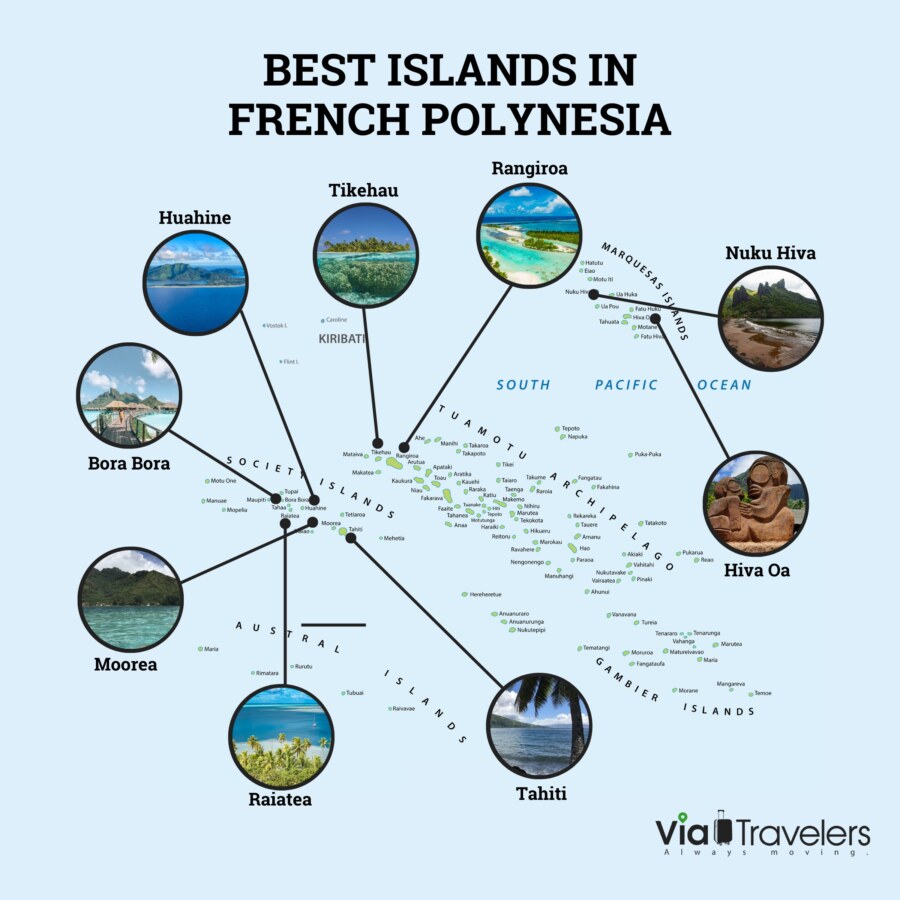
French Polynesia epitomizes tropical paradise with its 118 islands and atolls scattered across the South Pacific, offering a sublime blend of dramatic volcanic landscapes and pristine marine environments. Bora Bora’s iconic Mount Otemanu rises majestically above crystal-clear lagoons where overwater bungalows provide front-row views of vibrant coral gardens and colorful fish. On Tahiti, black sand beaches contrast with lush rainforests concealing hidden waterfalls, while Moorea’s jagged peaks create a dramatic backdrop for dolphin watching and vanilla plantations. Throughout these islands, Polynesian culture thrives through traditional dance, music, and crafts, alongside warm hospitality in small family-run pensions. Whether snorkeling among manta rays, witnessing traditional outrigger canoe races, or simply relaxing on powdery white beaches, French Polynesia delivers an unforgettable sensory experience where natural beauty and cultural authenticity converge.
The destination guide
French Polynesia
Travel guides for French Polynesia
Destination stories (1)
More guides featuring French Polynesia (8)
At a glance
- French
- Tahitian
- English
- Turquoise lagoons
- Volcanic islands
- Overwater bungalows
- Coral atolls
- Honeymoons
- Luxury Resorts
- Tropical Islands
- Scuba Diving & Snorkeling.
How French Polynesia scores
Editorial scores on a 10-point scale, weighed against destinations of the same kind.
Travel safety snapshot
SafePlace indicators use their source 100-point scale; higher is more favourable. Planning context, not a live travel advisory — check official government guidance before you go.
When to go
Best months to visit: April, May, June, July, August, September, October and November.
- January: 25.5 to 27.5 degrees Celsius, 197.8 millimetres of rain, best-time score 3 out of 5.
- February: 25.9 to 27.8 degrees Celsius, 154.5 millimetres of rain, best-time score 3 out of 5.
- March: 26.1 to 28 degrees Celsius, 120.6 millimetres of rain, best-time score 3 out of 5.
- April: 26.2 to 27.9 degrees Celsius, 107.1 millimetres of rain, best-time score 4 out of 5.
- May: 25.9 to 27.3 degrees Celsius, 94.3 millimetres of rain, best-time score 5 out of 5.
- June: 25.2 to 26.7 degrees Celsius, 87.8 millimetres of rain, best-time score 5 out of 5.
- July: 24.6 to 26 degrees Celsius, 58.7 millimetres of rain, best-time score 5 out of 5.
- August: 24.4 to 25.7 degrees Celsius, 59.8 millimetres of rain, best-time score 5 out of 5.
- September: 24.3 to 25.6 degrees Celsius, 77.4 millimetres of rain, best-time score 5 out of 5.
- October: 24.6 to 26 degrees Celsius, 107.4 millimetres of rain, best-time score 5 out of 5.
- November: 25.1 to 26.7 degrees Celsius, 159.5 millimetres of rain, best-time score 4 out of 5.
- December: 25.5 to 27.2 degrees Celsius, 257.8 millimetres of rain, best-time score 3 out of 5.
Month-by-month conditions and packing advice
- January
- Warm to hot, rainy January in French Polynesia: warmer, wetter-season weather makes outdoor and lagoon plans more variable. Crowds: January in French Polynesia is one of the wetter periods, so museums, food stops, flexible reservations, and backup indoor plans make the trip easier. Pack: Pack light clothing, sun protection, and comfortable walking shoes. Add a rain jacket or compact umbrella.
- February
- Warm to hot, rainy February in French Polynesia: warmer, wetter-season weather makes outdoor and lagoon plans more variable. Crowds: February in French Polynesia is one of the wetter periods, so museums, food stops, flexible reservations, and backup indoor plans make the trip easier. Pack: Pack light clothing, sun protection, and comfortable walking shoes. Add a rain jacket or compact umbrella.
- March
- Warm to hot, some rain March in French Polynesia: warmer, wetter-season weather makes outdoor and lagoon plans more variable. Crowds: March in French Polynesia is workable with normal seasonal planning; build in layers, weather checks, and a mix of indoor and outdoor activities. Pack: Pack light clothing, sun protection, and comfortable walking shoes. Add a rain jacket or compact umbrella.
- April
- Warm to hot, some rain April in French Polynesia: shoulder timing can offer good weather with fewer peak-season crowds. Crowds: April in French Polynesia is workable with normal seasonal planning; build in layers, weather checks, and a mix of indoor and outdoor activities. Pack: Pack light clothing, sun protection, and comfortable walking shoes. Add a rain jacket or compact umbrella.
- May
- Warm to hot, some rain May in French Polynesia: dry-season lagoons, beaches, snorkeling, whale watching, hiking, sailing, and island-hopping are most reliable. Crowds: May in French Polynesia is workable with normal seasonal planning; build in layers, weather checks, and a mix of indoor and outdoor activities. Pack: Pack light clothing, sun protection, and comfortable walking shoes. Add a rain jacket or compact umbrella.
- June
- Mild to warm, some rain June in French Polynesia: dry-season lagoons, beaches, snorkeling, whale watching, hiking, sailing, and island-hopping are most reliable. Crowds: June in French Polynesia is workable with normal seasonal planning; build in layers, weather checks, and a mix of indoor and outdoor activities. Pack: Pack light clothing, sun protection, and comfortable walking shoes. Add a rain jacket or compact umbrella.
- July
- Mild to warm, occasional rain July in French Polynesia: dry-season lagoons, beaches, snorkeling, whale watching, hiking, sailing, and island-hopping are most reliable. Crowds: July in French Polynesia is comfortable for sightseeing, neighborhoods, food stops, day trips, and outdoor time with limited weather friction. Pack: Pack light clothing, sun protection, and comfortable walking shoes.
- August
- Mild to warm, occasional rain August in French Polynesia: dry-season lagoons, beaches, snorkeling, whale watching, hiking, sailing, and island-hopping are most reliable. Crowds: August in French Polynesia is comfortable for sightseeing, neighborhoods, food stops, day trips, and outdoor time with limited weather friction. Pack: Pack light clothing, sun protection, and comfortable walking shoes.
- September
- Mild to warm, some rain September in French Polynesia: dry-season lagoons, beaches, snorkeling, whale watching, hiking, sailing, and island-hopping are most reliable. Crowds: September in French Polynesia is workable with normal seasonal planning; build in layers, weather checks, and a mix of indoor and outdoor activities. Pack: Pack light clothing, sun protection, and comfortable walking shoes. Add a rain jacket or compact umbrella.
- October
- Mild to warm, some rain October in French Polynesia: dry-season lagoons, beaches, snorkeling, whale watching, hiking, sailing, and island-hopping are most reliable. Crowds: October in French Polynesia is workable with normal seasonal planning; build in layers, weather checks, and a mix of indoor and outdoor activities. Pack: Pack light clothing, sun protection, and comfortable walking shoes. Add a rain jacket or compact umbrella.
- November
- Mild to warm, rainy November in French Polynesia: shoulder timing can offer good weather with fewer peak-season crowds. Crowds: November in French Polynesia is one of the wetter periods, so museums, food stops, flexible reservations, and backup indoor plans make the trip easier. Pack: Pack light clothing, sun protection, and comfortable walking shoes. Add a rain jacket or compact umbrella.
- December
- Warm to hot, rainy December in French Polynesia: warmer, wetter-season weather makes outdoor and lagoon plans more variable. Crowds: December in French Polynesia is one of the wetter periods, so museums, food stops, flexible reservations, and backup indoor plans make the trip easier. Pack: Pack light clothing, sun protection, and comfortable walking shoes. Add a rain jacket or compact umbrella.
- July
- August
- June
- September
- January
- February
- November
- December
- March
- April
Know before you go
Best time to visit
May to October
Season by season
The Dry Season (May-October) brings ideal, sunny weather with lower humidity. The Wet Season (November-April) is hotter, more humid, and carries a risk of tropical cyclones, but offers lush landscapes and lower prices.
Crowds
Moderate
Getting there and around
Getting there
French Polynesia is accessed primarily via Faaa International Airport (PPT) on main island Tahiti. Primary international carrier Air Tahiti Nui operates daily flights from Los Angeles (LAX), approximately 8.5-hour journey. Other airlines serving from U.S. include Air France, United, and Hawaiian Airlines. From airport, two domestic carriers Air Tahiti and Air Moana provide extensive network of flights to other 48 islands with airports like Bora Bora and Moorea. For Moorea travel, convenient and cheaper alternative is 30-minute high-speed ferry from Tahiti capital Papeete. U.S. citizens need no visa for 90-day tourist stays but require passport valid six months beyond return date.
Getting around
Getting around French Polynesia requires a bit of planning, as public transportation is limited outside of Tahiti. In Papeete, the capital, there is a relatively reliable but infrequent bus system (Le Truck) that serves main roads during daylight hours, but there are no metros or trams anywhere in the region. Walkability is high in resort towns and small islands like Moorea or Bora Bora, but venturing beyond these hubs often requires renting a car or scooter—especially on less developed islands where infrastructure is minimal. Taxis are available but expensive, and rideshare apps are virtually nonexistent, so it’s wise to arrange transfers through accommodations or consider purchasing inter-island air or ferry passes to streamline longer-distance travel.
Top experiences in French Polynesia
Mount Otemanu (Bora Bora)
The world’s most beautiful lagoon. Fifty shades of blue. You can swim with sharks and stingrays in shallow water. It is a natural aquarium.
Papeete Market (Tahiti)
A jagged green peak in Moorea. You can take an ATV or hike to the top for a view of Opunohu Bay and Cook’s Bay. It looks like Jurassic Park.
Cook's Bay & Opunohu Bay (Moorea)
One of the largest atolls in the world. The ‘Blue Lagoon’ is a lagoon inside a lagoon. The diving here (Tiputa Pass) is world-class for seeing dolphins and hammerheads.
Fautaua Waterfall (Tahiti)
One of the tallest waterfalls in the world (300m) on the main island of Tahiti. Accessible by a hike through the jungle. A reminder that these islands are volcanic high islands.
Matira Beach
The only public beach on Bora Bora. Soft white sand and shallow calm water. It faces west, so the sunsets are incredible. No filter needed.
Editor-curated picks carried over from our original guide. Where a full place guide exists, the card links to it.
Worth booking ahead in French Polynesia
Hand-picked from the operators our guides already send readers to. Prices and availability are live on the partner site.
BrowseViator
Tours and tickets in French Polynesia on Viator (opens Viator in a new tab)
Viator's full list of bookable tours and tickets in French Polynesia.
BrowseGetYourGuide
Experiences in French Polynesia on GetYourGuide (opens GetYourGuide in a new tab)
Everything GetYourGuide sells in French Polynesia, with the cancellation terms on each listing.
Where to stayBooking.com
Stays in French Polynesia (opens Booking.com in a new tab)
Live rates and availability for French Polynesia on Booking.com; filter by neighbourhood once you know where your days start.
We earn a commission if you book through these links, at no extra cost to you. It is how we keep the guides free and independent.
Where to stay
Four Seasons Resort Bora Bora
Motu Ome'e BP 506, Bora Bora 98730, French Polynesia
The ultimate bucket list hotel. Massive overwater villas (some with pools). Butler service. The view of Mount Otemanu is the best in Bora Bora. It is honeymoon central.
The Brando
Tetiaroa, Arue 98701, French Polynesia
Marlon Brando’s private island (Tetiaroa). An eco-resort that defines sustainable luxury. Obama wrote his book here. It is exclusive, private, and incredibly beautiful.
Hilton Moorea Lagoon Resort & Spa
BP 28, Maharepa 98728, French Polynesia
Located on the most beautiful beach in Moorea (Temae). It has huge overwater bungalows but feels more laid back than Bora Bora. The snorkeling right off the deck is amazing.
Editor-curated stays carried over from our original guide. Where we have reviewed the hotel, the card links to the review.
Tips from the field
Highlights
- The sheer, cinematic perfection of Bora Bora's turquoise lagoon and the world-class, ultra-luxurious overwater bungalows dotting the islands.
Best activities
- Snorkeling with blacktip reef sharks and stingrays in Bora Bora, hiking to waterfalls in Tahiti, and taking a 4×4 safari through the interior of Moorea.
Local experiences
- Attending a traditional 'Heiva' festival in July, or enjoying raw fish marinated in coconut milk (Poisson Cru).
Practical tips
- Inter-island flights on Air Tahiti are the primary way to get around. Book flights and luxury accommodations many months in advance. French and Tahitian are spoken, though English is common in resorts.
Photography tips
- A drone (check local regulations) or simply an overwater bungalow deck offers the quintessential shots of the mesmerizing color gradients in the lagoons. Use a polarizing filter to cut glare on the water.
Timing
- 10-14 days allows for a relaxed pace while island hopping between Tahiti, Moorea, and Bora Bora.
Keeping it authentic
- Beyond the hyper-luxurious resorts, the deeper islands offer incredibly vibrant Polynesian culture, ancient Marae (temples), and profound connections to the ocean.
Culture, customs and safety
Cultural heritage
French Polynesia preserves ancient Polynesian navigation mastery, where skilled wayfinders crossed vast Pacific expanses using star maps and ocean currents to reach these sacred islands over 2,000 years ago. The UNESCO-listed Marae Taputapuatea temple complex served as the spiritual epicenter where chiefs gathered for voyaging ceremonies, while vibrant tatau (tattoo) traditions encode genealogy and mana into intricate blackwork designs. From the mystical Tiare Apetahi flower found only on Mount Temehani to traditional pandanus weaving in the Austral Islands, this tropical paradise maintains deep connections to Polynesian mythology and craftsmanship.
Local customs & etiquette
French Polynesian culture is a harmonious blend of Polynesian traditions and French influences, characterized by laid-back island lifestyle and strong family values. The concept of mana (spiritual power) is deeply respected in Polynesian belief systems. Traditional greetings involve the honi (touching of noses and foreheads) though handshakes are common in tourist areas. Tahitian dance and music are integral to cultural identity, often performed at tamaaraa (traditional feasts). When visiting marae (ancient temples), show respect by dressing modestly and not touching sacred stones. French customs also apply – politeness is valued, and attempting basic French phrases is appreciated. Tipping is not customary as it goes against Polynesian hospitality traditions.
Safety notes
The islands are generally very safe with low crime rates. Use standard precautions against petty theft. Health risks include mosquito-borne illnesses (use repellent) and potential coral cuts or sea urchin stings while snorkeling.