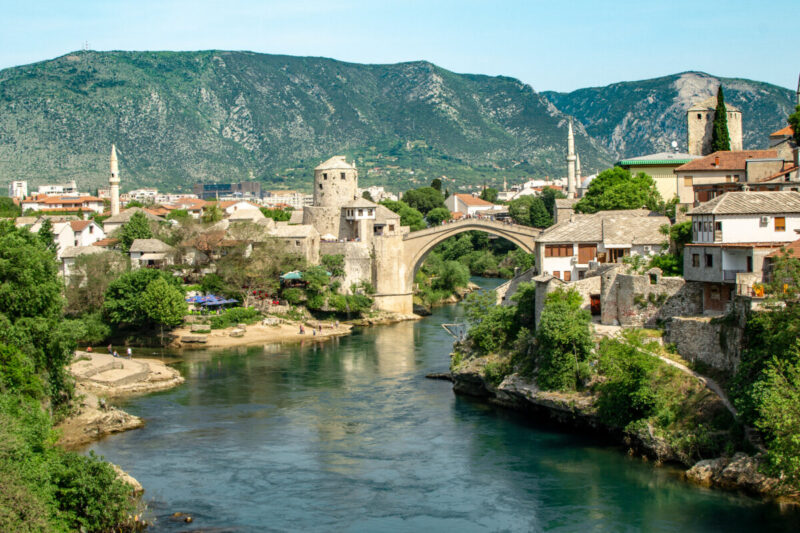
Mostar is a picturesque city known for its iconic Stari Most (Old Bridge), which connects the two sides of the city across the Neretva River. This UNESCO World Heritage site is a symbol of reconciliation and peace, reflecting the city’s rich history and diverse cultural influences. Visitors can explore cobblestone streets, historic Ottoman architecture, and vibrant bazaars, making it a perfect destination for history and culture enthusiasts.
The destination guide
Mostar

City in Bosnia And Herzegovina, EuropeUpdated
- Overall5/10
- Best forCouples, Budget travelers, Solo travelers
- PeakJun–Sep
- CurrencyBAM
Mostar’s Stari Most bridge was rebuilt stone by stone after the war — locals still dive 20 meters from its arch into the Neretva, and the Ottoman old town is a testament to survival.
Travel guides for Mostar
More guides featuring Mostar (4)
At a glance
CurrencyBAM
Time zoneCentral European Time
Languages
- Bosnian
- Croatian
- Serbian
Setting
- Bosnian valley
- Neretva River
- Ottoman bridge
- Mountain backdrop
Population113K113,169 residents
VisaDuration: Visa-free tourist stay of up to 90 days within any 180-day period (non-Schengen jurisdiction; days do not count toward Schengen Area limits). · Documents: Passport valid for at least 3 months beyond the intended departure date and proof of return/onward transportation.
How Mostar scores
5/10OverallFair
Weather7/10
Value for money8/10
Safety7/10
Food & cuisine8/10
Culture & arts6/10
Cultural experience9/10
History9/10
Nature & outdoors7/10
Adventure4/10
Nightlife6/10
Shopping7/10
Family friendly5/10
Romance8/10
Character
Photography score9/10
Authenticity score9/10
Off-the-beaten-path score7/10
Editorial scores on a 10-point scale, weighed against destinations of the same kind.
Travel safety snapshot
Overall69/100Moderate rating
Women travellers60/100
LGBTQ+ travellers40/100
Theft56/100
Medical care65/100
Physical harm70/100
Political freedom60/100
SafePlace indicators use their source 100-point scale; higher is more favourable. Planning context, not a live travel advisory — check official government guidance before you go.
When to go
Best months to visit: March, April, May, June, July, August, September and October.
- January: -1 to 8.1 degrees Celsius, 90.6 millimetres of rain, best-time score 2 out of 5.
- February: -2 to 9.8 degrees Celsius, 61.8 millimetres of rain, best-time score 2 out of 5.
- March: 0.7 to 12.1 degrees Celsius, 18.3 millimetres of rain, best-time score 4 out of 5.
- April: 4.3 to 17.3 degrees Celsius, 25.9 millimetres of rain, best-time score 5 out of 5.
- May: 7.4 to 19.7 degrees Celsius, 98.9 millimetres of rain, best-time score 5 out of 5.
- June: 12.1 to 26.1 degrees Celsius, 38.7 millimetres of rain, best-time score 5 out of 5.
- July: 14.8 to 31.5 degrees Celsius, 9.5 millimetres of rain, best-time score 4 out of 5.
- August: 14.7 to 32.1 degrees Celsius, 2.5 millimetres of rain, best-time score 4 out of 5.
- September: 11.6 to 26.9 degrees Celsius, 9.7 millimetres of rain, best-time score 5 out of 5.
- October: 7.6 to 19.4 degrees Celsius, 116.5 millimetres of rain, best-time score 5 out of 5.
- November: 4 to 14.4 degrees Celsius, 21.1 millimetres of rain, best-time score 3 out of 5.
- December: -0.1 to 8.3 degrees Celsius, 106.7 millimetres of rain, best-time score 2 out of 5.
Month-by-month conditions and packing advice
- January
- Cold weather, some rain January in Mostar: cold, wet winter conditions make this less balanced for first-time travel. Crowds: January represents the low season in Mostar, shaped by cold temperatures and frequent rain. Tourism activity slows significantly, resulting in minimal crowds and far lower hotel and guesthouse prices compared to the summer months. Many open-air attractions are less comfortable to visit due to chilly and damp weather, but indoor cultural sites—such as museums, mosques, and traditional teahouses—remain rewarding and uncrowded. This period is ideal for budget-conscious travelers and those seeking contemplative exploration rather than bustling social energy. Outdoor photography benefits from atmospheric winter fog, though conditions may limit hiking or excursions into the mountains. Advance bookings are not usually necessary, and the city’s calmness offers a more intimate cultural experience. Pack: Insulated winter coat for daytime and evening cold; Waterproof boots for wet cobblestone streets; Warm hat and gloves for below-freezing nights; Compact umbrella for frequent rain showers; Layered sweaters and thermal shirts; Scarf for both warmth and cultural modesty at religious sites
- February
- Cold weather, some rain February in Mostar: cold, wet winter conditions make this less balanced for first-time travel. Crowds: Travelers in February will find Mostar far from its peak tourist crowds, making it ideal for those seeking solitude and authentic interaction with locals. Cold temperatures and damp air limit outdoor activities to shorter walks through the Old Town or along the Neretva, while longer excursions into Herzegovina’s countryside may be less comfortable. Cultural exploration thrives, with warm cafés, traditional restaurants, and indoor museums offering refuge. Accommodation prices are significantly lower than in summer, and bookings are easy to secure last minute. Photography enthusiasts may find the fog and low winter light rewarding, though daylight hours are limited. Expect reduced seasonal services, but the payoff is a quieter, more contemplative experience of this UNESCO heritage city. Pack: Insulated winter jacket for subzero nights; Water-resistant boots for rain and slick cobblestones; Thermal base layers for cold mornings; Umbrella or compact rain poncho; Warm hat, scarf, and gloves for damp chill; Modest layered clothing suitable for cultural and religious sites
- March
- Cool weather, mostly dry March in Mostar: conditions can be rewarding, though high summer heat or early spring weather require planning. Crowds: March represents the shoulder season in Mostar, when tourist numbers remain low and accommodations are far more affordable than in the peak summer months. The cool but mostly dry weather favors sightseeing, cultural exploration, and photography without the pressure of large tour groups. However, some outdoor activities such as river swimming or evening terrace dining are not yet practical given the low temperatures. Travelers can expect quieter streets and more intimate access to iconic landmarks, making it an appealing time for those who prefer cultural immersion over nightlife or resort-style leisure. Early bookings are usually unnecessary, but some seasonal attractions may still operate on reduced hours. Pack: Warm layered clothing including sweaters and jackets; Water-resistant walking shoes for cobblestone streets; Light scarf and gloves for chilly mornings; Compact umbrella in case of showers; Modest attire for religious and cultural sites; Camera with low-light settings for early spring light
- April
- Cool weather, some rain April in Mostar: Old Bridge views, bazaar walks, river scenery, cafes, and Herzegovina day trips balance weather and crowds. Crowds: April marks the start of shoulder season in Mostar, offering favorable travel conditions before the summer crowds arrive. The mild climate makes it ideal for walking tours, cultural exploration, and day trips into Herzegovina’s countryside, without the extreme heat of midsummer. Rainfall is occasional but rarely disruptive, though flexible planning for indoor museum visits is wise. Accommodation prices remain lower than peak months, while attractions are open yet uncrowded—creating excellent value for travelers. Outdoor dining and riverside cafés begin to re-emerge, and the atmosphere is lively without being overwhelming. For those seeking authentic interaction with locals and a more relaxed pace, April is one of the best months to visit. Booking early is recommended for boutique stays, as smaller guesthouses start to fill with regional travelers taking spring holidays. Pack: Light jacket for cool mornings and evenings; Comfortable walking shoes for cobblestone streets; Compact umbrella or rain jacket for spring showers; Layered clothing for fluctuating temperatures; Modest attire for visiting religious and cultural sites; Travel camera to capture spring scenery and architecture
- May
- Cool weather, some rain May in Mostar: Old Bridge views, bazaar walks, river scenery, cafes, and Herzegovina day trips balance weather and crowds. Crowds: May is shoulder season in Mostar, offering an appealing balance between comfort and accessibility. The weather encourages outdoor sightseeing, particularly visits to the Old Bridge, local markets, and hillside walks. Rain showers may disrupt some activities, but they rarely linger. Crowds are moderate, less intense than peak summer months, which means shorter queues and a more intimate cultural experience. Prices for accommodations and tours are still reasonable before high season sets in during June. Travelers can take advantage of favorable conditions for photography, especially with spring’s vivid greenery and dramatic skies. For those seeking cultural depth without summer’s intensity, May is a prime month to explore. Booking in advance is wise, but last-minute arrangements are often possible this time of year. Pack: Light waterproof jacket for sudden spring showers; Layered clothing to adjust between cool mornings and warm afternoons; Comfortable walking shoes for cobbled streets and hillside paths; Compact travel umbrella for intermittent rain; Scarf or shawl for cooler evenings and modesty at religious sites; Daypack for carrying water, layers, and camera gear
- June
- Warm and pleasant, some rain June in Mostar: Old Bridge views, bazaar walks, river scenery, cafes, and Herzegovina day trips balance weather and crowds. Crowds: June offers highly favorable travel conditions in Mostar, marking the start of the summer tourist season without the overwhelming crowds of July and August. Comfortable temperatures support a wide range of outdoor activities from exploring historic sites to hiking nearby trails in the Herzegovinian countryside. While some rainfall may occur, it rarely disrupts sightseeing and instead brings out richer colors in the cityscape. Accommodation prices begin to climb as the season builds, so early booking is recommended. This is an excellent time for travelers who want lively energy in the Old Bazaar and local festivals while still avoiding the densest tourist influx. Restaurants and cafés extend their outdoor seating, and evenings remain cool enough for riverside strolls, making June one of the most balanced months for experiencing Mostar. Pack: Lightweight breathable clothing for warm days; A light jacket or sweater for cooler evenings; Comfortable walking shoes for cobblestone streets; Compact umbrella or rain jacket for occasional showers; Modest attire for visiting religious and cultural sites; Sunglasses and sunscreen for strong daytime sun
- July
- Warm and pleasant, mostly dry July in Mostar: conditions can be rewarding, though high summer heat or early spring weather require planning. Crowds: July represents the peak of Mostar’s summer season, drawing in both regional and international visitors. The consistently hot, dry conditions provide ideal circumstances for sightseeing, river activities, and day trips into Herzegovina’s wine country. However, the same qualities bring dense tourist crowds, especially clustered around the Old Bridge, with hotel prices and dining reservations reflecting high demand. Midday exploration can feel draining due to strong sun exposure, so travelers benefit from early starts and evening excursions. For budget-conscious visitors, this period offers fewer deals compared to spring or autumn, though the vibrancy and energy of the city in full swing is part of the experience. Booking accommodations in advance is strongly advised, as last-minute options may be scarce. Pack: Light, breathable clothing for hot days; Wide-brimmed hat and sunglasses for sun protection; High SPF sunscreen and lip balm; Comfortable sandals or walking shoes for cobblestone streets; Reusable water bottle to stay hydrated; Light shawl or modest cover for visiting religious sites
- August
- Warm and pleasant, mostly dry August in Mostar: conditions can be rewarding, though high summer heat or early spring weather require planning. Crowds: August represents the peak of Mostar’s summer season, attracting both international travelers and regional visitors. The combination of high daytime temperatures and virtually no rain makes it excellent for outdoor sightseeing, but also the busiest period with elevated hotel prices and crowded attractions. Expect higher demand around cultural events, as festivals often coincide with the dry, reliable weather. Midday exploration may feel taxing under the strong Balkan sun, so travelers are advised to schedule walking tours early in the morning or during the cooler evenings. Dining terraces stay lively late into the night, taking advantage of the pleasant post-sunset temperatures. Advance booking for accommodation and key experiences is highly recommended, as August remains one of the most popular months for visiting Herzegovina’s cultural capital. Pack: Lightweight breathable shirts for daytime heat; Wide-brimmed hat and strong SPF sunscreen; Reusable water bottle to stay hydrated; Comfortable sandals or breathable walking shoes; Light jacket or shawl for cooler evenings; Respectful clothing for visiting mosques and religious sites
- September
- Warm and pleasant, mostly dry September in Mostar: Old Bridge views, bazaar walks, river scenery, cafes, and Herzegovina day trips balance weather and crowds. Crowds: September represents the shoulder season in Mostar, a sweet spot for travelers seeking comfortable weather and fewer crowds compared to July and August. Daytime warmth allows for riverfront cafés, outdoor concerts, and day trips into Herzegovina’s wine country, while evenings cool enough for cozy dinners. Accommodation prices typically dip slightly after peak season, though cultural vibrancy remains high with harvest festivals and wine tastings taking place. Travelers benefit from excellent sightseeing conditions without oppressive heat or large tourist groups, making this month ideal for both city wanderings and excursions into nearby nature. Advance booking is still recommended for boutique stays, but spontaneous plans are easier to manage than in peak summer. Pack: Light layers for warm days and cooler evenings; Comfortable walking shoes for cobblestone streets; Light rain jacket or compact umbrella; Sunglasses and SPF 30+ sunscreen; Scarf or shawl for cooler nights and religious sites; Casual yet modest attire for cultural sensitivity
- October
- Cool weather, some rain October in Mostar: Old Bridge views, bazaar walks, river scenery, cafes, and Herzegovina day trips balance weather and crowds. Crowds: October represents the shoulder season in Mostar, bringing fewer crowds compared to the summer peak. Accommodation prices typically dip, though weekends may see a modest rise with regional travelers enjoying the autumn colors. The weather supports cultural exploration—historic mosques, galleries, and artisan shops offer dry refuges between showers. Outdoor dining terraces remain open, though evenings require a jacket as temperatures cool. While swimming in the Neretva River becomes impractical, guided walking tours, vineyard visits in surrounding Herzegovina, and photography excursions are highly rewarding. Travelers benefit from a quieter atmosphere and greater availability at guesthouses, but should prepare for occasional rain delays when scheduling activities. Pack: Waterproof jacket or compact umbrella for frequent showers; Layered clothing to adjust to 7–19°C temperature swings; Comfortable waterproof walking shoes for cobblestone streets; Warm sweater or fleece for chilly mornings and evenings; Camera gear with weather protection for autumn landscapes; Modest clothing for visiting mosques and cultural sites
- November
- Cool weather, mostly dry November in Mostar: quiet travel is possible, but cooler rain narrows outdoor plans. Crowds: November in Mostar marks the low season, offering travelers a quieter and more reflective experience. The cooler weather supports comfortable sightseeing without summer’s intense heat, though evenings can feel cold. With tourism winding down, crowds are minimal and accommodation prices are more favorable, making it an excellent time for budget-conscious visitors. While river swimming and outdoor festivals are out of season, this month favors cultural exploration—walking through the UNESCO-listed Old Town, visiting mosques and museums, and enjoying hearty Bosnian cuisine. Travelers should expect shorter daylight hours and plan key activities earlier in the day, but the absence of crowds allows for unhurried, intimate exploration of the city. Pack: Warm layers including sweaters and a medium-weight jacket; Comfortable waterproof walking shoes for cobblestone streets; Umbrella or compact rain jacket for occasional showers; Scarf and gloves for chilly evenings; Modest clothing suitable for religious sites; Camera gear with low-light capability for soft autumn light
- December
- Cold weather, some rain December in Mostar: cold, wet winter conditions make this less balanced for first-time travel. Crowds: December is firmly off-season for tourism in Mostar. Cold, wet weather combined with shorter days limits extended outdoor sightseeing, and some attractions or smaller family-run accommodations may reduce their hours. On the positive side, this period offers a quieter, more authentic experience of the city without crowds, and prices for hotels and dining are at their lowest. Travelers can enjoy intimate visits to museums, mosques, and traditional restaurants, taking advantage of the winter ambiance. While hiking or river activities are impractical, winter creates a unique lens to appreciate Mostar’s architecture and history. Early booking isn’t necessary, and spontaneous travelers can find excellent value and availability during this period. Pack: Insulated winter coat with waterproof outer layer; Warm hat, gloves, and scarf for cold mornings; Waterproof boots with good traction for wet cobblestones; Thermal base layers for added warmth; Umbrella or compact rain jacket for frequent showers; Modest long-sleeve clothing for cultural site visits
Peak season
- July
- August
- June
- September
Off-peak
- December
- January
- February
- March
- April
- October
- November
Know before you go
Best time to visit
May and September to October for comfortable temperatures (15-25°C), fewer tour groups, and the best conditions for exploring. June to August are lively with festivals and long daylight, but temperatures regularly exceed 30°C and the Old Town gets crowded with day-trippers. Spring (April-May) brings mild weather and blooming gardens. November to March is cold and rainy with reduced tourist services.
Crowds
Mostar is busiest June–September with river-diving tourists and cruise day-trippers in summer; quietest in November–March when visitor numbers drop markedly; overall the Old Bridge area can be very crowded during peak summer days.
Getting there and around
Getting there
Mostar has a small airport (OMO) with limited seasonal flights. Most visitors fly into Sarajevo (SJJ), Dubrovnik (DBV), or Split (SPU) airports. The Sarajevo–Mostar train is one of Europe’s most scenic rail journeys, following the Neretva River through mountains (about 2 hours). Buses connect from Sarajevo, Dubrovnik (2.5 hours, including border crossing), and Split. The bus and train stations sit next to each other, about a 20-minute walk from the Old Town.
Getting around
The historic Old Town is compact and entirely walkable — all major attractions are within a 10-minute radius of Stari Most. Wear comfortable shoes for the smooth, slippery cobblestones. For excursions to Kravica Waterfall, Blagaj (Dervish house), or Počitelj, organized tours or a rental car are the practical options. Local buses cover wider areas but are infrequent. Taxis are affordable but agree on the price before departure.
Top experiences in Mostar
Stari Most (Old Bridge)
Old Bazaar (Kujundžiluk)
Koski Mehmed Pasha Mosque
Crooked Bridge (Kriva Ćuprija)
Museum of War and Genocide Victims
Editor-curated picks carried over from our original guide. Where a full place guide exists, the card links to it.
Worth booking ahead in Mostar
Hand-picked from the operators our guides already send readers to. Prices and availability are live on the partner site.
BrowseViator
Tours and tickets in Mostar on Viator (opens Viator in a new tab)
Viator's full list of bookable tours and tickets in Mostar.
BrowseGetYourGuide
Experiences in Mostar on GetYourGuide (opens GetYourGuide in a new tab)
Everything GetYourGuide sells in Mostar, with the cancellation terms on each listing.
Where to stayBooking.com
Stays in Mostar (opens Booking.com in a new tab)
Live rates and availability for Mostar on Booking.com; filter by neighbourhood once you know where your days start.
We earn a commission if you book through these links, at no extra cost to you. It is how we keep the guides free and independent.
Where to stay
Hotel Mepas
Bisce Polje b.b., 88000 Mostar, Bosnia and Herzegovina
Five-star spa hotel on the banks of the Neretva River with panoramic views of the Stari Most bridge, an indoor pool, wellness centre, and refined restaurant.
City Hotel Mostar
Rade Bitange 2, 88000 Mostar, Bosnia and Herzegovina
Contemporary hotel close to the Old Bridge with spacious rooms, a rooftop terrace, and views of the Neretva valley and surrounding hills.
Muslibegovic House
Kujundžiluk bb, 88000 Mostar, Bosnia and Herzegovina
Ottoman-era stone guesthouse steps from the Stari Most with traditionally furnished rooms, a courtyard garden, and authentic Bosnian breakfast.
Editor-curated stays carried over from our original guide. Where we have reviewed the hotel, the card links to the review.
Tips from the field
Highlights
- Stari Most (Old Bridge) — Reconstructed 16th-century Ottoman bridge spanning the turquoise Neretva River
- UNESCO World Heritage. Old Bazaar — Ottoman-era cobblestone market with traditional copper, textile, and craft shops. Koski Mehmed Pasha Mosque — 1618 mosque with minaret offering panoramic rooftop views. Bridge diving — Local tradition of plunging from Stari Most into the Neretva below. War history — Museums and buildings documenting the 1990s conflict. Day trips — Kravica Waterfall, Blagaj Dervish house, medieval Počitelj.
Practical tips
- Currency & Cards: Bosnian Convertible Mark (BAM / KM) is pegged to the Euro (1 EUR = 1.95583 BAM). Euros (€) are accepted in many souvenir shops and restaurants, but BAM cash is required for official museum tickets, parking, and small cafes.
- Scenic Train Journey: The scenic passenger train between Sarajevo and Mostar traverses stunning gorges along the Neretva River and offers an affordable, breathtaking alternative to driving.
- Day Excursions: Combine your Mostar visit with the 16th-century Dervish monastery (Tekija) at Blagaj and the turquoise cascading pools of Kravica Waterfalls.
- Footwear Essential: Wear non-slip walking shoes to safely navigate the steep, slick cobblestones of the Old Bridge and historic quarter.
Culture, customs and safety
Cultural heritage
Mostar embodies the cultural synthesis of Ottoman Islamic heritage and Balkan multicultural traditions, where Islamic architecture, Orthodox Christian heritage, and Bosnian cultural identity created one of the most symbolically significant cities in the Balkans. The city preserves the iconic Stari Most bridge while representing both the destruction and reconstruction of multicultural Balkan society through war and peace. Mostar cultural heritage encompasses Ottoman Islamic culture, Balkan multicultural traditions, Bosnian national identity, and contemporary peace-building efforts that continue to represent the complexity of Balkan cultural identity and interfaith coexistence in Southeast Europe.
Local customs & etiquette
In Mostar, be respectful of local customs and traditions.
Safety notes
As of 2026, the US Department of State rates Bosnia and Herzegovina at Level 2 (Exercise Increased Caution) due to terrorism concerns and unexploded ordnance remnants from the 1990s conflict.
Key Personal Security & Hazard Guidelines:
• Landmine Awareness (BHMAC): While Mostar’s historic core and tourist sites are completely de-mined, rural areas, abandoned structures, and hiking trails in the surrounding hills may still contain unexploded landmines. Never cross red warning signs marked with skull and crossbones (“PAZI MINE”) and stay on established paved trails.
• Stari Most Slip Hazard: The polished medieval limestone paving on the Old Bridge is extremely slick even in dry weather; wear footwear with high-traction rubber soles.
• Neretva River Diving: The traditional 24-meter dive from the bridge into the ice-cold Neretva is performed by trained members of the Mostar Divers Club; unauthorized tourist jumping carries severe risk of spinal injury or death.
• Pickpocketing: Exercise routine vigilance in the crowded Kujundžiluk Ottoman bazaar during peak cruise and day-trip hours.
• Emergency: Police 122, Fire 123, Ambulance 124.