MenuClose

The destination guide

Northern Italy

Region in Italy, EuropeUpdated

  • Overall6/10
  • Best forCouples, Adventure seekers, Luxury travelers
  • PeakJun–Aug
  • CurrencyEUR

Northern Italy runs from Milan’s fashion to Venice’s canals to the Dolomites’ peaks — a region where Lake Como, Verona, and the best risotto in the country compete for your days.

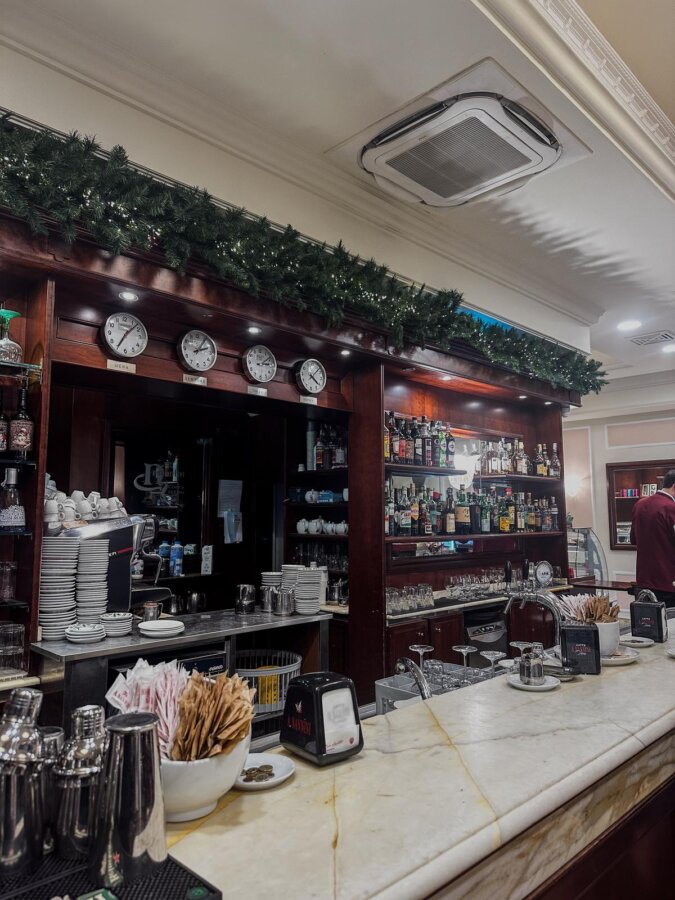
Christmas-season Italian café in Siena
Essentials

At a glance

Currency€ EURCode: EUR
Time zoneRomeEurope/Rome
Languages
  • Italian
Setting
  • Alpine mountains
  • Lake districts
  • Renaissance cities
  • Rolling hills
Population16M16,000,000 residents
VisaDuration: Up to 90 days within any 180-day period in the Schengen Area · Documents: Valid passport issued within the last 10 years and valid for at least 3 months after planned departure, plus proof of accommodation, onward or return travel, and sufficient funds if requested
Daily budget$80–$500 / day Full budget guide →Luxury destination
Scorecard

How Northern Italy scores

6/10OverallFair
Weather8/10
Value for money7/10
Safety8/10
Food & cuisine10/10
Culture & arts6/10
Cultural experience9/10
History9/10
Nature & outdoors9/10
Adventure6/10
Nightlife7/10
Shopping8/10
Family friendly5/10
Romance9/10

Character

Photography score9/10
Authenticity score8/10
Off-the-beaten-path score6/10

Editorial scores on a 10-point scale, weighed against destinations of the same kind.

Safety

Travel safety snapshot

Overall84/100High rating
Women travellers80/100
LGBTQ+ travellers70/100
Theft72/100
Medical care88/100
Physical harm85/100
Political freedom86/100

SafePlace indicators use their source 100-point scale; higher is more favourable. Planning context, not a live travel advisory — check official government guidance before you go.

Seasonality

When to go

Best months to visit: April, May, June, September, October and November.

  1. January: -0.3 to 7.7 degrees Celsius, 51.3 millimetres of rain, best-time score 2 out of 5.
  2. February: 2.3 to 11 degrees Celsius, 76.1 millimetres of rain, best-time score 2 out of 5.
  3. March: 4.6 to 14.5 degrees Celsius, 81.6 millimetres of rain, best-time score 3 out of 5.
  4. April: 8.5 to 18.6 degrees Celsius, 101.3 millimetres of rain, best-time score 4 out of 5.
  5. May: 12.8 to 22 degrees Celsius, 167.9 millimetres of rain, best-time score 5 out of 5.
  6. June: 18 to 27.9 degrees Celsius, 113 millimetres of rain, best-time score 5 out of 5.
  7. July: 19.9 to 29.6 degrees Celsius, 106.7 millimetres of rain, best-time score 3 out of 5.
  8. August: 19.9 to 29.5 degrees Celsius, 117.7 millimetres of rain, best-time score 3 out of 5.
  9. September: 15.7 to 24.4 degrees Celsius, 133.7 millimetres of rain, best-time score 5 out of 5.
  10. October: 11.3 to 19.1 degrees Celsius, 128.6 millimetres of rain, best-time score 5 out of 5.
  11. November: 5.4 to 12.1 degrees Celsius, 122.4 millimetres of rain, best-time score 4 out of 5.
  12. December: 1.2 to 7.9 degrees Celsius, 70.5 millimetres of rain, best-time score 3 out of 5.
Month-by-month conditions and packing advice
January
Cold, occasional rain January in Northern Italy: cold, short winter days make a broad itinerary less flexible. Crowds: January in Northern Italy is workable with normal seasonal planning; build in layers, weather checks, and a mix of indoor and outdoor activities. Pack: Pack warm layers, a coat, and comfortable shoes for cold mornings and evenings.
February
Cool to mild, some rain February in Northern Italy: cold, short winter days make a broad itinerary less flexible. Crowds: February in Northern Italy is workable with normal seasonal planning; build in layers, weather checks, and a mix of indoor and outdoor activities. Pack: Pack warm layers, a coat, and comfortable shoes for cold mornings and evenings. Add a rain jacket or compact umbrella.
March
Cool to mild, some rain March in Northern Italy: summer crowds, winter chill, or early-season variability make the balance weaker. Crowds: March in Northern Italy is workable with normal seasonal planning; build in layers, weather checks, and a mix of indoor and outdoor activities. Pack: Pack layered clothing and comfortable walking shoes. Add a rain jacket or compact umbrella.
April
Cool to mild, some rain April in Northern Italy: spring or late fall can work with layers and regional planning. Crowds: April in Northern Italy is workable with normal seasonal planning; build in layers, weather checks, and a mix of indoor and outdoor activities. Pack: Pack layered clothing and comfortable walking shoes. Add a rain jacket or compact umbrella.
May
Mild to warm, rainy May in Northern Italy: cities, lakes, vineyards, food trips, Alpine edges, and rail itineraries balance weather and atmosphere. Crowds: May in Northern Italy is one of the wetter periods, so museums, food stops, flexible reservations, and backup indoor plans make the trip easier. Pack: Pack layered clothing and comfortable walking shoes. Add a rain jacket or compact umbrella.
June
Warm to hot, some rain June in Northern Italy: cities, lakes, vineyards, food trips, Alpine edges, and rail itineraries balance weather and atmosphere. Crowds: June in Northern Italy is workable with normal seasonal planning; build in layers, weather checks, and a mix of indoor and outdoor activities. Pack: Pack light clothing, sun protection, and comfortable walking shoes. Add a rain jacket or compact umbrella.
July
Warm to hot, some rain July in Northern Italy: summer crowds, winter chill, or early-season variability make the balance weaker. Crowds: July in Northern Italy is workable with normal seasonal planning; build in layers, weather checks, and a mix of indoor and outdoor activities. Pack: Pack light clothing, sun protection, and comfortable walking shoes. Add a rain jacket or compact umbrella.
August
Warm to hot, some rain August in Northern Italy: summer crowds, winter chill, or early-season variability make the balance weaker. Crowds: August in Northern Italy is workable with normal seasonal planning; build in layers, weather checks, and a mix of indoor and outdoor activities. Pack: Pack light clothing, sun protection, and comfortable walking shoes. Add a rain jacket or compact umbrella.
September
Mild to warm, rainy September in Northern Italy: cities, lakes, vineyards, food trips, Alpine edges, and rail itineraries balance weather and atmosphere. Crowds: September in Northern Italy is one of the wetter periods, so museums, food stops, flexible reservations, and backup indoor plans make the trip easier. Pack: Pack light clothing, sun protection, and comfortable walking shoes. Add a rain jacket or compact umbrella.
October
Cool to mild, some rain October in Northern Italy: cities, lakes, vineyards, food trips, Alpine edges, and rail itineraries balance weather and atmosphere. Crowds: October in Northern Italy is workable with normal seasonal planning; build in layers, weather checks, and a mix of indoor and outdoor activities. Pack: Pack layered clothing and comfortable walking shoes. Add a rain jacket or compact umbrella.
November
Cool to mild, some rain November in Northern Italy: spring or late fall can work with layers and regional planning. Crowds: November in Northern Italy is workable with normal seasonal planning; build in layers, weather checks, and a mix of indoor and outdoor activities. Pack: Pack layered clothing and comfortable walking shoes. Add a rain jacket or compact umbrella.
December
Cold, some rain December in Northern Italy: summer crowds, winter chill, or early-season variability make the balance weaker. Crowds: December in Northern Italy is workable with normal seasonal planning; build in layers, weather checks, and a mix of indoor and outdoor activities. Pack: Pack warm layers, a coat, and comfortable shoes for cold mornings and evenings. Add a rain jacket or compact umbrella.

Peak season
  • June
  • July
  • August
Off-peak
  • November
  • December
  • January
  • February
Overview

Know before you go

About

Northern Italy encompasses a diverse geographical region stretching from the Alpine boundaries with France, Switzerland, and Austria to the fertile Po Valley, creating a cultural landscape where continental European and Mediterranean influences harmoniously blend. This region encompasses eight distinct administrative regions—Piedmont, Lombardy, Liguria, Emilia-Romagna, Veneto, Friuli-Venezia Giulia, Trentino-Alto Adige, and Valle d’Aosta—each contributing unique cultural, culinary, and architectural traditions to the area’s rich tapestry. The natural landscape transitions dramatically from the snow-capped Alpine peaks and crystalline lakes of the north to the rolling hills of Langhe and Franciacorta, renowned for their wine production, to the fog-shrouded Po River plains that support Italy’s agricultural and industrial heartland. Northern Italy’s architectural heritage spans Roman ruins and medieval villages to Renaissance palaces and innovative contemporary designs, showcased in world-class cities like Milan with its Gothic cathedral, Venice with its Byzantine-influenced waterways, and Turin with its elegant Baroque and Art Nouveau buildings. Gastronomically, the region defies typical Italian stereotypes through distinctive culinary traditions centered around risotto, polenta, and fresh pasta varieties like tajarin and agnolotti, complemented by prestigious wines including Barolo, Barbaresco, Amarone, and Prosecco. While tourists often focus on the region’s celebrated art cities, Northern Italy offers extraordinary diversity through lesser-explored areas like the Dolomites’ dramatic limestone formations, the tranquil shores of Lake Orta, the ancient university city of Bologna, and the preserved Roman and Byzantine mosaics of Ravenna, creating countless opportunities for discovery beyond the well-trodden paths of Venice, Milan, and the Italian Lakes.

Neighbourhoods

Milan’s Navigli canal district, Brera art quarter, and Duomo piazza anchor Italy’s fashion capital. Turin (Torino) blends royal Savoy palaces with a thriving contemporary food scene and the Museo Egizio. Venice’s San Marco, Dorsoduro, and Cannaregio sestieri each have a distinct atmosphere. The Cinque Terre on the Ligurian coast comprises five car-free fishing villages connected by coastal trails. The Dolomites, a UNESCO World Heritage range, straddle Trentino-Alto Adige and Veneto.

Best time to visit

April through June and September through October offer warm temperatures, manageable crowds, and lower hotel prices. July and August bring peak heat (35 °C+) and vacation crowds to the lakes and coast, though many Italians head south or abroad. Winter (December–March) is ideal for skiing in the Dolomites, and cities like Milan and Turin are lively year-round. The Lake District sparkles in spring when gardens bloom along the shores.

Crowds

Northern Italy (Milan, Lake District, Venice areas) is busiest May–September and during Easter and late-August holidays, with major cities and lakes crowded; quietest in January–February (post-holiday winter) when tourist numbers and hotel rates fall, though some ski areas remain busy.

Logistics

Getting there and around

Getting there

International airports include Milan Malpensa (MXP), Milan Linate (LIN), Venice Marco Polo (VCE), Turin Caselle (TRN), and Bologna (BLQ). Budget carriers Ryanair and EasyJet serve Milan Bergamo (BGY). High-speed trains connect northern Italy to Switzerland, Austria, France, and southern Italy. Flixbus and Itabus operate intercity routes. The Brenner Pass (A22/E45) links Austria to the Italian Dolomites.

Getting around

Italy’s high-speed Frecciarossa trains connect Milan, Turin, Bologna, Venice, Florence, and Rome in 1–3 hours. Regional Trenitalia and Italo trains serve smaller cities. In the Lake District, ferries and hydrofoils connect lakeside towns. The Cinque Terre is best navigated by local train (runs every 20 minutes between villages) or coastal hiking trails. Car rental is useful for the Dolomites and rural Piedmont/Veneto, though ZTL (restricted traffic zones) in most city centres mean parking outside the old town.

Northern Italy encompasses a diverse geographical region stretching from the Alpine boundaries with France, Switzerland, and Austria to the fertile Po Valley, creating a cultural landscape where continental European and Mediterranean influences harmoniously blend. This region encompasses eight distinct administrative regions—Piedmont, Lombardy, Liguria, Emilia-Romagna, Veneto, Friuli-Venezia Giulia, Trentino-Alto Adige, and Valle d’Aosta—each contributing unique cultural, culinary, and architectural traditions to the area’s rich tapestry.

The natural landscape transitions dramatically from the snow-capped Alpine peaks and crystalline lakes of the north to the rolling hills of Langhe and Franciacorta, renowned for their wine production, to the fog-shrouded Po River plains that support Italy’s agricultural and industrial heartland. Northern Italy’s architectural heritage spans Roman ruins and medieval villages to Renaissance palaces and innovative contemporary designs, showcased in world-class cities like Milan with its Gothic cathedral, Venice with its Byzantine-influenced waterways, and Turin with its elegant Baroque and Art Nouveau buildings.

Gastronomically, the region defies typical Italian stereotypes through distinctive culinary traditions centered around risotto, polenta, and fresh pasta varieties like tajarin and agnolotti, complemented by prestigious wines including Barolo, Barbaresco, Amarone, and Prosecco. While tourists often focus on the region’s celebrated art cities, Northern Italy offers extraordinary diversity through lesser-explored areas like the Dolomites’ dramatic limestone formations, the tranquil shores of Lake Orta, the ancient university city of Bologna, and the preserved Roman and Byzantine mosaics of Ravenna, creating countless opportunities for discovery beyond the well-trodden paths of Venice, Milan, and the Italian Lakes.

Curated picks

Top experiences in Northern Italy

  1. Venice & St. Mark's Basilica

    A UNESCO World Heritage city built on 118 islands in a shallow Adriatic lagoon, Venice has no roads—transport is by vaporetto (water bus), gondola, or on foot across 400 bridges. St. Mark’s Basilica (11th century) anchors the Piazza San Marco with its golden Byzantine mosaics, marble columns, and the Pala d’Oro altarpiece. The Doge’s Palace, Rialto Bridge, and Grand Canal palazzi complete the iconic cityscape.

  2. Milan's Duomo & The Last Supper

    Milan’s Gothic cathedral took nearly 600 years to complete and covers 11,700 square metres—the largest church in Italy. Visitors climb (or take an elevator) to the rooftop terraces to walk among 135 marble spires. Leonardo da Vinci’s ‘The Last Supper,’ painted on the wall of the Santa Maria delle Grazie refectory, requires timed tickets booked weeks or months in advance. The Galleria Vittorio Emanuele II, adjacent to the Duomo, is a 19th-century iron-and-glass shopping arcade.

  3. Cinque Terre

    Five clifftop fishing villages—Monterosso, Vernazza, Corniglia, Manarola, and Riomaggiore—cling to the rugged Ligurian coast in a UNESCO-protected national park. Colourful houses stack above small harbours, and terraced vineyards produce Sciacchetrà, a local dessert wine. The Sentiero Azzurro (Blue Trail) connects all five villages in about 5 hours of hiking. Trains run between villages every 20 minutes, and boats offer a sea-level perspective.

  4. Dolomites, Trentino-Alto Adige

    A UNESCO World Heritage mountain range with pale limestone peaks rising above 3,000 metres. Cortina d’Ampezzo, host of the 2026 Winter Olympics, is the most glamorous base. The Tre Cime di Lavaredo circuit (10 km, 3–4 hours) is the most photographed hike in the range. Val Gardena and Alta Badia offer 1,200+ km of interlinked ski runs in the Dolomiti Superski network. Rifugi (mountain huts) serve traditional Tyrolean meals at altitude.

  5. Lake Como

    The deepest lake in Italy (410 m) is ringed by Alpine peaks, Belle Époque villas, and terraced gardens. Bellagio, at the junction of the lake’s three arms, is the most photographed town, with cobblestone lanes, waterfront cafés, and the gardens of Villa Melzi. Varenna and Menaggio offer quieter lakeside strolls and ferry connections. George Clooney’s Villa Oleandra in Laglio has made the western shore a paparazzi magnet.

Editor-curated picks carried over from our original guide. Where a full place guide exists, the card links to it.

Curated picks

Where to stay

Hotel Danieli, a Luxury Collection Hotel

Riva degli Schiavoni 4149, 30122 Venice, Italy

Historic Venetian palazzo on the waterfront with opulent rooms, a terrace restaurant overlooking the lagoon, and a rooftop bar with panoramic views.

Bulgari Hotel Milano

Via Monte Napoleone 7, 20121 Milan, Italy

Elegant five-star boutique hotel on Milan’s most prestigious shopping street with designer interiors and an acclaimed Michelin-starred restaurant.

The Place Firenze

Piazza Santa Maria Novella 7, 50123 Florence, Italy

Renaissance-era monastery turned luxury hotel beside Santa Maria Novella with frescoed ceilings, landscaped gardens, and a full-service spa.

Editor-curated stays carried over from our original guide. Where we have reviewed the hotel, the card links to the review.

Context

Culture, customs and safety

Cultural heritage

Northern Italy represents the cultural synthesis of Renaissance artistic achievement, alpine European traditions, and contemporary Italian economic prosperity, where medieval city-state independence, Renaissance cultural patronage, and modern industrial development created one of Europe most culturally sophisticated and economically dynamic regions. The region preserves magnificent Renaissance art and architecture while maintaining traditional Italian craftsmanship and pioneering contemporary Italian design and fashion excellence. Northern Italy cultural heritage encompasses Renaissance Italian cultural achievement, alpine European traditions, traditional Italian craftsmanship, and contemporary Italian cultural leadership that continues to influence global art, design, and European regional development.

Local customs & etiquette

Greet shopkeepers with ‘Buongiorno.’ Espresso is drunk standing at the bar—sitting at a table costs more. Dinner begins at 20:00 or later; arriving before 19:30 marks you as a tourist. Tipping is not expected but rounding up the bill by a euro or two is appreciated. Cover charge (coperto) is standard at restaurants—it is not a tip. Dress codes apply at churches: shoulders and knees must be covered.

Last reviewed Data: Editorial research · Climate normals · SafePlace safety indicators