Slovenia captivates visitors with its extraordinary natural diversity packed into a compact country where Alpine peaks, emerald lakes, and Mediterranean coastline exist just hours apart. Explore the picture-perfect Lake Bled with its fairy tale island church, discover the magnificent underground chambers of Postojna Cave, or wander through Ljubljana’s charming riverside old town crowned by its medieval castle. Outdoor enthusiasts can hike through the pristine Julian Alps, raft down the turquoise Soča River, or cycle through rolling vineyard-covered hills. With its sustainable tourism approach, farm-to-table culinary traditions, and genuinely hospitable locals, Slovenia offers travelers an authentic European experience without the crowds.
The destination guide
Slovenia
Country in EuropeUpdated
- Overall6/10
- Best forSolo travelers
- CurrencyEUR
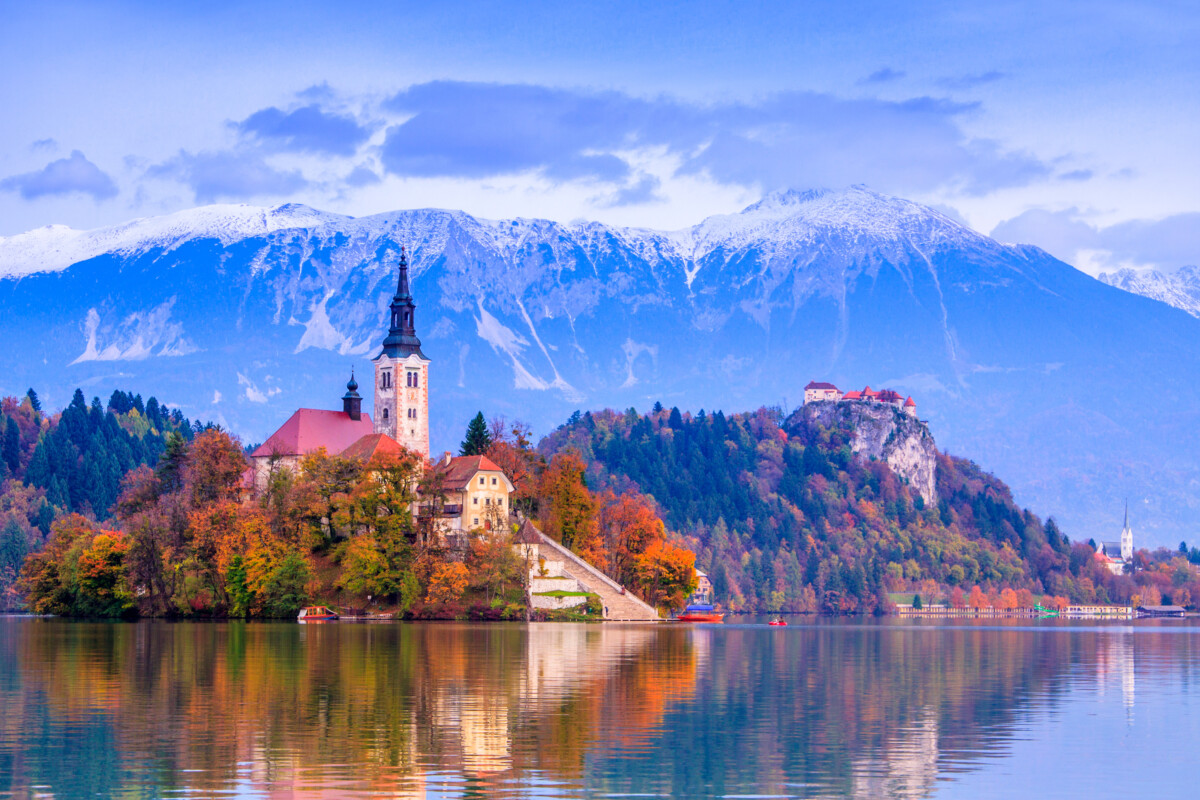
Lake Bled looks exactly like the photos — and that’s not a bad thing. The crowds thin fast once you start walking the trail.
Travel guides for Slovenia
More guides featuring Slovenia (3)
At a glance
Currency€ EURCode: EUR
Time zoneLjubljana UTC+01:00Europe/Ljubljana UTC+01:00
Languages
- Slovene
Setting
- Julian Alps
- Adriatic coast
- Karst caves
- Lake Bled landscape
Population2.1M2,108,977 residents
VisaDuration: Up to 90 days within any 180-day period in the Schengen Area · Documents: Valid passport issued within the last 10 years and valid for at least 3 months after planned departure, plus proof of accommodation, onward or return travel, and sufficient funds if requested
How Slovenia scores
6/10OverallFair
Weather3/10
Value for money5/10
Safety9/10
Food & cuisine7/10
Culture & arts6/10
Cultural experience7/10
History8/10
Nature & outdoors4/10
Adventure4/10
Nightlife4/10
Shopping6/10
Family friendly4/10
Romance7/10
Character
Photography score9/10
Authenticity score10/10
Off-the-beaten-path score5/10
Editorial scores on a 10-point scale, weighed against destinations of the same kind.
Travel safety snapshot
Overall88/100High rating
Women travellers86/100
LGBTQ+ travellers82/100
Theft80/100
Medical care86/100
Physical harm88/100
Political freedom82/100
SafePlace indicators use their source 100-point scale; higher is more favourable. Planning context, not a live travel advisory — check official government guidance before you go.
When to go
Best months to visit: May, June, July, August, September and October.
- January: -3.4 to 3.1 degrees Celsius, 73.4 millimetres of rain, best-time score 2 out of 5.
- February: -1.6 to 6 degrees Celsius, 74.4 millimetres of rain, best-time score 2 out of 5.
- March: 0.6 to 9.7 degrees Celsius, 76.3 millimetres of rain, best-time score 2 out of 5.
- April: 4.2 to 13.8 degrees Celsius, 75.6 millimetres of rain, best-time score 3 out of 5.
- May: 8.4 to 16.9 degrees Celsius, 142.7 millimetres of rain, best-time score 5 out of 5.
- June: 13.5 to 23.1 degrees Celsius, 91 millimetres of rain, best-time score 5 out of 5.
- July: 15 to 24.6 degrees Celsius, 107.2 millimetres of rain, best-time score 4 out of 5.
- August: 15 to 24.4 degrees Celsius, 94.7 millimetres of rain, best-time score 4 out of 5.
- September: 11.1 to 19.3 degrees Celsius, 144 millimetres of rain, best-time score 5 out of 5.
- October: 6.8 to 14.5 degrees Celsius, 100 millimetres of rain, best-time score 4 out of 5.
- November: 1.9 to 8 degrees Celsius, 125.1 millimetres of rain, best-time score 3 out of 5.
- December: -1.9 to 3.9 degrees Celsius, 83.3 millimetres of rain, best-time score 3 out of 5.
Month-by-month conditions and packing advice
- January
- Cold, some rain January in Slovenia: winter cold and snow narrow a broad non-ski itinerary. Crowds: January in Slovenia is workable with normal seasonal planning; build in layers, weather checks, and a mix of indoor and outdoor activities. Pack: Pack warm layers, a coat, and comfortable shoes for cold mornings and evenings. Add a rain jacket or compact umbrella.
- February
- Cold, some rain February in Slovenia: winter cold and snow narrow a broad non-ski itinerary. Crowds: February in Slovenia is workable with normal seasonal planning; build in layers, weather checks, and a mix of indoor and outdoor activities. Pack: Pack warm layers, a coat, and comfortable shoes for cold mornings and evenings. Add a rain jacket or compact umbrella.
- March
- Cold, some rain March in Slovenia: winter cold and snow narrow a broad non-ski itinerary. Crowds: March in Slovenia is workable with normal seasonal planning; build in layers, weather checks, and a mix of indoor and outdoor activities. Pack: Pack warm layers, a coat, and comfortable shoes for cold mornings and evenings. Add a rain jacket or compact umbrella.
- April
- Cool to mild, some rain April in Slovenia: early spring or late fall can be scenic but more variable. Crowds: April in Slovenia is workable with normal seasonal planning; build in layers, weather checks, and a mix of indoor and outdoor activities. Pack: Pack layered clothing and comfortable walking shoes. Add a rain jacket or compact umbrella.
- May
- Cool to mild, rainy May in Slovenia: Ljubljana, Lake Bled, hiking, wine regions, caves, and the coast balance pleasant weather with fewer peak crowds. Crowds: May in Slovenia is one of the wetter periods, so museums, food stops, flexible reservations, and backup indoor plans make the trip easier. Pack: Pack layered clothing and comfortable walking shoes. Add a rain jacket or compact umbrella.
- June
- Mild to warm, some rain June in Slovenia: Ljubljana, Lake Bled, hiking, wine regions, caves, and the coast balance pleasant weather with fewer peak crowds. Crowds: June in Slovenia is workable with normal seasonal planning; build in layers, weather checks, and a mix of indoor and outdoor activities. Pack: Pack layered clothing and comfortable walking shoes. Add a rain jacket or compact umbrella.
- July
- Mild to warm, some rain July in Slovenia: summer and early fall remain rewarding with crowd or weather planning. Crowds: July in Slovenia is workable with normal seasonal planning; build in layers, weather checks, and a mix of indoor and outdoor activities. Pack: Pack light clothing, sun protection, and comfortable walking shoes. Add a rain jacket or compact umbrella.
- August
- Mild to warm, some rain August in Slovenia: summer and early fall remain rewarding with crowd or weather planning. Crowds: August in Slovenia is workable with normal seasonal planning; build in layers, weather checks, and a mix of indoor and outdoor activities. Pack: Pack light clothing, sun protection, and comfortable walking shoes. Add a rain jacket or compact umbrella.
- September
- Cool to mild, rainy September in Slovenia: Ljubljana, Lake Bled, hiking, wine regions, caves, and the coast balance pleasant weather with fewer peak crowds. Crowds: September in Slovenia is one of the wetter periods, so museums, food stops, flexible reservations, and backup indoor plans make the trip easier. Pack: Pack layered clothing and comfortable walking shoes. Add a rain jacket or compact umbrella.
- October
- Cool to mild, some rain October in Slovenia: summer and early fall remain rewarding with crowd or weather planning. Crowds: October in Slovenia is workable with normal seasonal planning; build in layers, weather checks, and a mix of indoor and outdoor activities. Pack: Pack layered clothing and comfortable walking shoes. Add a rain jacket or compact umbrella.
- November
- Cold, some rain November in Slovenia: early spring or late fall can be scenic but more variable. Crowds: November in Slovenia is workable with normal seasonal planning; build in layers, weather checks, and a mix of indoor and outdoor activities. Pack: Pack warm layers, a coat, and comfortable shoes for cold mornings and evenings. Add a rain jacket or compact umbrella.
- December
- Cold, some rain December in Slovenia: early spring or late fall can be scenic but more variable. Crowds: December in Slovenia is workable with normal seasonal planning; build in layers, weather checks, and a mix of indoor and outdoor activities. Pack: Pack warm layers, a coat, and comfortable shoes for cold mornings and evenings. Add a rain jacket or compact umbrella.
Know before you go
Best time to visit
The best time to visit Slovenia is May through September, when warm weather, long daylight hours, and outdoor activity options are at their peak. July and August are the warmest months with temperatures reaching 25-30°C (77-86°F), ideal for Lake Bled, Alpine hiking, and a brief Adriatic coast season in Piran.
Seasonal Highlights
The shoulder months of May-June and September-October offer the best balance of comfortable weather, smaller crowds, and lower prices. September is particularly rewarding: warm enough for swimming at Lake Bled, ideal hiking conditions in the Julian Alps, and the start of wine harvest season in the eastern regions. Winter (December-March) transforms the country into a ski destination, with Kranjska Gora and Vogel offering Alpine skiing within short distances of Ljubljana.
Season by season
Spring (March-May):
Weather: 10-20°C (50-68°F), increasing sunshine, wildflowers
Highlights: Ljubljana café culture revives, Vintgar Gorge opens (April), early hiking season
Best For: City exploration, wine regions, emerging green landscapes
Summer (June-August):
Weather: 22-30°C (72-86°F), warm lakes, afternoon thunderstorms possible
Highlights: Lake Bled and Bohinj swimming, Alpine hiking in Julian Alps, Ljubljana festival season, Piran beach
Best For: Lake activities, mountain hiking, outdoor festivals, coast
Autumn (September-November):
Weather: 10-22°C (50-72°F), crisp air, golden foliage
Highlights: Wine harvest in Goriška Brda and Karst, fewer tourists, warm swimming into early October
Best For: Wine touring, hiking, photography, food festivals
Winter (December-February):
Weather: -2 to 5°C (28-41°F), snow in Alps and plateau
Highlights: Skiing at Kranjska Gora and Vogel, Ljubljana Christmas market, thermal spas
Best For: Alpine skiing, spa weekends, festive Ljubljana, Škocjan Caves
Crowds
Slovenia sees peak crowds in summer (June–August) especially Lake Bled and coastal Piran; Easter and August festival weeks raise local spikes; quietest November–March outside ski resorts, overall moderately busy in summer but never as crowded as major Western European hotspots.
Getting there and around
Getting there
Ljubljana Jože Pučnik Airport (LJU) receives direct flights from major European cities including London, Paris, Munich, Frankfurt, Amsterdam, and Istanbul. Budget carriers (Wizz Air, easyJet) serve the route alongside traditional airlines.
Alternatively, several nearby airports provide competitive access: Venice Marco Polo (VCE) or Treviso (TSF), both about 2.5 hours by car; Trieste (TRS) in Italy, 1.5 hours; Klagenfurt (KLU) in Austria, 1 hour; Zagreb (ZAG) in Croatia, 1.5 hours. GoOpti and FlixBus operate shared shuttle transfers from these airports to Ljubljana.
By rail, Ljubljana connects to Vienna (6 hours), Munich (6 hours), Venice (4 hours), and Zagreb (2.5 hours). FlixBus covers these routes more cheaply with comparable journey times. By car, Slovenia is accessible via well-maintained highways from Austria (Karawanken Tunnel), Italy (through Trieste or Udine), and Croatia.
Getting around
A rental car is the most flexible way to explore Slovenia — the country is compact enough to drive from Ljubljana to Lake Bled (55 km) in under an hour, and to the Adriatic coast (120 km) in 90 minutes. Purchase an e-vignette online before using highways (mandatory, starting at €15 for a weekly pass). Winter tires are legally required from November 15 to March 15.
Slovenia’s train network (SŽ) connects Ljubljana to Bled (55 minutes), Maribor (2 hours), and Koper/coast (2.5 hours). Buses fill gaps in rail coverage and serve smaller towns, national parks, and the coast.
Ljubljana itself is walkable and bike-friendly — the car-free old town stretches along the Ljubljanica River, and BicikeLJ offers a public bike-sharing system. Taxis and Bolt (ride-hailing) are available throughout Ljubljana and larger towns.
For Lake Bled and Bohinj, a car provides the most flexibility for reaching trailheads, Vintgar Gorge, and viewpoints. Public buses connect Bled to Ljubljana and Bohinj but run on limited schedules.
Top experiences in Slovenia
Lake Bled
Lake Bled sits at the foot of the Julian Alps, its milky-turquoise waters surrounding a tiny island bearing the Church of the Assumption. Bled Castle, perched 130 meters above the lake on a steep cliff, has overlooked this scene since the 11th century and now houses a museum, a wine cellar, and a printing press workshop. Traditional pletna boats — wooden flat-bottomed boats rowed by standing oarsmen — ferry visitors to the island, where 99 stone steps lead to the church. Swimming, rowing, and walking the 6-km lake path are summer staples. The Mala Osojnica viewpoint offers the most spectacular elevated perspective.
Ljubljana Old Town
Ljubljana’s Old Town unfolds along both banks of the Ljubljanica River beneath the castle hill. The Triple Bridge, Cobbler’s Bridge, and Dragon Bridge connect the two sides with distinctive architectural character — the Dragon Bridge (1901) features four copper dragon statues that have become the city’s symbol. The car-free town center is lined with Baroque facades, outdoor cafés, and the Central Market (designed by architect Jože Plečnik). Ljubljana Castle, reached by funicular or a 15-minute walk, provides panoramic views and hosts cultural events. The city was named European Green Capital in 2016 for its sustainability initiatives.
Vintgar Gorge
Vintgar Gorge, just 4 km northwest of Lake Bled, channels the Radovna River through a 1.6-km limestone canyon on wooden walkways and bridges hugging the gorge walls. The turquoise-green water flows over rapids, pools, and natural dams before culminating at the 13-meter Šum waterfall at the gorge’s end. Open from mid-April to early November, the gorge is most dramatic in spring when snowmelt raises water levels and force. Early morning visits avoid the heaviest crowds during peak summer.
Škocjan Caves
The Škocjan Caves, a UNESCO World Heritage Site since 1986, contain one of the world’s largest known underground chambers — Martel’s Chamber, 308 meters long, 123 meters wide, and 146 meters high. The caves were carved by the Reka River, which disappears underground and flows through massive passages before emerging 34 km away on the Italian coast. Guided tours (approximately 90 minutes) traverse illuminated walkways, suspension bridges over the underground canyon, and chambers adorned with stalactites and stalagmites. The scale of the underground spaces is genuinely awe-inspiring.
Piran
Piran is Slovenia’s most beautiful coastal town — a narrow peninsula jutting into the Adriatic Sea, shaped by 500 years of Venetian rule. Narrow medieval streets, Venetian Gothic palazzos, and Tartini Square (named after the violin virtuoso born here in 1692) create a distinctly Italian atmosphere. The Church of St. George belltower, modeled on the campanile of St. Mark’s in Venice, offers views across the Gulf of Trieste to Italy and Croatia. The town’s seafood restaurants serve Adriatic catches prepared with Istrian olive oil, and the Sečovlje salt pans on the edge of town have been producing sea salt since the 14th century.
Editor-curated picks carried over from our original guide. Where a full place guide exists, the card links to it.
Worth booking ahead in Slovenia
Hand-picked from the operators our guides already send readers to. Prices and availability are live on the partner site.
BrowseViator
Tours and tickets in Slovenia on Viator (opens Viator in a new tab)
Viator's full list of bookable tours and tickets in Slovenia.
BrowseGetYourGuide
Experiences in Slovenia on GetYourGuide (opens GetYourGuide in a new tab)
Everything GetYourGuide sells in Slovenia, with the cancellation terms on each listing.
Where to stayBooking.com
Stays in Slovenia (opens Booking.com in a new tab)
Live rates and availability for Slovenia on Booking.com; filter by neighbourhood once you know where your days start.
We earn a commission if you book through these links, at no extra cost to you. It is how we keep the guides free and independent.
Where to stay
Hotel & Vila Bled
Cesta svobode 26, 4260 Bled, Slovenia
Vila Bled is a lakeside retreat that once served as President Tito’s summer residence. The property offers rooms and suites with direct lake views, private beach access, and a restaurant serving Slovenian cuisine with local wines. Its secluded position on the western shore provides a quieter alternative to Bled town while remaining within walking distance of the castle and lakeside path.
InterContinental Ljubljana
Slovenska cesta 59, 1000 Ljubljana, Slovenia
InterContinental Ljubljana is the city’s premier luxury hotel, occupying a modern tower in the center with views across the old town to the castle. The property features Michelin-starred dining (Restaurant Cubo), a rooftop bar, spa, and contemporary rooms with panoramic windows. Its central location is steps from the Triple Bridge, Central Market, and Old Town.
Hotel & Hostel Celica
Metelkova ulica 8, 1000 Ljubljana, Slovenia
Hostel Celica is a hostel-turned-art-project in a former Yugoslav military prison in Ljubljana’s Metelkova cultural quarter. Twenty former cells were redesigned by international artists, creating unique themed rooms alongside standard dormitory accommodation. The building’s history, communal spaces, and location in Ljubljana’s alternative cultural hub make it one of Europe’s most distinctive hostels.
Editor-curated stays carried over from our original guide. Where we have reviewed the hotel, the card links to the review.
Tips from the field
Highlights
- Lake Bled — Fairy-tale Alpine lake with an island church, clifftop castle, and Julian Alps panorama
- Ljubljana — One of Europe's most livable small capitals with a car-free riverfront center
- Vintgar Gorge — A 1.6-km canyon walkway above emerald waters near Lake Bled
- Lake Bohinj — Wilder, quieter Alpine lake inside Triglav National Park
- Škocjan Caves — UNESCO World Heritage underground chambers among Europe's largest
- Piran — Venetian-influenced Adriatic coast town with seafood and Mediterranean light
- Julian Alps & Triglav — Alpine peaks, mountain huts, and hiking trails
- Slovenian Wine Regions — Goriška Brda, Vipava Valley, and Karst producing world-class wines
Best activities
- Slovenia packs extraordinary geographic diversity into a country roughly the size of New Jersey. Lake Bled — with its island church, clifftop castle, and Julian Alps backdrop — is the country's most recognizable scene and one of Europe's most photographed locations. A traditional pletna boat to the island and 99 steps up to the Church of the Assumption is the essential Bled experience, followed by a slice of kremšnita (Bled cream cake) on a lakeside terrace.
- Ljubljana, the capital, is one of Europe's most livable small cities — a car-free center along the Ljubljanica River, overlooked by a hilltop castle reachable by funicular. The city punches above its weight with a restaurant scene drawing on Italian, Austrian, and Balkan culinary traditions. Beyond the cities, Vintgar Gorge (4 km from Bled) channels the Radovna River through a 1.6-km canyon on wooden walkways. Lake Bohinj, less touristy than Bled, sits inside Triglav National Park and offers wilderness swimming, kayaking, and the Vogel cable car ride for panoramic Alpine views. The Škocjan Caves, a UNESCO World Heritage Site, contain one of Europe's largest underground chambers. Piran, on the Adriatic coast, is a Venetian-inflected Mediterranean jewel with narrow streets, a bell tower modeled on St. Mark's, and seafood restaurants along the harbor.
Practical tips
- Currency: Euro (EUR). Cards widely accepted in cities, hotels, and restaurants. Carry some cash for rural areas, mountain huts, and small vendors.
- Getting There: Ljubljana Airport (LJU) has European flights. Venice, Trieste, and Klagenfurt airports offer alternative access. Excellent road and rail connections from Austria, Italy, and Croatia.
- Language: Slovenian. English is widely spoken, especially among younger people and in tourist areas. Italian is common in the coastal region; German in the north.
- Dining: Slovenian cuisine blends Central European, Mediterranean, and Balkan influences. Signature dishes include štruklji (rolled dumplings), potica (nut roll), žlikrofi (Idrija pasta pockets), and jota (bean stew). Wine regions (Goriška Brda, Karst) produce excellent whites and reds — 'orange wine' from the Vipava Valley is a Slovenian specialty. Average dinner mains: €12-20.
- Tap Water: Safe to drink throughout the country.
- Drivers: Purchase an e-vignette (€15/week) before highway driving. Winter tire rules are strict.
- Tipping: Not obligatory but appreciated — round up or add 5-10% at restaurants.
- Packing: Layers are essential due to altitude variations. Hiking boots for mountain trails. Swimwear for lakes and coast. Rain jacket year-round.
Photography tips
- Golden Hour Shots:
- Lake Bled — Island church with Julian Alps backdrop in warm morning or evening light from Mala Osojnica viewpoint
- Ljubljana Castle — Panoramic views across the old town and Ljubljanica River at dusk
- Piran harbor — Venetian architecture reflected in Adriatic waters at sunset
- Iconic Views:
- Mala Osojnica viewpoint — The definitive Lake Bled photograph from 756m above the lake
- Vintgar Gorge — Emerald water flowing through narrow canyon walls on wooden walkways
- Lake Bohinj — Pristine Alpine lake within Triglav National Park
- Škocjan Caves — Massive underground chambers (tripod needed, check photography rules)
- Predjama Castle — A Renaissance castle built into a 123-meter cliff face
- Ljubljana's Triple Bridge — Art Nouveau bridges over the Ljubljanica River
- Best Months: September-October for clear Alpine skies and fall color. June for longest days. December for snow-covered landscapes.
- Equipment: Wide-angle for Alpine panoramas and cave chambers. Telephoto for Lake Bled compressed perspectives from Mala Osojnica. Polarizing filter for reducing lake and river glare. Tripod for dawn shots and cave interiors.
Keeping it authentic
- Slovenia may be the most genuine country in Central Europe. Its small size (2 million people in a country smaller than New Jersey) means that development hasn't outpaced identity — Ljubljana's car-free center wasn't designed as a tourist precinct, it was closed to traffic because the city chose walkability over commerce. When Ljubljana won European Green Capital in 2016, it wasn't a branding exercise but a recognition of policies the city had already implemented. Lake Bled's pletna boats aren't a tourist invention — the wooden-bottomed rowing tradition goes back to the 12th century, and the boatmen today are descendants of the families who have held the concession for generations. Slovenian wine isn't marketed with tourism buzzwords — it's made by small-scale viticulturalists in regions (Goriška Brda, Karst, Vipava Valley) that have been cultivating vines for centuries. Mountain huts in the Julian Alps serve hikers the same goulash and strudel they've served since the Alpine clubs built them a century ago. When a Slovenian tells you to swim in a specific spot in Lake Bohinj, they're sharing a personal tradition, not reading from a script.
Culture, customs and safety
Cultural heritage
Slovenia’s cultural and historical heritage is a rich blend of Slavic, Roman, and Habsburg influences, shaped by its strategic location at the crossroads of Central Europe. Its traditions are preserved in folk dances, alpine architecture, and festivals like Kurentovanje, a UNESCO-recognized intangible heritage celebrating spring’s arrival. Architecturally, the capital Ljubljana showcases the legacy of Jože Plečnik, whose urban design is nominated for UNESCO World Heritage status. The Škocjan Caves, inscribed as a UNESCO World Heritage Site, highlight Slovenia’s geological and ecological significance. From medieval castles like Predjama to the spiritual heritage of the Carthusian Žiče Charterhouse, Slovenia’s identity is deeply rooted in both nature and history.
Local customs & etiquette
Slovenians are reserved but friendly, and once engaged in conversation, generous with their time and knowledge. Greet with a handshake and maintain eye contact. ‘Dober dan’ (good day) is the standard polite greeting.
Slovenians take quiet pride in their country’s natural beauty and cultural achievements. They value sustainability — Ljubljana was European Green Capital in 2016, and the country’s environmental consciousness is genuine, not performative. Recycling, organic farming, and nature conservation are deeply embedded in daily life.
Remove shoes when entering a home — hosts will typically offer slippers. Bringing wine, flowers, or chocolates as a guest gift is appreciated. Flowers should be given in odd numbers (even numbers are for funerals).
Mountain etiquette matters: greet fellow hikers with ‘Dober dan’ on trails, yield to ascending hikers on narrow paths, and respect marked routes in Triglav National Park. Mountain huts (planinskih koč) serve meals and accommodation to hikers — reservations are recommended in peak season.
Sunday is traditionally a family and rest day. Many shops outside Ljubljana and tourist areas close on Sundays. Plan grocery shopping accordingly.
Safety notes
Slovenia is one of the safest countries in Europe, ranking 9th on the 2024 Global Peace Index. Crime rates are very low, and violent crime against tourists is extremely rare.
General Tips:
• Take standard precautions with valuables — petty theft (pickpocketing) can occur in tourist areas and on public transport
• Keep car doors locked and valuables out of sight when parked at trailheads and tourist parking areas
• Carry a copy of your passport — failure to produce ID if requested can result in a fine
Outdoor Safety:
• Mountain weather changes rapidly in the Julian Alps — carry layers, rain gear, and check forecasts before hiking
• Inform someone of your hiking plans and expected return time
• Ticks are common in forested areas from spring through autumn — use repellent and check for ticks after walks
• Swim only in designated areas at lakes — water temperatures can be cold
Driving:
• Strict drink-driving limits (0.05% BAC, 0.00% for new drivers)
• E-vignette required for highway use
• Winter equipment mandatory Nov 15 – Mar 15
Emergency: 112 (police, fire, ambulance, mountain rescue).


Travel Style
Activities