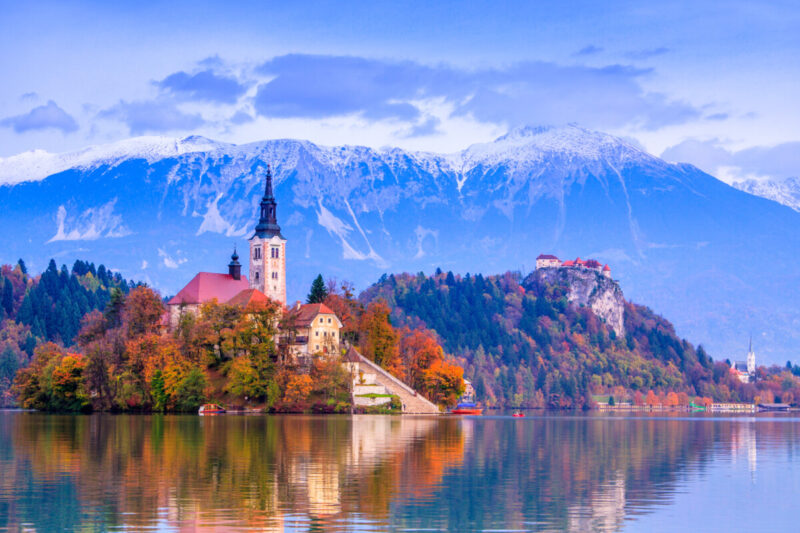
The Upper Sava Valley (Zgornjesavska dolina) stretches through northwestern Slovenia, carved by the emerald Sava River as it winds between the towering Julian Alps and Karavanke mountain ranges. This pristine alpine region encompasses the municipalities of Kranjska Gora, Jesenice, and Žirovnica, offering an authentic glimpse into Slovenian mountain culture and natural splendor. The valley’s crown jewel is Kranjska Gora, an idyllic mountain resort town serving as a gateway to Triglav National Park and host to world-class winter sports events at its Planica Nordic Center, home to some of the world’s largest ski flying hills. Throughout the seasons, the valley transforms dramatically—from winter’s snow-covered landscapes perfect for skiing and snowboarding, to spring’s wildflower-carpeted alpine meadows, summer’s crystal-clear lakes including the fairy-tale Lake Jasna, and autumn’s spectacular display of golden larch forests against limestone peaks. Cultural highlights include the Russian Chapel on the Vršič Pass, built by WWI Russian prisoners of war; traditional wooden alpine architecture in villages like Podkoren and Rateče; and the iron-forging heritage of Jesenice. The valley’s strategic location at the tripoint of Slovenia, Austria, and Italy has shaped its distinctive cultural identity, visible in local cuisine that blends Alpine, Mediterranean, and Slavic influences. Outdoor enthusiasts find paradise in the network of hiking and cycling trails leading to spectacular viewpoints like the Tamar Valley, Zelenci Nature Reserve with its emerald springs, or the majestic Peričnik waterfall. Despite gaining popularity for sustainable tourism, the Upper Sava Valley maintains its authentic character where traditional mountain farming practices, folklore, and crafts continue alongside pristine natural environments.
The destination guide
Upper Sava Valley
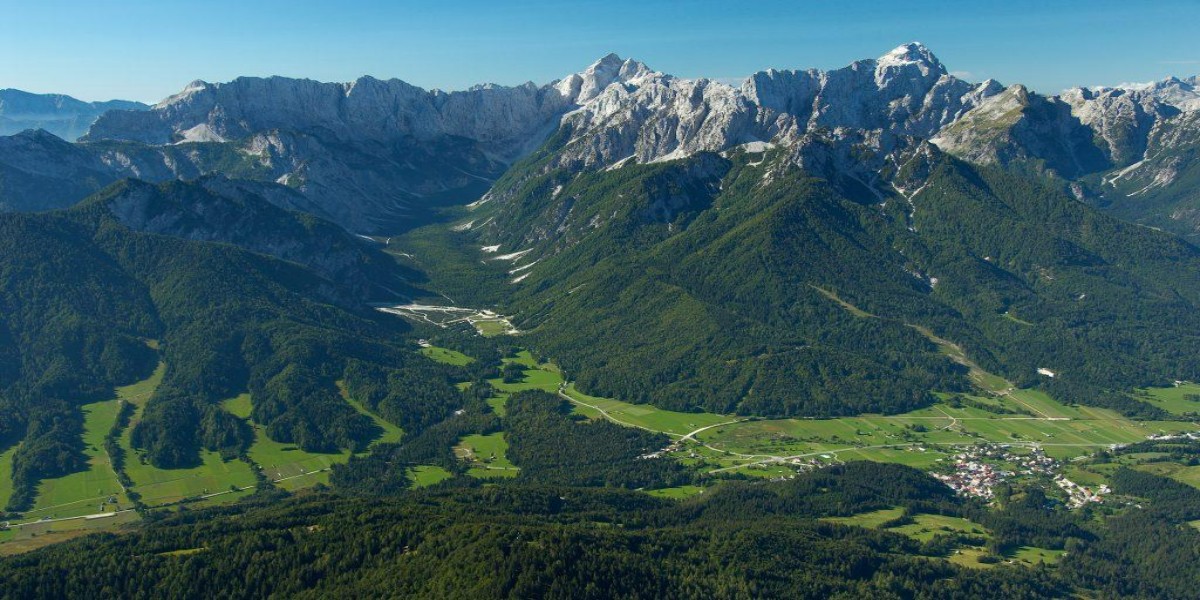
The Upper Sava Valley in Slovenia stretches from Kranjska Gora to Bled with Julian Alps framing every view — a valley where ski resorts and emerald rivers share the landscape.
At a glance
- Slovene
- Alpine valley
- Julian Alps
- Mountain rivers
- Ski terrain
- Alpine
- Hiking
- Skiing
- Nature
- Lakes
- Waterfalls
- Adventure
- Cycling
How Upper Sava Valley scores
Character
Editorial scores on a 10-point scale, weighed against destinations of the same kind.
Travel safety snapshot
SafePlace indicators use their source 100-point scale; higher is more favourable. Planning context, not a live travel advisory — check official government guidance before you go.
When to go
Best months to visit: January, February, March, May, June, July, August, September, October and December.
- January: -5.5 to 2.9 degrees Celsius, 78.3 millimetres of rain, best-time score 5 out of 5.
- February: -3.5 to 5.3 degrees Celsius, 98.1 millimetres of rain, best-time score 5 out of 5.
- March: -0.7 to 8.9 degrees Celsius, 86.9 millimetres of rain, best-time score 5 out of 5.
- April: 2.8 to 13.2 degrees Celsius, 107.8 millimetres of rain, best-time score 3 out of 5.
- May: 7.3 to 16.6 degrees Celsius, 156.1 millimetres of rain, best-time score 4 out of 5.
- June: 12.6 to 22.8 degrees Celsius, 108.5 millimetres of rain, best-time score 5 out of 5.
- July: 13.8 to 24.2 degrees Celsius, 114.9 millimetres of rain, best-time score 5 out of 5.
- August: 13.7 to 24 degrees Celsius, 129.1 millimetres of rain, best-time score 5 out of 5.
- September: 9.8 to 19 degrees Celsius, 146.1 millimetres of rain, best-time score 5 out of 5.
- October: 5.8 to 14.5 degrees Celsius, 120.9 millimetres of rain, best-time score 4 out of 5.
- November: 0.5 to 7.6 degrees Celsius, 143.5 millimetres of rain, best-time score 3 out of 5.
- December: -3.8 to 3.9 degrees Celsius, 100.9 millimetres of rain, best-time score 5 out of 5.
Month-by-month conditions and packing advice
- January
- Cold, some rain January in Upper Sava Valley: the valley is strongest for ski season or summer hiking, cycling, lakes, waterfalls, and Julian Alps scenery. Crowds: January in Upper Sava Valley is best for winter-ready travelers; outdoor plans need warm gear, shorter daylight expectations, and weather-aware transport planning. Pack: Pack insulated layers, warm footwear, gloves, and a serious winter coat. Add a rain jacket or compact umbrella.
- February
- Cold, some rain February in Upper Sava Valley: the valley is strongest for ski season or summer hiking, cycling, lakes, waterfalls, and Julian Alps scenery. Crowds: February in Upper Sava Valley is workable with normal seasonal planning; build in layers, weather checks, and a mix of indoor and outdoor activities. Pack: Pack warm layers, a coat, and comfortable shoes for cold mornings and evenings. Add a rain jacket or compact umbrella.
- March
- Cold, some rain March in Upper Sava Valley: the valley is strongest for ski season or summer hiking, cycling, lakes, waterfalls, and Julian Alps scenery. Crowds: March in Upper Sava Valley is workable with normal seasonal planning; build in layers, weather checks, and a mix of indoor and outdoor activities. Pack: Pack warm layers, a coat, and comfortable shoes for cold mornings and evenings. Add a rain jacket or compact umbrella.
- April
- Cool to mild, some rain April in Upper Sava Valley: transition-season snow, mud, or closures narrow outdoor options. Crowds: April in Upper Sava Valley is workable with normal seasonal planning; build in layers, weather checks, and a mix of indoor and outdoor activities. Pack: Pack warm layers, a coat, and comfortable shoes for cold mornings and evenings. Add a rain jacket or compact umbrella.
- May
- Cool to mild, rainy May in Upper Sava Valley: late spring or early fall can be rewarding if passes, trails, and weather cooperate. Crowds: May in Upper Sava Valley is one of the wetter periods, so museums, food stops, flexible reservations, and backup indoor plans make the trip easier. Pack: Pack layered clothing and comfortable walking shoes. Add a rain jacket or compact umbrella.
- June
- Mild to warm, some rain June in Upper Sava Valley: the valley is strongest for ski season or summer hiking, cycling, lakes, waterfalls, and Julian Alps scenery. Crowds: June in Upper Sava Valley is workable with normal seasonal planning; build in layers, weather checks, and a mix of indoor and outdoor activities. Pack: Pack layered clothing and comfortable walking shoes. Add a rain jacket or compact umbrella.
- July
- Mild to warm, some rain July in Upper Sava Valley: the valley is strongest for ski season or summer hiking, cycling, lakes, waterfalls, and Julian Alps scenery. Crowds: July in Upper Sava Valley is workable with normal seasonal planning; build in layers, weather checks, and a mix of indoor and outdoor activities. Pack: Pack light clothing, sun protection, and comfortable walking shoes. Add a rain jacket or compact umbrella.
- August
- Mild to warm, some rain August in Upper Sava Valley: the valley is strongest for ski season or summer hiking, cycling, lakes, waterfalls, and Julian Alps scenery. Crowds: August in Upper Sava Valley is workable with normal seasonal planning; build in layers, weather checks, and a mix of indoor and outdoor activities. Pack: Pack layered clothing and comfortable walking shoes. Add a rain jacket or compact umbrella.
- September
- Cool to mild, rainy September in Upper Sava Valley: the valley is strongest for ski season or summer hiking, cycling, lakes, waterfalls, and Julian Alps scenery. Crowds: September in Upper Sava Valley is one of the wetter periods, so museums, food stops, flexible reservations, and backup indoor plans make the trip easier. Pack: Pack layered clothing and comfortable walking shoes. Add a rain jacket or compact umbrella.
- October
- Cool to mild, some rain October in Upper Sava Valley: late spring or early fall can be rewarding if passes, trails, and weather cooperate. Crowds: October in Upper Sava Valley is workable with normal seasonal planning; build in layers, weather checks, and a mix of indoor and outdoor activities. Pack: Pack layered clothing and comfortable walking shoes. Add a rain jacket or compact umbrella.
- November
- Cold, rainy November in Upper Sava Valley: transition-season snow, mud, or closures narrow outdoor options. Crowds: November in Upper Sava Valley is one of the wetter periods, so museums, food stops, flexible reservations, and backup indoor plans make the trip easier. Pack: Pack warm layers, a coat, and comfortable shoes for cold mornings and evenings. Add a rain jacket or compact umbrella.
- December
- Cold, some rain December in Upper Sava Valley: the valley is strongest for ski season or summer hiking, cycling, lakes, waterfalls, and Julian Alps scenery. Crowds: December in Upper Sava Valley is workable with normal seasonal planning; build in layers, weather checks, and a mix of indoor and outdoor activities. Pack: Pack warm layers, a coat, and comfortable shoes for cold mornings and evenings. Add a rain jacket or compact umbrella.
Know before you go
Best time to visit
June through September for alpine hiking and lake swimming. December-March for skiing at nearby resorts. May and October offer shoulder-season tranquility with blooming meadows or golden foliage.
Season by season
Winter (Dec–Mar): skiing and snowshoeing, temperatures −5 to 5°C, short days. Spring (Apr–May): snowmelt, waterfalls at peak flow, wildflowers, some trails still snowy. Summer (Jun–Aug): warm (18–28°C), all trails open, Lake Jasna ideal for swimming. Autumn (Sep–Nov): golden larch forests, quiet trails, cool nights.
Crowds
High (July–August, February ski season), Moderate (June, September, December), Low (October–November, March–May)
Getting there and around
Getting there
Fly into Ljubljana Jože Pučnik Airport (LJU) and drive 45 minutes northwest. Trains from Ljubljana reach Jesenice in 1.5 hours. The valley is accessible via the A2 motorway. Lake Bled and Kranjska Gora are nearby starting points.
Top experiences in Upper Sava Valley
Lake Jasna
Two interconnected turquoise alpine lakes 2 km from Kranjska Gora, reflecting the jagged peaks of Mount Prisank and Mount Razor. A lakeside circuit trail, a bronze statue of the legendary Goldhorn (Zlatorog), and calm waters for swimming and stand-up paddleboarding make it one of Slovenia’s most photographed spots.
Vršič Pass
A dramatic 1,611-m mountain pass linking the Upper Sava Valley to the Soča Valley, with 50 hairpin bends climbing through spruce forest and above the treeline. Along the road stands the Russian Chapel, built by WWI prisoners of war. The pass is free to drive and serves as the trailhead for dozens of Julian Alps hikes.
Martuljek Waterfalls
A pair of waterfalls beneath Mount Špik, reached by a half-day hike through a narrow gorge. The Lower Martuljek Fall drops 50 m; the Upper Fall cascades 110 m — one of the tallest free-falling waterfalls in the Julian Alps. The trail climbs through moss-covered boulders and old-growth forest.
Zelenci Nature Reserve
A spring-fed wetland reserve where an emerald-green pool bubbles up from underground at the source of the Sava Dolinka River. A boardwalk meanders through the protected area, teeming with dragonflies, wild orchids, and migratory birds. The vivid green color comes from aquatic plants on the sandy lake floor.
Planica Nordic Centre
The world-renowned ski-jumping and ski-flying venue at the western end of the valley, hosting FIS World Cup events each spring. A museum and the Planica Zip Line (over the largest hill) operate year-round. In summer the meadows fill with wildflowers and the area transforms into a hiking and cycling hub.
Editor-curated picks carried over from our original guide. Where a full place guide exists, the card links to it.




Worth booking ahead in Upper Sava Valley
Hand-picked from the operators our guides already send readers to. Prices and availability are live on the partner site.
BrowseViator
Tours and tickets in Upper Sava Valley on Viator (opens Viator in a new tab)
Viator's full list of bookable tours and tickets in Upper Sava Valley.
BrowseGetYourGuide
Experiences in Upper Sava Valley on GetYourGuide (opens GetYourGuide in a new tab)
Everything GetYourGuide sells in Upper Sava Valley, with the cancellation terms on each listing.
Where to stayBooking.com
Stays in Upper Sava Valley (opens Booking.com in a new tab)
Live rates and availability for Upper Sava Valley on Booking.com; filter by neighbourhood once you know where your days start.
We earn a commission if you book through these links, at no extra cost to you. It is how we keep the guides free and independent.
Where to stay
Jasna Chalet Resort
Jasna 21, 4280 Kranjska Gora, Slovenia
A hillside chalet resort beside Lake Jasna with floor-to-ceiling windows framing the Julian Alps, an outdoor hot tub overlooking the emerald lake, and spacious wood-accented suites. The on-site restaurant serves Slovenian alpine cuisine, and ski slopes are a 5-minute drive.
Boutique Hotel Milka
Koroška ulica 14, 4280 Kranjska Gora, Slovenia
A century-old boutique hotel in the heart of Kranjska Gora, renovated with a Scandinavian-alpine aesthetic: natural timber, stone, and muted tones. The in-house restaurant focuses on locally foraged ingredients. Walking distance to the ski lift and the Vršič Pass road.
Guesthouse Pod Peco
Vršiška cesta 47, 4282 Gozd Martuljek, Slovenia
A family-run alpine lodge on a quiet stretch between Kranjska Gora and the Vrata Valley trailhead, offering B&B rooms and self-catering apartments with mountain-view balconies. A sauna and wellness area provide post-hike recovery, and the owners organize guided tours of Triglav National Park.
Editor-curated stays carried over from our original guide. Where we have reviewed the hotel, the card links to the review.
Tips from the field
Highlights
- Lake Jasna — Emerald alpine lake with Julian Alps reflections
- Vršič Pass — 50 hairpin bends through the mountains
- Martuljek Waterfalls — 110-m cascade in virgin forest
- Zelenci — Vivid green spring pools
- Planica — World-cup ski flying
- Triglav National Park — Slovenia's crown jewel
Best activities
- Swim in Lake Jasna and paddleboard beneath the peaks, drive or cycle the hairpin bends of Vršič Pass, hike to the Martuljek Waterfalls, walk the boardwalk at Zelenci Nature Reserve, visit the Russian Chapel, ski Kranjska Gora's slopes in winter, fly down the Planica zip line, explore Triglav National Park, and bike the riverside trail to Mojstrana.
Local experiences
- Paddle across Lake Jasna as the first morning light catches the limestone peaks, hike through the gorge to the thundering Martuljek Falls, or drive the 50 hairpin bends of Vršič Pass with the Julian Alps unfolding at every turn.
Practical tips
- Rent a car for the most flexibility; bus service exists but is infrequent outside summer.
- Vršič Pass is open roughly May to November — check conditions online at promet.si.
- Bring layers: mountain weather can change rapidly, even in summer.
- A Julian Alps hiking map (1:25,000) from the Planinska Zveza Slovenije (PZS) is invaluable.
- Wi-Fi is widely available in hotels but spotty in the mountains — download offline maps.
- Slovenia uses the euro (€); card payments are accepted almost everywhere.
Photography tips
- Lake Jasna is most dramatic at sunrise when mist drifts off the water and the peaks above glow pink. The Goldhorn statue makes a strong foreground with a wide-angle lens. Vršič Pass is best shot from the top looking back over the switchbacks — use a 24–70 mm zoom. The Martuljek Waterfalls require a slow shutter (1/4 s or longer) and a tripod to capture the motion.
Timing
- One day covers Lake Jasna and Zelenci. Two days add Vršič Pass and the Russian Chapel. Three days include the Martuljek Waterfalls and Planica. Five days allow serious hikes inside Triglav National Park.
Keeping it authentic
- The Upper Sava Valley sits at the northern threshold of Triglav National Park — Slovenia's only national park and one of Europe's oldest protected areas (established 1924). Kranjska Gora's identity is rooted in mountain culture: local cheesemakers still produce trniči (traditional cow's-milk cheese), and the valley's wooden hay racks (kozolci) date to a farming tradition stretching back centuries. Alpine mountaineering began here in the 18th century, and Josip Vandot's beloved children's story of Kekec was set in these mountains.
Culture, customs and safety
Cultural heritage
Upper Sava Valley preserves traditional Alpine Slovene culture through historic villages, wooden architecture, and sustainable mountain farming practices. Kranjska Gora maintains traditional wooden houses with carved balconies and painted beehive panels. Alpine farming traditions include haymaking on steep slopes and transhumance grazing. The valley witnessed WWI Isonzo Front battles commemorated through outdoor museums. Traditional crafts include woodcarving, lace-making, and beekeeping. Winter sports heritage blends with farming culture creating authentic Alpine community resisting mass tourism pressures.
Local customs & etiquette
Slovenians greet with a friendly ‘dober dan’ (good day). Tipping 5–10% is appreciated at restaurants. Hiking etiquette is important: stay on marked trails, pack out all litter, and greet fellow hikers (‘zdravo!’). Swimming in high-mountain lakes inside Triglav National Park is prohibited to protect fragile ecosystems. Slovenian mountain huts expect hikers to bring their own sleeping-bag liners.
Safety notes
The Upper Sava Valley and Slovenia in general are extremely safe, with very low crime rates. Kranjska Gora is a small resort town where you can walk comfortably at any hour. The main risks are mountain-specific: sudden weather changes, icy trails at altitude, and limited mobile coverage in remote gorges. Always check the weather forecast before hiking, stay on marked trails, and inform your accommodation of your plans if venturing into Triglav National Park.