

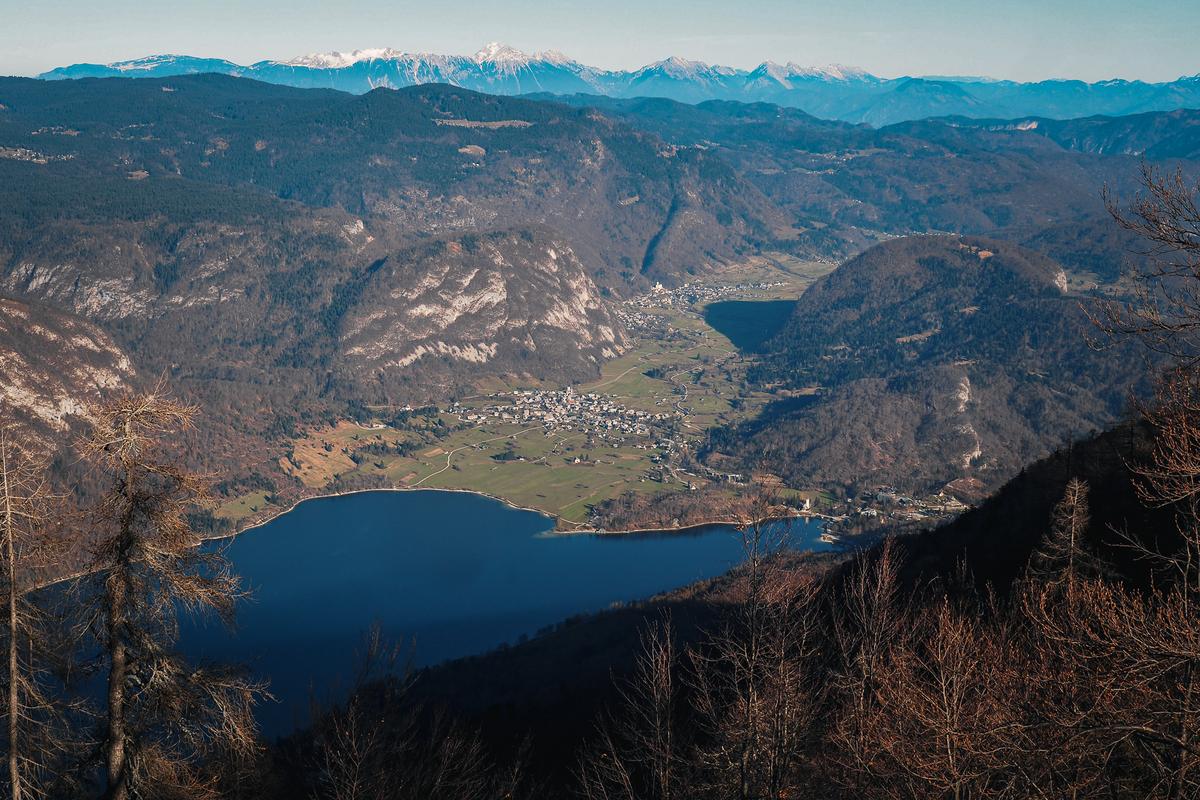
The largest permanent natural lake in Slovenia, located within Triglav National Park. Known for its crystal-clear waters and stunning mountain scenery, it is a quieter, more natural alternative to Lake Bled.
A place worth knowing
Lake Bohinj
Nature · Lake in Triglav National ParkUpdated
- Google rating4.8/5
- Typical visit2-4 hours, or longer if engaging in extensive hiking, swimming, or other activities.
- EntranceFree
Why it matters
Slovenia's largest natural lake tucked inside Triglav National Park, an emerald-green glacial jewel quieter and wilder than neighboring Lake Bled
Story and significance
About
The largest permanent natural lake in Slovenia, located within Triglav National Park. Known for its crystal-clear waters and stunning mountain scenery, it is a quieter, more natural alternative to Lake Bled.
Historical context
Lake Bohinj has a rich historical background that dates back to prehistoric times, with archaeological evidence indicating human presence in the region since the Bronze Age. The lake and its valley have long been a strategic and vital location due to their natural resources and position along ancient trade routes connecting the Adriatic coast with Central Europe. Throughout the Middle Ages, the area was part of the Duchy of Carniola under the Habsburg Monarchy, during which time the local communities developed agricultural and pastoral practices adapted to the Alpine environment. The village of Ribčev Laz, located on the lake’s shore, features a 12th-century church dedicated to St. John the Baptist, showcasing the region’s medieval Christian heritage. In the 19th and early 20th centuries, Lake Bohinj became a destination for early tourism and mountaineering, attracting explorers and naturalists who documented its pristine environment. During World War II, the surrounding Triglav National Park area was significant for the Slovene Partisan resistance movement against occupying forces, with the lake region serving as a refuge and strategic base. Post-war, Lake Bohinj was incorporated into the Triglav National Park established in 1981, reflecting growing efforts to preserve its natural and historical heritage. The lake’s history is thus intertwined with broader regional developments, from ancient settlement to modern conservation.
Cultural context
Lake Bohinj holds deep cultural significance for the Slovene people, serving as a symbol of natural purity and national identity within the Julian Alps region. The area surrounding the lake is home to traditional Alpine customs that have been preserved for centuries, including unique folk music, dance, and costume traditions often showcased during local festivals. One of the most notable cultural events is the annual Bohinj Cultural Summer, which features performances of traditional Slovenian music, storytelling, and culinary fairs, celebrating the rich heritage of the Upper Carniola region. Local artisans continue to practice age-old crafts such as woodcarving and lace-making, reflecting the community’s connection to their environment and history. The lake and its surroundings also inspire numerous legends and folklore, including tales of mythical creatures and spirits believed to inhabit the waters and forests, highlighting the spiritual relationship locals maintain with nature. These cultural expressions emphasize respect for the natural world and the continuity of ancestral customs, making Lake Bohinj a vital cultural landmark within Slovenia. The lake remains a living cultural landscape where traditions are actively practiced and shared with visitors, fostering a deeper understanding of Slovenian Alpine heritage.
Architecture
While Lake Bohinj itself is a natural landmark, the architectural significance in its vicinity lies primarily in the traditional Alpine structures and religious buildings that reflect the historical and cultural evolution of the region. The most prominent architectural feature near the lake is the Church of St. John the Baptist in Ribčev Laz, which dates back to the 12th century and exemplifies Romanesque architectural style with later Gothic and Baroque modifications. This church is notable for its well-preserved frescoes and stone masonry, serving as a testament to medieval ecclesiastical architecture in the Slovenian Alps. Surrounding villages exhibit vernacular Alpine architecture characterized by wooden hayracks (kozolec), steep gabled roofs, and stone foundations, designed to withstand the harsh mountain climate and support traditional farming lifestyles. These structures are built using locally sourced timber and stone, showcasing sustainable construction techniques adapted to the environment. In addition, there are several mountain lodges and chalets constructed in the 19th and 20th centuries that combine rustic design with functional elements for tourism and mountaineering. The architectural landscape around Lake Bohinj thus represents a harmonious blend of historical religious edifices and vernacular Alpine building traditions, providing insight into the region’s cultural and environmental adaptation over centuries.
Local significance
For the local communities around Lake Bohinj, the lake is much more than a scenic landmark; it is a central element of daily life, cultural identity, and economic sustenance. The lake supports traditional livelihoods such as fishing and pastoral farming, practices that have been passed down through generations and continue to shape the local way of life. It also plays a crucial role in community gatherings and seasonal celebrations, where residents come together to honor their heritage and natural surroundings. Local legends often speak of the lake’s mystical qualities, including stories of water spirits and guardians of the mountains, which foster a deep spiritual connection between people and place. The lake’s presence influences local cuisine, with freshwater fish like trout featured prominently in traditional dishes served during festivals and family occasions. Additionally, Lake Bohinj is a focal point for sustainable tourism, providing employment and economic opportunities while encouraging environmental stewardship among residents. The lake’s accessibility and natural beauty have made it a beloved recreational area for locals, who use it for swimming, boating, and hiking, reinforcing a strong bond with their environment. Overall, Lake Bohinj is integral to the social fabric and cultural continuity of the surrounding communities, embodying a harmonious relationship between people and nature that endures today.
Make the most of it
Local tips
- Local guides know hidden viewpoints
- Wildlife most active early morning
- Sunrise and sunset offer best light
- Respect local conservation efforts
- Weekdays much less crowded
- Seasonal changes create different experiences
- Weather can change quickly
Hidden gems nearby
- Wildlife observation spots
- Hidden caves and grottos
- Natural formations off main path
- Perfect picnic spots away from crowds
- Secret swimming holes known to locals
- Historical markers easily missed
- Unmarked trails to pristine areas
Special features
- Lake Bohinj is distinguished by its remarkable natural features that contribute to its status as Slovenia’s largest permanent lake. Nestled within the Julian Alps, the lake spans approximately 318 hectares and reaches a maximum depth of around 45 meters, offering crystal-clear glacial waters fed by the Savica River and numerous mountain streams. Its pristine condition is maintained through minimal human intervention and its location within Triglav National Park, Slovenia’s only national park. The lake is surrounded by dramatic alpine peaks, including Mount Triglav, the highest summit in Slovenia, which forms a breathtaking backdrop and attracts hikers and climbers. Unique to Lake Bohinj is its role as a habitat for diverse flora and fauna, including endemic fish species and protected birdlife, making it a vital ecological site. The area also features the Savica Waterfall, one of Slovenia’s most famous waterfalls, which cascades from a height of 78 meters into the lake’s inflow. Seasonal variations create distinct landscapes, with winter snow transforming the region into a serene snowscape and summer months inviting swimming, kayaking, and fishing. The lake’s natural purity, combined with its alpine setting and biodiversity, makes it a special feature of both national and international environmental importance. These distinctive elements ensure Lake Bohinj remains a treasured natural landmark.
How we rate it
Authenticity9/10
Accessibility score6/10
Family-friendly score8/10
Off-the-beaten-path7/10
Editorial scores on a 10-point scale, judged against places of the same kind.


Where to find it
- Address
- Ribcev Laz 48, 4265 Bohinjsko jezero, Slovenia
- Map
- Open map ↗ Directions ↗ Verified location
- Coordinates
- 46.2823, 13.85822
- Destination
- Triglav National Park