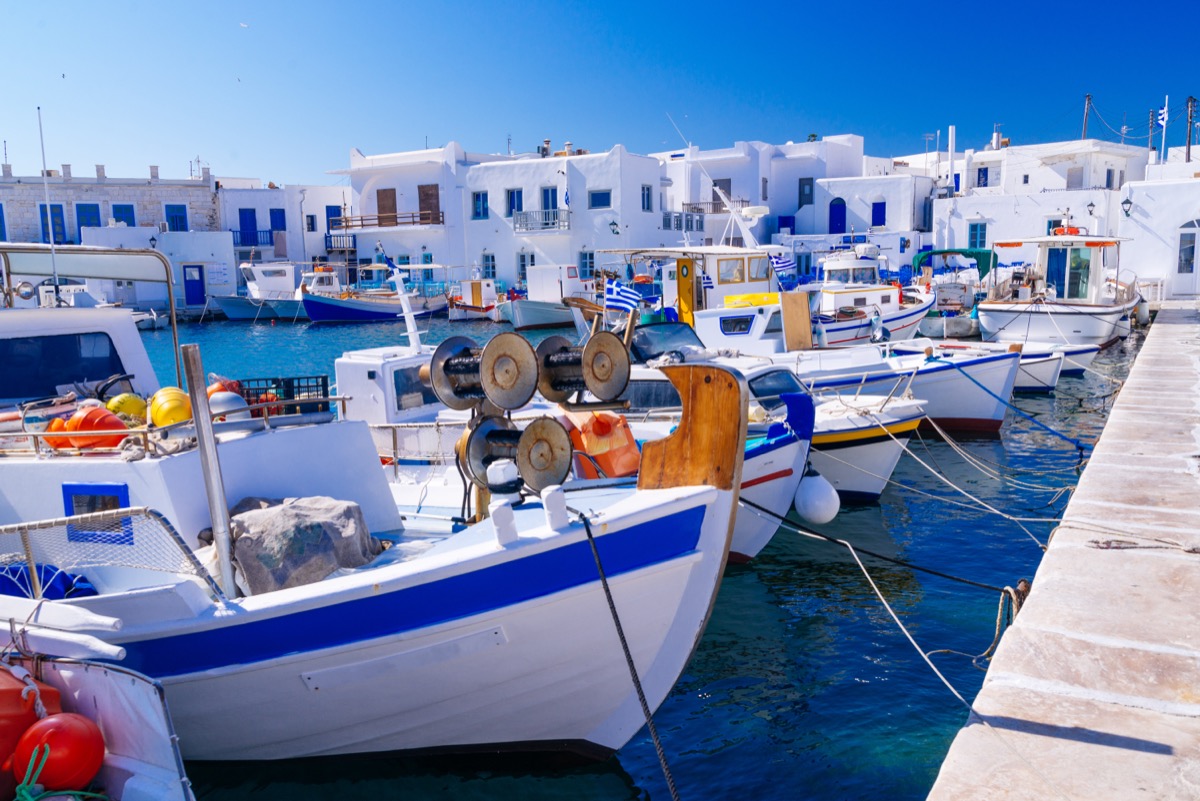
Naoussa sits on the northern coast of Paros island in the central Cyclades, built around a semi-circular harbour where colourful fishing boats moor beside the remnants of a 15th-century Venetian fortification. The village combines an active fishing economy with upscale tourism, drawing visitors with its labyrinthine whitewashed alleys, boutique hotels, and some of the best seafood restaurants on the island. Its beaches, nightlife, and proximity to Parikia make it the second hub of Paros and a destination in its own right.
What is Naoussa Paros known for?
Naoussa is best known for its partially submerged Venetian kastro at the harbour entrance, its dense network of narrow marble-paved lanes lined with bougainvillea, and a waterfront dining strip where fishermen unload their catch metres from restaurant tables. The village also has a strong local identity rooted in fishing and agriculture, producing Parian wine from local vineyards and serving fresh seafood including octopus, sea bream, and grilled calamari. The annual Carnival celebration in late summer, commemorating a 1537 pirate raid, is one of the most distinctive local festivals in the Cyclades.
Best things to do in Naoussa Paros
The single most rewarding activity in Naoussa is an early-morning or sunset walk along the inner harbour past the fishing boats to the Venetian fort ruins, followed by coffee at one of the cafes on the main plateia. Beyond the harbour, visitors can explore the Church of Agios Nikolaos near the waterfront, rent a boat or take a short water taxi to the granite rock formations at Kolymbithres beach, and browse the boutiques along the main pedestrian lane running inland from the port.
- Walk the Venetian kastro ruins at the harbour mouth
- Take a water taxi to Kolymbithres beach and its sculpted granite boulders
- Visit the Church of Agios Nikolaos on the harbourfront
- Explore the inland pedestrian shopping lane toward the main square
- Attend the late-August pirate re-enactment festival on the waterfront
Where to eat in Naoussa Paros
The harbourfront and the lanes immediately behind it concentrate Naoussa’s best eating, ranging from traditional psarotavernas serving the morning’s catch to wine bars and modern Greek cuisine restaurants. Signature dishes to order include grilled octopus dried on the harbour lines, fresh sea urchin when in season, local Parian goat cheese, and kakavia fish soup. The cluster of tavernas on the inner quay is the most atmospheric setting, where tables extend to the water’s edge.
- Order grilled octopus and fresh calamari at harbourfront psarotavernas
- Try kakavia fish soup and local Parian goat cheese
- Sample Parian wine from regional vineyards at waterfront wine bars
- Seek out fresh sea urchin at smaller family-run tavernas in season
Where to walk in Naoussa Paros
The most rewarding walking route in Naoussa begins at the main plateia inland, threads through the whitewashed residential alleys past small Orthodox chapels and flower-draped doorways, and ends at the harbourfront kastro ruins where the lane opens onto the waterfront promenade. A second short walk leads north from the harbour along the coastal path toward Piperi beach, passing old boathouses and offering open sea views toward the northern Aegean.
How to get to Naoussa Paros
Naoussa is connected to Parikia, the island capital and main ferry port, by a regular KTEL bus service running along the main island road, with the journey taking approximately 20 minutes. Taxis are available from Parikia port and from the Naoussa main square. Paros is served by ferry from Piraeus port in Athens, with crossings ranging from roughly 3.5 hours on high-speed catamarans to 5 hours on conventional ferries, operated by lines including Seajets and Blue Star Ferries. Paros National Airport also receives domestic flights from Athens.
Best time to visit Naoussa Paros
Late May through June and September through early October offer the best balance of warm Aegean weather, open businesses, and manageable crowds, as July and August bring peak-season congestion to the narrow lanes and harbour. The village remains partially active into November for visitors seeking quiet, with some tavernas and cafes staying open year-round for locals.