MenuClose

A place worth knowing

Giardino di Boboli

Nature · Historic garden in FlorenceUpdated

  • Google rating4.5/5
  • Typical visit2-4 hours, longer if exploring all sections and enjoying the views.
  • EntranceFree
Boboli Gardens at Palazzo Pitti, one of the best things to do in Florence with kids
  • Today (Monday)8:15 AM – 4:30 PM
  • Typical visit2-4 hours, longer if exploring all sections and enjoying the views.
  • EntranceFree
  • Google rating4.5/5
  • WebsiteOfficial site ↗
Opening hours all week
Monday
8:15 AM – 4:30 PM
Tuesday
8:15 AM – 4:30 PM
Wednesday
8:15 AM – 4:30 PM
Thursday
8:15 AM – 4:30 PM
Friday
8:15 AM – 4:30 PM
Saturday
8:15 AM – 4:30 PM
Sunday
8:15 AM – 4:30 PM
The short answer

Why it matters

A sprawling Renaissance garden behind Pitti Palace with ancient sculptures, grottos, and panoramic views over Florence

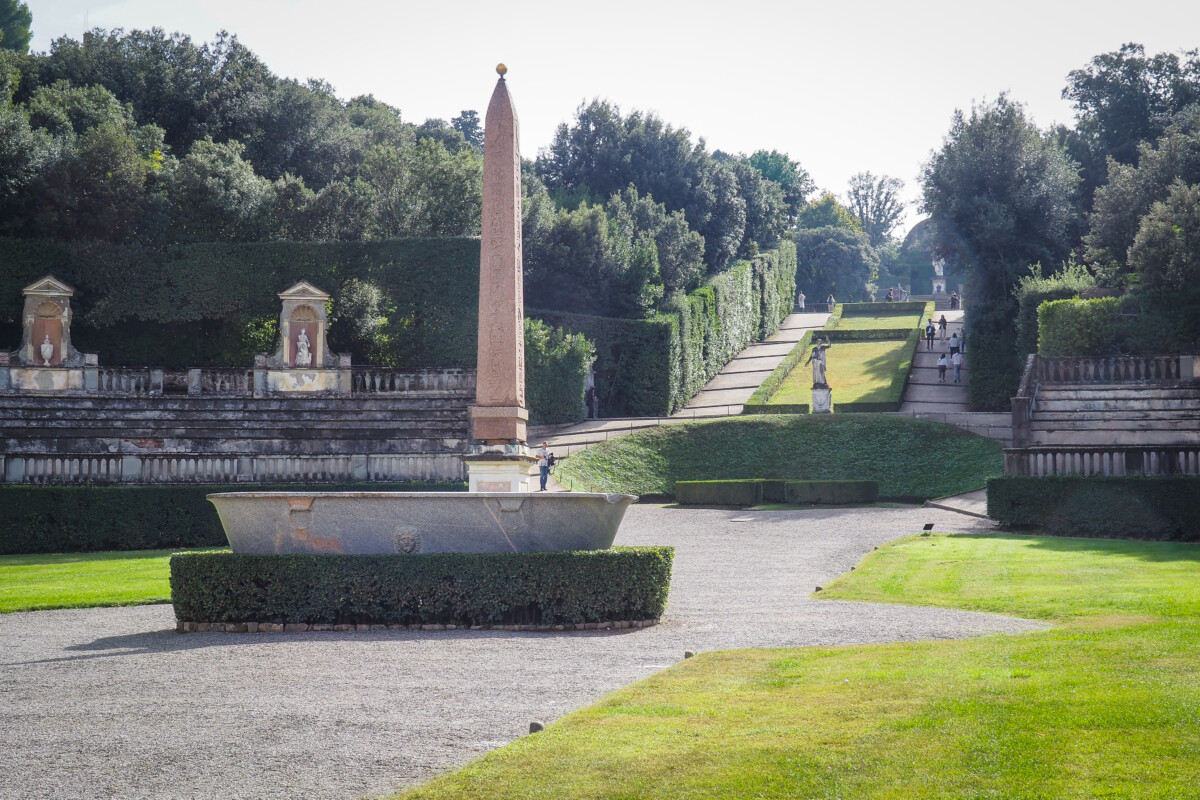
The Boboli Gardens (Giardino di Boboli) stand as one of Italy’s most magnificent historical parks and an extraordinary open-air museum showcasing the evolution of Italian garden design from the Renaissance through the 18th century. Created initially for the Medici family following their acquisition of Palazzo Pitti in 1550, these 45-hectare gardens stretch up a steep hillside behind the palace, offering panoramic views of Florence. Unlike many formal European gardens, Boboli follows the natural amphitheater-like terrain, incorporating terraces, grottos, fountains, and garden theatres harmonized with the landscape rather than imposing rigid geometry. The gardens display masterpieces of garden sculpture and architecture, including the Amphitheatre with its Egyptian obelisk brought from Rome’s Baths of Caracalla, the enigmatic Grotta del Buontalenti with its fantastical stalactites and stalagmites concealing hidden meanings, and the whimsical Bacchus fountain featuring a corpulent dwarf (Pietro Barbino, court jester) riding a tortoise. Magnificent cypress-lined boulevards frame distant views of the Florentine countryside, while secluded pathways reveal hidden fountains and intimate garden rooms. The Renaissance and Mannerist statuary dispersed throughout creates a dialogue between art and nature, reflecting the period’s philosophical ideals. Beyond aesthetic pleasure, Boboli holds profound historical significance as the inspiration for many European royal gardens, including Versailles. For travelers seeking an immersive experience of Italian cultural history beyond museums, Boboli offers living insight into Renaissance and Baroque aesthetics, Medici power and patronage, and the harmonious integration of artistic expression within natural settings.

Cultural Context

One of first and most important examples of Italian Renaissance garden design, representing Medici cultural patronage and aristocratic lifestyle. Served as model for European court gardens, embodying Italian mastery in landscape architecture that combines nature, art, and power. Outdoor museum showcasing integration of sculpture, architecture, and horticulture.

Historical Context

Designed 1549 by Niccolò Tribolo for Duchess Eleonora di Toledo behind newly acquired Pitti Palace. Expanded under successive Medici Grand Dukes Cosimo II and Ferdinando II. Opened to public 1766. Enhanced by Habsburg-Lorraine and Savoy dynasties, extending to ancient city walls at Porta Romana.

Context

Story and significance

About

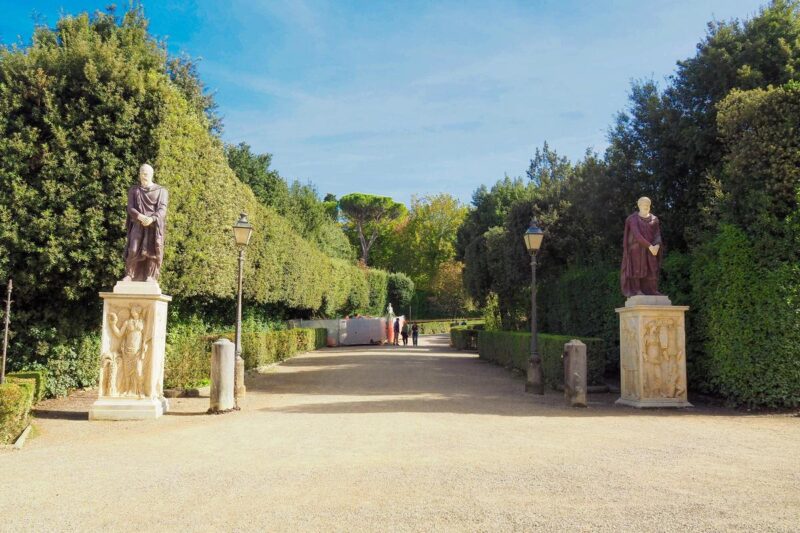
The Giardino di Boboli (Boboli Gardens) is a 45,000-square-metre Renaissance garden behind the Pitti Palace in Florence, laid out from 1549 for Eleonora di Toledo, wife of Cosimo I de’ Medici. The grounds feature an amphitheatre, grottoes (including the Grotta del Buontalenti with Michelangelo-associated sculptures), the Isolotto fountain island, and avenues lined with Renaissance and Baroque statues. As one of the earliest formal European gardens, it influenced the design of many royal gardens across Europe, including Versailles.

Historical significance

As one of the first and most influential Italian Renaissance gardens, Boboli shaped garden design across Europe and preserves important sculptures and landscape compositions. Its association with the Medici and later rulers, and its role in the cultural life of Florence, make it significant to art history and landscape architecture.

Historical context

Designed 1549 by Niccolò Tribolo for Duchess Eleonora di Toledo behind newly acquired Pitti Palace. Expanded under successive Medici Grand Dukes Cosimo II and Ferdinando II. Opened to public 1766. Enhanced by Habsburg-Lorraine and Savoy dynasties, extending to ancient city walls at Porta Romana.

Cultural context

One of first and most important examples of Italian Renaissance garden design, representing Medici cultural patronage and aristocratic lifestyle. Served as model for European court gardens, embodying Italian mastery in landscape architecture that combines nature, art, and power. Outdoor museum showcasing integration of sculpture, architecture, and horticulture.

Architecture

Features symmetrical geometric layout with central amphitheater inspired by Roman Baths of Caracalla. Contains Buontalenti famous grotto with Michelangelo slave copies, Fountain of Neptune, Ocean Fountain. Includes 18th-century Kaffeehaus (rare Tuscan Rococo) and Lemon House by Zanobi del Rosso.

Local significance

The Giardino di Boboli is a cherished green lung and cultural touchstone for Florentines, embodying the city’s Renaissance heritage and taste for formal gardens. Locals value it as a place for quiet walks, study and family outings beneath historic sculptures, terraces and cypress-lined vistas that complement Florence’s museum circuit. The garden also plays a practical role during tourist seasons, providing an expanse where residents and visitors alike experience views over the city and respite from the urban centre.

Updated Data: Editorial research · Google Places ratings · Verified coordinates